
Seasonal Maintenance Tips for Ceilings
You should inspect your ceiling each season for cracks, water damage, mold, and structural issues to keep it safe and looking great. Clean dust and cobwebs regularly, check for loose fixtures, and guarantee proper ventilation to prevent moisture buildup and mildew. Don’t forget to assess paint condition and watch for pest problems. Testing insulation and scheduling professional inspections will help catch hidden concerns early. Keep up these steps, and you’ll discover even more ways to protect your home’s ceiling.
Inspect for Cracks and Structural Damage
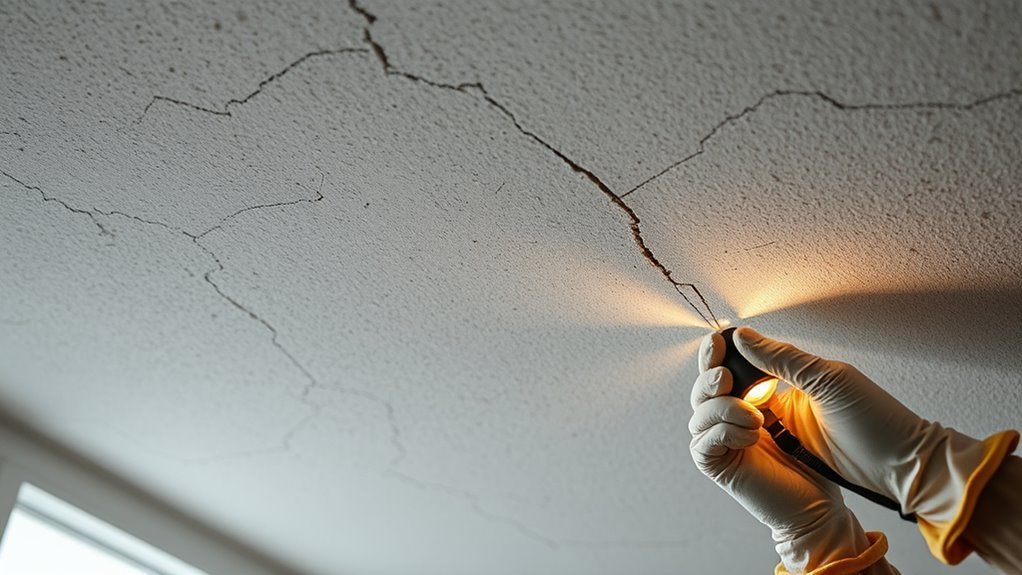
Before the seasons change, you should carefully inspect your ceilings for any cracks or signs of structural damage. Taking time for a thorough crack assessment helps guarantee your home’s structural integrity remains intact, freeing you from unexpected repairs later. Look closely at corners, joints, and areas around fixtures where cracks often appear. Even small, hairline cracks can indicate underlying issues that need attention. You don’t want hidden damage to compromise your space’s safety or your peace of mind. By being proactive, you maintain control over your environment, avoiding costly structural problems down the road. Regular inspections empower you to address concerns early, preserving the strength and freedom your home offers. Remember, a solid ceiling means a secure, worry-free living space.
Check for Signs of Water Leaks
If you notice any discoloration or damp spots on your ceiling, it’s essential to check for water leaks promptly. Ignoring these signs can lead to severe water damage that compromises your ceiling’s integrity and freedom from costly repairs. Start with a thorough leak detection by inspecting areas around plumbing fixtures, rooflines, and attic spaces. Look for peeling paint, sagging drywall, or mold growth, all indicators of hidden moisture. Using a moisture meter or thermal camera can help pinpoint leaks that aren’t visible. Addressing water leaks early prevents them from spreading, preserving both your home’s structure and your peace of mind. Taking control of leak detection empowers you to maintain a safe, damage-free ceiling all year long.
Clean Dust and Cobwebs Thoroughly
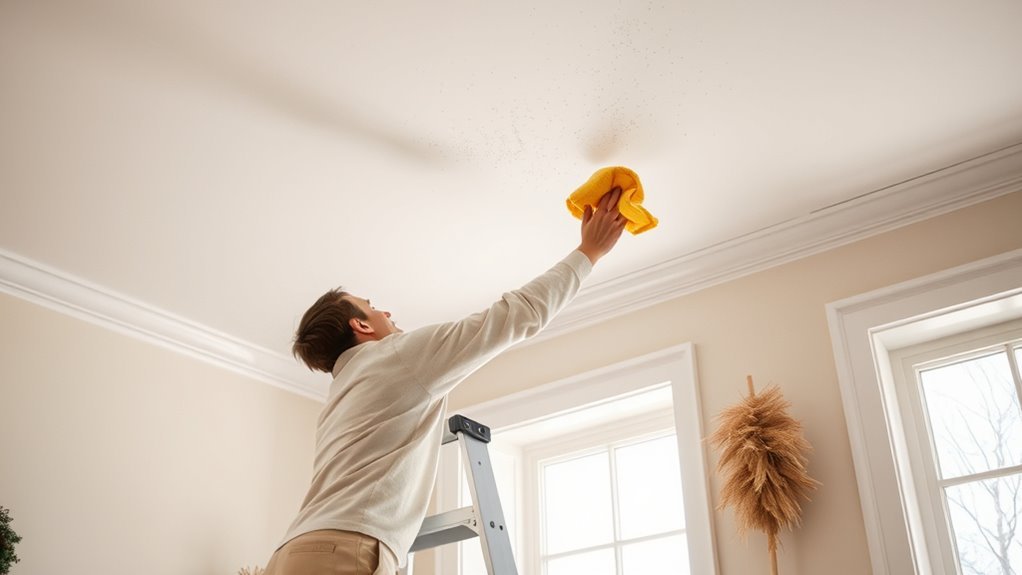
While dust and cobwebs might seem harmless, they can accumulate quickly and affect your ceiling’s appearance and air quality. To keep your space fresh and free, focus on thorough dust removal and cobweb prevention. Here’s how you can tackle it efficiently:
- Use a long-handled duster or vacuum with a brush attachment to reach high spots without strain.
- Incorporate microfiber cloths for gentle yet effective dust removal on delicate surfaces.
- Regularly check corners and light fixtures where cobwebs like to form.
- Consider applying a gentle insect repellent spray to prevent spiders from rebuilding webs.
Examine for Mold and Mildew Growth
Since ceilings are often exposed to moisture and poor ventilation, they can become prime spots for mold and mildew growth. You want to stay ahead with mold prevention by inspecting your ceiling regularly. Catching mildew early means you can apply quick remedies and keep your space fresh and free.
| Spot Check Areas | Signs to Look For |
|---|---|
| Bathroom corners | Dark spots, musty smell |
| Near windows | Water stains, peeling |
| Attic ceiling | Discoloration, dampness |
| Kitchen ceiling | Greasy residue, stains |
| Basement ceiling | Fuzzy patches, odor |
Use a mix of ventilation and natural remedies to fight mildew. Regular inspections will keep your ceiling healthy and your home a space of freedom.
Assess Paint Condition and Touch Up
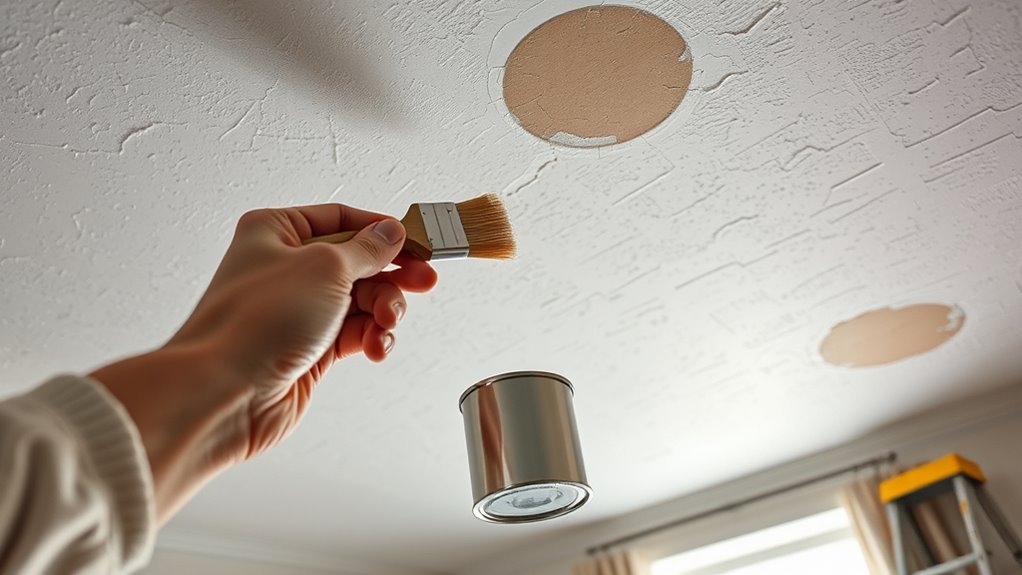
Before repainting becomes a necessity, you’ll want to carefully inspect your ceiling’s paint for any signs of wear, such as cracking, peeling, or fading. Maintaining a fresh paint look not only protects your ceiling but also keeps your space feeling open and free. Here’s how to assess and touch up effectively:
Regularly inspect your ceiling paint for cracks or peeling to keep your space fresh and protected.
- Examine the entire surface under good lighting for discoloration or damage.
- Choose a paint that matches your existing color or consider new color trends for a subtle update.
- Clean the area gently to remove dust and grime before touching up.
- Apply paint sparingly with a small brush to blend repairs seamlessly.
Inspect Ceiling Fixtures and Lighting
Make sure to check for any loose ceiling fixtures that could pose a safety risk or cause damage. You’ll also want to clean light covers to keep your lighting bright and efficient. Regularly inspecting these areas helps maintain both function and appearance.
Check for Loose Fixtures
One of the easiest ways to keep your ceiling safe and functional is to regularly check for loose fixtures. Ensuring fixture stability not only promotes ceiling safety but also prevents potential accidents. When you inspect, focus on:
- Gently wiggling light fixtures to detect movement.
- Examining screws or mounting brackets for tightness.
- Checking electrical connections for wear or loosening.
- Looking for cracks or damage around fixture bases.
Clean Light Covers
Dust and grime can quickly dull the appearance of your light covers, reducing the brightness in your rooms. To keep your ceiling fixtures shining, you’ll want to clean them regularly. Different light cover materials call for specific cleaning techniques to avoid damage and maintain clarity.
| Light Cover Material | Recommended Cleaning Technique | Tips for Best Results |
|---|---|---|
| Glass | Use mild soap and water | Avoid abrasive scrubbers |
| Plastic | Wipe with a damp cloth | Use gentle cleaners |
| Fabric | Vacuum or spot clean | Avoid soaking to prevent stains |
| Metal | Polish with a soft cloth | Use metal-safe cleaning agents |
Ensure Proper Ventilation and Airflow
Proper ventilation and airflow play a crucial role in maintaining the condition of your ceilings throughout the year. Without effective airflow strategies, moisture can build up, leading to stains, warping, or mold. To keep your ceilings in top shape, consider these ventilation solutions:
- Regularly check and clean air vents and registers to guarantee unobstructed airflow.
- Use exhaust fans in moisture-prone areas like bathrooms and kitchens to reduce humidity.
- Open windows periodically to promote natural ventilation and fresh air circulation.
- Install ceiling fans to help distribute air evenly and prevent stagnant spots.
Look for Pest Infestations
How can you tell if pests have taken up residence near your ceiling? Look for small droppings, chewed materials, or unusual sounds like scratching or scurrying. These signs hint at unwanted guests invading your space. To protect your freedom from infestations, prioritize pest prevention by sealing cracks and gaps where critters sneak in. Setting up seasonal traps during times when pests are most active helps catch them early and stops populations from growing. Regularly inspect your ceiling, especially after weather changes, to catch issues before they escalate. Taking these proactive steps keeps your ceiling—and your home—free from pests, so you can enjoy a safe, comfortable environment without feeling trapped by unwanted invaders.
Test for Insulation Effectiveness
Wondering if your ceiling insulation is doing its job? Testing its effectiveness can save you energy costs and boost your home’s comfort. Different insulation types perform differently, so it’s key to check yours regularly.
Here’s how you can test your insulation’s effectiveness:
- Feel for drafts or cold spots on your ceiling during colder months.
- Use an infrared thermometer to spot temperature variations.
- Check for settled or compressed insulation, which reduces energy efficiency.
- Compare your energy bills seasonally; spikes might signal poor insulation.
Schedule Professional Ceiling Inspections
Although you can spot some issues yourself, scheduling professional ceiling inspections guarantees that hidden problems don’t go unnoticed. Experts understand the nuances of different ceiling materials and can detect subtle signs of wear, moisture damage, or structural weakness that might escape your eye. Depending on your ceiling materials and local climate, the ideal inspection frequency varies, but generally, an annual check-up keeps your ceiling in top shape. By trusting professionals, you free yourself from worry and assure timely repairs, preventing costly damage down the road. Embrace this proactive approach—it’s a simple way to protect your home’s integrity while enjoying the freedom of knowing your ceiling’s health is in expert hands. Don’t wait for visible problems; schedule your inspection today.
Frequently Asked Questions
How Do I Choose the Best Ceiling Paint Finish?
Choosing the best ceiling paint finish can feel like deciding the fate of the universe—no pressure, right? You’ll want to weigh ceiling paint types carefully; matte finishes hide imperfections like magic, while semi-gloss offers finish durability and easy cleaning. If you crave freedom from constant touch-ups, go for a finish that balances style and toughness. Remember, your ceiling’s finish should reflect your lifestyle, not just look good!
What Materials Are Best for Ceiling Repairs?
When tackling ceiling repairs, you’ll want materials that suit your style and freedom to create. Drywall alternatives like plywood or plasterboard offer durability and flexibility. For minor damage, lightweight spackle or joint compound works great. Repair techniques vary—patching holes with mesh tape or using spray foam for gaps can save time. Choose what fits your skill level and desired finish, so your ceiling looks seamless and lets your creativity shine.
Can Ceiling Fans Help Reduce Moisture Buildup?
Like a refreshing gust of wind in a stuffy room, ceiling fans boost air circulation, helping you keep humidity control in check. When moisture tries to sneak in, these fans whisk it away, reducing the risk of mold and mildew. By running your ceiling fan, you’re giving your space the freedom to breathe, preventing dampness from taking hold and keeping your home comfortable and dry all year round.
How Often Should Ceiling Insulation Be Replaced?
You should consider replacing your ceiling insulation roughly every 15 to 25 years, depending on the insulation lifespan of the materials used. Keep an eye out for replacement indicators like sagging, moisture damage, pest infestations, or noticeable drops in energy efficiency. If you spot any of these signs, don’t hesitate to act. Staying on top of insulation guarantees your home stays comfortable and energy-efficient, giving you the freedom to enjoy your space without worry.
Are There Eco-Friendly Options for Ceiling Maintenance?
Did you know that using sustainable paint can reduce indoor air pollution by up to 90%? If you’re looking to maintain your ceilings while staying eco-friendly, you’ll love choosing sustainable paint options that avoid harmful chemicals. Plus, using natural cleaners keeps your space fresh without toxic residues. You don’t have to sacrifice freedom or style—these green choices let you care for your home and the planet at the same time.