Spring Cleaning Guide for Chair
To spring clean your chairs, first check what material they’re made of—fabric, wood, metal, or plastic—so you use the right cleaning method. Gather supplies like a soft brush, microfiber cloth, and gentle cleaners. For upholstery, blot stains and use mild soap; wooden chairs benefit from a damp cloth and a bit of furniture polish, while metal and plastic chairs need gentle cleaners and protective coatings. Keep going to discover expert tips for stubborn stains and long-lasting freshness.
Assessing the Material of Your Chair
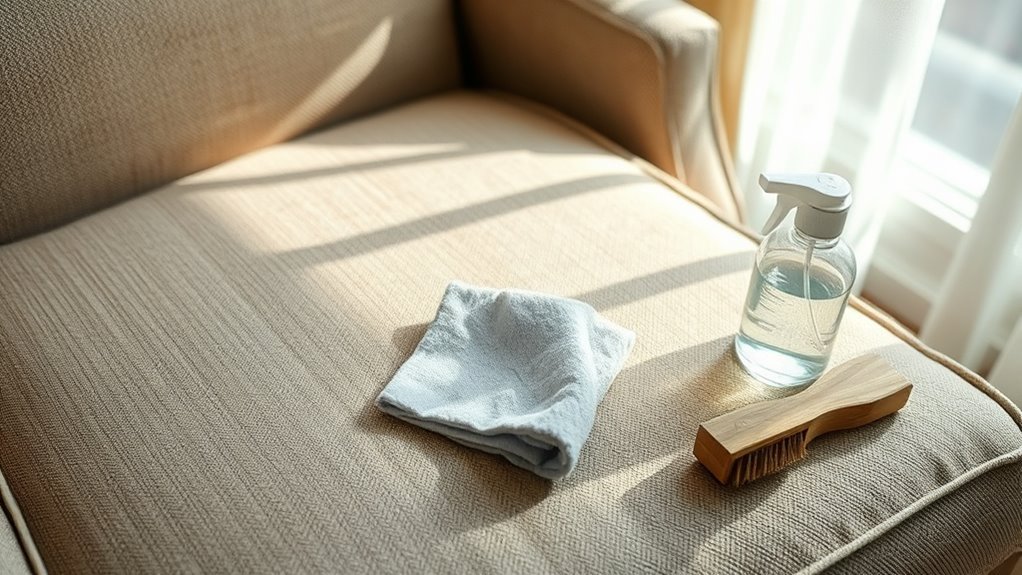
Before diving into cleaning, you need to figure out what material your chair is made of. Understanding the fabric types and chair finishes helps you choose the right cleaning method without risking damage. Is your chair upholstered in cotton, velvet, or leather? Each fabric type reacts differently to water, soap, and cleaning agents. Likewise, consider the chair’s finish — is it polished wood, metal, or plastic? These finishes require unique care to maintain their look and durability. By evaluating these details, you gain freedom from guesswork and can clean confidently, protecting your chair’s integrity. Knowing your chair’s material isn’t just practical; it’s the first step toward keeping your space fresh and truly yours.
Gathering Essential Cleaning Supplies
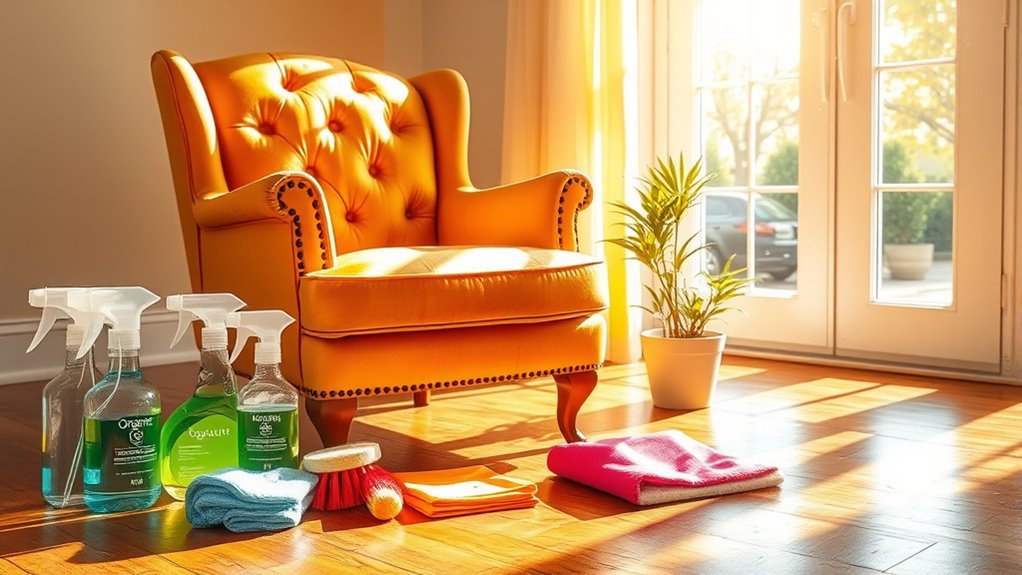
Once you know what your chair is made of, gathering the right cleaning supplies becomes much easier. You’ll want to select cleaning tools and eco friendly supplies that protect both your chair and the environment, giving you freedom from harsh chemicals and waste.
Here’s a quick guide to essentials:
| Cleaning Tools | Eco Friendly Supplies | Purpose |
|---|---|---|
| Soft brush | Bamboo cloth | Dust removal |
| Microfiber cloth | Natural soap | Gentle cleaning |
| Vacuum attachment | Vinegar solution | Deep cleaning |
| Spray bottle | Baking soda | Odor neutralizing |
| Gloves | Lemon juice | Stain treatment |
With these in hand, you’re ready to clean efficiently and responsibly.
Cleaning Upholstered Chairs Effectively
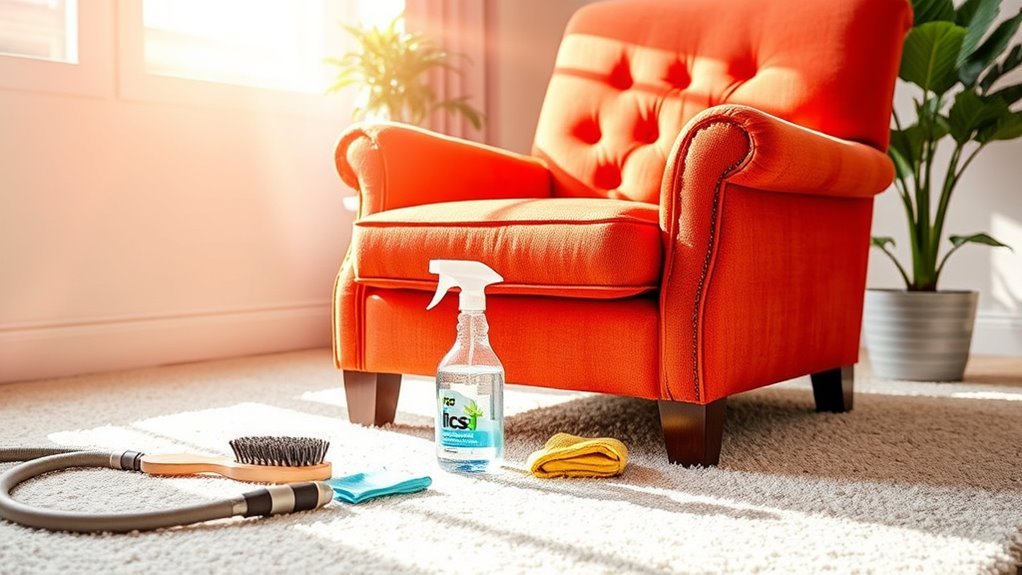
Cleaning upholstered chairs effectively starts with understanding the fabric type and spotting any stains or odors. Different fabric types demand specific cleaning methods to avoid damage. Before diving in, test a small hidden area with your chosen cleaner. Use gentle techniques for delicate fabrics like silk or velvet, while synthetic fibers may tolerate more vigorous cleaning.
Begin cleaning upholstered chairs by identifying fabric types and testing cleaners on a hidden spot to prevent damage.
Keep these tips in mind:
- Identify fabric types (cotton, linen, microfiber) to select safe cleaning agents.
- Blot stains immediately with a clean cloth instead of rubbing.
- Use mild soap and water or specialized upholstery cleaners depending on fabric compatibility.
Restoring Wooden Chairs to Their Shine
Although wooden chairs are durable, they can lose their luster over time due to dust, spills, and general wear. To regain their shine, focus on wood finish restoration by gently cleaning and polishing. Start with a soft cloth and mild cleaner, then apply natural oils or waxes using proper chair polishing techniques for a smooth, protected surface.
| Step | Tip |
|---|---|
| Clean | Use a damp cloth, avoid harsh chemicals |
| Restore Finish | Apply wood oil or wax evenly |
| Polish | Buff with a soft cloth for shine |
Maintaining Metal and Plastic Chairs
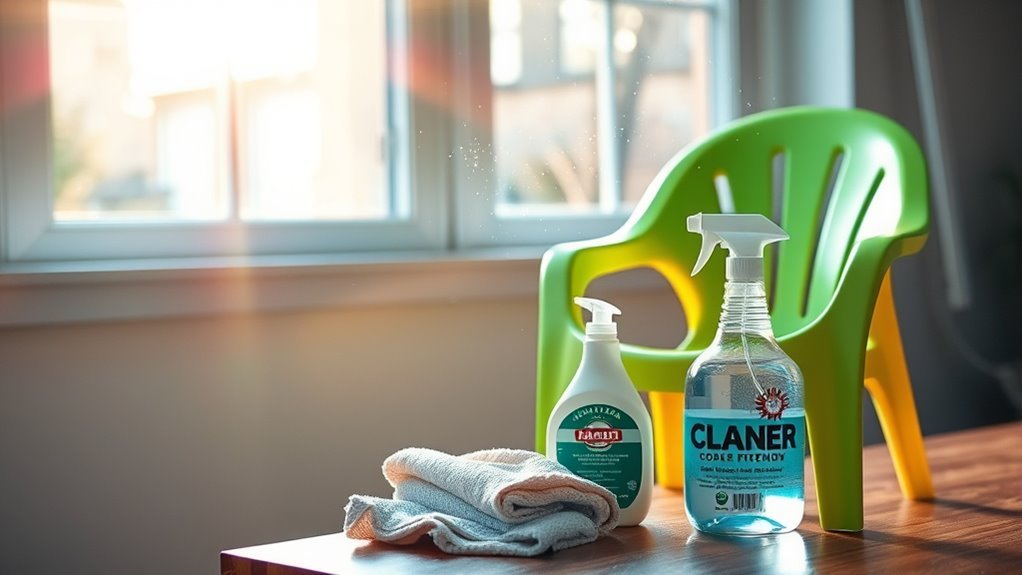
When it comes to metal chairs, you’ll want to use gentle cleaners to avoid scratches and rust. For plastic chairs, regular washing with mild soap keeps them bright and prevents buildup. Let’s explore the best ways to care for both materials so your chairs stay looking great all year.
Cleaning Techniques for Metals
Since metal and plastic chairs often face different challenges than fabric ones, you’ll want to use specific methods to keep them looking their best. For metal chairs, focus on metal polishing to restore shine and prevent dullness. If you spot rust, don’t ignore it—rust removal is essential to avoid further damage. Use gentle abrasives or rust removers designed for furniture. After cleaning, dry thoroughly to prevent new rust spots.
Here’s a quick checklist for metal chair care:
- Use a soft cloth and metal polish for regular shine.
- Apply rust remover immediately on any corrosion.
- Seal with a protective coating to fend off moisture.
These steps give you freedom from worry and keep your metal chairs fresh and sturdy all year.
Caring for Plastic Chairs
Metal chairs require careful attention to prevent rust, but plastic chairs bring their own set of maintenance needs. When it comes to plastic chair care, you want to keep them looking fresh without too much hassle. Start by rinsing your chairs with water to remove loose dirt. For tougher grime, a mixture of mild soap and water works wonders. Avoid harsh chemicals that could degrade the plastic over time. Since you’re likely enjoying these chairs outdoors, outdoor plastic maintenance is key—regular cleaning prevents stains and fading from sun exposure. Store your plastic chairs in a shaded spot or cover them when not in use to extend their lifespan. With simple care, your plastic chairs will stay free and ready for your next outdoor gathering.
Treating Stubborn Stains and Odors
Although regular cleaning removes most dirt, stubborn stains and odors often require extra effort and specific treatments to restore your chair’s freshness. You can tackle these challenges head-on with proven stain removal techniques and odor neutralization methods that give you freedom from lingering grime and smells. Try these effective approaches:
- Use a mixture of baking soda and water to gently lift stains without harsh chemicals.
- Apply white vinegar diluted with water as a natural odor neutralizer.
- Employ gentle scrubbing with a soft brush to target tough spots without damaging fabric or finishes.
Preventive Tips to Keep Chairs Clean Longer
If you want your chairs to stay fresh and clean longer, adopting simple preventive habits is key. Start by committing to regular maintenance—quick dusting and vacuuming can prevent dirt buildup before it becomes a problem. Don’t wait for stains to set in; address spills immediately to keep your chairs looking their best. Using protective covers is another smart move, especially if your chairs see heavy use or are exposed to pets and kids. These covers act as a barrier against spills, dust, and wear, making cleaning easier and extending your chair’s life. By embracing these straightforward steps, you free yourself from constant, intensive cleaning sessions and keep your space feeling open, fresh, and inviting without hassle.
Frequently Asked Questions
How Often Should I Deep Clean My Chairs Annually?
You should aim for a cleaning frequency of deep cleaning your chairs at least twice a year to keep them fresh and in good shape. Of course, if you have pets or kids, you might want to do it more often. Maintenance tips like regular vacuuming and spot cleaning help extend the time between deep cleans. This way, you’ll enjoy your chairs without feeling tied down by constant upkeep.
Can I Use Natural Cleaning Products on All Chair Materials?
Oh sure, because natural cleaners are exactly like superheroes that fit every chair’s costume perfectly, right? In reality, their effectiveness depends on chair material compatibility. You can’t just splash lemon juice or vinegar everywhere and expect magic on leather or delicate fabrics—it might cause damage. But if you embrace your freedom to choose wisely, natural cleaners can work wonders on wood, cotton, or plastic, offering a gentle, eco-friendly shine without sacrificing your chair’s health.
What Are the Best Techniques for Drying Chairs After Cleaning?
When drying chairs after cleaning, you’ll want to avoid trapping moisture. Start with towel blotting to gently soak up excess water without rubbing, which can damage the fabric. Then, let your chair air dry in a well-ventilated space, preferably outdoors or near an open window. This combo gives you freedom from harsh heat or chemicals and helps keep your chair fresh and ready to enjoy again without any lingering dampness.
How Do I Safely Clean Antique or Delicate Chairs?
Imagine gently revealing a hidden treasure—your antique wood chair. To safely clean it, don’t rush. Use a soft cloth with mild soap, avoiding harsh chemicals that could strip its character. For fabric preservation, opt for gentle vacuuming and spot-cleaning with a delicate solution. You’ll maintain its charm without confining it. Trust your touch; preserving history means letting your chair breathe freely, not trapping it under layers of heavy cleaners or moisture.
Are Professional Chair Cleaning Services Worth the Cost?
When weighing cost vs value, professional chair cleaning services can be worth it if you want to save time and guarantee a deep, thorough clean. If you clean your chairs frequently, you might feel comfortable handling it yourself. But if you prefer freedom from the hassle and want to protect delicate fabrics or antiques, professionals can extend your chair’s life and keep it looking fresh without the stress. It’s all about what feels right for you.