Spring Cleaning Guide for Fan
For your spring cleaning, start by unplugging your fan and gathering supplies like a microfiber cloth, soft brush, and mild detergent. Carefully remove the grill and blades for easy dusting and wipe them down to clear grime. Use compressed air or a vacuum on vents and motor parts, then lightly lubricate the motor for smooth operation. Regular upkeep boosts efficiency and extends fan life. Keep going to uncover more tips for a thorough, year-round fan care routine.
Tools and Supplies Needed for Cleaning Fans
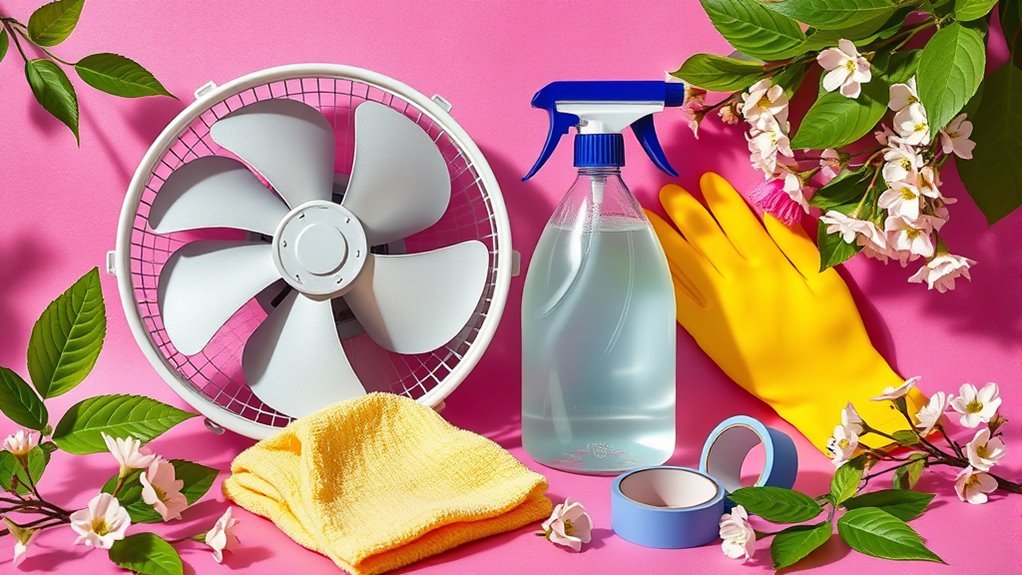
To get your fan thoroughly clean, you’ll need a few essential tools and supplies. Start with basic cleaning supplies like a microfiber cloth, a soft brush, and a mild detergent or all-purpose cleaner. These will help you remove dust and grime without damaging the fan’s surfaces. For more precise upkeep, grab maintenance tools such as a screwdriver to open the fan housing if necessary and compressed air to blow out stubborn dust from hard-to-reach places. Having a small vacuum with a brush attachment can also be a game-changer for clearing out dirt efficiently. With these tools and supplies at hand, you’ll have the freedom to maintain your fan’s performance and keep it running smoothly all season long.
How to Safely Disconnect and Prepare Your Fan
Before you begin cleaning, make certain you unplug your fan to eliminate any risk of electric shock. This vital step is the foundation of all safety precautions during fan maintenance. Next, take a moment to move your fan to a spacious, well-lit area where you can work freely without restrictions. If your fan has detachable parts, carefully remove them according to the manufacturer’s instructions. This lets you access all areas for thorough cleaning while preventing damage. Avoid forcing any components apart; gentle handling preserves their integrity and extends your fan’s lifespan. By following these steps, you guarantee both your safety and the efficiency of your fan maintenance routine. Taking these precautions gives you the freedom to clean confidently and keep your fan running smoothly.
Cleaning Techniques for Different Types of Fans
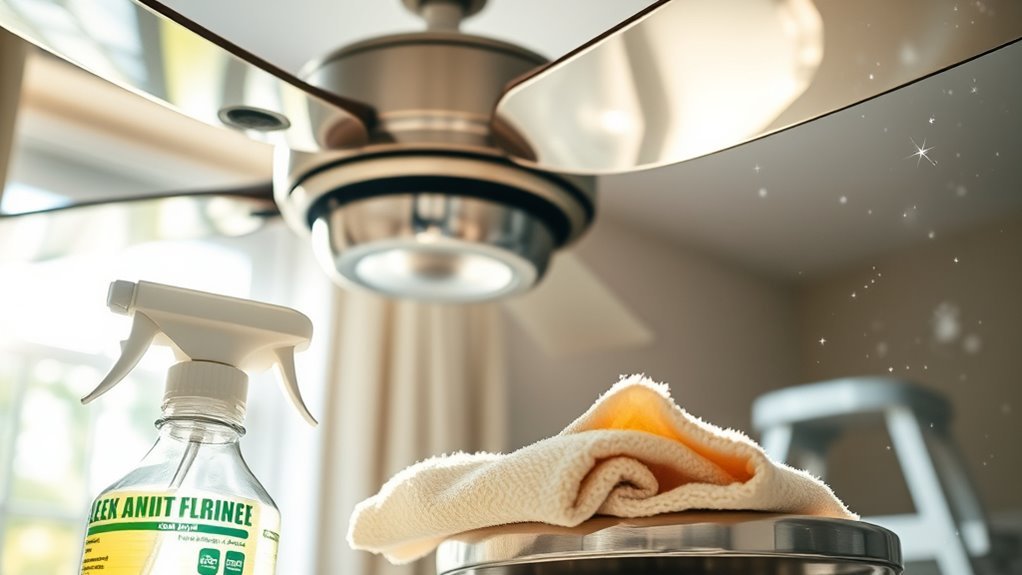
Once your fan is safely unplugged and disassembled as needed, it’s time to tackle the cleaning process tailored to your fan type. For pedestal and box fans, a damp cloth and mild detergent work well on blades and grills, but avoid soaking electrical parts. Tower fans often require careful vacuuming or soft brushes to reach internal vents without disassembly. Ceiling fans benefit from a microfiber duster or pillowcase method to trap dust efficiently. Remember, your cleaning frequency depends on usage and environment—dustier spaces call for more frequent care. By adjusting your approach to each fan type, you not only extend your fan’s life but also enjoy fresher airflow, giving you the freedom to relax comfortably throughout the warmer months.
Removing Dust and Debris From Fan Blades and Grills
Although dust and debris might seem harmless, they can greatly reduce your fan’s efficiency and air quality. To keep your fan running freely, start with fan blade maintenance by gently wiping each blade with a damp microfiber cloth or using a vacuum with a brush attachment. Don’t forget the grill—dust tends to accumulate there, blocking airflow. Removing it regularly not only improves performance but also helps with dust buildup prevention, so you breathe cleaner air. For stubborn grime, a mild soap solution works wonders. Make sure the fan is unplugged before you begin, and let everything dry completely before reassembling. Staying consistent with this simple routine gives you the freedom to enjoy fresh air without the hassle of a sluggish, dusty fan.
Deep Cleaning and Lubricating Fan Motors

To keep your fan running smoothly, you’ll need to carefully disassemble the motor without damaging any parts. Once opened, use gentle cleaning methods to remove any built-up grime or dust inside. Finally, apply the right lubricant sparingly to guarantee quiet and efficient operation.
Motor Disassembly Tips
Start by unplugging your fan and carefully removing the outer casing to access the motor. When it comes to motor maintenance, fan disassembly is essential for a thorough deep clean and proper lubrication. Don’t rush; take your time to guarantee everything stays intact. Here are some tips to guide you:
- Keep track of screws and small parts by organizing them in labeled containers.
- Use a soft brush or compressed air to gently remove dust without damaging delicate components.
- Avoid forcing parts apart; if something resists, double-check for hidden screws or clips.
Cleaning Techniques for Motors
Three key steps will help you effectively deep clean and lubricate your fan motor: removing dust buildup, cleaning components, and applying the right lubricant. These actions not only boost energy efficiency but also extend motor lifespan, giving you more freedom from frequent repairs.
| Step | Action | Benefit |
|---|---|---|
| Remove Dust | Use compressed air | Prevents overheating |
| Clean Components | Wipe with a soft cloth | Avoids debris buildup |
| Check Bearings | Inspect for wear | Guarantees smooth operation |
| Lubricate Motor | Apply lubricant sparingly | Reduces friction, saves energy |
Stay thorough but gentle to keep your motor running smoothly and efficiently.
Proper Lubrication Methods
Proper lubrication is essential for keeping your fan motor running smoothly and quietly. When you apply the right fan lubricant types, you reduce friction and wear, which means better performance and long term benefits. To get it right, follow these key steps:
- Choose a lubricant designed specifically for electric motors or light machinery to avoid damage.
- Clean the motor’s moving parts thoroughly before applying lubricant to prevent dirt buildup.
- Apply lubricant sparingly to the motor bearings and shafts, ensuring even coverage without overdoing it.
Tips for Maintaining Fan Efficiency Year-Round
Although you might think cleaning your fan once a year is enough, regular upkeep throughout the seasons will keep it running efficiently and extend its lifespan. To maintain year round efficiency, start by dusting the blades monthly—dust buildup slows airflow and strains the motor. Check and tighten screws to prevent wobbling, which wastes energy. Don’t skip lubricating moving parts; smooth operation means less wear and quieter performance. Also, clean or replace filters if your fan has them, ensuring ideal air quality and flow. Keep the fan in a dry place to avoid rust and electrical issues. By following these fan maintenance tips consistently, you’ll enjoy cooler air and more freedom from costly repairs or replacements. Staying proactive lets you control comfort without hassle all year long.
Frequently Asked Questions
How Often Should I Replace My Fan’s Filter?
You should stick to a regular filter maintenance routine to keep your fan running smoothly and your air clean. Typically, replacing your fan’s filter every 3 months is a solid replacement schedule, but it can vary based on usage and environment. If you want to feel free from worries about dust buildup, check your filter monthly and swap it sooner if it looks dirty. Staying on top of this lets you enjoy fresh air without hassle.
Can Fan Cleaning Improve Indoor Air Quality?
Did you know that indoor air can be up to five times more polluted than outdoor air? When you clean your fan and remove built-up fan dust, you’re not just keeping it looking nice—you’re boosting air circulation and helping fresh air flow freely. This means fewer allergens and pollutants lingering around. So, by maintaining your fan, you’re taking a simple step to breathe easier and enjoy your space with greater freedom.
Are There Eco-Friendly Fan Cleaning Products?
Absolutely, you can find eco-friendly fan cleaning products that won’t tie you down or harm the planet. Look for natural cleaners made from sustainable materials like vinegar, baking soda, or plant-based ingredients—they clean effectively without harsh chemicals. Choosing these options lets you keep your space fresh and your conscience clear, giving you the freedom to maintain your home while supporting a healthier environment. It’s all about smart, green choices.
What to Do if My Fan Makes Unusual Noises?
Imagine you’re tuning a vintage gramophone, seeking perfect sound. If your fan makes unusual noises, first unplug it and check for loose screws or debris stuck in the blades—that’s basic troubleshooting noises. Regular fan maintenance tips include lubricating the motor’s bearings and cleaning dust buildup. If the noise persists, consider replacing worn parts or consulting a pro. Keeping your fan smooth lets you enjoy cool freedom without distractions.
How to Safely Dispose of Old or Broken Fans?
If you’ve got an old or broken fan, don’t just toss it in the trash. You can explore fan recycling options at local e-waste centers or specialized recycling facilities. Some parts might contain hazardous materials, so it’s important to check if your area offers hazardous waste disposal services. This way, you’re freeing yourself from clutter while doing your part to keep the environment safe and clean. It’s a win-win!