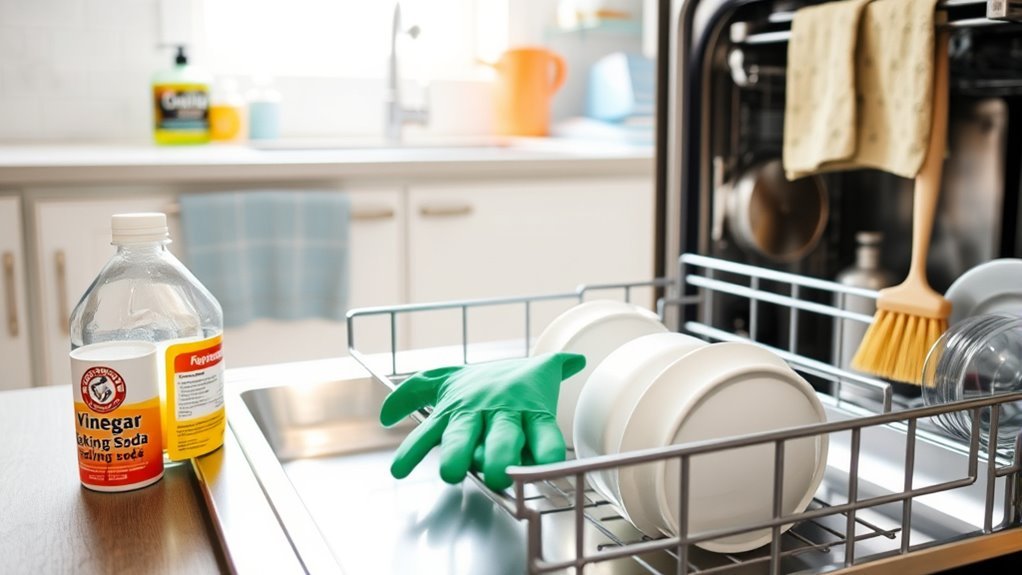
Top 10 Tips for Cleaning Dishwasher
To keep your dishwasher running smoothly, regularly remove and clean the filter to avoid clogs, and clear spray arms of debris for even water flow. Wipe down door seals and edges to prevent mold buildup. Run a vinegar wash monthly and sprinkle baking soda to deodorize. Don’t forget to check racks and scrub interior walls. Maintain the exterior surface for a polished look. Stick with these tips, and you’ll discover even more ways to keep your dishwasher in top shape.
Remove and Clean the Filter
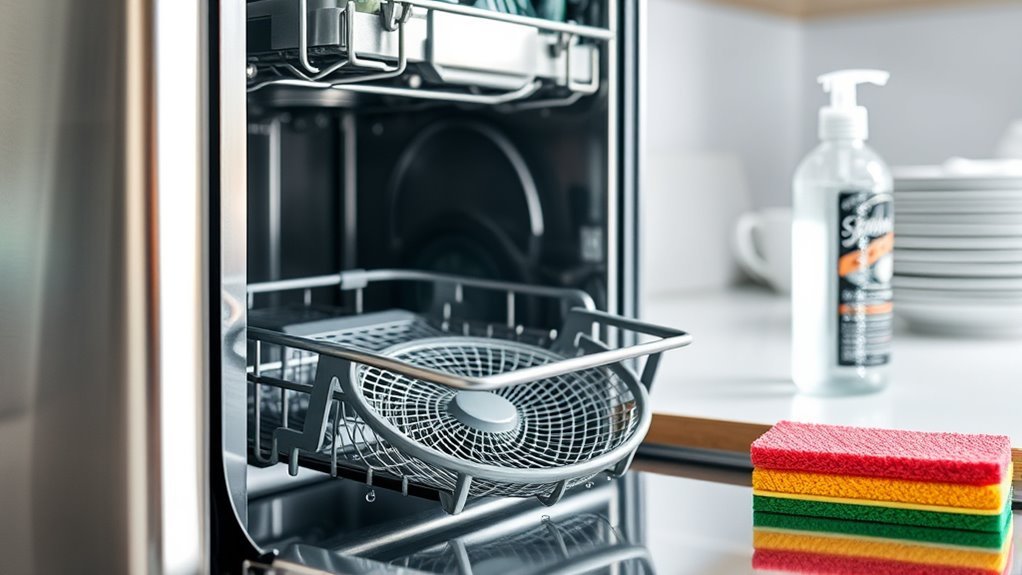
One of the most important steps in keeping your dishwasher running efficiently is to remove and clean the filter regularly. You want your dishwasher to work without a hitch, and filter maintenance tips are key to that freedom. Start by locating the filter at the bottom of your dishwasher, then twist or lift it out carefully. Use warm, soapy water and a soft brush to remove trapped food particles and debris. Avoid harsh tools that could damage the filter. Rinse thoroughly before placing it back. Mastering these simple filter cleaning techniques guarantees your dishwasher stays fresh and clog-free, saving you time and hassle. By staying on top of this routine, you’ll enjoy sparkling dishes and a dishwasher that keeps up with your busy lifestyle.
Inspect and Clear Spray Arms
After cleaning the filter, it’s important to check the spray arms for blockages that can affect your dishwasher’s performance. You want to keep water flowing freely, so inspecting and clearing the spray arms is key to efficient cleaning. Start by removing the spray arms—consult your manual if needed—and look for debris or mineral buildup clogging the holes. Use a toothpick or a small brush to gently clear each nozzle. Rinse the arms under warm water to flush out loosened particles. Regular spray arm maintenance prevents uneven water distribution and keeps your dishwasher running smoothly, giving you the freedom to enjoy spotless dishes without hassle. Incorporate these cleaning techniques into your routine to guarantee your dishwasher stays in top shape.
Wipe Down Door Seals and Edges
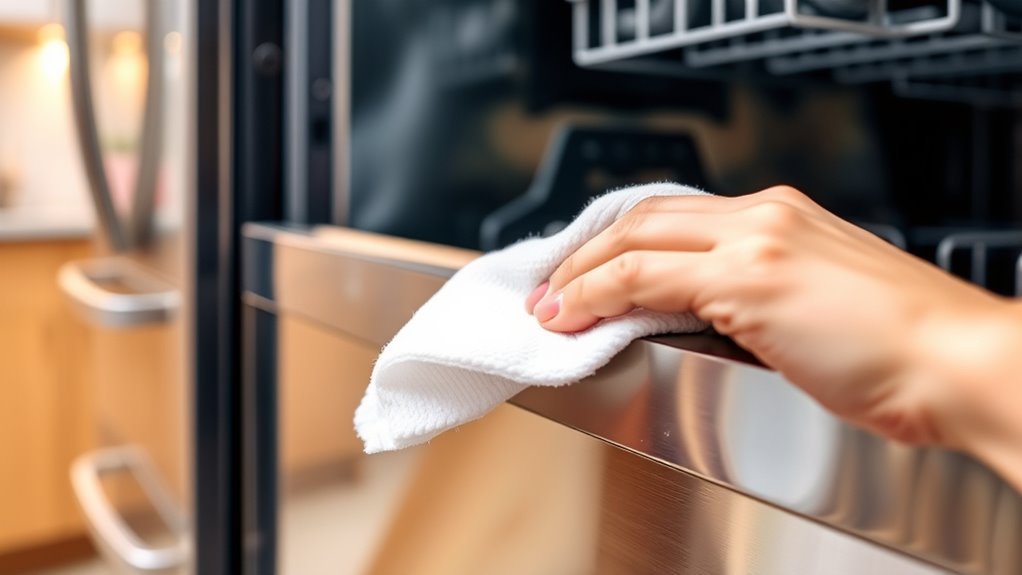
Two key areas that often get overlooked are the door seals and edges of your dishwasher. For effective door seal maintenance, you want to regularly wipe down these rubber seals with a damp cloth to remove grime and prevent mold buildup. This simple step helps keep your dishwasher airtight and working efficiently. When it comes to edge cleaning techniques, pay attention to the crevices where food particles and detergent residue can hide. Use a soft brush or microfiber cloth dipped in warm, soapy water to gently clean these spots. Staying on top of these areas not only extends your dishwasher’s life but also guarantees your dishes come out cleaner. Taking a few minutes for door seal maintenance and edge cleaning techniques frees you from bigger headaches later.
Run a Vinegar Wash Cycle
Running a vinegar wash cycle once a month can make a big difference in keeping your dishwasher fresh and free from buildup. Simply place a cup of white vinegar in a dishwasher-safe container on the top rack and run a hot wash cycle without any dishes. The vinegar benefits include breaking down grease, dissolving mineral deposits, and eliminating odors that soap alone can’t tackle. This natural cleaning method helps maintain your dishwasher’s efficiency, freeing you from worrying about hidden grime and buildup. By incorporating this simple step into your routine, you reclaim control over your appliance’s cleanliness while avoiding harsh chemicals. Embrace the ease and freedom of a vinegar wash cycle—it’s an effortless way to keep your dishwasher running smoothly and smelling fresh.
Use Baking Soda for Deodorizing
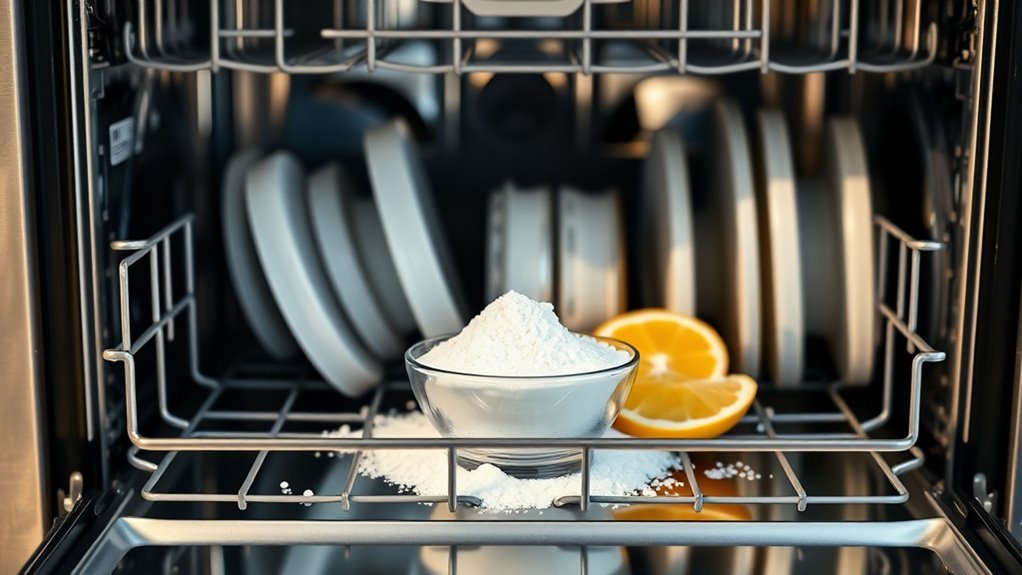
Although vinegar tackles buildup effectively, baking soda is your go-to for deodorizing and brightening your dishwasher. Its natural deodorizing benefits make it perfect for eliminating lingering odors, leaving your machine fresh and inviting. To harness the baking soda benefits fully, sprinkle a cup of it along the bottom of your empty dishwasher. Then run a short, hot water cycle to refresh the interior.
Here are some deodorizing tips to maximize results:
- Use baking soda after a vinegar wash cycle for a complete clean.
- Avoid mixing with bleach or ammonia to prevent harmful fumes.
- Regularly sprinkle baking soda monthly to maintain freshness and brightness.
Embrace this simple step to keep your dishwasher smelling great and running freely.
Clean the Dishwasher Drain
After deodorizing your dishwasher with baking soda, the next step is to verify the drain is clean and free of debris. A clogged drain can cause water to pool, resulting in unpleasant odors and inefficient cleaning. Start by removing the bottom rack to access the drain area. Check for any visible debris that might cause a drain blockage—food particles, broken glass, or other small bits. Carefully remove these obstructions by hand or with a soft brush. For stubborn buildup, you might use a vinegar rinse to break down grease and residue. Taking these steps regularly verifies your dishwasher runs smoothly and prevents costly repairs. By tackling drain blockage through effective debris removal, you maintain your freedom from frustration and enjoy spotless dishes every time.
Check and Clean the Dishwasher Racks
Take out the dishwasher racks and inspect them closely for any damage or buildup. Don’t forget to clean the rack wheels to guarantee they roll smoothly. Finally, wipe down the rack coating to keep it in good condition and prevent rust.
Remove and Inspect Racks
When you remove the racks from your dishwasher, you get a clear view of any hidden grime or damage that might be affecting performance. This step lets you inspect the rack materials—whether coated metal or plastic—for chips or rust that could harm your dishes. Plus, it’s a chance to rethink your rack organization to boost loading efficiency and freedom in arranging your dishes. Look for:
- Cracks or peeling in the rack coating that might cause rust or scratches
- Bent tines that could keep dishes from sitting properly or block spray arms
- Food debris or soap scum stuck in corners that reduce cleaning power
Taking time to remove and inspect racks guarantees a cleaner, more efficient dishwasher tailored to your daily freedom and convenience.
Clean Rack Wheels
Two key steps will keep your dishwasher racks rolling smoothly: checking and cleaning the rack wheels. Regular rack maintenance guarantees your racks glide freely without getting stuck or making noise. Start by inspecting each wheel for grime buildup or damage. Use a soft brush or cloth to scrub away dirt and food particles. After cleaning, apply a bit of wheel lubrication to keep them spinning effortlessly.
| Step | Tool Needed | Tip |
|---|---|---|
| Inspect wheels | Flashlight | Look for cracks or debris |
| Clean wheels | Soft brush/cloth | Remove all grime and buildup |
| Lubricate wheels | Food-safe lubricant | Avoid over-applying |
Keep your racks rolling freely and enjoy the freedom of hassle-free loading!
Wipe Rack Coating
After ensuring your rack wheels move smoothly, it’s important to check the coating on your dishwasher racks. This protective layer prevents rust and keeps your racks sturdy longer. Regular rack maintenance not only extends their life but also maintains the dishwasher’s efficiency. When wiping down the coating, be gentle to avoid peeling or damage.
Here’s how you can take care of the coating protection:
- Use a soft cloth with mild soap to wipe away grime and mineral deposits.
- Avoid abrasive scrubbers or harsh chemicals that can wear down the coating.
- Inspect for chips or cracks; if found, consider using a rack repair kit to prevent rust.
Scrub the Interior Walls
To keep your dishwasher running smoothly, you’ll want to scrub the interior walls regularly. Grab reliable interior scrubbers designed for tight spaces to tackle stubborn grime and residue. Focus on the walls where food particles and soap scum accumulate, as neglecting wall cleaning can lead to unpleasant odors and reduced efficiency. Don’t hesitate to use a bit of baking soda or a gentle cleaner to break down buildup without damaging surfaces. By making interior wall scrubbing a routine, you free yourself from the hassle of deep cleans later and extend your dishwasher’s life. Keeping these walls spotless guarantees every cycle runs clean, giving you the freedom to enjoy spotless dishes without worry. Regular care equals lasting performance.
Maintain the Exterior Surface
Keeping the exterior surface of your dishwasher clean is just as important as maintaining its interior. A spotless exterior not only enhances your kitchen’s look but also prolongs the appliance’s life. To keep that sleek finish, start by wiping down the surface with a gentle cleaner to avoid scratches. Then, apply an exterior polish to restore shine and offer a layer of surface protection. This simple routine keeps your dishwasher looking fresh and guards against daily wear.
- Use a microfiber cloth for streak-free cleaning
- Avoid abrasive pads that can damage the surface
- Apply exterior polish monthly to maintain shine and protection
Schedule Regular Deep Cleaning
You should plan a deep clean for your dishwasher every one to three months, depending on how often you use it. Having the right supplies, like dishwasher cleaner, vinegar, and a soft brush, makes the process easier and more effective. Sticking to this schedule helps keep your dishwasher running smoothly and prevents buildup.
Frequency Recommendations
Regularly scheduling deep cleanings for your dishwasher guarantees it runs efficiently and lasts longer. To maintain peak performance, you’ll want to follow a clear cleaning schedule that fits your usage patterns. Here’s a simple frequency guide to keep freedom from hassle:
- Monthly: Run a cleaning cycle with a dishwasher cleaner to remove buildup.
- Quarterly: Check and clean filters and spray arms to prevent clogs.
- Annually: Inspect door seals and perform a thorough deep clean to extend your dishwasher’s life.
Sticking to this frequency guide helps you avoid unexpected breakdowns and keeps your appliance fresh without eating up your time. With a smart cleaning schedule, you gain the freedom to enjoy spotless dishes without the worry of maintenance issues sneaking up on you.
Essential Cleaning Supplies
Although a deep clean might seem challenging, having the right supplies on hand makes the process straightforward and efficient. To keep your dishwasher fresh and running smoothly, you’ll want to gather essential cleaning tools and consider eco friendly options that protect both your appliance and the environment.
| Cleaning Tools | Eco Friendly Options |
|---|---|
| Soft brush | Vinegar |
| Microfiber cloth | Baking soda |
| Toothpick or needle | Lemon juice |
With these supplies, you can easily remove grime, unclog spray arms, and neutralize odors without harsh chemicals. By choosing eco friendly options, you maintain your dishwasher’s performance while embracing a cleaner, greener lifestyle—giving you the freedom to enjoy a spotless kitchen effortlessly.
Frequently Asked Questions
Can I Use Bleach to Clean My Dishwasher?
You might be wondering if you can use bleach to clean your dishwasher. While bleach is a strong cleaner, it’s generally not recommended because it can damage rubber seals and cause corrosion. Instead, you can explore bleach alternatives like white vinegar or baking soda, which are gentler and effective. For dishwasher maintenance, sticking to these natural options helps keep your appliance running smoothly without risking harm. You’ve got freedom to choose safer methods!
How Often Should I Replace My Dishwasher Detergent?
You should replace your dishwasher detergent based on its type and storage conditions. Powder and liquid detergents typically last around 6 months, while pods have a longer shelf life if kept dry. To keep your detergent effective, store it in a cool, dry place, sealed tightly to avoid moisture. Don’t stress about exact dates—trust your senses and swap out old detergent if it clumps or smells off. Keep things simple and enjoy your freedom!
Is It Safe to Run the Dishwasher When It’s Half Full?
You might’ve heard running a half-full dishwasher wastes energy, but that’s not always true. Modern dishwashers adjust water use and cycle length based on load size, so running it half full doesn’t necessarily hurt dishwasher efficiency. In fact, waiting to fill it might use more energy overall. So, if you want freedom from clutter and quick cleanups, running it half full is usually safe and won’t spike energy consumption much.
What Types of Dishes Should I Avoid Putting in a Dishwasher?
You’ll want to avoid putting non dishwasher safe items in your machine, like certain plastics that can warp or release chemicals. Fragile items, such as delicate glassware, hand-painted dishes, or antique china, also aren’t great candidates—they might chip or crack. When you’re aiming for freedom from worry, it’s best to hand wash these to keep them looking great. Stick to sturdy, dishwasher-safe dishes to keep things easy and carefree.
Can Hard Water Damage My Dishwasher?
Imagine mineral deposits slowly building up like stubborn sand dunes inside your dishwasher. That’s the hard water effects at work, quietly clogging spray arms and heating elements. If you want your dishwasher to run smoothly and last longer, regular dishwasher maintenance is key. Using a water softener or descaling product helps you break free from the grip of hard water, keeping your appliance efficient and your dishes sparkling clean.