Top 10 Tips for Cleaning Kitchen
To keep your kitchen spotless, start by decluttering and organizing items for easy access. Use eco-friendly cleaners suited to your surfaces and clean as you cook to avoid big messes. Wipe countertops daily, deep clean your sink regularly, and maintain a germ-free floor. Properly dispose of food waste and sanitize cutting boards and utensils to prevent bacteria. Set a weekly deep-clean routine to stay ahead of grime. With simple habits, you’ll enjoy an effortlessly clean and inviting kitchen environment.
Declutter and Organize Your Kitchen Space

Before you start cleaning, take a moment to declutter and organize your kitchen space. When you clear out unnecessary items, you create freedom to move and clean efficiently. Focus on optimizing your kitchen storage by grouping similar items together—think pots with lids, spices in one rack, and baking essentials in a designated drawer. Use smart organization techniques like vertical stacking or clear containers to maximize space and visibility. This way, you won’t waste time searching or dealing with clutter while cleaning. Keeping your kitchen streamlined not only makes cleaning easier but also lets you enjoy cooking without stress. Embrace these simple steps, and your kitchen will feel more open and inviting, giving you the freedom to focus on what truly matters.
Use the Right Cleaning Products for Different Surfaces
Because kitchens have a variety of surfaces, you’ll want to choose cleaning products that match each one to avoid damage and get the best results. Using eco friendly cleaners tailored for specific materials helps you maintain your space without harsh chemicals. For example, a gentle, natural solution works wonders on wood, while a stronger, grease-cutting product suits stainless steel. Knowing surface specific techniques lets you clean efficiently—like avoiding abrasive scrubs on glass or using microfiber cloths on granite countertops. This approach not only protects your kitchen but also gives you freedom from worrying about stains or wear. By selecting the right cleaners for each surface, you simplify your routine and keep your kitchen fresh, safe, and inviting without compromising your values or your time.
Clean as You Go During Cooking
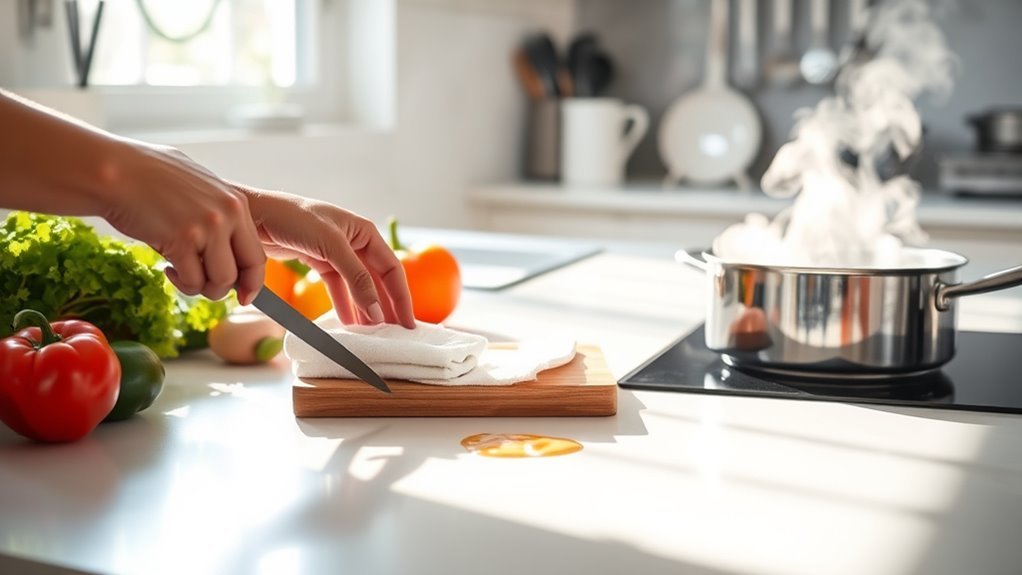
While you’re cooking, cleaning as you go can make a huge difference in keeping your kitchen organized and reducing stress. This approach boosts kitchen efficiency and lets you enjoy meal prep without a mountain of dishes afterward. By tidying up bit by bit, you free yourself from a chaotic cleanup and stay in control of your space.
Here are some simple ways to clean as you go:
- Rinse and load dirty dishes into the dishwasher during downtime.
- Wipe spills and splatters immediately to prevent stains.
- Use a bowl for scraps to toss directly into the trash.
- Keep a damp cloth handy to quickly wipe your hands or surfaces.
This habit keeps your kitchen fresh and your cooking flow smooth, giving you more freedom to create.
Wipe Down Countertops Daily
Keeping your workspace clean as you cook makes wiping down countertops afterward much easier. Incorporating surface sanitization into your daily routine prevents buildup and keeps your kitchen a safe, inviting space. Just a quick wipe down with a gentle cleaner guarantees germs don’t linger and your freedom to cook without worry stays intact.
Here’s a simple guide to streamline your daily countertop care:
| Time of Day | Recommended Cleaner | Key Benefit |
|---|---|---|
| Morning | Mild soap & water | Removes overnight dust |
| After Meals | Disinfectant spray | Kills bacteria |
| Evening | Vinegar solution | Natural deodorizer |
Stick to this routine, and your countertops will stay spotless, letting you enjoy your kitchen without hassle.
Deep Clean Your Sink Regularly
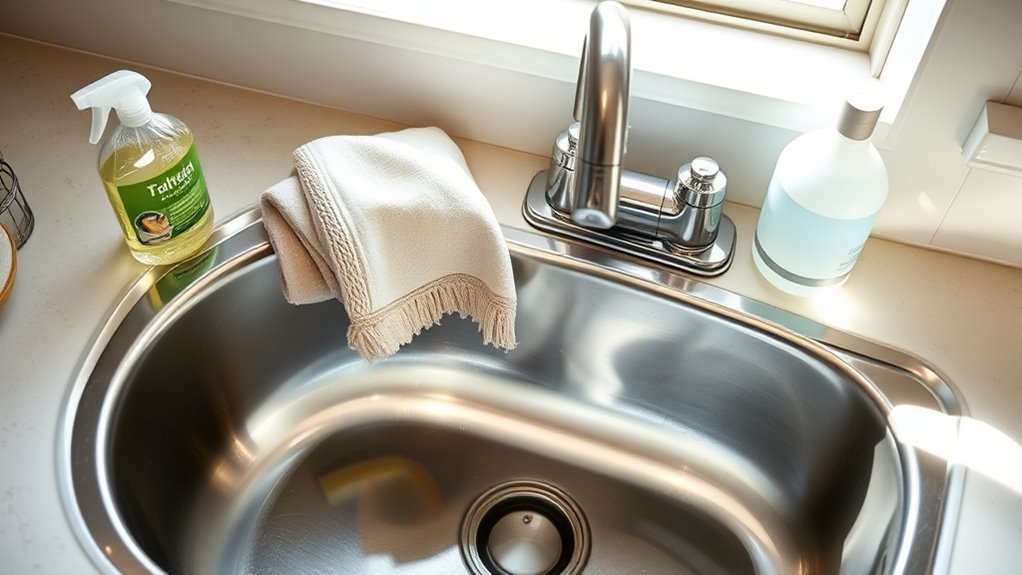
To keep your sink fresh, start by removing any food debris stuck around the drain. Then, disinfect it using vinegar to kill germs naturally. Finally, give the drain area a good scrub to prevent buildup and odors.
Remove Food Debris
Scrape away leftover food particles from your sink daily to prevent buildup and odors. Tackling food residue regularly frees you from stubborn grime and keeps your kitchen fresh. Use these smart cleaning techniques to stay on top:
- Rinse the sink after each use to wash away loose debris.
- Use a brush or sponge to scrub areas where food tends to cling.
- Don’t forget the drain—remove trapped bits to avoid clogs.
- Wipe down the sink edges and faucet base to catch hidden crumbs.
Disinfect With Vinegar
Although rinsing removes debris, it won’t kill bacteria lurking in your sink. To truly deep clean, reach for vinegar—a natural disinfectant with impressive vinegar benefits. It effortlessly breaks down grime, eliminates odors, and wipes out germs without harsh chemicals. Just spray undiluted white vinegar all over your sink, let it sit for 10 minutes, then rinse with warm water. This simple step guarantees your sink stays hygienic and fresh, giving you freedom from worries about contamination. Vinegar’s power lies in its acidity, which disrupts bacteria and keeps your kitchen safe. Using vinegar means you’re choosing an eco-friendly, cost-effective way to maintain cleanliness. Make disinfecting with vinegar a regular part of your routine, and enjoy a spotless sink that supports your healthy, independent lifestyle.
Scrub Drain Area
After disinfecting with vinegar, don’t forget the drain area—it’s a hotspot for buildup and odors. Keeping it clean is key to smooth drain maintenance and effective odor elimination. You want to free yourself from that stubborn gunk slowing things down and causing unpleasant smells. Here’s how to tackle it:
- Use a stiff brush or an old toothbrush to scrub around the drain edges and inside the stopper.
- Pour baking soda followed by hot water to break down grease and grime naturally.
- Remove and clean the drain cover regularly to prevent buildup.
- Rinse thoroughly to wash away loosened debris and freshen the area.
Stick to these habits, and your sink’s drain will stay fresh, clear, and odor-free, giving you the freedom to enjoy your kitchen without worry.
Maintain Your Appliances With Routine Cleaning
To keep your kitchen appliances running smoothly, make it a habit to wipe them down regularly. Setting up a deep clean schedule helps tackle buildup and extends their lifespan. With consistent care, your appliances will stay efficient and looking great.
Regular Appliance Wipe-Downs
Keeping your kitchen appliances clean doesn’t have to be a chore if you make it a regular habit. Regular appliance wipe-downs are essential for kitchen appliance maintenance, helping you avoid buildup and extend your appliances’ lifespan. By using effective cleaning techniques, you save time and keep your space looking fresh.
Try these quick tips for routine wipe-downs:
- Use a microfiber cloth and mild detergent for surfaces.
- Wipe spills immediately to prevent stains.
- Clean handles, buttons, and touchscreens regularly.
- Avoid abrasive cleaners that can damage finishes.
Incorporating these simple steps into your routine gives you freedom from deep scrubbing sessions later and keeps your kitchen running smoothly. Regular care means your appliances stay efficient and your kitchen stays inviting.
Deep Clean Schedule
While regular wipe-downs help maintain your appliances day-to-day, setting up a deep clean schedule guarantees they stay in top condition over time. By committing to deep cleaning every few months, you prevent buildup that can reduce efficiency and cause breakdowns. Create a cleaning checklist tailored to each appliance—oven, fridge, dishwasher—to keep track of what needs attention and when. This checklist helps you stay organized and makes sure no task gets overlooked, giving you more freedom from unexpected repairs. Deep cleaning may take a bit more effort, but it’s a smart investment that saves you time and money long-term. Stick to your routine, and your kitchen appliances will reward you with consistent performance and a longer lifespan.
Keep the Floor Spotless and Germ-Free
A clean kitchen floor not only looks inviting but also helps prevent the spread of germs and bacteria. To keep your floor spotless and support effective germ prevention, you’ll want a practical approach to floor cleaning that fits your lifestyle. Here’s how you can keep your kitchen floor fresh and safe:
- Sweep or vacuum daily to remove crumbs and dirt before they settle.
- Mop with a disinfectant solution at least twice a week to kill bacteria.
- Wipe up spills immediately to avoid sticky spots that attract germs.
- Use washable floor mats near the sink and stove to catch debris and moisture.
Stick to these simple habits, and you’ll enjoy a cleaner kitchen floor that supports your freedom from worry and grime.
Properly Dispose of Food Waste and Garbage
Properly disposing of food waste and garbage is essential for maintaining a hygienic kitchen and preventing unpleasant odors. You want your space to feel fresh, not trapped by lingering smells or clutter. Start by composting food scraps like vegetable peels and coffee grounds—this not only reduces waste but also gives you freedom from constantly emptying your trash. Separate your recycling containers clearly, making it easy to sort plastics, glass, and paper. This simple habit keeps your kitchen organized and supports a cleaner environment. Remember, a well-managed disposal routine saves you time and headaches, letting you enjoy your kitchen without the hassle of unwanted mess or smells. Keep it simple, stay consistent, and your kitchen will thank you.
Sanitize Cutting Boards and Utensils
You’ll want to make sure your cutting boards and utensils are properly sanitized to keep harmful bacteria at bay. Using safe cleaning solutions like diluted bleach or vinegar can be very effective. This simple step helps prevent cross-contamination and keeps your kitchen safer.
Effective Sanitizing Methods
While it might seem straightforward, sanitizing cutting boards and utensils is essential to prevent cross-contamination and foodborne illnesses. You want methods that are effective yet easy, giving you the freedom to focus on what matters—cooking great meals. Consider these top sanitizing techniques:
- Steam cleaning: harness high-temperature steam to kill bacteria without harsh chemicals.
- UV sanitization: use UV light devices designed for kitchen tools to zap germs quickly.
- Dishwasher: run cutting boards and utensils through a hot cycle for thorough cleaning.
- Air dry: let items dry completely before storage to avoid moisture buildup that breeds bacteria.
Safe Cleaning Solutions
How can you guarantee your cutting boards and utensils stay germ-free without using harsh chemicals? Opt for eco friendly cleaners that are both effective and gentle on your health and the environment. Natural disinfectants like white vinegar, hydrogen peroxide, and lemon juice work wonders to sanitize surfaces without leaving toxic residues. After washing your cutting boards and utensils with hot, soapy water, apply a natural disinfectant and let it sit for a few minutes before rinsing. This simple step assures bacteria are eliminated while preserving your freedom from synthetic chemicals. Embracing these safe cleaning solutions means you can maintain a spotless kitchen, protect your family, and support sustainability—all without compromising your lifestyle or values.
Preventing Cross-Contamination
Since cutting boards and utensils come into contact with various foods, it’s crucial to sanitize them properly to prevent cross-contamination. When you handle food, keeping these tools clean guarantees harmful bacteria don’t transfer between raw and cooked items. Follow these tips for safe food handling and storage:
- Use separate cutting boards for meats and veggies to avoid mixing juices.
- Wash utensils and boards with hot, soapy water immediately after use.
- Disinfect cutting surfaces with a bleach solution or vinegar to kill lingering germs.
- Store sanitized boards and utensils in a dry, clean area to maintain safe storage conditions.
Establish a Weekly Deep-Cleaning Schedule
To keep your kitchen spotless and hygienic, you’ll want to set aside time each week for a thorough deep clean. Establishing a weekly deep-cleaning schedule guarantees you stay on top of dirt and grime that daily tidying might miss. Start by identifying key tasks like scrubbing countertops, cleaning appliances inside and out, and tackling the floors. Use kitchen cleaning scheduling tips such as picking a consistent day and blocking out dedicated time to prevent procrastination. By sticking to this routine, you’ll free yourself from overwhelming messes and keep your kitchen a safe, inviting space. Remember, scheduling this deep clean is about creating freedom—less stress, more time to enjoy your kitchen without the constant worry of hidden dirt.
Frequently Asked Questions
How Often Should I Replace Kitchen Sponges?
You should replace your kitchen sponge every one to two weeks to maintain proper sponge hygiene. Sponges can harbor bacteria quickly, so sticking to a regular replacement schedule keeps your kitchen safe and fresh. If you notice any foul smells or wear, swap it out sooner. Staying on top of this simple routine gives you the freedom to cook and clean without worrying about germs lurking in your sponge.
What’S the Best Method to Clean Greasy Oven Vents?
Oh sure, just wave a magic wand and watch that greasy oven vent sparkle! Since that’s not happening, you’ve gotta embrace grease removal techniques like soaking the vents in hot, soapy water mixed with vinegar or baking soda. Scrub with an old toothbrush to blast away stubborn gunk. Freedom means not choking on kitchen fumes, so give your oven vent cleaning the attention it deserves — your lungs will thank you.
Can Natural Cleaning Products Be as Effective as Chemical Ones?
You might wonder if natural alternatives can match the effectiveness of chemical cleaners. The truth is, natural products often hold their own, especially for everyday grime and grease. While they may require a bit more elbow grease or time, their safety and eco-friendliness make them appealing. When you weigh effectiveness comparison, it’s about balancing power with peace of mind, letting you clean freely without harsh chemicals controlling your space.
How Do I Remove Hard Water Stains From My Kitchen Faucet?
Hard water stains on your faucet can feel like stubborn chains holding you back from a gleaming kitchen. To break free, soak a cloth in a vinegar solution and wrap it around the stained area for about 30 minutes. Then, sprinkle baking soda over the spot and gently scrub with a soft brush. This natural combo dissolves mineral buildup, letting your faucet shine without harsh chemicals, giving you the freedom to enjoy a fresh, clean space.
What’S the Safest Way to Clean Kitchen Drains?
When it comes to the safest way to clean kitchen drains, you’ll want to focus on gentle drain maintenance. Avoid harsh chemicals and instead use natural solutions like baking soda and vinegar. Grab some basic cleaning tools like a drain brush or a plunger to tackle clogs without damaging pipes. Regular upkeep keeps your drains flowing freely, giving you more freedom from blockages and plumbing headaches.