Using Essential Oils to Clean Grease
You can clean grease effectively using essential oils, which naturally break down oily grime without harsh chemicals. Oils like lemon, orange, eucalyptus, and rosemary work well to dissolve grease and leave fresh scents. Simply mix 10-15 drops of your chosen essential oil with a base like vinegar or castile soap, spray on the surface, and wipe with a microfiber cloth. Be sure to dilute properly to avoid skin irritation. Keep exploring and you’ll find even better tips for tough grime removal.
How Essential Oils Break Down Grease
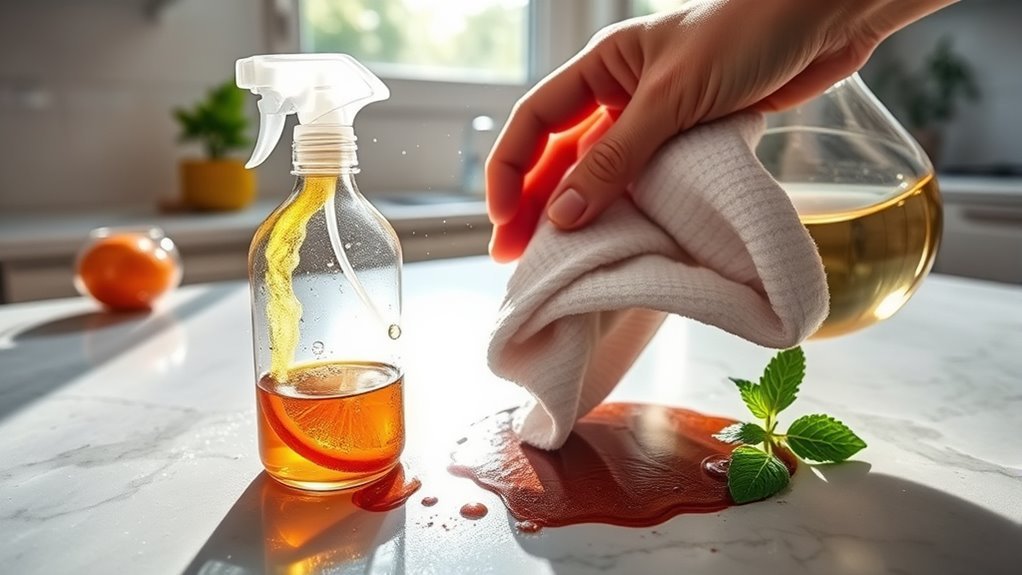
Although it might seem surprising, essential oils are surprisingly effective at breaking down grease because of their natural chemical properties. When you understand grease composition, you’ll see it’s mainly made of fats and oils that cling stubbornly to surfaces. Essential oils contain molecules that interact with these grease components on a chemical level, disrupting their structure. These oil interactions allow the essential oils to penetrate and dissolve grease, breaking it into smaller particles that are easier to wipe away. By harnessing this natural power, you gain a cleaning method that’s both efficient and free from harsh chemicals. This approach offers you the freedom to clean effectively while staying connected to nature’s solutions.
Top Essential Oils for Grease Removal
When it comes to cutting through grease, citrus oils like lemon and orange are your best friends because of their natural degreasing power. You’ll also find herbaceous oils such as rosemary and eucalyptus effective for breaking down stubborn grime. Let’s explore how these oils work and why they’re so great for grease removal.
Citrus Oils Benefits
Citrus oils are among the most effective natural solutions for tackling grease. Their unique citrus oil properties, like powerful degreasing compounds and fresh scents, make them ideal for freeing your space from stubborn buildup. When you use citrus oil applications, you’re not just cleaning—you’re embracing a chemical-free, liberating approach to maintaining your home.
Here’s why you’ll want to reach for citrus oils:
- Powerful Degreasing: Citrus oils break down grease easily, saving you time and effort.
- Natural Antibacterial: They help sanitize surfaces while you clean.
- Refreshing Aroma: Their invigorating scent replaces harsh chemical odors, making cleaning a pleasure.
Herbaceous Oils Effectiveness
Since you’re looking for effective natural cleaners beyond citrus, herbaceous oils offer a powerful alternative for cutting through grease. Their herbaceous properties make them ideal for breaking down stubborn grime while leaving a crisp scent. You can also boost their effectiveness by creating oil combinations tailored to your cleaning needs. Here are some top herbaceous oils and their benefits:
| Essential Oil | Herbaceous Properties |
|---|---|
| Rosemary | Antimicrobial, grease-cutting |
| Eucalyptus | Degreasing, invigorating scent |
| Tea Tree | Antibacterial, strong cleaner |
Mixing these oils can amplify grease removal and keep your space naturally clean. Embrace freedom from harsh chemicals by harnessing these natural powerhouses.
Preparing Essential Oil Cleaning Solutions
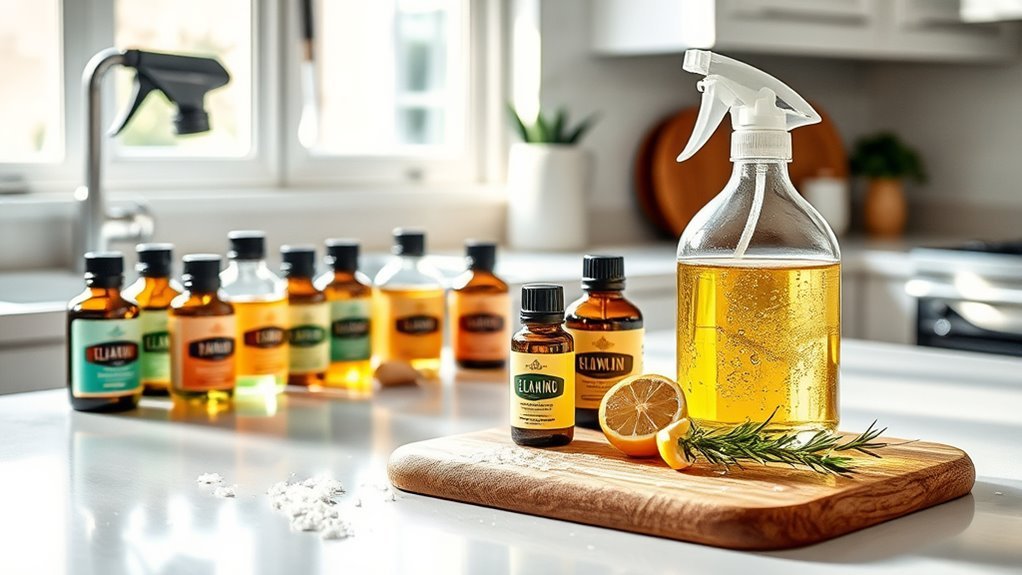
Before you start mixing, make sure you have all the essential oils and base ingredients ready for your cleaning solution. Creating the perfect blend means understanding essential oil combinations and cleaning solution ratios that work best against grease. Freedom to customize your mix means you control strength and scent.
Gather your oils and bases first to craft the ideal grease-fighting blend tailored to your scent and strength preferences.
Here’s a quick guide to get you started:
- Choose oils with strong degreasing properties like lemon, eucalyptus, or rosemary.
- Use a base like white vinegar or castile soap to amplify cleaning power.
- Follow a ratio of about 10-15 drops of essential oil per cup of base liquid for effective yet safe cleaning.
With these steps, you’ll craft a potent, natural cleaner tailored to your needs.
Application Techniques for Stubborn Grease
When tackling stubborn grease, how you apply your essential oil cleaner can make all the difference. Start by using spray bottle techniques to evenly distribute the solution on greasy surfaces, ensuring every nook is covered without soaking it. Let it sit for a few minutes to break down the grime, then grab a microfiber cloth. These cloths are your best friend—they trap grease and oils without spreading them around. Use firm, circular motions to lift the residue, switching to a clean side of the cloth as needed. Repeat spraying and wiping until the surface shines. This method not only maximizes the power of your essential oils but also gives you the freedom to clean efficiently without harsh chemicals or scrubbing endlessly.
Safety Tips When Using Essential Oils for Cleaning
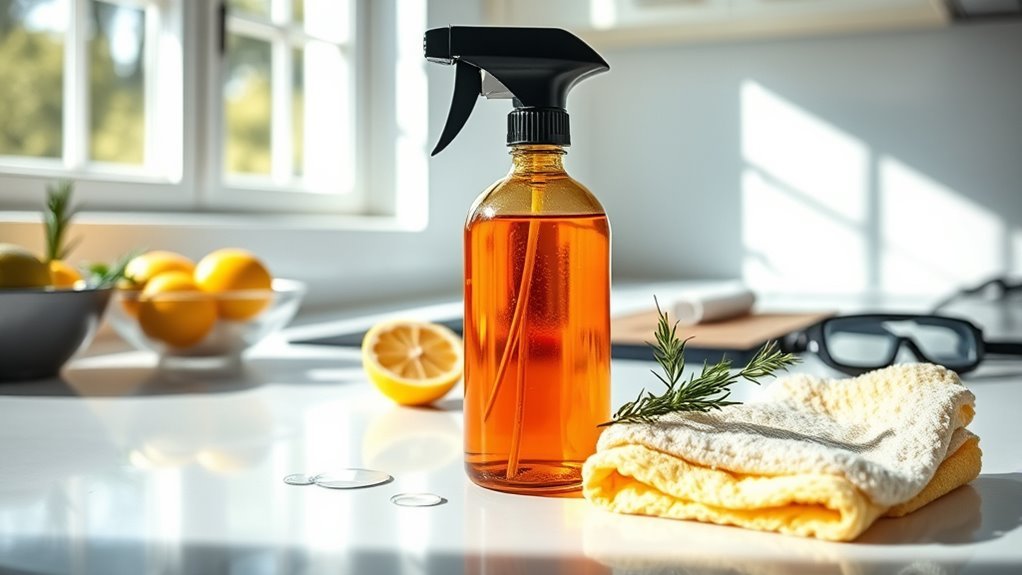
When using essential oils for cleaning, it’s important to dilute them properly to avoid irritation. You should never apply undiluted oils directly to your skin since they can cause burns or allergic reactions. Taking these precautions guarantees your cleaning routine stays both effective and safe.
Dilution Guidelines
Three key dilution ratios can help you safely use essential oils for cleaning without damaging surfaces or irritating your skin. Understanding these dilution ratios guarantees the right oil concentration, giving you freedom to clean effectively and confidently.
- 1% Dilution: Use 6 drops of essential oil per 1 ounce of carrier (like water or vinegar). Perfect for delicate surfaces.
- 2-3% Dilution: Add 12-18 drops per ounce for general-purpose cleaning—stronger but still safe.
- 5% Dilution: Use 30 drops per ounce for tough grease spots, but test a small area first to avoid damage.
Following these guidelines allows you to harness the power of essential oils while protecting your home and health.
Skin Contact Precautions
Although essential oils can be powerful cleaning agents, you should always take precautions to avoid skin irritation or allergic reactions. Before diving in, test a small amount of the diluted oil on your wrist to check for any sensitivity. If you notice redness, itching, or swelling, steer clear of that oil to prevent allergy reactions. Always wear gloves when handling concentrated oils, especially if you have sensitive skin. Avoid prolonged contact, and never apply essential oils directly onto your skin without proper dilution. If you do experience skin irritation, rinse the area immediately with cool water and discontinue use. By respecting these skin contact precautions, you can enjoy the freedom of natural cleaning without compromising your skin’s health or comfort.
Benefits of Using Essential Oils Over Chemical Cleaners
Because essential oils come from natural sources, they offer a safer alternative to harsh chemical cleaners that can irritate your skin or damage surfaces. When you choose essential oils, you’re embracing eco friendly alternatives that respect both your health and the environment. Plus, they often serve as cost effective solutions, helping you save money over time.
Essential oils provide a natural, safe, and eco-friendly cleaning option that protects your health and saves money.
Here are three key benefits you’ll appreciate:
- Gentle yet effective: Essential oils break down grease without harmful residues.
- Versatile use: You can clean various surfaces without worry of damage.
- Pleasant natural scents: They leave your space smelling fresh without synthetic chemicals.
Frequently Asked Questions
Can Essential Oils Damage Kitchen Surfaces?
Like steering through a labyrinth, you need to be cautious with essential oils on kitchen surfaces. You shouldn’t assume all surfaces can handle their power—surface compatibility is key. If you use too high an oil concentration, you risk damage, like a spell gone wrong. To keep your kitchen looking free and flawless, always test a small area first and dilute oils properly. That way, you can enjoy their magic without worry.
How Long Do Essential Oil Cleaning Solutions Last?
You’ll find that essential oil cleaning solutions generally have a shelf life of about 6 months to a year, depending on the oils used and how you store them. To keep your mix fresh and effective, store it in a dark glass bottle away from heat and sunlight. This way, you maintain its power and enjoy the freedom to clean naturally without worrying about your solution going bad too quickly.
Are Essential Oils Safe for Use Around Pets?
You might think essential oils are as harmless as a breeze, but when it comes to pet safety, you’ve got to be super cautious. Some oils can cause serious oil toxicity in cats and dogs, risking their health. If you want to keep your furry friends safe while enjoying freedom with natural scents, always research each oil’s effects and never leave open bottles around pets. Their well-being comes first!
Can Essential Oils Remove Old, Baked-On Grease?
You might find that essential oils offer some grease removal benefits, but they’re not always the best for tough, old, baked-on grease. Their cleaning effectiveness shines more with fresh or light grease stains. If you want real freedom from stubborn grime, combining essential oils with other natural cleaners like vinegar or baking soda can boost your results. So, don’t rely solely on oils for heavy-duty cleaning, but they can definitely help lighten the load.
Do Essential Oils Leave a Residue After Cleaning?
You might wonder if essential oils leave a residue after cleaning. The truth is, their residue comparison to conventional cleaners is minimal, especially when diluted properly. Their cleaning effectiveness shines in breaking down grime without harsh chemicals, letting you enjoy a fresher, cleaner space without sticky leftovers. So, if you’re aiming for a natural, residue-free clean that gives you freedom from synthetic residues, essential oils can be a great choice.