Washing Baby Items Without Damage
To wash baby items without damage, choose a gentle, hypoallergenic detergent free from dyes and fragrances. Sort clothes by color and fabric type to prevent fading and wear. Use cold water and gentle wash cycles, avoiding machine overload. Clean toys and feeding gear with mild soaps, rinse well, and air dry to avoid heat damage. Proper care keeps items safe and fresh, and exploring these simple steps can help you keep your baby’s belongings in great shape every time.
Choosing the Right Detergent for Baby Items
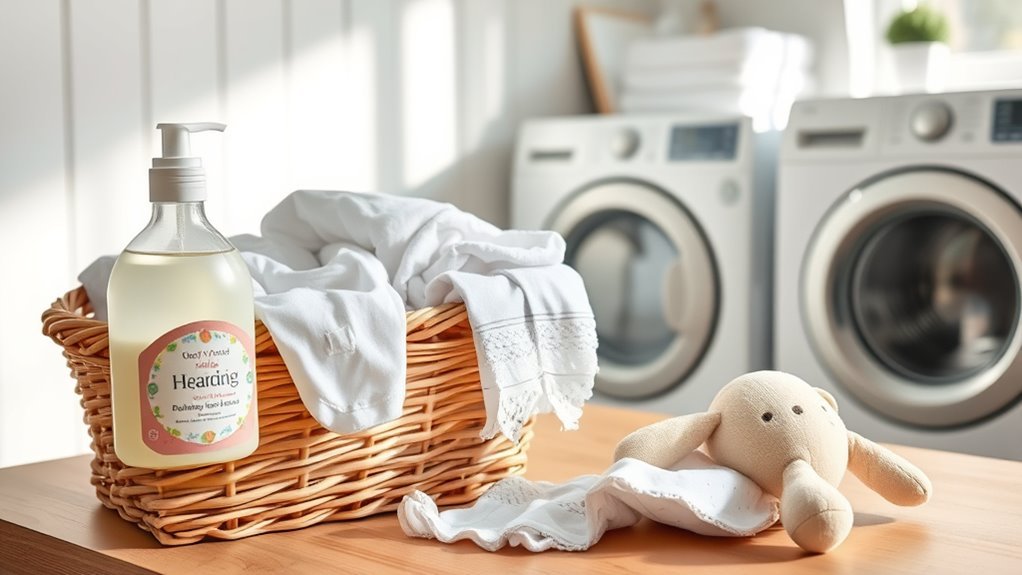
How do you pick the best detergent for your baby’s clothes and items? You want something gentle yet effective, freeing you from worries about irritation or harsh chemicals. Opt for natural alternatives that skip synthetic fragrances and dyes, giving your baby’s skin the pure care it deserves. Hypoallergenic options are your go-to, especially if your little one has sensitive skin or allergies. These detergents minimize the risk of rashes and discomfort, so you can wash with confidence. Remember, choosing the right detergent isn’t about complexity—it’s about simplicity and safety. By selecting products designed specifically for babies, you’re embracing a lifestyle that values freedom from harmful ingredients and embraces peace of mind in every wash. Your baby deserves nothing less.
Sorting Baby Clothes and Accessories Before Washing
Before you toss your baby’s clothes and accessories into the wash, it’s important to sort them properly to guarantee the best cleaning results and prevent damage. Start with color sorting: separate whites, pastels, and darker shades to avoid color bleeding. This simple step keeps your baby’s clothes vibrant and fresh. Next, consider fabric types. Group together similar fabrics like cottons, synthetics, and blends so each load gets the right wash cycle. This way, delicate knits won’t get tangled with sturdier items, preserving their softness and shape. Sorting also helps you avoid overloading the machine, giving your baby’s clothes the freedom to move and get clean. Taking these few minutes guarantees your baby’s wardrobe stays safe and spotless every time.
Best Washing Techniques for Delicate Fabrics
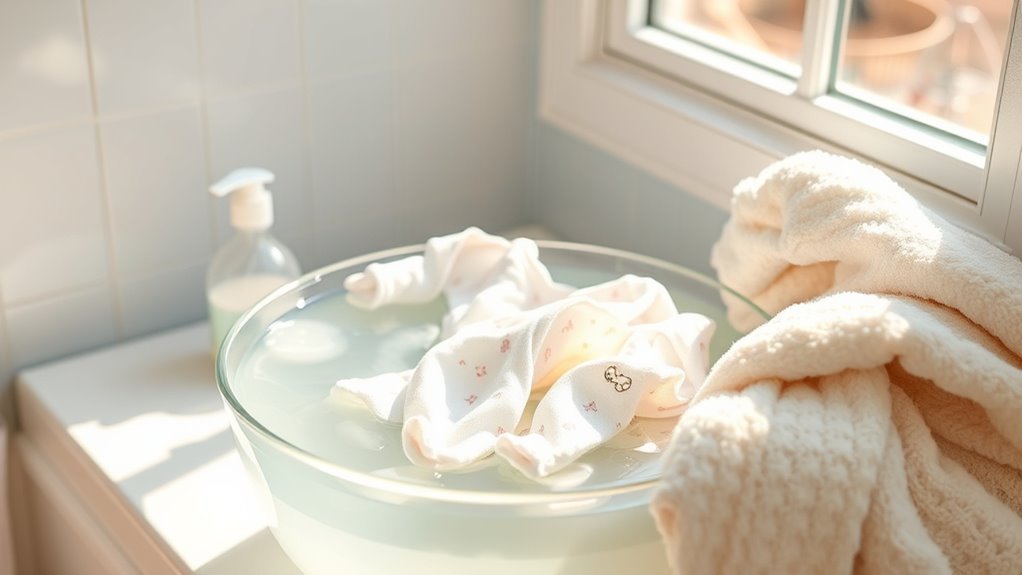
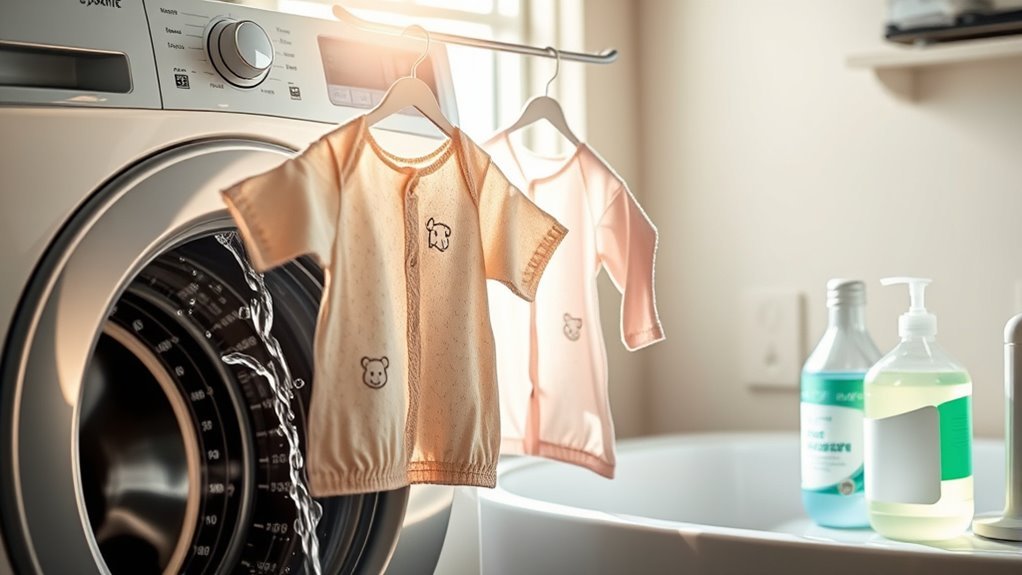
When washing delicate baby fabrics, you’ll want to choose a gentle detergent that’s free from harsh chemicals. Using cold water helps prevent shrinking and color fading, keeping items looking fresh. Sometimes, hand washing is the safest option to protect those soft, sensitive materials.
Gentle Detergent Selection
Why choose a gentle detergent for your baby’s delicate fabrics? Because these tiny clothes deserve care that protects without harsh chemicals. Opting for detergents with natural ingredients guarantees the fabric stays soft and safe against your baby’s sensitive skin. You want hypoallergenic options that minimize irritation and free your little one from unnecessary exposure to allergens. This choice gives you the freedom to wash confidently, knowing you’re preserving the integrity of each garment while keeping your baby comfortable. Avoid detergents loaded with dyes or fragrances—they might seem tempting but can cause damage or discomfort. By selecting gentle detergents, you embrace a washing routine that respects both your baby’s needs and your desire for simplicity and safety in every wash.
Cold Water Usage
Using cold water for washing your baby’s delicate fabrics is one of the simplest ways to protect their clothes and skin. Choosing the right washing temperature matters, and cold water benefits go beyond just saving energy—it helps maintain fabric softness and prevents color fading. When you stick to cold water, you’re minimizing wear and tear, keeping those tiny outfits looking fresh longer. Here’s why you should consider cold water usage:
- Preserves the integrity of delicate fibers
- Reduces the risk of shrinking or stretching
- Helps maintain bright and vibrant colors
- Lowers the chance of irritating your baby’s sensitive skin
Hand Wash Methods
Cold water is gentle on fabrics, but sometimes delicate baby items need even more care than a machine wash can provide. When you embrace hand washing techniques, you’re in control, ensuring your baby’s garments stay soft and intact. Here’s a quick guide to effective baby garment care using hand wash methods:
| Step | Action | Tip |
|---|---|---|
| 1. Soak | Use cold water and mild soap | Avoid harsh detergents |
| 2. Gently Rub | Focus on stained areas | Don’t scrub vigorously |
| 3. Rinse | Rinse thoroughly | Use clean cold water |
| 4. Dry | Lay flat to air dry | Keep away from direct sun |
This hands-on approach lets you preserve delicate fabrics while giving your baby’s clothes the freedom to stay fresh and comfortable.
Proper Care for Baby Toys and Soft Items
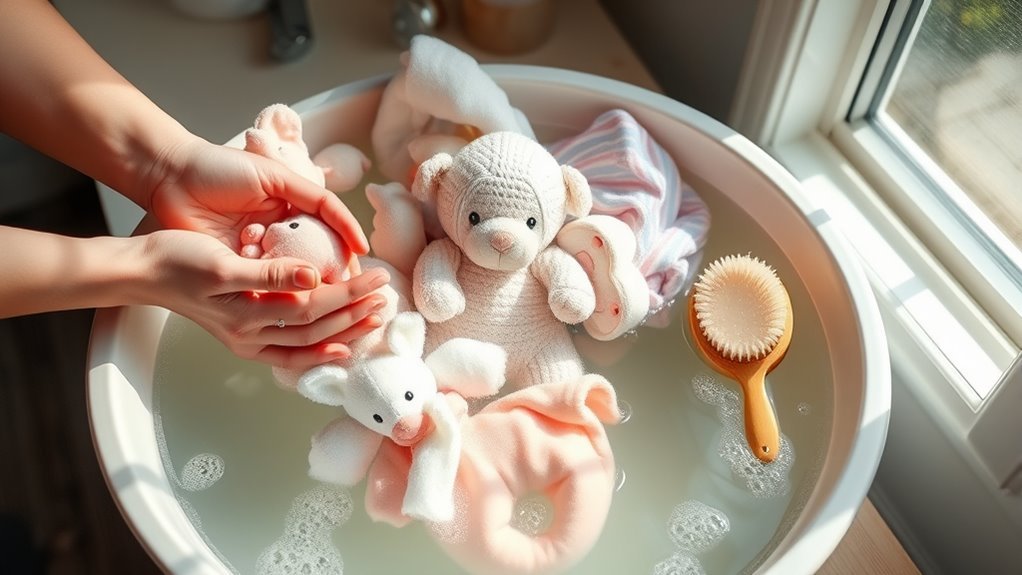
When cleaning your baby’s toys and soft items, it’s important to use safe techniques that won’t damage them. You’ll want to choose gentle detergents that are free from harsh chemicals. Plus, drying them properly helps keep them fresh and in good shape.
Safe Cleaning Techniques
A key step in keeping your baby’s toys and soft items safe is choosing the right cleaning methods. You want to avoid harsh chemicals that could irritate your little one or damage delicate materials. Opt for natural cleaning and eco friendly solutions that protect both your child and the planet. Here are some simple, safe techniques to try:
- Use mild, plant-based cleansers diluted with water for gentle washing
- Spot clean with a soft cloth to avoid over-wetting fabric toys
- Air dry toys and stuffed animals thoroughly to prevent mold
- Wash plastic toys in warm, soapy water and rinse well
Choosing Gentle Detergents
Choosing the right detergent plays a big role in keeping your baby’s toys and soft items clean without causing irritation or damage. You want something effective yet gentle, so opting for fragrance free choices is smart—they reduce the chance of allergic reactions and skin sensitivities. Eco friendly options are also worth considering; they’re free from harsh chemicals, better for your baby, and kinder to the environment. When picking a detergent, look for labels that specify they’re safe for babies or sensitive skin. Avoid anything with dyes or strong scents, which can linger on fabrics and toys. By choosing gentle detergents thoughtfully, you give your little one the freedom to explore safely while maintaining the integrity of their cherished belongings.
Drying Methods for Soft Toys
Properly drying soft toys is just as important as washing them to keep your baby’s items safe and in good condition. You want to guarantee they’re completely dry to prevent mold and maintain their softness. When it comes to drying, you’ve got options that fit your lifestyle and time constraints.
- Air drying is gentle and helps preserve the toy’s shape and fabric.
- Machine drying can be quicker but use a low heat setting to avoid damage.
- Placing toys in a pillowcase or laundry bag during machine drying protects them.
- If air drying, position toys in a well-ventilated area away from direct sunlight to prevent fading.
Choosing the right drying method lets you keep your baby’s soft toys fresh and ready for play without sacrificing their quality.
Cleaning Feeding Equipment Safely
To keep your baby’s feeding equipment safe and hygienic, you’ll need to clean it thoroughly after each use. Start by rinsing bottles, nipples, and pacifiers with warm water to remove milk residue. Use a bottle brush and mild soap to scrub all parts, paying close attention to crevices. After washing, sterilizing bottles is essential—you can use boiling water or a steam sterilizer to kill harmful bacteria. Don’t forget about cleaning pacifiers; these should be sterilized regularly, especially if they fall on the floor or get dirty. Avoid harsh chemicals or abrasive tools that could damage the material. By following these simple steps, you’ll keep feeding equipment safe without sacrificing your freedom to explore easy, effective cleaning methods that protect your baby’s health.
Drying Methods to Preserve Baby Item Quality
Once you’ve thoroughly cleaned and sterilized your baby’s feeding equipment, the next step is making certain they dry in a way that keeps them in good condition. Air drying is often the best choice, letting items dry naturally without heat damage. Tumble drying might be tempting for speed, but it can warp or wear out delicate pieces. To preserve quality, try these tips:
Air drying baby feeding equipment helps maintain quality by preventing heat damage and warping from tumble drying.
- Use a clean, dry rack or mat for air drying to avoid contamination.
- Avoid direct sunlight, which can fade or weaken plastics.
- If you tumble dry, choose a low heat or delicate setting.
- Make sure all parts are fully dry before storing to prevent mold growth.
This way, you’ll keep your baby’s items safe and last longer.
Tips for Maintaining Baby Items Between Washes
Although regular washing is essential, there are simple habits you can adopt to keep your baby’s items clean and safe between washes. Spot treat stains right away with gentle stain removal techniques to prevent setting and keep fabrics fresh longer. Air out items like blankets and clothes after use, which helps reduce odors and limits the need for frequent laundering. Rotate toys and accessories to avoid overuse and buildup of dirt. When handling fabric care, avoid harsh chemicals that can degrade fibers or irritate your baby’s skin. Keep storage areas clean and dry to prevent mold or mildew. By integrating these easy steps, you’ll extend the life of baby items while maintaining their cleanliness, giving you more freedom and less frequent laundry loads.
Frequently Asked Questions
Can I Use Homemade Detergents for Washing Baby Items?
You can use homemade detergent ingredients to wash baby items, but you’ve got to be careful. Since baby skin sensitivity is super high, you want to avoid harsh chemicals or fragrances. Opt for gentle ingredients like baking soda, castile soap, or white vinegar. Always do a patch test on a small item first to make sure your baby won’t react. This way, you keep things natural without risking irritation or damage.
How Often Should I Wash Baby Items to Prevent Allergies?
Keeping clean keeps kids healthy! For baby item hygiene and allergy prevention, you’ll want to wash items like clothes, bedding, and toys at least once a week. If your little one has sensitive skin or allergies, more frequent washing—every few days—can help reduce allergens. Always use gentle, hypoallergenic detergents to protect their delicate skin. Staying consistent with cleaning gives you the freedom to enjoy worry-free cuddles and playtime.
Are UV Sterilizers Effective for Baby Item Sanitation?
You might wonder about UV effectiveness for baby item sanitation. UV sterilizers can be pretty effective at killing germs without chemicals, offering a convenient sanitation method. They’re great if you want a quick, chemical-free way to sanitize bottles and toys. However, they don’t remove dirt or grime, so you’ll still need to clean items before using UV light. Combining both methods gives you freedom and confidence in keeping baby stuff safe.
Can Fabric Softeners Harm Baby Clothes or Skin?
Did you know that 20% of babies develop skin irritation from harsh laundry products? Using fabric softeners can sometimes harm baby clothes and sensitive skin, especially with delicate baby clothing materials like cotton or bamboo. To keep your little one comfortable, consider fabric softener alternatives like white vinegar or baking soda—they soften fabrics naturally without chemicals. This way, you’re free to choose gentle options that protect your baby’s skin and clothes without compromise.
What Is the Safest Way to Store Washed Baby Items?
When you’re thinking about safe storage for baby items, keep things simple and breathable. Use clean, dry containers or baskets that allow air flow to avoid moisture buildup. Temperature control is key—store items in a cool, dry place away from direct sunlight to prevent damage or mold. This way, you maintain freshness and freedom from worries, letting you focus on enjoying those precious moments with your little one.