Washing Balcony Without Damage
To wash your balcony without causing damage, first identify the surface type and clear all furniture and debris. Use soft-bristle brushes and microfiber cloths with gentle pressure to avoid scratches. Opt for mild, eco-friendly cleaners like diluted vinegar or baking soda solutions to protect materials and prevent erosion. Rinse thoroughly with clean water and dry well to prevent moisture buildup. Following these careful steps guarantees your balcony stays clean and intact; there’s more to explore about protecting delicate tiles, wood, and preventing mold.
Assessing Your Balcony Surface Type
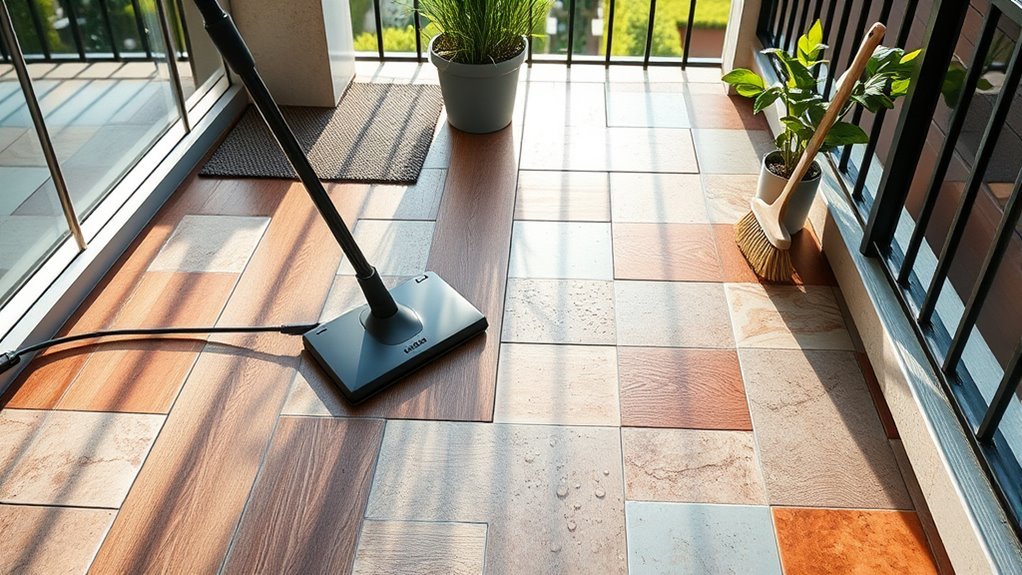
Before you start washing, you need to identify what type of surface your balcony has. Knowing your balcony materials is essential because each surface demands a unique approach to avoid damage. Whether it’s wood, concrete, tile, or metal, each has different surface durability and reacts differently to cleaning methods. Understanding this lets you protect your balcony and maintain its beauty without restrictions. You want to preserve your freedom to enjoy the space, not worry about causing harm. Take a moment to inspect the surface closely—look for cracks, coatings, or finishes that might affect your cleaning choices. By evaluating your balcony surface type first, you guarantee a safe, effective wash that respects the materials and keeps your outdoor retreat intact.
Choosing the Right Cleaning Tools
To keep your balcony safe from scratches, you’ll want to pick soft bristle brushes and non-abrasive cloths for cleaning. Using eco-friendly solutions not only protects your surfaces but also the environment. Let’s look at how these tools make a difference in gentle yet effective cleaning.
Soft Bristle Brushes
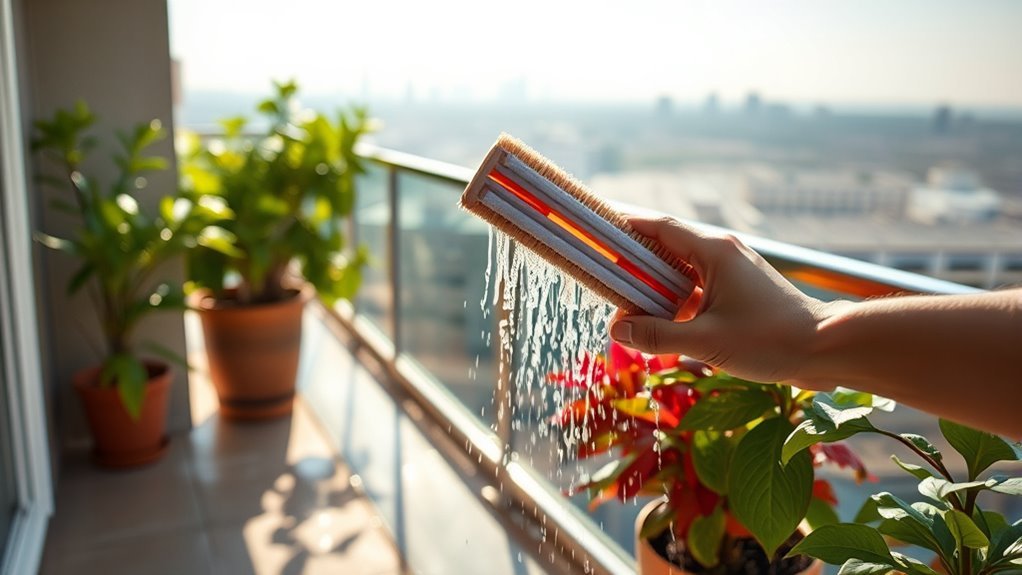
Choosing the right brush can make all the difference when washing your balcony without causing damage. Opting for a soft bristle brush offers many benefits, especially if your balcony has delicate surfaces like wood or painted metal. These brushes gently lift dirt and grime without scratching or wearing down the finish. When selecting bristle types, look for natural fibers or high-quality synthetic bristles that balance flexibility with strength. Avoid stiff or abrasive bristles that might leave marks or cause premature wear. By choosing a soft bristle brush tailored to your balcony’s materials, you maintain its beauty and extend its lifespan, giving you the freedom to enjoy a clean, damage-free outdoor space without worry.
Non-abrasive Cleaning Cloths
Just as a soft bristle brush protects your balcony’s surfaces, using non-abrasive cleaning cloths helps you avoid scratches and damage while wiping down delicate areas. When choosing your tools, opt for microfiber cloths—they’re gentle yet effective, trapping dirt without harming finishes. Non abrasive sponges are another great choice, especially when you need a bit more scrubbing power without risking scratches. These materials give you the freedom to clean confidently, knowing you won’t compromise your balcony’s look or texture. Avoid rough fabrics or harsh scrubbers that can leave marks or wear down surfaces. By selecting the right non-abrasive cloths and sponges, you maintain your balcony’s beauty effortlessly, letting you enjoy a fresh, spotless space without the worry of damage.
Eco-friendly Cleaning Solutions
While you want your balcony to shine, it’s important to pick cleaning solutions that are gentle on both surfaces and the environment. Opting for natural alternatives like vinegar, baking soda, or lemon juice helps you avoid harsh chemicals that can cause damage or pollution. These eco-friendly choices support sustainable practices and keep your outdoor space safe for plants, pets, and people. When selecting tools, go for reusable brushes and biodegradable sponges instead of disposable ones. This way, you maintain freedom from harsh toxins while reducing waste. Choosing the right cleaning tools doesn’t just protect your balcony; it honors your commitment to a greener lifestyle. Embracing these simple swaps lets you enjoy a sparkling balcony without compromising your values or the planet.
Selecting Safe Cleaning Solutions
When choosing cleaning solutions for your balcony, you’ll want to pick ones that are non-abrasive to avoid scratches. Look for eco-friendly ingredients that are safe for the environment and your outdoor space. Also, make sure the formula is pH-balanced to protect your surfaces from harsh chemicals.
Non-Abrasive Cleaners
Choosing the right non-abrasive cleaner is key to protecting your balcony’s surfaces during cleaning. You want a solution that’s tough on dirt but gentle enough to preserve your balcony’s finish. Natural cleaners are an excellent choice because they offer effective surface protection without harsh chemicals. They clean efficiently without scratching or eroding materials like wood, tile, or stone. When picking a cleaner, look for labels emphasizing non-abrasive formulas that won’t compromise your balcony’s integrity. Avoid gritty scrubs or harsh chemicals that could damage delicate surfaces. By choosing wisely, you’ll maintain your balcony’s beauty and enjoy the freedom of a clean, inviting outdoor space without worry. This approach keeps your balcony safe and looking its best for years to come.
Eco-Friendly Ingredients
Three key eco-friendly ingredients you should look for in balcony cleaners are vinegar, baking soda, and castile soap. Using these natural cleaning agents helps you maintain your space without harmful chemicals, preserving both your freedom and the environment. Plus, they come from sustainable materials, making your cleaning routine guilt-free.
- Vinegar: Cuts grease and removes mineral deposits effectively.
- Baking soda: Acts as a gentle abrasive and deodorizer.
- Castile soap: Provides a mild yet thorough clean, safe for most surfaces.
Ph-Balanced Formulas
Maintaining a pH-balanced cleaner is essential for protecting your balcony’s surfaces while ensuring effective cleaning. When you choose products with the right pH levels, you avoid harsh chemicals that can erode materials or discolor finishes. Gentle formulas work with your balcony’s natural state, preserving wood, stone, or metal without causing damage. You don’t have to compromise cleanliness for safety—pH-balanced solutions offer both. Look for cleaners labeled as neutral or mildly acidic/basic to match your balcony’s needs. This way, you maintain freedom to clean thoroughly without worrying about harm. By selecting safe, gentle formulas, you keep your outdoor space fresh and inviting, all while respecting the surfaces that make your balcony uniquely yours.
Preparing the Balcony for Washing
Before you start washing your balcony, you need to clear the area completely to prevent damage and make cleaning easier. This means moving any balcony furniture to a safe spot or covering it well. Protecting your belongings keeps them safe and lets you clean without worry.
Here’s what to do before washing:
- Remove or cover balcony furniture with protective coverings to shield from water and cleaning agents.
- Sweep away loose dirt, leaves, and debris to avoid scratching surfaces during washing.
- Check for fragile plants or items and relocate them to a secure place.
Taking these steps gives you the freedom to wash your balcony thoroughly without risking damage or extra cleanup later.
Step-by-Step Guide to Gentle Cleaning
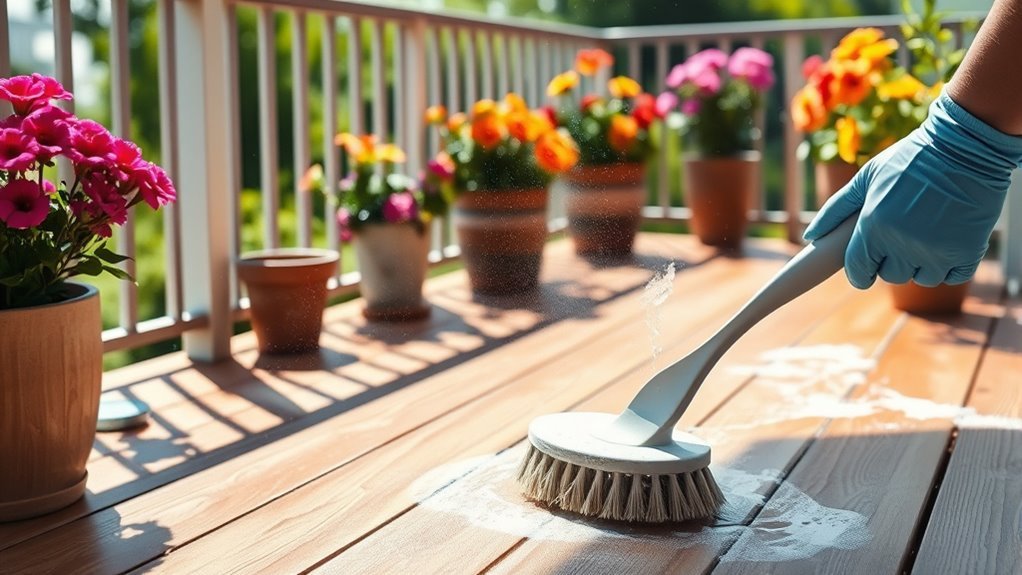
Although washing your balcony might seem straightforward, using gentle methods is key to preventing damage. Start by sweeping away loose dirt and debris. Next, mix a mild detergent with water and apply it using a soft brush or sponge. Use gentle pressure to avoid scratching surfaces. Rinse thoroughly with clean water, ensuring no soap residue remains. Don’t rush—taking your time helps protect your balcony’s finish. Adjust your cleaning frequency based on weather and usage; typically, once a month keeps your space fresh without overdoing it. By sticking to this step-by-step approach, you maintain your balcony’s integrity and enjoy a clean, inviting outdoor area that feels as free as you do.
How to Avoid Water Damage and Stains
Taking care when cleaning your balcony helps preserve its surface, but preventing water damage and stains requires extra attention. To keep your balcony looking fresh and free from unsightly marks, you’ll want to focus on a few key strategies. First, apply high-quality waterproof sealants to create a protective barrier against moisture. Next, guarantee your balcony has effective drainage solutions to avoid standing water that can lead to stains or structural harm. Finally, be mindful of the cleaning products you use—harsh chemicals can erode surfaces and worsen damage. Here’s a quick checklist to help you maintain your balcony’s freedom from water issues:
- Use waterproof sealants regularly to protect surfaces.
- Check and clear drainage solutions to prevent pooling.
- Opt for gentle cleaning agents that don’t degrade materials.
Tips for Cleaning Delicate Balcony Tiles
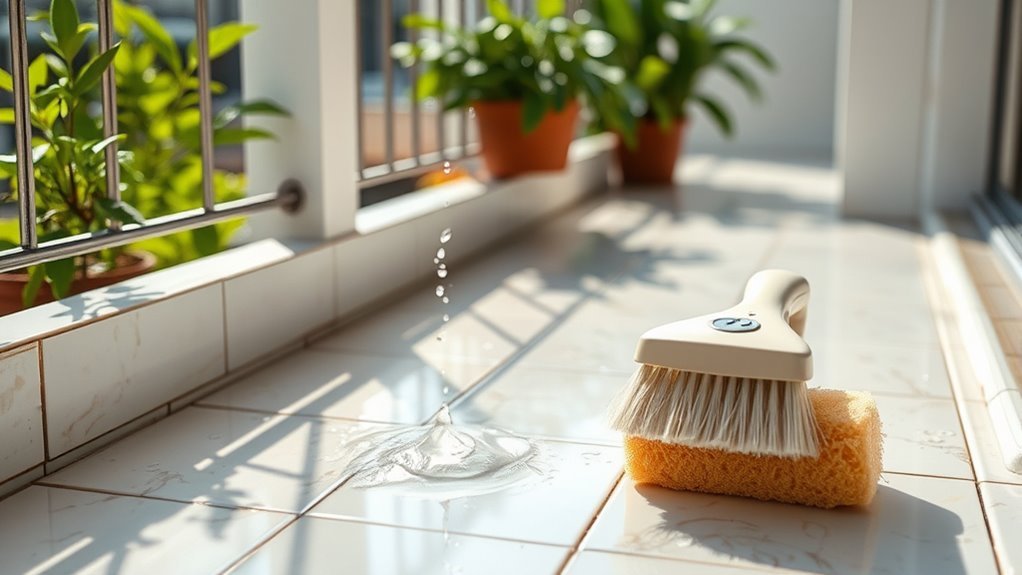
When you’re cleaning delicate balcony tiles, it’s important to choose methods that won’t scratch or damage their surface. Gentle cleaning helps maintain their look and eases your balcony maintenance routine. Avoid harsh chemicals and abrasive tools. Instead, use mild soap and a soft brush or cloth. Rinse thoroughly with water to prevent residue buildup. Regular cleaning prevents dirt from settling and keeps your tiles looking fresh.
| Tip | Why It Matters |
|---|---|
| Use mild detergent | Protects tile surface |
| Soft brush or cloth | Prevents scratches |
| Avoid harsh chemicals | Maintains tile integrity |
| Rinse well | Removes soap residue |
| Regular cleaning | Easier delicate tile care |
Stick to these tips for freedom from tile damage and stress-free balcony maintenance.
Caring for Wooden Balcony Decking
Wooden balcony decking adds warmth and charm to your outdoor space but needs regular care to stay in good shape. You’ll want to establish a maintenance schedule that fits your lifestyle, ensuring your wood decking stays protected and beautiful. Start with a proper wood treatment to guard against weathering and fading. Avoid harsh chemicals; opt for gentle cleaning solutions that preserve the wood’s natural look.
Here’s how you can care for your wooden balcony decking:
- Clean the surface with a soft brush and mild detergent regularly.
- Apply wood treatment once or twice a year, depending on exposure.
- Inspect for cracks or splinters and sand them down promptly.
This routine keeps your balcony inviting and extends the life of your wooden deck.
Preventing Mold and Mildew Growth
Although mold and mildew thrive in damp environments, you can prevent their growth on your balcony with consistent care. Start by ensuring proper drainage to avoid standing water, which encourages mold formation. Regularly sweep and wash your balcony with mild, mold prevention solutions that don’t harm surfaces. Choose mildew resistance products, like specialized sealants or paints, to create a protective barrier against moisture. Keep your balcony well-ventilated by opening windows or using fans, allowing surfaces to dry quickly. Trim nearby plants to reduce excess humidity and debris. By staying proactive and maintaining your space clean and dry, you’ll enjoy a fresh, mold-free balcony without restricting your freedom to relax or entertain outdoors. Embracing these simple steps guarantees a healthy, inviting area all year round.
Frequently Asked Questions
Can I Use a Pressure Washer on My Balcony?
You might think using a pressure washer on your balcony is a quick fix, but it really depends on your balcony surface types. For example, delicate wood or painted surfaces can get damaged if the pressure’s too high. To enjoy pressure washer safety, you’ll want to start with a low setting and test a small area first. That way, you keep your balcony intact and still get that satisfying clean freedom you crave.
How Often Should I Clean My Balcony for Maintenance?
You should aim for a cleaning frequency of at least once every season to keep your balcony looking fresh and prevent buildup. Seasonal maintenance helps you enjoy your outdoor space without worry, letting you relax freely without constant upkeep. Of course, if you live in a dusty or rainy area, you might want to clean more often. Regular attention means you can fully embrace your balcony’s freedom and comfort year-round.
Are There Eco-Friendly Cleaning Products Suitable for Balconies?
You might wonder if eco-friendly cleaning products can really tackle balcony grime—well, they absolutely can. Biodegradable cleaners and natural solutions like vinegar, baking soda, and lemon juice work wonders without harming the environment or your freedom to enjoy a pristine space. These options break down safely, so you’re not trading cleanliness for chemicals. Embracing them means you keep your balcony fresh while respecting nature, giving you peace of mind and a sparkling retreat.
What Should I Do if My Balcony Has Pet Stains?
If your balcony has pet stains, you’ll want to act quickly for effective pet stain removal. Start by blotting the stain gently, then use an eco-friendly cleaner that’s safe for your balcony surface protection. Avoid harsh chemicals that might damage the material. You can also try a mixture of water and vinegar or baking soda to neutralize odors. Let it dry completely, and your balcony will stay fresh without compromising its look or your freedom to enjoy the space.
Can Balcony Washing Affect Nearby Plants or Furniture?
Imagine your balcony is like a small garden oasis. When you wash it, think of it as watering your plants—but if you use harsh chemicals or too much water, it’s like flooding the roots. To guarantee balcony protection and plant safety, cover nearby furniture and plants with plastic sheets or move them temporarily. Using gentle, eco-friendly cleaners helps you keep your space fresh without sacrificing your freedom to enjoy a thriving, undamaged balcony.