Washing Coffee Machine Without Damage
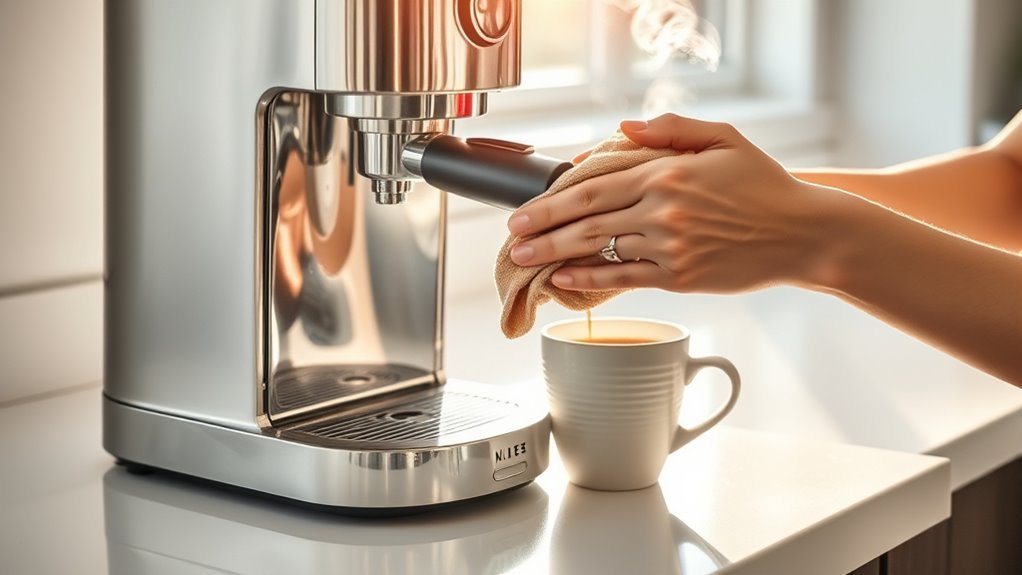
To wash your coffee machine without causing damage, use gentle tools like soft cloths and natural cleaners such as vinegar or baking soda. Avoid harsh scrubbing and never submerge electrical parts in water. For drip machines, run a vinegar-water cycle to break down residue, then rinse thoroughly. Espresso machines need regular, careful cleaning of group heads and steam wands using recommended products. Follow these tips to keep your machine safe and lasting longer. Keep going to uncover more smart cleaning methods.
Choosing the Right Cleaning Materials
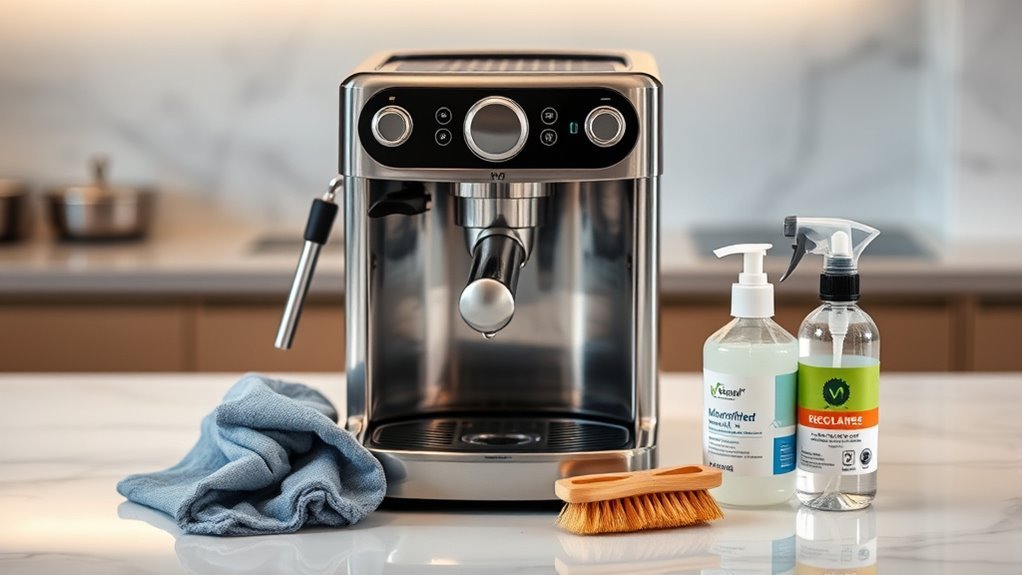
Before you start cleaning your coffee machine, it’s important to choose the right materials to avoid damage. You want cleaning tools that are gentle yet effective—soft cloths, non-abrasive sponges, and brushes designed for delicate surfaces work best. Avoid harsh scrubbing pads or anything that could scratch your machine. Embracing natural cleaners like vinegar or baking soda gives you freedom from harsh chemicals while still tackling buildup efficiently. These natural options break down residue without compromising your coffee maker’s components. By picking the right cleaning tools and natural cleaners, you maintain your machine’s integrity and guarantee it lasts longer. Choosing wisely means you can clean your coffee maker confidently, preserving both its performance and your peace of mind.
Step-by-Step Cleaning Process for Drip Coffee Makers
Now that you’ve picked the right cleaning materials, it’s time to focus on the actual process of cleaning your drip coffee maker. Maintaining a regular cleaning frequency helps prevent stubborn coffee residue buildup and guarantees each cup tastes fresh. Here’s a simple step-by-step guide to keep your machine running smoothly:
- Empty the coffee grounds and rinse the filter basket thoroughly.
- Fill the water reservoir with equal parts water and white vinegar.
- Run a full brewing cycle to loosen coffee residue inside.
- Pause halfway, let it sit for 30 minutes, then complete the cycle.
- Rinse the reservoir and run two or three cycles with clean water to remove vinegar traces.
Safe Cleaning Techniques for Espresso Machines
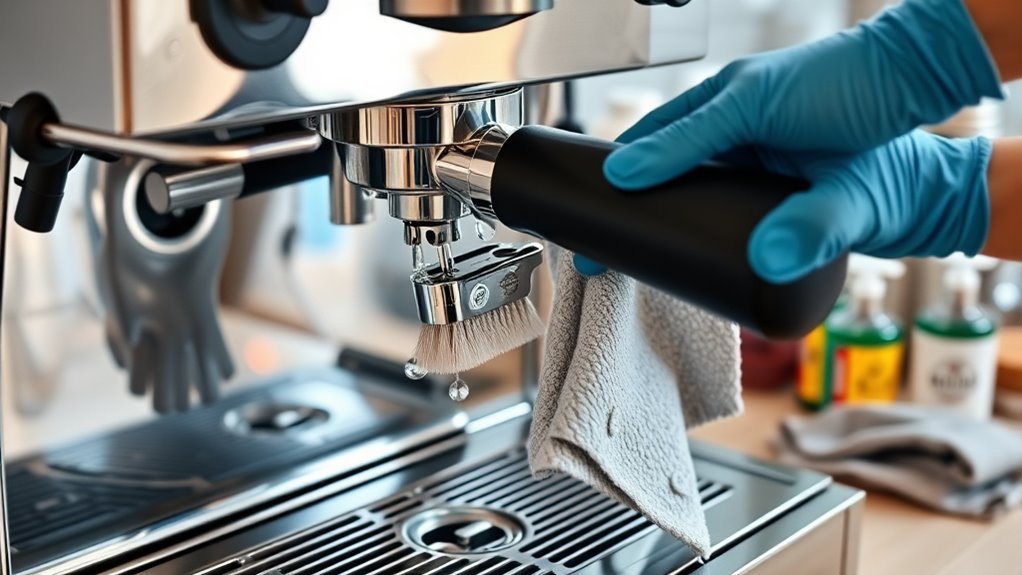
Although espresso machines require more delicate care than drip coffee makers, you can keep yours in top shape by following safe cleaning techniques. Focus on regular espresso machine maintenance by cleaning group heads, portafilters, and steam wands after each use to prevent buildup. Use only recommended cleaning agents to avoid damage, and never submerge electrical components in water. Stick to a consistent cleaning frequency—daily rinsing and weekly deep cleaning with specialized detergents will keep your machine running smoothly. Descaling is essential, but only do it when your machine signals it’s needed or every few months if you use hard water. By respecting these guidelines, you’ll preserve your espresso machine’s performance and enjoy the freedom of fresh, flavorful coffee without risking costly repairs.
How to Clean Single-Serve Coffee Machines Properly
A single-serve coffee machine offers convenience, but it still needs regular cleaning to work well and last long. To enjoy your freedom without hassle, stick to a cleaning frequency that matches your usage—usually once a week for daily brewers. Here are essential maintenance tips to keep your machine in top shape:
- Empty and rinse the drip tray and pod holder after each use.
- Descale the machine monthly to prevent mineral buildup.
- Use a damp cloth to wipe the exterior regularly.
- Run a water-only brew cycle weekly to flush out residues.
- Replace any removable parts as recommended by the manufacturer.
Avoiding Common Mistakes That Damage Coffee Machines
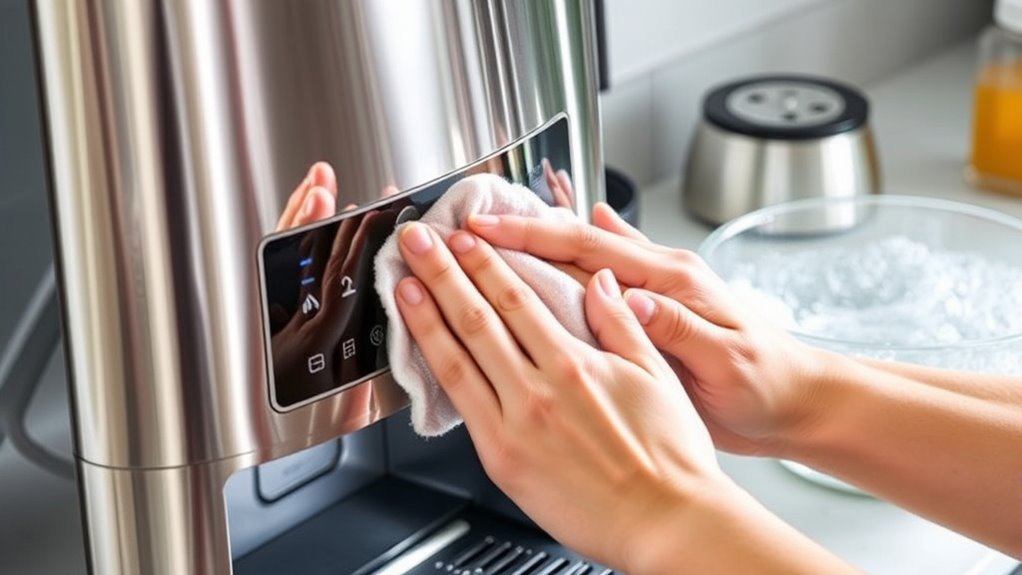
To keep your coffee machine in good shape, you’ll want to use the right cleaning agents and avoid harsh chemicals. Be careful not to let water seep into areas that aren’t waterproof, and always stick to the manufacturer’s cleaning instructions. These steps help prevent damage and extend the life of your machine.
Use Appropriate Cleaning Agents
When you clean your coffee machine, choosing the right cleaning agents is essential to avoid damage. Harsh chemicals can corrode internal parts or leave harmful residues. Instead, opt for natural cleaners that are gentle yet effective. A vinegar solution is a popular choice, but use it diluted to prevent harm. Here’s how to stay safe:
- Use a 1:1 water-to-vinegar ratio for descaling.
- Avoid bleach or abrasive cleaners.
- Choose biodegradable, food-safe detergents.
- Rinse thoroughly after cleaning to remove any residue.
- Test new products on a small part before full use.
Prevent Water Damage
Although coffee machines handle water daily, improper exposure can lead to serious damage. You want to keep your machine running smoothly, so controlling moisture is key. Avoid excessive water exposure, especially around electrical parts, to prevent short circuits or corrosion. When cleaning, don’t soak the machine or let water pool inside. Use a damp cloth rather than flooding components. Also, make sure to dry everything thoroughly before reassembling or turning it back on. Proper moisture control not only preserves your machine’s lifespan but also keeps your coffee tasting fresh. By being mindful of how you expose your coffee maker to water, you maintain its freedom to brew without costly repairs or frustration. Remember, a little care goes a long way in preventing water damage.
Follow Manufacturer Guidelines
Keeping moisture in check is only part of the equation to protect your coffee machine. To truly keep your machine safe, you need to follow the manufacturer recommendations closely. Ignoring these can lead to unnecessary wear or damage. Pay attention to the cleaning frequency suggested; over-cleaning or under-cleaning can both cause issues. Here’s what you should keep in mind:
- Use only approved cleaning agents and tools
- Stick to the recommended cleaning schedule
- Avoid submerging electrical components
- Follow instructions for descaling and rinsing
- Don’t improvise with homemade solutions
Tips for Maintaining Your Coffee Maker’s Longevity
To keep your coffee maker working well for years, stick to a regular cleaning schedule. Always choose gentle cleaning agents to avoid damaging the machine’s components. These simple habits can make a big difference in your coffee maker’s lifespan.
Regular Cleaning Schedule
Since you use your coffee maker daily, setting up a regular cleaning schedule is essential to prevent buildup and guarantee it runs smoothly. Sticking to a consistent cleaning frequency helps you avoid costly repairs and keeps your coffee tasting fresh. Establishing a maintenance routine that fits your lifestyle means you won’t feel chained to chores but rather enjoy freedom from worries about your machine’s condition. Here’s a simple plan to keep your coffee maker in top shape:
- Clean removable parts weekly to prevent residue buildup
- Descale your machine monthly to avoid mineral deposits
- Rinse the water reservoir every few days
- Wipe the exterior regularly to maintain appearance
- Run a brewing cycle with clean water after each cleaning
This routine balances ease and effectiveness, giving your coffee maker a long, healthy life.
Use Gentle Cleaning Agents
Although you might be tempted to use strong chemicals for a deep clean, gentle cleaning agents are your coffee maker’s best friend. Harsh substances can damage internal parts, reducing your machine’s lifespan. Instead, opt for gentle detergents or safe alternatives that clean effectively without risk. These options preserve your coffee maker’s integrity and keep it running smoothly.
Here’s a quick guide to safe cleaning agents:
| Cleaning Agent | Type | Benefits |
|---|---|---|
| Mild dish soap | Gentle detergent | Removes oils, safe on parts |
| White vinegar | Natural alternative | Dissolves mineral buildup |
| Baking soda | Gentle abrasive | Neutralizes odors |
| Commercial cleaners | Specially formulated | Designed for coffee machines |
Choose wisely, and your coffee maker will reward you with great brews and longevity.
Frequently Asked Questions
Can I Use Vinegar to Descale My Coffee Machine?
You can use vinegar to descale your coffee machine, and it’s a popular choice because of vinegar benefits like cutting through mineral buildup effectively. However, it’s important to follow proper descaling methods to avoid any damage or lingering smell. You’ll want to dilute vinegar with water and run it through a brew cycle, then flush with fresh water a couple of times. This way, you keep your machine clean while enjoying freedom from costly repairs.
How Often Should I Clean the Coffee Machine’S Water Reservoir?
They say, “A stitch in time saves nine,” and that’s true with water reservoir maintenance. You should clean your coffee machine’s water reservoir at least once a week to keep things fresh and avoid buildup. If you use your machine daily or notice any funky smells, bump up the cleaning frequency. Regular care lets you enjoy freedom from funky flavors and guarantees every cup tastes just right without hassle.
Is It Safe to Put Coffee Machine Parts in the Dishwasher?
You’ll want to check your coffee machine’s manual first because dishwasher safety varies by brand and part. Some parts, like glass carafes, are usually dishwasher safe, but others, like plastic or electronic components, might not be. Machine compatibility is key to avoid damage or warping. If you want to keep things safe and hassle-free, hand-washing delicate parts might be your best bet. This way, you keep your freedom to enjoy coffee without worry!
What Should I Do if My Coffee Maker Has Mold Buildup?
If your coffee maker has mold buildup, don’t worry—you can tackle it effectively. Start by disassembling removable parts and soaking them in a vinegar-water solution to kill mold. Use mild cleaning solutions designed for appliances to scrub stubborn spots. To prevent mold in the future, dry your machine thoroughly after each use and run regular cleaning cycles. Staying proactive with mold prevention lets you enjoy fresh coffee without hassle or worry.
Can Hard Water Damage My Coffee Machine Over Time?
Imagine your coffee machine as a delicate ship traversing a sea of minerals. Hard water, filled with calcium and magnesium, can slowly erode its inner workings, like relentless waves wearing down a sturdy hull. Over time, this buildup restricts water flow and damages your machine, limiting your freedom to enjoy perfect brews. To keep your coffee machine sailing smoothly, consider using filtered water or regular descaling—so you’re always free to savor every cup.