Washing Toys Without Damage
You can wash your child’s toys safely by first knowing their material—plastic handles gentle soap and water, while fabric needs spot cleaning or delicate cycles. Always remove batteries and loose parts before cleaning. Use mild, eco-friendly solutions like vinegar or baking soda to avoid harsh chemicals. Gently scrub with soft cloths and dry thoroughly to prevent damage. Keeping toys clean and safe is essential, and there are more tips to help you care for every type and condition.
Understanding Different Toy Materials
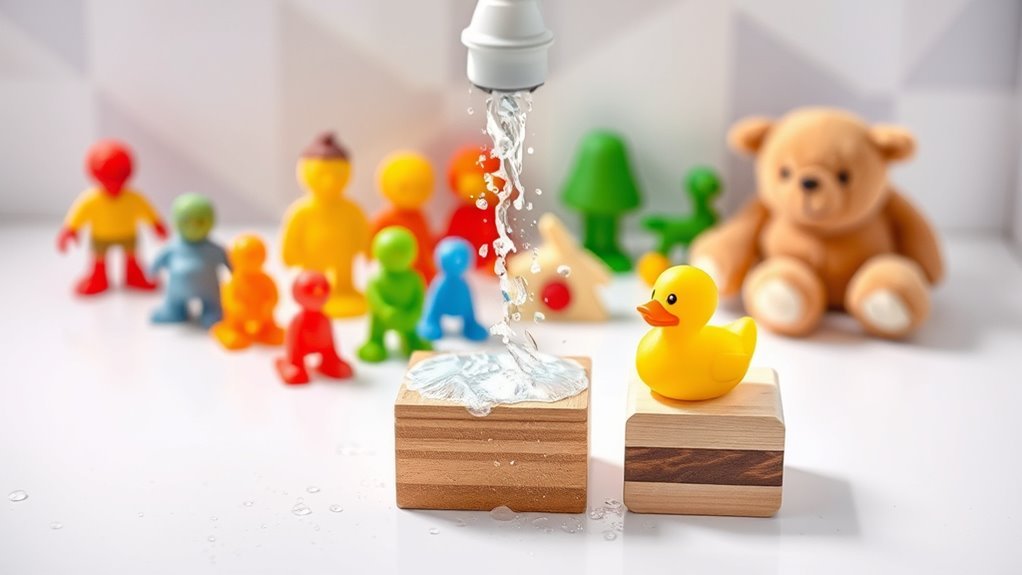
When it comes to washing toys, knowing what materials they’re made of is essential. You’ll find that plastic toys and fabric toys need different care to keep them in good shape without damage. Plastic toys are usually more durable and can handle gentle scrubbing with mild soap and water. Fabric toys, on the other hand, are more delicate and often require a softer approach, like spot cleaning or a gentle cycle in the washing machine. Understanding these differences lets you clean freely without worrying about ruining your child’s favorite playthings. By recognizing the material type first, you gain the freedom to choose the best cleaning method, ensuring all toys stay safe, fresh, and ready for endless fun.
Preparing Toys for Cleaning
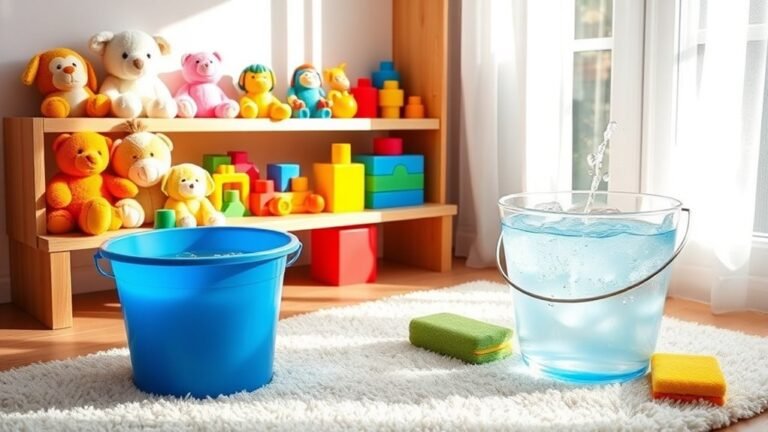
Knowing the material of your toys is just the first step before cleaning. For effective toy preparation, you need to remove any batteries or electronic parts to avoid damage. Check for loose pieces that could come off during washing and secure or remove them. Clear off visible dirt and debris by wiping or brushing the toys gently. Gather your cleaning supplies thoughtfully—select tools that won’t scratch or harm the toys’ surfaces. Having the right supplies at hand means you won’t need to pause mid-cleaning, maintaining your freedom to move through the task smoothly. Taking these steps guarantees your toys are ready for a safe and thorough wash without risk, letting you confidently enjoy a clean, fresh play environment.
Safe Cleaning Solutions for Toys
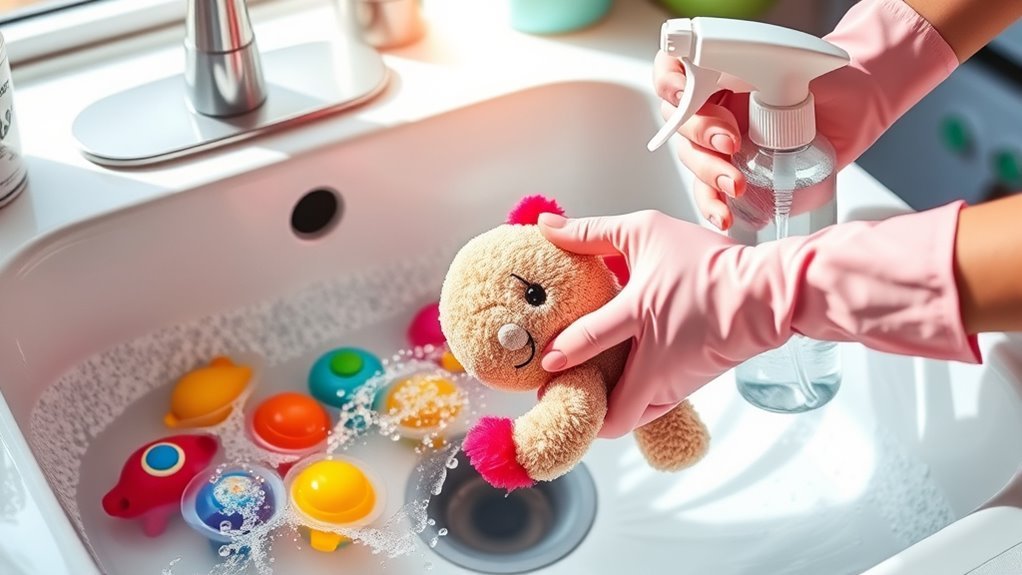
How can you guarantee the cleaning solutions you use are safe for your child’s toys? Opting for eco friendly solutions is a smart move that respects both your child’s health and the environment. You don’t have to rely on harsh chemicals; homemade cleansers made from simple ingredients like vinegar, baking soda, and mild soap work wonders. These options let you maintain control over what touches your toys, ensuring no hidden toxins sneak in. Plus, making your own solutions means freedom from commercial products laden with unnecessary additives. Just mix small batches, test on a toy corner, and you’re set. With these safe cleaning solutions, you protect your child while embracing a cleaner, greener lifestyle—giving you peace of mind and your child the freedom to play safely.
Hand Washing Techniques for Delicate Toys
When hand washing delicate toys, you’ll want to pick gentle cleaning agents that won’t damage their materials. Using soft cloths or brushes helps protect fragile surfaces during cleaning. After washing, make sure to dry the toys thoroughly to prevent moisture buildup and mold.
Choose Gentle Cleaning Agents
Although you might be tempted to use strong detergents, gentle cleaning agents are vital when hand washing delicate toys to prevent damage. Harsh chemicals can weaken materials, fade colors, or cause surfaces to become sticky. Instead, opt for mild soaps or gentle detergents designed specifically for sensitive items. You’ll find many eco-friendly options that not only protect your toys but also minimize environmental impact. These products break down easily and avoid harmful residues. By choosing gentle detergents, you preserve the toy’s integrity and guarantee it stays safe and enjoyable for longer. Remember, selecting the right cleaning agent is the first step to maintaining delicate toys without sacrificing their quality or your commitment to sustainability.
Use Soft Cleaning Tools
A soft cleaning tool is essential for gently washing delicate toys without causing damage. When you’re ready to clean, grab soft sponges or microfiber cloths—they’re perfect for reaching tiny crevices and scrubbing without scratching. These tools let you control the pressure, so you can avoid harsh scrubbing that might wear down paint or materials. Use gentle, circular motions, and you’ll preserve your toys’ original look and feel. Plus, microfiber cloths are great at trapping dust and dirt, making your cleaning process efficient. By choosing the right tools, you’re giving your toys the care they deserve while keeping your freedom to clean whenever you want, without worrying about causing harm.
Dry Toys Thoroughly
After gently cleaning your toys with soft tools, the next step is making sure they dry completely to prevent moisture damage. Choosing the right drying methods is essential for moisture prevention and preserving your toy’s integrity. Air drying in a well-ventilated area is often best, but sometimes you need alternatives to speed things up without causing harm.
| Drying Method | Ideal For | Moisture Prevention Tip |
|---|---|---|
| Air Drying | Most delicate toys | Place on a clean towel |
| Towel Pat Dry | Slightly damp toys | Avoid rubbing harshly |
| Fan Drying | Quick drying needed | Keep fan at a distance |
| Sunlight | Sturdy, non-fade toys | Limit exposure time |
| Hair Dryer (cool) | Small, quick touch-ups | Use lowest setting only |
Pick your method wisely to keep your toys fresh and damage-free.
Using the Washing Machine Safely
When you use the washing machine to clean toys, it’s important to follow a few safety guidelines to prevent damage to both the toys and the machine. First, check the toy placement carefully—always place smaller or delicate toys inside a mesh laundry bag or pillowcase to keep them secure during the wash. Avoid overloading the machine, as this can cause toys to get caught or damaged. Next, adjust the machine settings to a gentle or delicate cycle with cold water; this helps preserve the toy’s material and colors. Skip heavy agitation or high spin speeds, which can be harsh. By being mindful of these details, you’ll enjoy the freedom to clean toys effectively without risking harm to them—or your washing machine.
Disinfecting Toys Without Harsh Chemicals
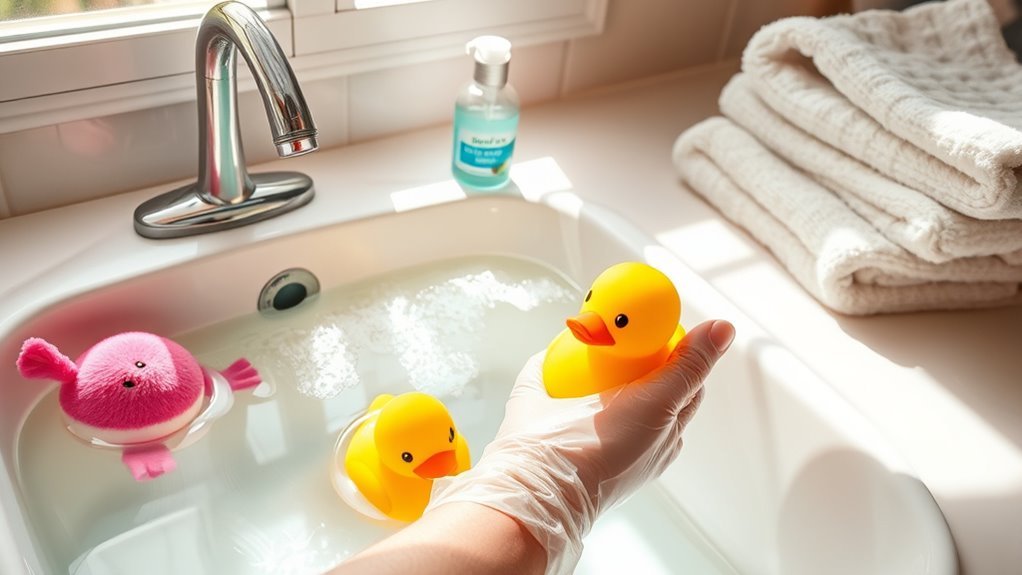
Although disinfecting toys is essential to keep your little ones safe, you don’t have to rely on harsh chemicals that can be harmful or leave residues. You can embrace natural disinfectants like vinegar, hydrogen peroxide, or tea tree oil, which offer safe sanitizing without the risks tied to synthetic products. These options let you maintain a clean environment while preserving your family’s freedom from unnecessary toxins. Simply mix a solution of water and one of these natural agents, spray or wipe toys thoroughly, and let them air dry. This approach not only protects your children but also respects your commitment to using gentle, eco-friendly methods. By choosing natural disinfectants, you guarantee toys are germ-free without compromising your values or your child’s health.
Drying Toys to Prevent Damage
Since moisture can cause toys to deteriorate or harbor bacteria, drying them properly is essential after cleaning. You want to avoid trapping water in crevices, which can lead to mold or damage. Start by towel drying each toy gently, especially those made of fabric or with porous surfaces, to soak up excess water quickly. Then, give your toys the freedom to air dry completely in a well-ventilated space. This combination helps prevent moisture buildup without risking heat damage from dryers or direct sunlight. Remember, rushing this step can undo your cleaning efforts, so be patient. By mastering towel drying followed by air drying, you keep toys safe, clean, and ready for endless play without sacrificing their condition.
Cleaning Electronic and Battery-Operated Toys
Because electronic and battery-operated toys have sensitive components, you’ll need to clean them carefully to avoid damage. First, always remove batteries before cleaning to guarantee battery safety and prevent corrosion. Use a soft, damp cloth with mild soap to wipe surfaces—never submerge these toys in water. Pay attention to small crevices where dirt accumulates, but avoid applying excess moisture. For electronic maintenance, inspect battery compartments regularly for leaks or residue, and clean gently with a dry cloth if needed. Let the toy air dry completely before reinserting batteries to prevent short circuits. By following these steps, you’ll keep your toys functional and safe, giving you the freedom to enjoy playtime without worry.
Maintaining Toy Cleanliness Between Washes
Taking care of electronic and battery-operated toys requires extra caution, but keeping all your toys clean between washes doesn’t have to be complicated. You can maintain toy cleanliness with simple habits that save time and effort. After playtime, use a soft cloth or disinfecting wipe for quick cleaning, especially on high-touch areas. This prevents buildup without risking damage. Proper toy storage plays a big role, too — keeping toys in breathable bins or shelves reduces dust and grime. Rotate toys regularly to limit exposure and make cleaning easier. By adopting these straightforward steps, you’ll enjoy a clutter-free space and extend the life of every toy, all while freeing yourself from constant, deep cleaning sessions.
Signs a Toy Needs Special Care or Replacement
You’ll want to watch for signs that a toy’s material is sensitive or deteriorating, like fading colors or texture changes. If you notice cracks, tears, or loose parts, it’s a clear indicator the toy needs special care or might be time to replace it. Paying attention to these details helps keep playtime safe and enjoyable.
Material Sensitivity Indicators
When a toy shows signs like fading colors, cracking surfaces, or a persistent odor, it’s a clear signal that it needs special care or might be time to replace it. You’ve got to pay attention to material sensitivity to maintain both material durability and toy safety. Knowing when a toy demands gentle handling can save you from accidental damage or health risks.
Watch for these indicators:
- Soft or weakened plastic that bends easily
- Fading fabric that loses texture and color
- Rubber parts feeling sticky or crumbly
- Metal components showing rust or corrosion
Damage and Wear Signs
Signs of damage and wear on toys shouldn’t be ignored, as they often indicate the need for special care or replacement. You’ll want to look out for wear indicators like frayed seams, cracks, discoloration, or loose parts. These signs suggest the toy’s structural integrity is compromised, which can affect both safety and cleanliness. Ignoring these issues can shorten toy longevity and even pose risks during play. When you spot such damage, it’s best to either give the toy extra gentle washing or consider retiring it altogether. By paying attention to these wear indicators, you maintain a safe, clean collection while maximizing your freedom to enjoy toys without worry. Taking these steps helps you protect both your space and your peace of mind.
Frequently Asked Questions
Can I Use a Dishwasher to Clean Plastic Toys?
Sure, you could toss your plastic toys in the dishwasher and hope for the best—because who doesn’t love a surprise? But if you care about dishwasher safety, you’ll want to take into account toy materials first. Some plastics can warp or fade under high heat, ruining your kid’s favorite plaything. So, if you want freedom from damage, check the toy’s label or stick to hand washing to keep things safe and sound.
How Often Should Stuffed Animals Be Professionally Cleaned?
When it comes to stuffed animal care, the cleaning frequency really depends on how often they’re used and exposed to dirt. If your stuffed animals are regular companions, getting them professionally cleaned every 6 to 12 months keeps them fresh and safe. Of course, if allergies or stains pop up, don’t wait—take action sooner. This way, you’re giving your cuddly friends the freedom to stay comfy and clean without risking damage.
Are There Any Toys That Should Never Be Cleaned With Water?
Think of certain toys like delicate flowers—you wouldn’t soak them in a rainstorm. If your toys have water sensitive materials or contain electronics, you should avoid using water to clean them, or you risk ruining their essence. Instead, opt for gentle dusting or spot cleaning to keep them fresh without harm. This way, you keep your playthings safe and free, just like you want to be.
What Is the Best Way to Clean Wooden Toys Naturally?
When you want to clean wooden toys naturally, stick to a simple mix of mild soap and warm water. Avoid soaking them to maintain toy maintenance and prevent damage. Wipe the toys gently with a damp cloth, then dry immediately with a towel. You can also use a little vinegar diluted in water for natural cleaning. This way, you keep your toys safe and long-lasting while staying eco-friendly and free from harsh chemicals.
How Can I Remove Mold From Toys Safely?
If you want to remove mold from toys safely, start by wiping the affected areas with a mixture of white vinegar and water—it’s a natural, safe cleaner that kills mold without harsh chemicals. Let the toy dry completely in fresh air to prevent mold from coming back. To keep your toys mold-free, focus on mold prevention by storing them in dry, well-ventilated spaces. You’ll enjoy freedom from worry and a healthier playtime!