Cleaning With Stains: What Works and What Doesn’T
When tackling stains, it helps to know your stain type—protein, oil-based, tannin, or dye—since each needs a specific approach. Use cold water for protein stains to avoid setting them, blot gently rather than rubbing, and leverage household staples like vinegar, baking soda, or dish soap depending on the stain. Commercial removers work if used carefully, but protect your skin and test fabrics first. For tough or delicate stains, professional help can make a big difference. You’ll find useful tips on stain-specific treatments and prevention ahead.
Understanding Different Types of Stains

Before you can effectively remove a stain, you need to identify what type it is, since different stains require different treatments. Stain identification is your first step toward freedom from stubborn marks. Stains generally fall into key categories: protein-based (like blood or sweat), oil-based (such as grease or makeup), tannin-based (coffee, tea, wine), and dye-based (ink or grass). Each category responds differently to cleaning agents and techniques. Knowing which category your stain belongs to helps you choose the right approach, preventing damage and wasted effort. By mastering stain categories and honing your identification skills, you’ll gain control over the cleaning process, making stain removal more effective and less frustrating. This knowledge empowers you to tackle stains confidently, without trial and error. Additionally, understanding the specific surface characteristics of the stained area is crucial for selecting the appropriate cleaning method and ensuring successful removal.
The Science Behind Stain Removal
Knowing the type of stain you’re dealing with sets the stage for effective removal, but understanding the science behind how stains adhere and respond to cleaning agents will greatly boost your success. Stain chemistry revolves around the molecular structure of the substances involved—both the stain and the fabric. Different stains have unique molecular bonds that determine how strongly they cling to fibers. For instance, protein-based stains like blood form different bonds than oil-based stains. When you grasp these molecular interactions, you can select methods that disrupt those bonds efficiently. This means targeting the stain’s chemistry precisely, rather than using random cleaning tactics. By appreciating this science, you gain freedom from trial-and-error, making stain removal more predictable and effective every time you tackle a mess. Utilizing household items like baking soda and vinegar can be a safe and effective way to break down and lift stains without damaging surfaces.
Effective Household Ingredients for Stain Cleaning
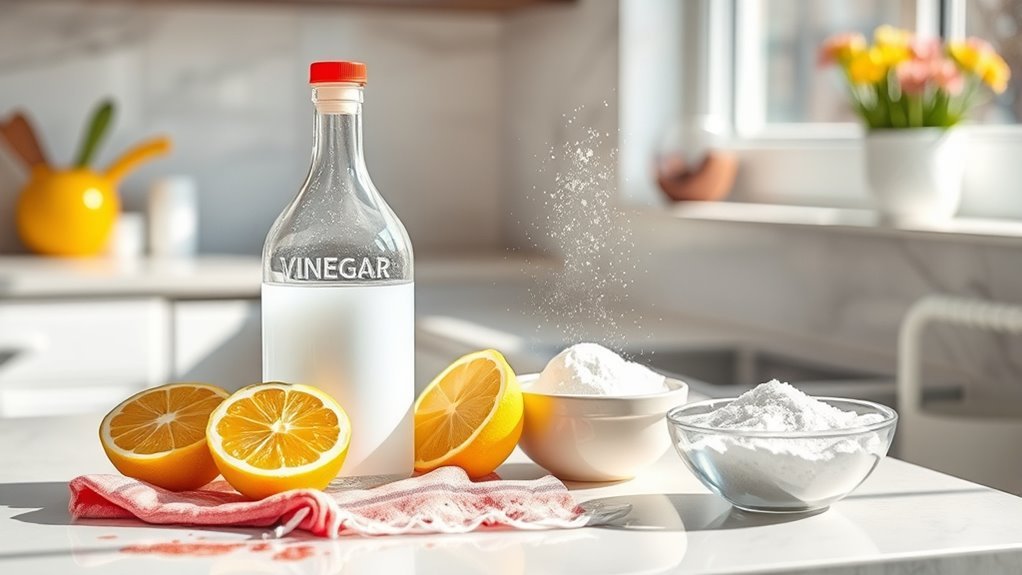
You don’t need expensive products to tackle stains effectively—common household ingredients like baking soda, vinegar, and hydrogen peroxide work wonders. These items not only break down stains but also offer natural, non-toxic alternatives to harsh chemicals. Let’s explore how you can use these simple solutions to clean stains efficiently. Using the right cleaning materials helps protect surfaces and achieve the best results.
Common Stain Removers
Several common household ingredients can tackle a wide range of stains effectively, saving you time and money on specialized cleaners. Understanding stain remover effectiveness helps you avoid stain removal myths that often lead to frustration. Here are four reliable options:
- White vinegar – cuts through grease and deodorizes.
- Baking soda – gently lifts stains and neutralizes odors.
- Hydrogen peroxide – breaks down organic stains but use cautiously on colored fabrics.
- Dish soap – dissolves oily residues quickly.
Using these ingredients properly means applying them promptly and testing on hidden areas first. This practical approach empowers you to handle stains independently, breaking free from costly, ineffective products. Knowing what works lets you maintain your freedom while keeping your home spotless.
Natural Cleaning Alternatives
Three household ingredients stand out as natural cleaning alternatives that tackle stains effectively without harsh chemicals. These eco friendly solutions empower you to create homemade cleaners that are safe, economical, and versatile. By using these ingredients, you gain freedom from commercial products loaded with synthetic additives.
| Ingredient | Stain Type | Cleaning Tip |
|---|---|---|
| White Vinegar | Coffee, Wine | Dilute with water, apply with cloth |
| Baking Soda | Grease, Sweat | Make a paste with water, scrub gently |
| Lemon Juice | Ink, Rust | Apply directly, let sit before rinsing |
Incorporate these into your cleaning routine to maintain a fresh, stain-free environment with minimal environmental impact.
Common Mistakes That Make Stains Worse
You might think hot water speeds up stain removal, but it often sets stains permanently. Instead of rubbing, which can push the stain deeper into fibers, you should blot gently to lift it away. Avoiding these mistakes can save your fabrics from lasting damage. Using cold water for fresh stains helps prevent proteins and dyes from bonding, making removal easier.
Using Hot Water
Although hot water might seem like the go-to solution for tackling stains, using it improperly can actually set certain stains permanently, making them harder to remove. You need to understand hot water settings and temperature effects to avoid this.
- Avoid high temperatures on protein-based stains (blood, sweat) as heat can coagulate proteins, fixing stains.
- Check fabric care labels to select the right hot water setting; some materials shrink or discolor with heat.
- Use warm water instead of hot for dye-based stains like wine or coffee to prevent color setting.
- Never pour boiling water directly on a stain; it risks spreading or embedding it deeper.
Rubbing Instead Of Blotting
A common mistake when dealing with stains is rubbing instead of blotting, which can worsen the damage by pushing the stain deeper into the fabric fibers. You want to focus on blotting techniques that lift the stain gently without spreading it. This approach is key for effective stain prevention and keeps your fabric intact.
| Action | Effect |
|---|---|
| Rubbing | Drives stain deeper |
| Rubbing | Damages fabric fibers |
| Blotting | Absorbs stain efficiently |
| Blotting | Prevents spread of stain |
| Blotting | Preserves fabric integrity |
How to Treat Red Wine and Fruit Stains
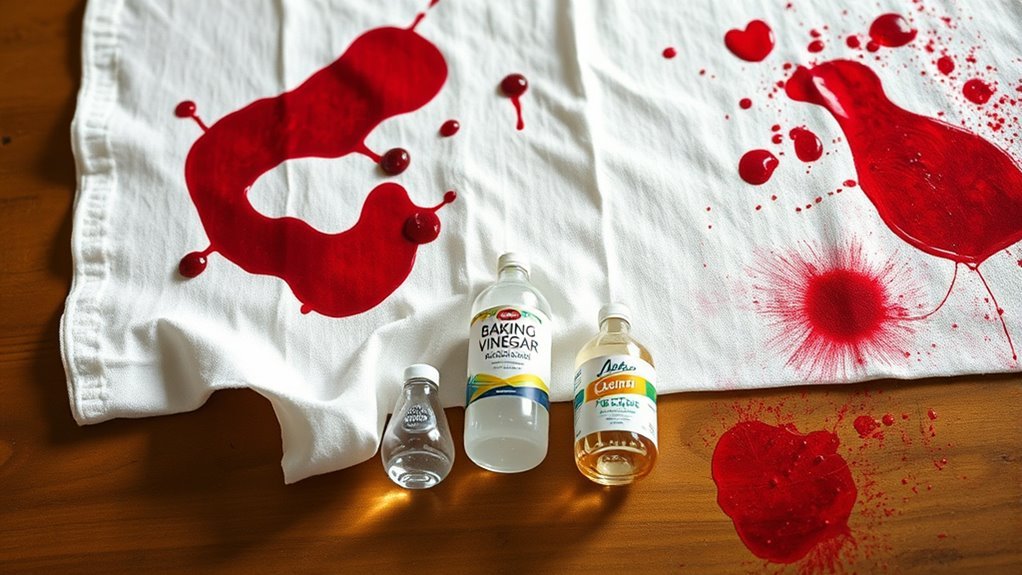
When red wine or fruit juice spills on fabric, acting quickly is essential to prevent the stain from setting. Here’s what you should do:
- Blot the spill gently with a clean cloth to absorb as much liquid as possible—never rub, as that spreads the stain.
- Sprinkle salt or baking soda on the stain to draw out moisture and prevent it from sinking deeper.
- Rinse the area with cold water from the back of the fabric to push the stain out, not further in.
- Apply a stain remover or a mixture of dish soap and hydrogen peroxide, then wash according to the fabric’s care label.
- Always avoid using hot water because it sets the stain instead of lifting it.
Best Practices for Removing Grease and Oil Marks
Grease and oil stains can be tricky to tackle because they tend to penetrate fabric fibers quickly. To stay ahead, focus on effective grease removal techniques and oil stain prevention. Act fast—blot excess grease, avoid rubbing, and treat with a solvent like dish soap or a specialized degreaser. Here’s a quick guide:
| Step | Action |
|---|---|
| Immediate Care | Blot gently, don’t rub |
| Pre-Treatment | Apply dish soap or degreaser |
| Wash & Check | Use hot water; repeat if needed |
Recognizing the different types of grease stains can help tailor your removal approach for better results.
Techniques for Ink and Dye Stain Removal
Although ink and dye stains can seem stubborn, knowing the right techniques can make their removal much more manageable. You’ll want to act quickly and select effective ink removal methods and dye stain solutions to liberate your fabrics from unwanted marks. Here’s a practical approach:
- Blot excess ink gently with a clean cloth—avoid rubbing to prevent spreading.
- Apply rubbing alcohol or hand sanitizer directly on the stain to dissolve ink pigments.
- For dye stains, soak the fabric in a mixture of cold water and vinegar to break down color molecules.
- Launder as usual but check the stain before drying; heat can set it permanently.
Using Commercial Stain Removers Safely
When using commercial stain removers, you need to apply them carefully to avoid damaging your fabric or surfaces. Always follow the product’s instructions and test a small area first to check for any adverse reactions. Additionally, take safety precautions like wearing gloves and ensuring good ventilation to protect yourself during the process. Opening a window or turning on the fan for ventilation helps reduce chemical smells and ensures a safer cleaning environment.
Proper Application Techniques
Start by reading the label carefully to guarantee you understand the proper usage and safety precautions of the commercial stain remover. Your success in stain treatment depends on the application methods you choose. Follow these steps for best results:
- Test the product on a hidden fabric area to check for colorfastness.
- Apply the remover directly onto the stain, avoiding surrounding areas to prevent damage.
- Use a clean cloth or sponge to gently blot the stain—never rub, as this can spread it.
- Allow the remover to sit as directed before rinsing or laundering to maximize effectiveness.
Safety Precautions to Follow
Because commercial stain removers contain potent chemicals, you’ll need to handle them with care to protect yourself and your fabrics. Always prioritize gloves usage to prevent skin irritation or chemical burns. Choose durable, chemical-resistant gloves and change them if they get damaged. Mask recommendations are equally important, especially if you’re working in a poorly ventilated area or using spray formulas. A simple mask can reduce inhalation of harmful fumes, keeping your respiratory system safe. Work in a well-ventilated space, open windows, or use fans to disperse fumes quickly. Avoid mixing stain removers with other cleaning agents to prevent dangerous chemical reactions. Finally, follow all instructions on the product label exactly and store stain removers out of reach of children or pets for maximum safety.
Tips for Protecting Fabrics From Future Stains
Although you can’t prevent every spill, taking proactive steps can greatly reduce the risk of stains on your fabrics. Fabric protection is essential for stain prevention, and you can achieve it with simple, practical actions:
- Apply a fabric protector spray to create a barrier against liquids and dirt.
- Choose stain-resistant materials when possible, especially for high-traffic areas.
- Act quickly to blot spills before they set—time is your ally in stain prevention.
- Regularly clean fabrics according to care instructions to maintain their protective qualities.
Using the wrong cleaning tools on fabrics can worsen stains or damage the material, so always select appropriate cleaning methods.
When to Seek Professional Cleaning Services
When should you consider calling in professional cleaners? Knowing when to hire experts is key to maintaining your belongings without stress. Signs of necessity include stubborn stains that resist all home remedies, delicate fabrics requiring specialized care, or large-scale cleaning tasks beyond your time or tools. If you notice discoloration worsening or fabric damage risk, it’s a clear signal to stop DIY efforts. Professionals have the right equipment and knowledge to handle tough stains safely, preserving your items’ quality and saving you time. Don’t wait until stains set permanently; early intervention by pros often yields better results. Ultimately, recognizing when to hire cleaning services frees you from frustration and guarantees your fabrics stay in top condition with minimal hassle. Some stains may not respond to natural remedies despite scrubbing, which is a key reason to seek professional stain removal.
Frequently Asked Questions
Can Sunlight Help Bleach Out Stains Naturally?
You might be surprised by how effective sunlight exposure can be for natural bleaching. When you let stained fabrics bask in sunlight, the UV rays break down the chemical bonds in stains, gradually fading them. It’s a gentle, eco-friendly method that doesn’t rely on harsh chemicals. Just know it works best on fresh, organic stains and lighter fabrics. So, if you want a natural, free way to brighten up your clothes, sunlight’s your ally.
Are There Eco-Friendly Alternatives to Commercial Stain Removers?
You can definitely choose eco-friendly alternatives to commercial stain removers. Try a paste of baking soda and water for gentle scrubbing; it lifts stains without harsh chemicals. A vinegar solution, mixing equal parts white vinegar and water, works wonders on many stains too. These options are effective, safe, and give you freedom from synthetic ingredients. Plus, they’re budget-friendly and environmentally kind, making your cleaning routine both practical and green.
How Does Water Temperature Affect Stain Removal Effectiveness?
Imagine spilling red wine on your white cotton shirt. When deciding hot vs cold water, you’ll want to use cold water first—hot water can set the stain by causing a fabric reaction that bonds the pigment deeper. Cold water helps prevent this. For protein-based stains like blood, cold water works best, while greasy stains often respond better to warm water. Knowing your fabric and stain type gives you freedom to choose the right temperature for effective removal.
Can Stain Removal Techniques Damage Delicate Fabrics?
Yes, stain removal techniques can damage delicate fabrics if you’re not careful. These materials often have high stain sensitivity, meaning harsh chemicals or vigorous scrubbing can weaken fibers or cause discoloration. To protect your delicate fabrics, always test a small, hidden area first and opt for gentle, fabric-specific stain removers. Using cold water and patting instead of rubbing helps maintain your garment’s integrity while effectively treating stains.
What Household Tools Assist in Effective Stain Cleaning?
Imagine you spill coffee on your favorite shirt—don’t panic. You can use household tools like baking soda and white vinegar for effective stain cleaning. Sprinkle baking soda to absorb moisture, then apply white vinegar to break down the stain. These natural ingredients work well without harsh chemicals. You’ll appreciate how accessible and gentle they are, giving you freedom from expensive cleaners while keeping your fabrics safe and fresh.