How to Clean a White Coat: Effective Techniques and Tips
Cleaning a white coat effectively requires a combination of proper washing techniques and the right products. To keep your white coat looking fresh and bright, start by pre-treating stains, using the right detergent, and washing it in the appropriate cycle. This guide will walk you through the essential steps to maintain the pristine appearance of your white coat.
Pre-Treating Stains

Identifying and treating stains promptly is crucial to prevent them from setting. The longer a stain remains on the fabric, the more difficult it becomes to remove. To effectively tackle stains on a white coat, follow these steps:
1. Immediate Action: As soon as you notice a stain, act quickly. Blot the area with a clean, dry cloth to absorb excess liquid and prevent it from spreading.
2. Use the Right Products: Choose a stain remover that is specifically designed for delicate fabrics. For instance, enzymatic stain removers can break down protein-based stains like blood or sweat effectively. Apply the stain remover directly to the affected area and let it sit for about 5-10 minutes before rinsing with cold water.
3. Gentle Rubbing: For tougher stains, gently rub the area with your fingers or a soft-bristled toothbrush to lift the stain without damaging the fabric. Always do a patch test on an inconspicuous area first to ensure the product does not discolor the fabric.
By addressing stains promptly and using suitable products, you can significantly improve your chances of restoring your white coat to its original condition.
Choosing the Right Detergent
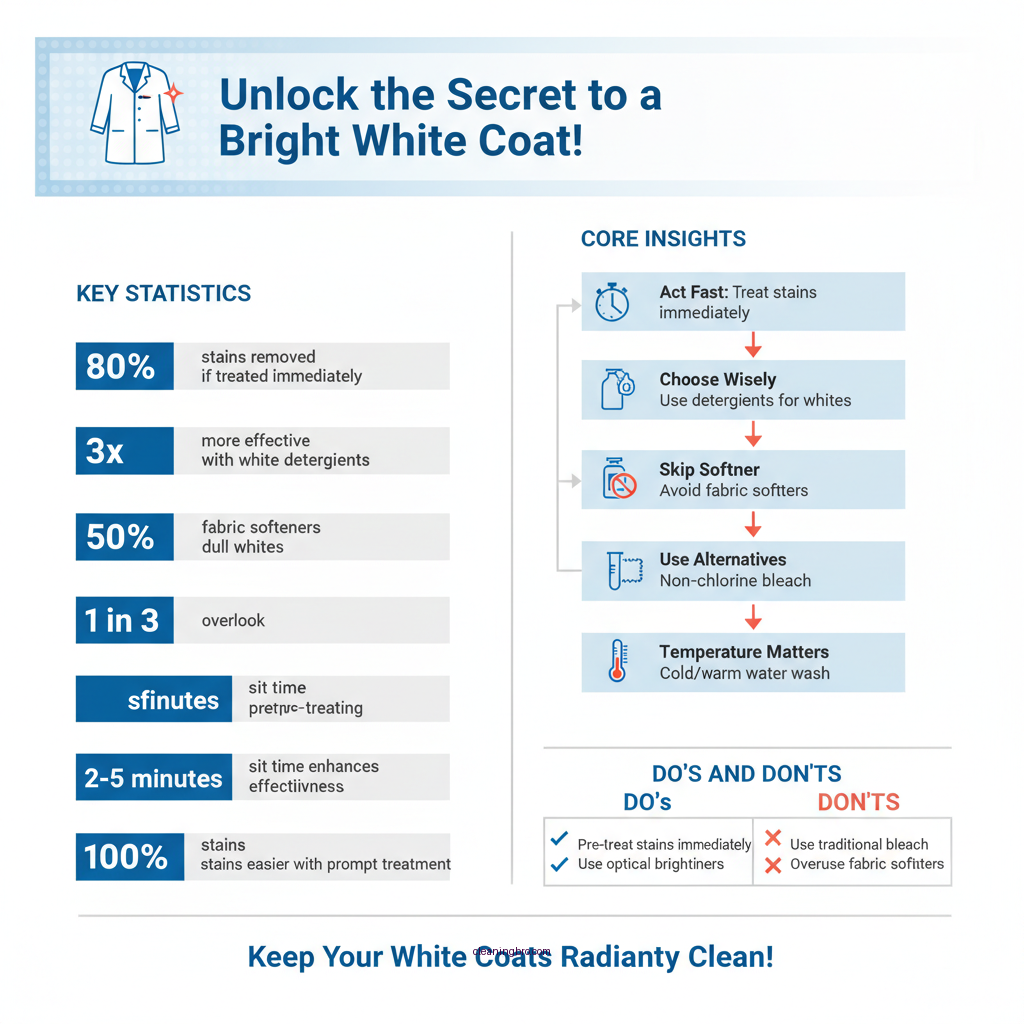

Using the right detergent is essential for maintaining the brightness of your white coat. Here are some tips for selecting the best detergent:
1. Opt for Detergents Formulated for Whites: Choose a detergent specifically designed to enhance the brightness of white fabrics. These detergents often contain optical brighteners, which help reflect light and make whites appear whiter.
2. Consider Non-Chlorine Bleach Alternatives: When tackling stubborn stains, consider using a non-chlorine bleach alternative, such as oxygen bleach. This option provides added stain-fighting power without the risk of damaging the fabric like traditional bleach can.
3. Avoid Fabric Softeners: While fabric softeners are great for making clothes feel softer, they can leave residues that may dull the brightness of your white coat over time. Opt for a detergent that includes fabric-softening properties instead.
By carefully selecting your detergent, you can ensure that your white coat remains bright and free of dinginess after each wash.
Washing Your White Coat

Washing techniques play a critical role in maintaining the integrity of your white coat. Follow these guidelines for an effective wash:
1. Select the Right Water Temperature: Always wash your white coat in cold or lukewarm water. Hot water can cause fabrics to shrink and can also lead to fading. Additionally, cold water is more energy-efficient and gentler on the fabric.
2. Use a Gentle Cycle: Set your washing machine to a gentle cycle to protect the fibers of your coat while still effectively cleaning it. This setting is particularly important for delicate fabrics, which can easily become damaged in a more vigorous wash.
3. Separate Whites from Colors: To prevent color transfer, wash your white coat separately from colored items. Even light-colored fabrics can bleed, leading to unwanted stains on your coat.
By adhering to these washing practices, you can prolong the life of your white coat and keep it looking fresh.
Drying Techniques
How you dry your white coat can significantly affect its appearance and longevity. Here are some recommended drying techniques:
1. Air Dry Whenever Possible: The best way to dry your white coat is to air dry it. Hang it on a padded hanger in a well-ventilated area, away from direct sunlight, which can cause yellowing and fading. This method is gentle and helps maintain the shape of the coat.
2. Using a Dryer: If you must use a dryer, select a low heat setting to minimize the risk of heat damage. Remove the coat promptly when the drying cycle is complete to reduce wrinkles. You can also place a clean, dry towel in the dryer with the coat to help absorb moisture and speed up the drying process.
3. Avoid Overdrying: Overdrying can lead to a stiff texture and can cause the fibers to break down. Check the coat frequently while it’s in the dryer to ensure it doesn’t dry too much.
By employing these drying techniques, you can help maintain the soft texture and bright appearance of your white coat.
Maintaining Brightness Between Washes
To keep your white coat looking its best between washes, implement these simple maintenance strategies:
1. Regular Brushing: Use a soft brush to gently remove dirt and debris from the surface of your coat. This can help maintain its bright appearance and prevent the buildup of grime.
2. Proper Storage: Store your coat in a cool, dry place, ideally in a garment bag to protect it from dust and potential stains. Avoid hanging it in direct sunlight, as exposure can lead to yellowing over time.
3. Spot Cleaning: For minor spills or stains, consider spot cleaning instead of washing the entire coat. This approach conserves water and reduces wear and tear on the fabric.
By incorporating these maintenance practices into your routine, you can keep your white coat looking polished and new.
Dealing with Tough Stains
Stubborn stains can be particularly challenging to remove from white fabrics. Here’s how to effectively deal with them:
1. Soaking Solutions: For particularly tough stains, soak your coat in a mixture of water and white vinegar. Combine one part vinegar with two parts water and allow the coat to soak for 30 minutes before washing. Vinegar is a natural stain remover that is safe for most fabrics.
2. Baking Soda Paste: Another effective method is to create a paste using baking soda and water. Apply the paste to the stain and let it sit for at least 15-20 minutes before rinsing and washing as usual.
3. Test Cleaning Solutions: Always test any new cleaning solution on a small, inconspicuous area first to avoid damage or discoloration. This precaution ensures that the cleaning method will not adversely affect the fabric.
Using these techniques, you can effectively manage tough stains while preserving the integrity of your white coat.
Top 5 Detergents for White Fabrics (2024)
| # | Brand | Type | Stain Removal Power | Price per Load |
|---|---|---|---|---|
| 1 | Tide Pods | Pods | Excellent | $0.30 |
| 2 | Arm & Hammer | Powder | Very Good | $0.25 |
| 3 | OxiClean | Liquid | Excellent | $0.28 |
| 4 | Seventh Generation | Liquid | Good | $0.35 |
| 5 | Purex | Liquid | Good | $0.22 |
Detergent Comparison: Tide Pods vs. Arm & Hammer vs. OxiClean
| Feature | ⭐ Tide Pods | Arm & Hammer | OxiClean |
|---|---|---|---|
| Type | Pods | Powder | Liquid |
| Stain Removal | ✅ Excellent | ✅ Very Good | ✅ Excellent |
| Price per Load | $0.30 | $0.25 | $0.28 |
| Formulation | Concentrated | Regular | Concentrated |
| Scent | Fresh | Clean | Variety |
| Availability | Widely Available | Widely Available | Widely Available |
| Eco-Friendly | No | Yes | Yes |
| Safe for Delicates | ✅ Yes | ✅ Yes | ✅ Yes |
| Overall Rating | ★★★★☆ | ★★★☆☆ | ★★★★☆ |
| 🏆 Best For | Convenience & Efficiency | Budget-Conscious Users | Highly Stain-Resistant Needs |
In summary, keeping your white coat clean involves pre-treating stains, using the right detergent, and following specific washing and drying techniques. By incorporating these tips into your routine, you can ensure your coat remains bright and fresh. For best results, try to clean your coat regularly and address any stains promptly to maintain its pristine condition. Implementing these steps will not only extend the life of your coat but also keep you looking sharp and polished.
Frequently Asked Questions
How can I effectively remove stains from my white coat?
To effectively remove stains from your white coat, start by blotting the stain with a clean cloth to absorb any excess liquid. Apply a mixture of hydrogen peroxide and baking soda directly to the stain, letting it sit for about 30 minutes before rinsing with cold water. For tougher stains, a gentle fabric-safe bleach may be used, but always test on a hidden area first.
What is the best way to wash a white coat without damaging it?
The best way to wash a white coat is to check the care label for specific instructions, then use a gentle cycle with cold water and a mild detergent. Avoid using hot water or harsh chemicals that can cause yellowing. Additionally, air drying your coat instead of using a dryer can help maintain its brightness and fabric integrity.
Why does my white coat turn yellow after washing, and how can I prevent this?
Your white coat may turn yellow due to residues from detergents, fabric softeners, or even washing in hard water. To prevent this, use a detergent specifically designed for whites and consider adding a whitening booster like baking soda or oxygen bleach. Regularly clean your washing machine to eliminate any buildup that could transfer to your garments.
Which products are recommended for cleaning white coats?
Recommended products for cleaning white coats include oxygen bleach, which is effective yet gentle on fabrics, and specially formulated stain removers that target tough stains. Look for detergents with optical brighteners, as they help maintain the whiteness of your coat. Always check the labels for compatibility with the fabric type.
How often should I clean my white coat to keep it looking fresh?
You should clean your white coat as soon as you notice stains or after every few wears to keep it looking fresh and bright. If you wear it regularly in environments prone to dirt or spills, a more frequent wash may be necessary. However, avoid over-washing to prevent fabric wear; spot clean when possible to maintain its quality.
References
- Pregnancy and obesity: Know the risks – Mayo Clinic
https://www.mayoclinic.org/healthy-lifestyle/consumer-health/in-depth/laundry-101/art-20044409 - https://www.cdc.gov/infectioncontrol/guidelines/healthcare-personnel/ppe.html
https://www.cdc.gov/infectioncontrol/guidelines/healthcare-personnel/ppe.html - https://www.ncbi.nlm.nih.gov/pmc/articles/PMC4770074/
https://www.ncbi.nlm.nih.gov/pmc/articles/PMC4770074/ - https://www.who.int/water_sanitation_health/publications/wash-in-healthcare-facilities/en/
https://www.who.int/water_sanitation_health/publications/wash-in-healthcare-facilities/en/ - https://www.nature.com/articles/s41598-020-67564-7
https://www.nature.com/articles/s41598-020-67564-7 - https://www.sciencedirect.com/science/article/pii/S2213933420301441
https://www.sciencedirect.com/science/article/pii/S2213933420301441 - https://pubmed.ncbi.nlm.nih.gov/26782534/
https://pubmed.ncbi.nlm.nih.gov/26782534/ - https://www.bbc.com/future/article/20200417-the-science-of-cleaning-your-clothes
https://www.bbc.com/future/article/20200417-the-science-of-cleaning-your-clothes - Google Scholar Google Scholar
https://scholar.google.com/scholar?q=how+to+clean+white+coat - Google Scholar Google Scholar
https://scholar.google.com/scholar?q=cleaning+methods+for+white+coats