
How to Clear a Blocked Air Duct: Step-by-Step Guide
Clearing a blocked air duct is vital for ensuring efficient airflow and optimal operation of your HVAC system. A blocked duct can lead to uneven heating or cooling, increased energy bills, and poorer air quality. This guide will provide you with practical steps to identify and resolve blockages, ultimately enhancing your home’s comfort and efficiency.
Identify Signs of a Blocked Air Duct

Recognizing the signs of a blocked air duct early can save you time and money on HVAC repairs. Here are some indicators to watch for:
– Unusual Noises or Sounds from the Ductwork: If you hear strange noises such as rattling, hissing, or whistling, it may indicate that airflow is being obstructed. These sounds can be a result of debris or even animal nests within the duct.
– Uneven Heating or Cooling in Different Rooms: One of the most common signs of a blocked air duct is inconsistent temperatures throughout your home. If some rooms are excessively hot or cold compared to others, it’s a clear indication of airflow issues. The blockage may be localized in certain ducts, affecting the temperature distribution.
Gather Necessary Tools
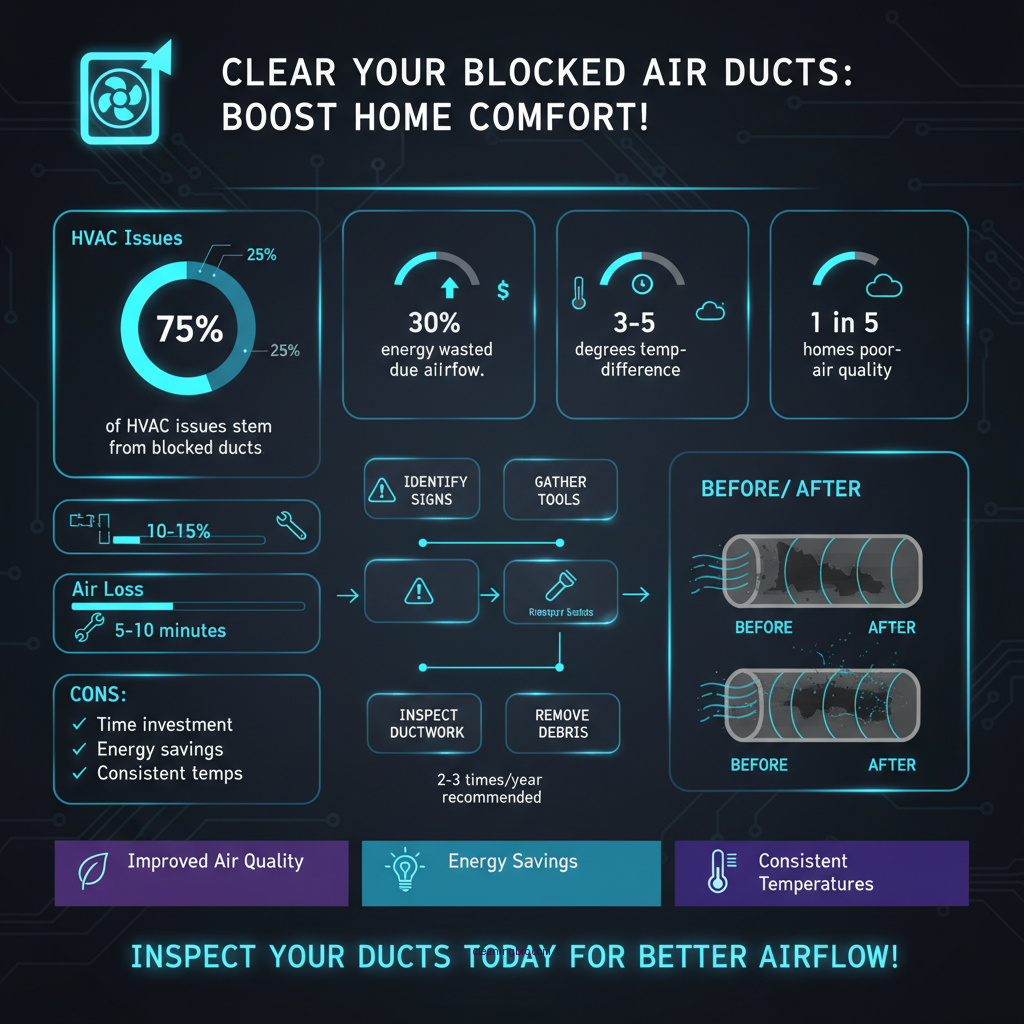

Before diving into the cleaning process, it’s essential to gather the necessary tools to ensure an efficient and thorough job:
– Vacuum Cleaner with Hose Attachment: A vacuum cleaner with a hose attachment is crucial for removing loose debris and dust from the ducts. Opt for a vacuum with strong suction to ensure effective cleaning.
– Duct Cleaning Brushes: These brushes come in various sizes and shapes, specifically designed to reach deep into ducts and dislodge stubborn blockages. They are particularly useful for brushing away accumulated dust and lint.
– Flashlight for Inspection: A flashlight will help you see inside the ducts clearly. Inspecting the ductwork will enable you to identify the location and extent of any debris or damage.
Inspect the Duct System

Performing a thorough inspection of your duct system is a vital step in addressing blockages:
– Check for Visible Blockages at Vent Openings: Start by inspecting the vents in various rooms. Look for any visible signs of dust buildup, debris, or obstructions that may hinder airflow.
– Use a Flashlight to Look Inside Ducts for Debris or Damage: Shine a flashlight into the duct openings to get a better view of the interior. Look for dirt, dust, or any physical damage to the ductwork, such as dents or collapses.
Remove Blockages
Once you have identified the locations of the blockages, it’s time to take action:
– Use a Vacuum to Clean Out Loose Debris: Start with your vacuum cleaner. Insert the hose attachment into the duct openings and vacuum any loose debris that you can reach. This step will significantly reduce the amount of dust and dirt within the system.
– Employ Duct Cleaning Brushes for Stubborn Clogs: For more stubborn blockages that the vacuum cannot handle, use the duct cleaning brushes. Insert the brush into the duct and gently scrub to dislodge any accumulated dirt or debris. Be cautious not to damage the duct walls while scrubbing.
Consider Professional Help
While many blockages can be resolved with DIY methods, there are instances where professional assistance may be necessary:
– Know When to Call a Professional for Severe Blockages: If you encounter a blockage that is beyond your reach or ability to clean, it may be time to call in a professional. Signs that you should seek help include persistent airflow issues, significant noise from the ducts, or if you notice mold growth.
– Understand the Benefits of Professional Duct Cleaning Services: Professionals have specialized equipment and training to clean ducts thoroughly and safely. They can also identify potential issues that may lead to future blockages or HVAC inefficiencies.
Maintain Regular Duct Maintenance
To prevent future blockages and maintain optimal airflow, regular duct maintenance is essential:
– Schedule Annual Inspections to Prevent Blockages: Consider scheduling an annual inspection of your HVAC system, including the ductwork. Regular inspections can help catch potential issues before they develop into significant problems.
– Replace Air Filters Regularly to Reduce Dust Buildup: Changing your air filters every 1-3 months can significantly reduce dust and debris accumulation within your ducts, leading to improved airflow and air quality.
Regularly clearing your air ducts is crucial for enhancing your home’s comfort and energy efficiency. By following the steps outlined in this guide, you can effectively tackle common blockages and improve your indoor air quality. Consider implementing a maintenance schedule to keep your ducts clear and functioning optimally.
Top 7 Causes of Blocked Air Ducts (2024)
| # | Cause | Description | Potential Impact |
|---|---|---|---|
| 1 | Dust Accumulation | Buildup of dust particles within ducts | Reduced Airflow |
| 2 | Debris | Leaves, dirt, or other debris entering the duct | Air Quality Issues |
| 3 | Animal Nests | Rodents or birds nesting in ducts | Severe Blockage |
| 4 | Mold Growth | Mold developing due to moisture | Health Risks |
| 5 | Duct Design | Poorly designed ductwork | Inefficient Airflow |
| 6 | Ageing System | Old ducts that are breaking down | Frequent Repairs |
| 7 | Improper Installation | Ducts not installed according to specifications | Increased Energy Costs |
DIY Duct Cleaning vs. Professional Duct Cleaning vs. Regular Maintenance
| Feature | ⭐ DIY Duct Cleaning | Professional Duct Cleaning | Regular Maintenance |
|---|---|---|---|
| Cost | Low ($0-$50) | High ($100-$500) | Moderate ($100-$200/year) |
| Time Commitment | Variable (2-4 hours) | 1-3 hours | Minimal (1 hour) |
| Effectiveness | ✅ Good | ✅ Excellent | ✅ Good |
| Skill Required | Basic | Professional Expertise | Basic |
| Tools Required | Basic Tools | Advanced Equipment | Basic Tools |
| Flexibility | High | Low | Medium |
| Health Benefits | ✅ Moderate | ✅ High | ✅ Moderate |
| Time Between Cleanings | Variable (6-12 months) | 1-3 years | 6-12 months |
| Warranty | None | Often included | None |
| 🏆 Best For | Budget-conscious homeowners | Thorough cleaning and inspection | Routine upkeep and prevention |
By understanding the signs of blocked air ducts, gathering the right tools, and following a systematic approach to cleaning, you can greatly improve your HVAC system’s performance and the air quality in your home. Remember, regular maintenance is equally important in preventing future blockages. Whether you choose to handle cleaning yourself or hire a professional, staying proactive will ensure a comfortable living environment.
Frequently Asked Questions
What are the signs that my air duct is blocked?
Common signs of a blocked air duct include inconsistent airflow, increased energy bills, and unusual noises from your HVAC system. You might also notice dust buildup around vents or the presence of musty odors, indicating poor air quality. Addressing these symptoms promptly can help maintain system efficiency and improve indoor air quality.
How can I safely clear a blocked air duct?
To safely clear a blocked air duct, start by turning off your HVAC system to prevent any damage. Use a vacuum cleaner with a long hose attachment to remove dust and debris from the vent. If the blockage persists, consider using a duct cleaning brush or hiring a professional service for a thorough cleaning, as they have specialized tools to reach deeper obstructions.
Why is it important to clear a blocked air duct?
Clearing a blocked air duct is crucial for maintaining efficient airflow and optimal HVAC performance. Blockages can lead to increased energy consumption, resulting in higher utility bills and potential damage to your system. Additionally, unaddressed blockages may contribute to poor indoor air quality, which can affect your health and comfort.
What tools do I need to clear a blocked air duct?
To clear a blocked air duct, you will need a vacuum cleaner with a hose attachment, a duct cleaning brush or rod, and possibly a flashlight to inspect the ductwork. Additionally, a screwdriver may be necessary to remove vent covers. Having these tools on hand can make the cleaning process more efficient and effective.
Which professional services can help with blocked air ducts?
Professional duct cleaning services are highly recommended for addressing blocked air ducts. Look for certified HVAC technicians or companies that specialize in air duct cleaning, as they have the expertise and equipment to thoroughly clean and inspect your ductwork. Regular maintenance from professionals can also help prevent future blockages and ensure your HVAC system operates efficiently.
References
- https://www.ncbi.nlm.nih.gov/pmc/articles/PMC6465230/
https://www.ncbi.nlm.nih.gov/pmc/articles/PMC6465230/ - https://www.cdc.gov/niosh/topics/indoorenv/ventilation.html
https://www.cdc.gov/niosh/topics/indoorenv/ventilation.html - https://www.mayoclinic.org/healthy-lifestyle/indoor-air-quality/expert-answers/indoor-air-quality/faq-20058092
https://www.mayoclinic.org/healthy-lifestyle/indoor-air-quality/expert-answers/indoor-air-quality/faq-20058092 - https://www.epa.gov/indoor-air-quality-iaq/duct-cleaning
https://www.epa.gov/indoor-air-quality-iaq/duct-cleaning - https://www.who.int/news-room/questions-and-answers/item/indoor-air-pollution
https://www.who.int/news-room/questions-and-answers/item/indoor-air-pollution - Air-conditioning | Types, Benefits & Maintenance | Britannica
https://www.britannica.com/science/air-conditioning - Google Scholar Google Scholar
https://scholar.google.com/scholar?q=how+to+clear+a+blocked+air+duct - Google Scholar Google Scholar
https://scholar.google.com/scholar?q=duct+cleaning+techniques - Google Scholar Google Scholar
https://scholar.google.com/scholar?q=indoor+air+quality+and+ventilation - https://www.sciencedirect.com/topics/engineering/air-ducts
https://www.sciencedirect.com/topics/engineering/air-ducts