How to Clean Drum Heads: A Step-by-Step Guide
Cleaning your drum heads is essential for maintaining their sound quality and extending their lifespan. In just a few simple steps, you can ensure your drum heads remain in optimal condition. This guide will walk you through the best practices for cleaning your drum heads effectively, enhancing your overall drumming experience.
Drum heads are a fundamental component of your drums, affecting not only their appearance but also their tonal quality. Regular cleaning can remove dirt, oils, and other debris that accumulate over time, which can impair sound and playability. By understanding the different types of drum heads and following a straightforward cleaning process, you can keep your instruments sounding their best.
Understanding Drum Head Types
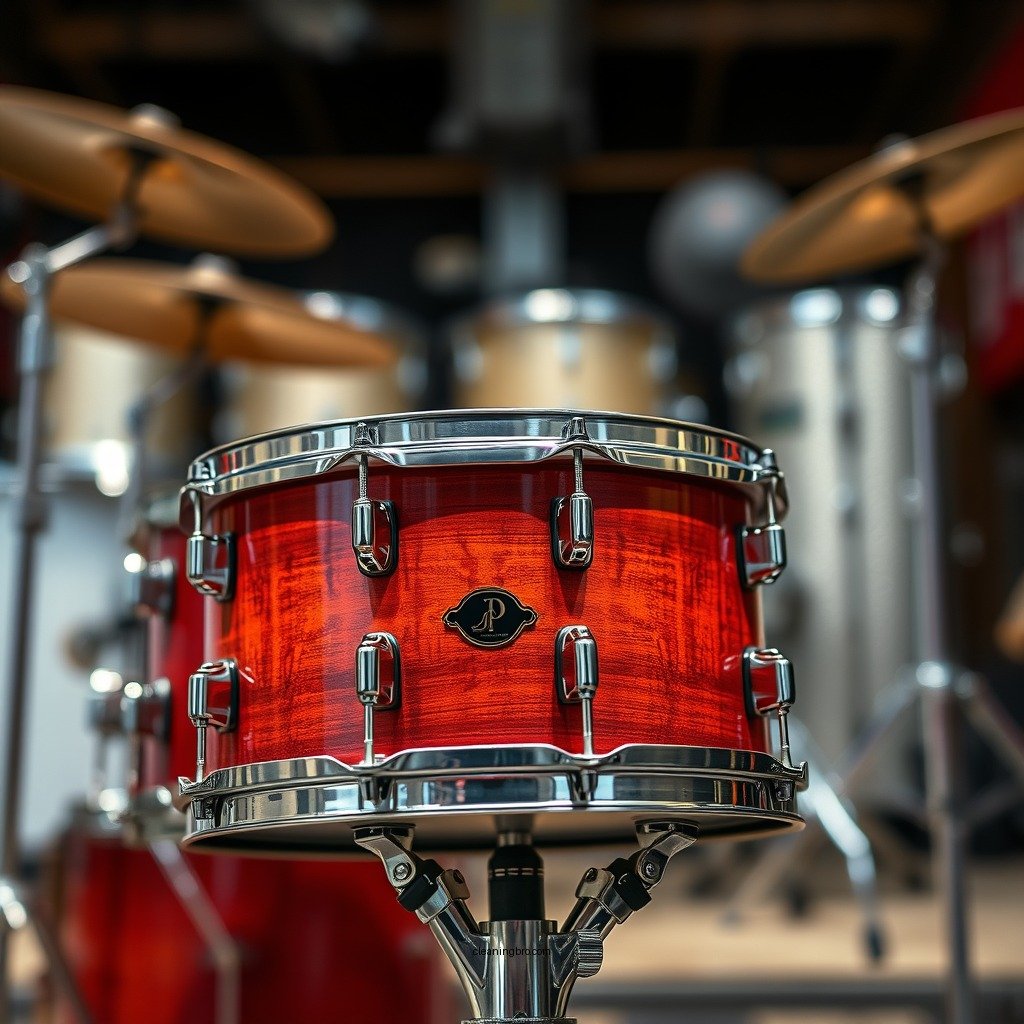
Drum heads come in various materials, each with unique characteristics and cleaning requirements. The most common types are Mylar and calfskin, but there are also synthetic and hybrid options.
– Mylar: This plastic material is prevalent in modern drum heads due to its durability and consistent sound quality. Cleaning Mylar heads typically involves using a damp cloth and mild soap, as they are resistant to moisture and wear.
– Calfskin: Traditionally used in vintage drums, calfskin heads require more delicate care. They can be sensitive to humidity and temperature fluctuations, making them less durable than Mylar. Cleaning calfskin involves using specialized products designed to maintain the natural oils in the skin, preventing it from drying out.
– Synthetic and Hybrid Heads: These are designed to combine the benefits of both Mylar and calfskin. Cleaning synthetic heads is similar to Mylar, but care must be taken to avoid using harsh chemicals.
Understanding these materials will help you choose the right cleaning method, ensuring that you do not inadvertently damage your drum heads.
Tools and Supplies Needed
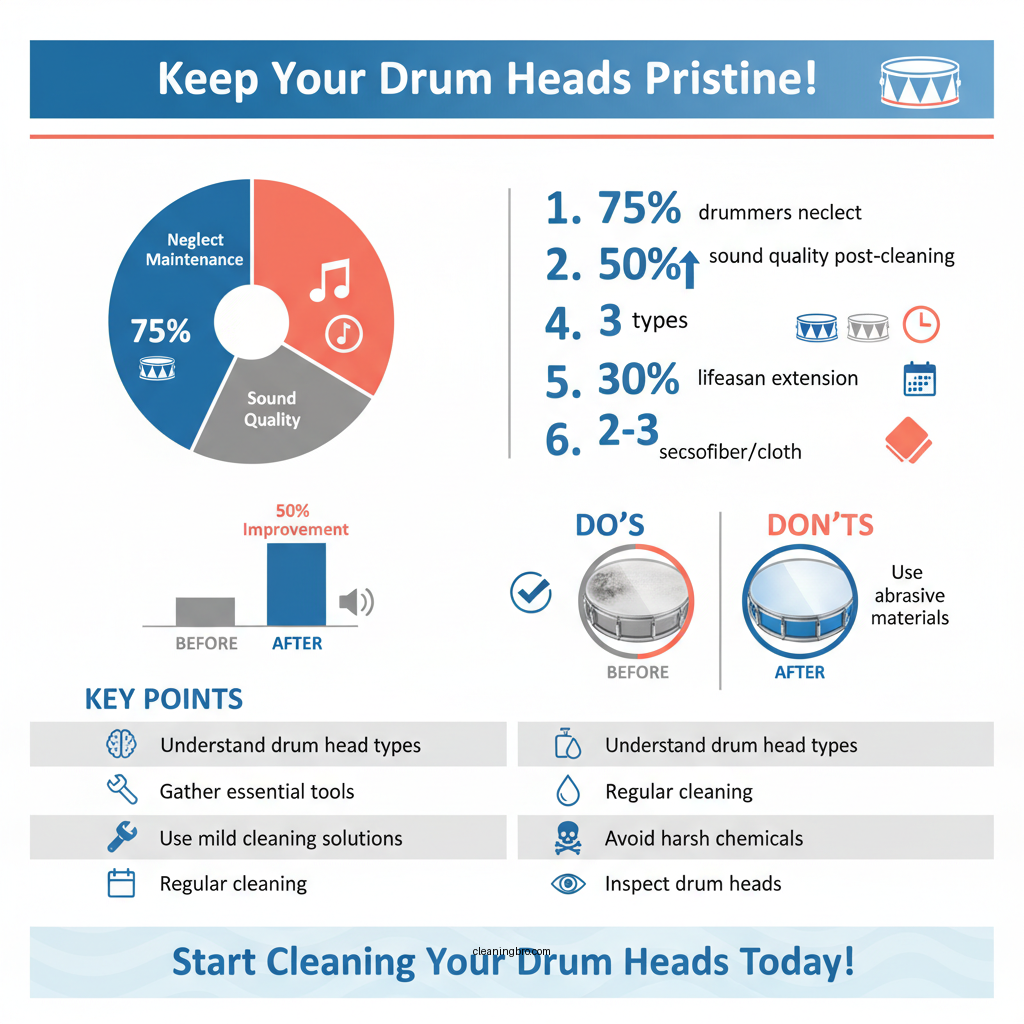
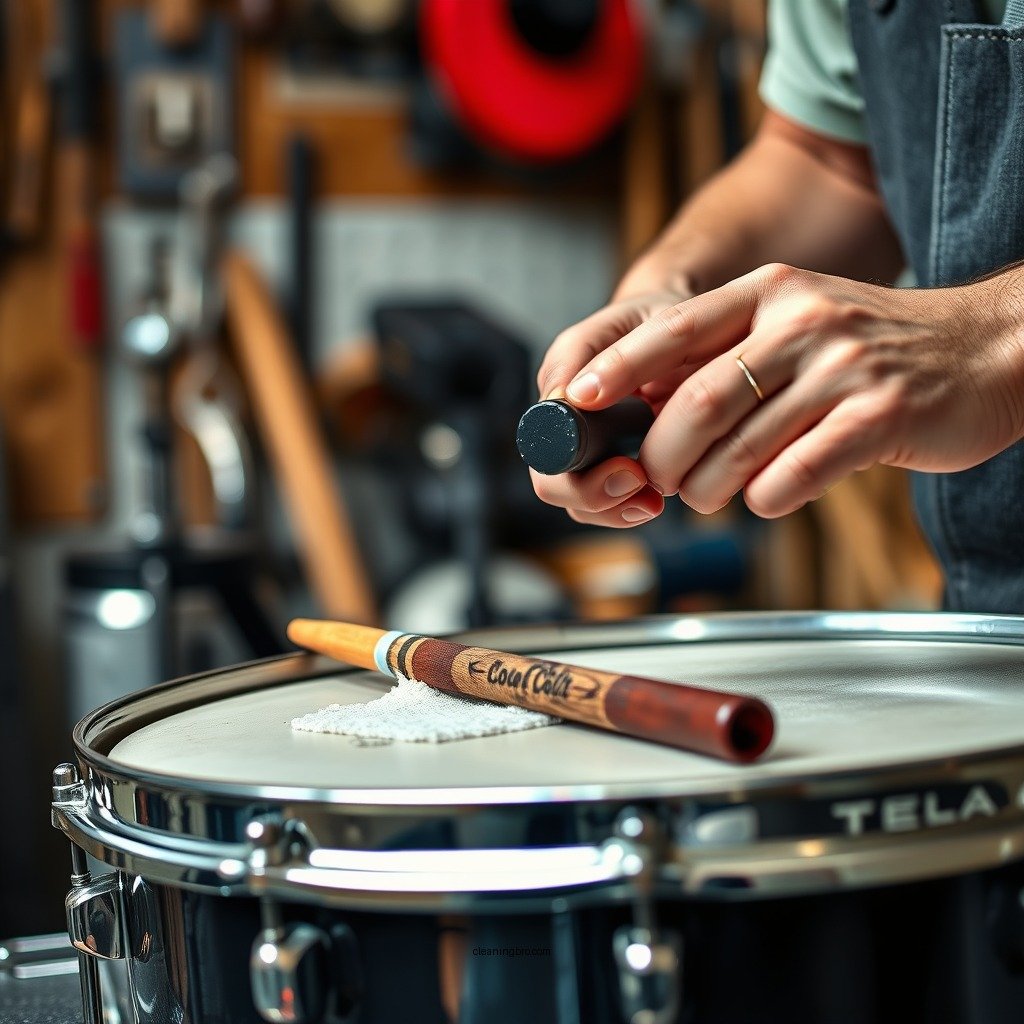
To effectively clean your drum heads, gather the following essential tools and supplies:
– Microfiber Cloths: Soft and non-abrasive, these cloths are ideal for wiping down drum heads without scratching the surface.
– Drum Brushes: A soft brush can be useful for removing dust and debris from around the edges of the drum head.
– Mild Cleaning Solution: A gentle soap or specialized drum cleaning solution helps lift dirt without damaging the material. Avoid anything abrasive or alcohol-based, as these can strip protective coatings.
– Warm Water: This is essential for diluting your cleaning solution and dampening your cloth.
Using non-abrasive materials is crucial to prevent scratches and maintain the integrity of the drum heads. Regularly check your cleaning supplies to ensure they are suitable for use on your specific drum head material.
Step-by-Step Cleaning Process
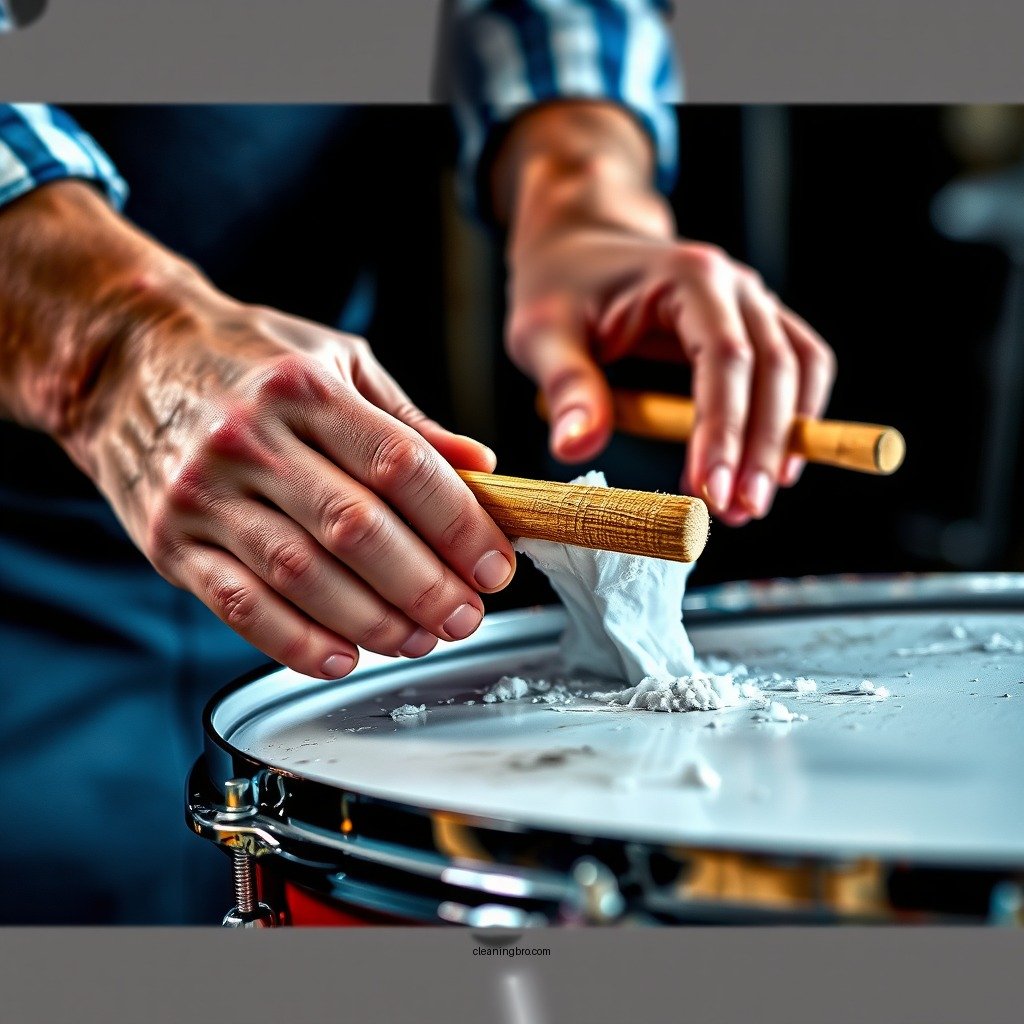
Cleaning your drum heads can be broken down into a simple step-by-step process:
1. Remove the Drum Head: Gently loosen the tension rods using a drum key. Carefully lift the drum head off the shell. This step allows for thorough cleaning and inspection.
2. Inspect for Damage: Before cleaning, check for cracks, dents, or other issues. If you notice significant damage, consider replacing the head instead of cleaning.
3. Clean the Surface: Dampen a microfiber cloth with warm water and a mild cleaning solution. Wipe the surface of the drum head in a circular motion, removing dirt and oils. For calfskin heads, use a specialized cleaner.
4. Focus on the Edges: Use a soft brush to remove any debris from the edges of the drum head. This area tends to collect dust and oils, which can affect sound quality.
5. Dry the Drum Head: Allow the drum head to air dry completely before reattaching it to the drum shell. This prevents moisture buildup, which can lead to mold and mildew.
6. Reattach the Drum Head: Once dry, carefully position the drum head back on the shell and tighten the tension rods evenly. This ensures proper tuning and maintains drum integrity.
Following this process will keep your drum heads clean and enhance their longevity and sound quality.
Top 7 Drum Head Brands and Their Features (2024)
| # | Brand | Material | Durability | Price Range |
|---|---|---|---|---|
| 1 | Remo | Mylar | High | $20-$50 |
| 2 | Evans | Mylar | High | $25-$55 |
| 3 | Aquarian | Mylar | Medium | $30-$60 |
| 4 | Attack | Mylar | High | $15-$45 |
| 5 | Puresound | Calfskin | Medium | $35-$70 |
| 6 | Remo Renaissance | Calfskin | Low | $50-$90 |
| 7 | Aquarian Texture Coated | Mylar | High | $20-$50 |
Tips for Maintaining Drum Heads
Regular maintenance is crucial in prolonging the life of your drum heads. Here are some best practices:
– Wipe Down After Use: After each practice or performance, use a microfiber cloth to wipe away sweat, oils, and dust. This quick step can prevent buildup.
– Store Properly: When not in use, store your drums in a controlled environment. Avoid placing them in direct sunlight or humid areas, as this can warp the drum heads.
– Check Tension Regularly: Monitor the tension of your drum heads. Proper tuning not only enhances sound quality but also reduces unnecessary strain on the head material.
– Use a Drum Cover: Invest in a drum cover to protect your drums from dust and debris when not in use. This simple addition can significantly reduce cleaning frequency.
Implementing these practices can help maintain the aesthetic and acoustic qualities of your drum heads, ensuring they perform at their best.
Common Mistakes to Avoid
Even seasoned drummers can make mistakes when it comes to cleaning and maintaining drum heads. Here are some common pitfalls to avoid:
– Using Harsh Chemicals: Avoid using bleach or other harsh cleaning agents, as they can damage the head material and affect sound quality.
– Neglecting the Edges: Many drummers forget to clean the edges of the drum head, where dirt tends to accumulate. This neglect can lead to sound dampening and a dull tone.
– Over-tightening: When reattaching the drum head, be careful not to over-tighten the tension rods. This can lead to cracks or warping.
– Ignoring Signs of Wear: If you notice discoloration, cracking, or a significant drop in sound quality, don’t ignore these signs. Addressing issues early can prevent more extensive damage.
If you find yourself having made these mistakes, take immediate corrective action, such as gently re-cleaning the head or consulting with a professional for repairs.
When to Replace Drum Heads
Knowing when to replace your drum heads is just as important as maintaining them. Here are signs that indicate a drum head needs replacement:
– Visible Damage: Cracks, dents, or significant wear can affect the sound and playability of your drums.
– Loss of Tone: If you notice a significant drop in sound quality or resonance, it may be time to replace the head.
– Frequent Tuning Issues: If you find that you are constantly tuning a drum head, it may no longer be holding tension effectively.
– Moisture Damage: If a drum head appears warped or discolored due to moisture, it can impact both its appearance and acoustic properties.
Replacing worn heads ensures that your drums deliver the sound quality you expect, maintaining your overall performance.
Regularly cleaning your drum heads is vital for preserving their sound quality and extending their lifespan. By following the outlined cleaning techniques and maintenance tips, you can enhance your overall drumming experience and ensure your sound remains crisp and clear. Taking the time to care for your drum heads will lead to improved playability and longevity, allowing you to focus on what matters most—creating music.
Frequently Asked Questions
What is the best way to clean drum heads?
The best way to clean drum heads is to use a soft cloth or microfiber towel dampened with water or a mild soap solution. Gently wipe the surface to remove dirt and grime, and avoid using harsh chemicals that can damage the drum head material. Regular cleaning helps maintain the sound quality and longevity of your drum heads.
How often should I clean my drum heads?
You should clean your drum heads regularly, ideally after each practice session or performance, to prevent buildup of oils and dirt. For drummers who play frequently, a deeper clean every few weeks is recommended. This routine helps preserve the clarity of your drum sound and extends the life of the heads.
Why is it important to clean drum heads?
Cleaning drum heads is important because it removes dirt, oils, and debris that can mute the sound and affect the tonal quality of your drums. Additionally, regular maintenance prevents unwanted wear and tear, ensuring your drum heads remain responsive and vibrant. A clean drum head allows for better performance and sound projection.
Which products should I avoid when cleaning drum heads?
You should avoid harsh chemicals, alcohol-based cleaners, or abrasive materials when cleaning drum heads, as these can damage the drum head surface and alter its sound. Additionally, avoid using paper towels, as they can scratch the surface. Instead, stick to mild soap, water, and soft cloths designed for delicate surfaces.
How can I remove stubborn stains from drum heads?
To remove stubborn stains from drum heads, apply a small amount of mild soap mixed with water to a soft cloth and gently scrub the stained area. For tougher stains, a mixture of baking soda and water can be used to create a paste that lifts the stain without damaging the head. Always test any cleaning solution on a small area first to ensure it doesn’t affect the head’s finish.
References
- Drumhead
https://en.wikipedia.org/wiki/Drum_head - https://www.britannica.com/art/drum
https://www.britannica.com/art/drum - Google Scholar Google Scholar
https://scholar.google.com/scholar?q=how+to+clean+drum+heads - Google Scholar Google Scholar
https://scholar.google.com/scholar?q=drum+maintenance - https://www.drumforum.org/threads/how-to-clean-your-drumheads.171592/
https://www.drumforum.org/threads/how-to-clean-your-drumheads.171592/ - Mike Porter | NAMM.org
https://www.namm.org/library/oral-history/mike-porter - https://www.sciencedirect.com/topics/engineering/drum-head
https://www.sciencedirect.com/topics/engineering/drum-head - https://www.mayoclinic.org/healthy-lifestyle/consumer-health/in-depth/cleaning-your-instruments/art-20045546
https://www.mayoclinic.org/healthy-lifestyle/consumer-health/in-depth/cleaning-your-instruments/art-20045546 - Google Scholar Google Scholar
https://scholar.google.com/scholar?q=drum+head+cleaning+techniques - https://www.drumshop.com/blogs/news/how-to-clean-drumheads
https://www.drumshop.com/blogs/news/how-to-clean-drumheads