How to Clean Epoxy Resin Countertops Effectively
Cleaning epoxy resin countertops is straightforward and essential for maintaining their shine and durability. To keep your countertops looking their best, regular cleaning with the right methods and products is crucial. In this guide, you will learn the best techniques and tips for effectively cleaning your epoxy resin surfaces.
Understanding Epoxy Resin Countertops

Epoxy resin is a high-performance material known for its durability, resistance to stains, and ability to withstand scratches, making it an ideal choice for countertops. Unlike traditional materials like wood or laminate, epoxy resin provides a non-porous surface that is less prone to absorbing spills and stains. This unique property not only enhances its aesthetic appeal but also contributes to its longevity and ease of maintenance. Understanding these characteristics is vital when selecting the appropriate cleaning agents and methods, as using harsh chemicals can compromise the surface integrity and finish.
Essential Cleaning Supplies
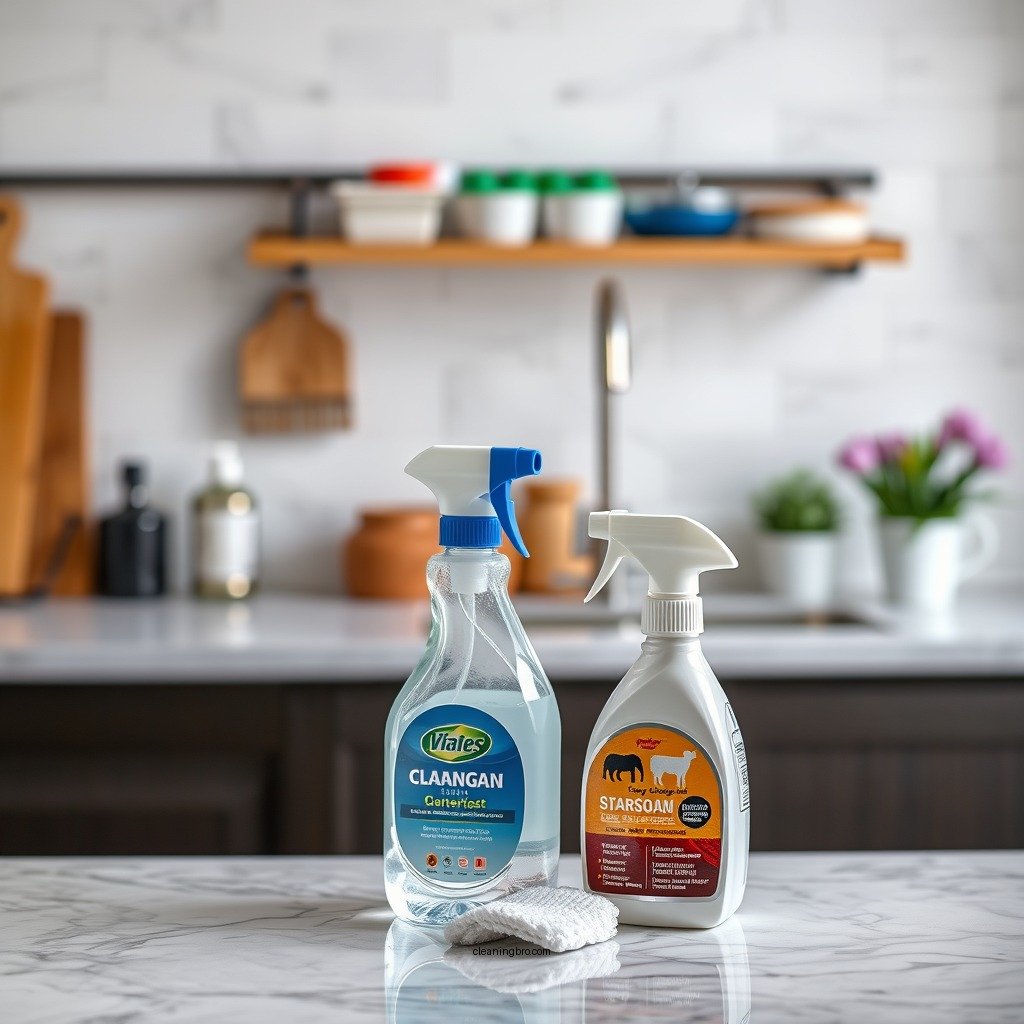
To clean epoxy resin countertops effectively, gather the following essential supplies:
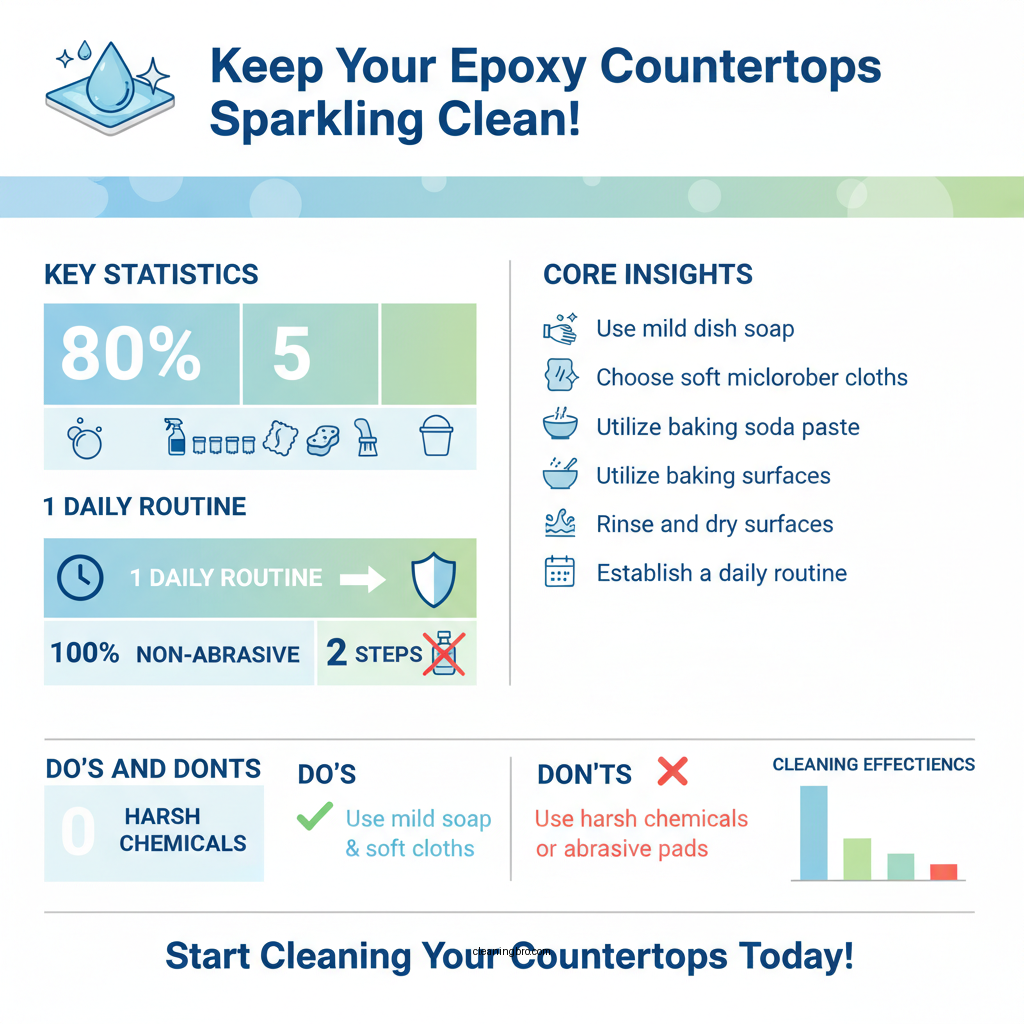
– Mild Dish Soap: Mix a few drops of mild dish soap with warm water. This solution is effective for everyday cleaning without risking damage to the resin.
– Soft Microfiber Cloths: These are ideal for wiping down surfaces as they are gentle and non-abrasive, reducing the risk of scratching.
– Non-Abrasive Sponges: For scrubbing tougher stains, opt for non-abrasive sponges that won’t scratch the surface.
– Baking Soda: This natural abrasive can be made into a paste with water for tougher stains.
– Spray Bottle: A spray bottle can be handy for easy application of cleaning solutions.
Daily Cleaning Routine
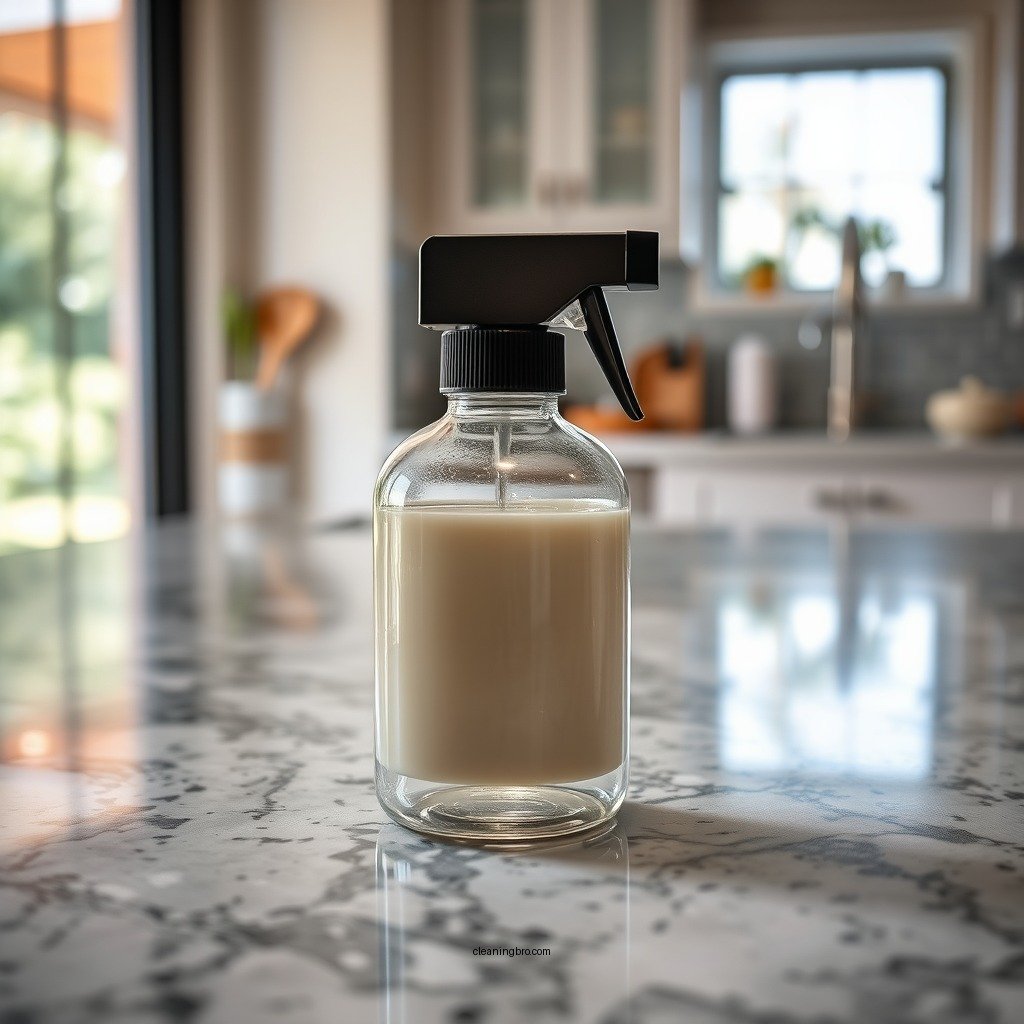
Maintaining a cleaning routine is critical to ensure that your epoxy resin countertops remain in pristine condition. Here are some steps for a daily cleaning routine:
1. Wipe Down Surfaces: Daily, use a soft microfiber cloth dipped in the soap-water solution to wipe down the countertops. This will help prevent the buildup of dirt and grime.
2. Rinse with Clean Water: After wiping, rinse the cloth with clean water and go over the surface again to remove any soap residue.
3. Dry with a Clean Cloth: Finally, dry the surface with a clean microfiber cloth to prevent water spots and enhance the shine.
Deep Cleaning Techniques
Even with a regular cleaning routine, tough stains may occasionally appear. Here are effective deep cleaning techniques:
1. Baking Soda Paste: For stubborn stains, make a paste using baking soda and a small amount of water. Apply it to the stain and gently scrub with a non-abrasive sponge. Leave the paste on for a few minutes before rinsing it off with warm water.
2. Isopropyl Alcohol: For grease stains or sticky residues, use a cloth soaked in isopropyl alcohol to wipe the affected area. This method is effective without damaging the surface.
3. Avoid Harsh Chemicals: It is crucial to steer clear of bleach, ammonia, or other harsh chemicals, as they can degrade the epoxy finish and lead to discoloration.
Top 7 Epoxy Resin Cleaning Products (2024)
| # | Product | Type | Best For | Price |
|---|---|---|---|---|
| 1 | Simple Green | Multi-Surface Cleaner | General Cleaning | $7.99 |
| 2 | Krud Kutter | Stain Remover | Tough Stains | $8.50 |
| 3 | Bar Keepers Friend | Powder Cleaner | Stainless Steel & More | $5.99 |
| 4 | 3M Marine Cleaner | Marine Cleaner | Outdoor Use | $12.99 |
| 5 | Rejuvenate | Surface Cleaner | Multi-Surface | $6.50 |
| 6 | Weiman | Countertop Cleaner | Granite & Quartz | $8.99 |
| 7 | Zep | All-Purpose Cleaner | General Cleaning | $6.49 |
Preventive Measures
Taking proactive steps can significantly prolong the life of your epoxy resin countertops. Here are effective preventive measures:
1. Use Coasters and Trivets: Always place hot pots, pans, or dishes on trivets and use coasters for drinks to prevent heat damage and ring marks.
2. Regular Sealing: Depending on the usage, reseal your epoxy resin surfaces every 1-2 years to maintain their protective layer. Follow the manufacturer’s recommendations for sealing products.
3. Avoid Sharp Objects: While epoxy is durable, using a cutting board will prevent scratches from knives and other sharp objects.
Troubleshooting Common Issues
Even with proper care, you may encounter issues with your epoxy resin countertops. Here’s how to troubleshoot:
1. Scratches: For minor scratches, gently sand the area with fine-grit sandpaper (around 2000-grit) and then polish with a soft cloth to restore the shine.
2. Discoloration: If your countertops become discolored, try using a specialized resin cleaner designed for epoxy surfaces. Always test a small area first to ensure compatibility.
3. Stains: For persistent stains, a mixture of baking soda and water can be effective. Apply the paste, let it sit, and then scrub gently before rinsing.
Cleaning Products for Epoxy Resin: Comparison
| Feature | ⭐ Simple Green | Krud Kutter | Bar Keepers Friend |
|---|---|---|---|
| Type | Multi-Surface | Stain Remover | Powder Cleaner |
| Natural Ingredients | ✅ | ✅ | ❌ |
| Non-Toxic | ✅ | ✅ | ❌ |
| Stain Removal | ✅ Good | ✅ Excellent | ✅ Good |
| Price | $7.99 | $8.50 | $5.99 |
| Scent | Pleasant | Strong | Pleasant |
| Eco-Friendly | ✅ | ✅ | ❌ |
| Ease of Use | ✅ Simple | ✅ Moderate | ✅ Simple |
| Availability | Widely Available | Common Retailers | Widely Available |
| 🏆 Best For | General Use | Tough Stains | Multi-Surface Cleaning |
When to Seek Professional Help
While many cleaning tasks can be handled at home, there are situations where professional intervention is advisable:
1. Persistent Deep Stains: If stains do not respond to home remedies or cleaning products, a professional cleaner may have advanced methods and tools for restoration.
2. Extensive Damage: For significant scratches, chips, or discoloration, a professional can assess the damage and recommend repair or resurfacing options, ensuring that your countertops are restored to their original beauty.
Summarizing the best practices for cleaning epoxy resin countertops ensures they remain beautiful and functional for years to come. By following these tips and maintaining a regular cleaning routine, you can enjoy your countertops’ durability and aesthetic appeal. For more detailed guidance or specific product recommendations, feel free to explore further or reach out to professionals in the field.
Frequently Asked Questions
How do I clean epoxy resin countertops without damaging them?
To clean epoxy resin countertops safely, use a soft cloth or sponge with warm soapy water. Avoid abrasive cleaners or scrubbers, as they can scratch the surface. For tougher stains, a mixture of baking soda and water can be effective, but always test it on a small area first.
What cleaners are safe for epoxy resin countertops?
Mild dish soap and warm water are the safest options for regular cleaning of epoxy resin countertops. You can also use pH-balanced cleaners specifically designed for resin surfaces. Always avoid acidic or harsh chemical cleaners, as they can degrade the epoxy finish over time.
Why is it important to regularly clean epoxy resin countertops?
Regular cleaning of epoxy resin countertops is essential to maintain their durability and appearance. Dirt, grease, and stains can accumulate and, if not addressed promptly, may lead to a dull surface or permanent discoloration. Keeping the countertops clean also helps prevent bacteria buildup in food preparation areas.
What is the best method to remove sticky residue from epoxy resin countertops?
The best method to remove sticky residue from epoxy resin countertops is to use a mixture of warm water and mild dish soap. Apply the solution with a soft cloth, gently rubbing the sticky area until it’s clean. For stubborn residue, a little white vinegar can be added to the mixture, but ensure to rinse thoroughly afterward.
Which tools are recommended for cleaning epoxy resin countertops?
Recommended tools for cleaning epoxy resin countertops include microfiber cloths, soft sponges, and a non-abrasive scrub brush for tougher spots. Using a spray bottle for cleaning solutions can also help control the amount of liquid applied. Avoid steel wool or any abrasive tools that could scratch the surface.
References
- Epoxy
https://en.wikipedia.org/wiki/Epoxy - https://www.sciencedirect.com/topics/engineering/epoxy-resin
https://www.sciencedirect.com/topics/engineering/epoxy-resin - https://pubmed.ncbi.nlm.nih.gov/31779304/
https://pubmed.ncbi.nlm.nih.gov/31779304/ - Epoxy | Adhesive, Resin, Coating | Britannica
https://www.britannica.com/science/epoxy - https://www.nhlbi.nih.gov/health-topics/cleaning-and-disinfecting
https://www.nhlbi.nih.gov/health-topics/cleaning-and-disinfecting - https://www.cdc.gov/infectioncontrol/guidelines/disinfection/index.html
https://www.cdc.gov/infectioncontrol/guidelines/disinfection/index.html - Google Scholar Google Scholar
https://scholar.google.com/scholar?q=how+to+clean+epoxy+resin+countertops - Google Scholar Google Scholar
https://scholar.google.com/scholar?q=cleaning+epoxy+resin+surfaces - Google Scholar Google Scholar
https://scholar.google.com/scholar?q=epoxy+countertop+maintenance - https://www.nytimes.com/2018/04/16/home/how-to-clean-epoxy.html
https://www.nytimes.com/2018/04/16/home/how-to-clean-epoxy.html