
How to Clean Table Saw Blades Effectively
Cleaning your table saw blades is essential for maintaining their performance and longevity. Regular cleaning removes pitch, resin, and debris, which can compromise cut quality and safety. This article provides practical methods and tips for effectively cleaning your table saw blades, ensuring they remain sharp and functional.
Understanding the Importance of Cleaning Table Saw Blades
Regular cleaning of table saw blades significantly enhances cutting efficiency and precision. A clean blade provides smoother cuts and reduces the risk of splintering, which is particularly crucial for fine woodworking projects. Additionally, dirty blades can lead to overheating during operation, causing damage to both the blade and the table saw itself. This overheating can result in premature wear, requiring costly replacements and repairs. Maintaining clean table saw blades not only prolongs their lifespan but also ensures safer operation, thus safeguarding the user and the equipment.
Materials Needed for Cleaning


To clean your table saw blades effectively, you’ll require a few common household items and possibly some specialized cleaning solutions. Here’s a list of what you’ll need:
– Vinegar: A natural cleaner that effectively breaks down grime and resin.
– Baking Soda: Acts as a gentle abrasive to help scrub away stubborn deposits.
– Dish Soap: Essential for cutting through grease and oils.
– Toothbrush or Soft Brush: For scrubbing the teeth of the blade without causing damage.
– Spray Bottle: For applying cleaning solutions evenly and effectively.
– Specialized Blade Cleaning Solutions: Products like Simple Green or other commercial cleaners designed for cutting tools can also be very effective.
These materials are easily accessible and provide a cost-effective way to maintain your blades.
Step-by-Step Cleaning Process
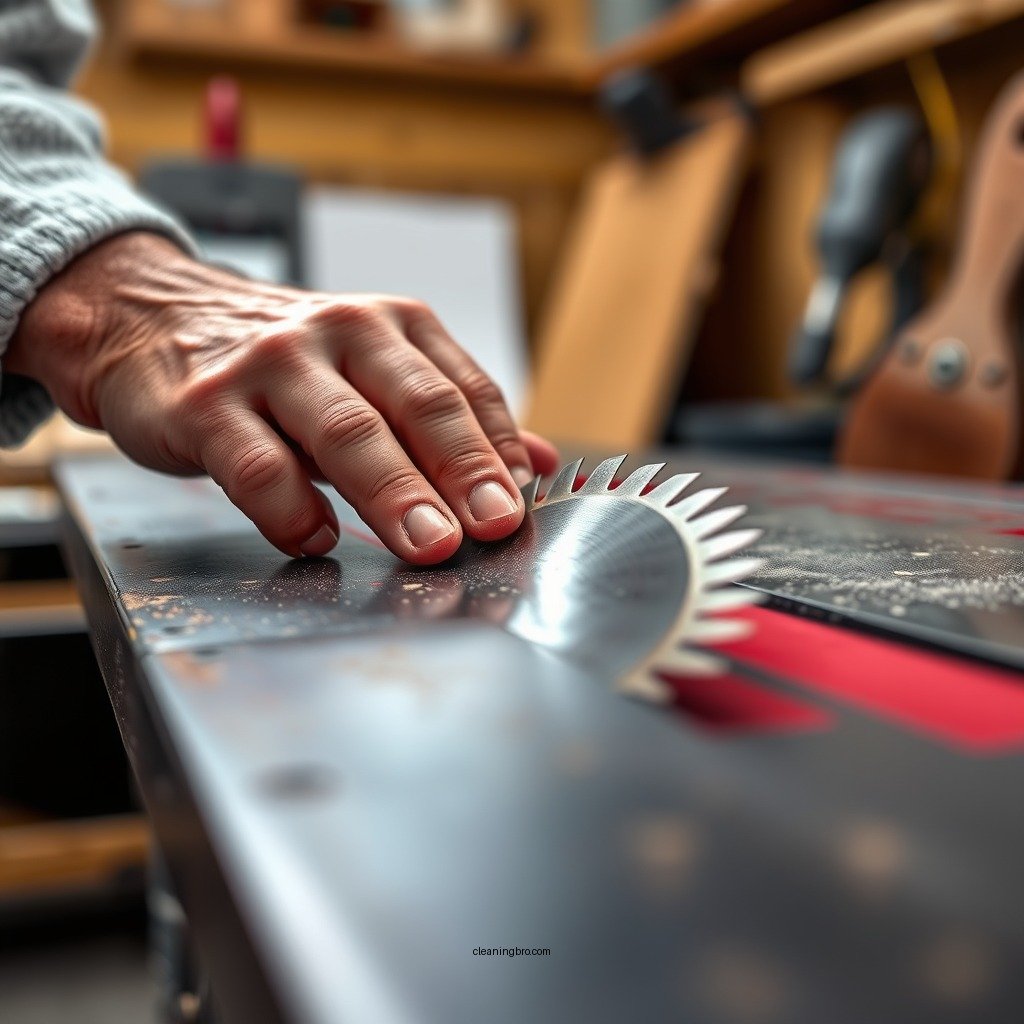
Cleaning your table saw blade is straightforward if you follow these steps:
1. Remove the Blade: Before you begin, ensure your table saw is unplugged. Carefully remove the blade, following the manufacturer’s instructions for safety.
2. Soak the Blade: Prepare a cleaning solution using a mixture of vinegar and baking soda, or use a specialized cleaner. Soak the blade in the solution for the recommended duration, usually about 15 to 30 minutes.
3. Scrub the Teeth: After soaking, use a toothbrush or a soft brush to scrub the teeth of the blade. Pay special attention to any areas with built-up resin or pitch. Avoid using steel wool or abrasive pads, as these can damage the blade’s surface.
4. Rinse and Dry: Once clean, rinse the blade thoroughly with water to remove any residual cleaning solution. Dry the blade completely to prevent rusting.
5. Reinstall the Blade: After ensuring the blade is dry, reinstall it carefully back onto the saw, following the manufacturer’s guidelines.
Cleaning Data Table
Top 7 Common Table Saw Blade Cleaning Methods
| # | Method | Effectiveness | Time Required | Cost |
|---|---|---|---|---|
| 1 | Vinegar Soak | High | 30 min | Low |
| 2 | Baking Soda Paste | Medium | 15 min | Very Low |
| 3 | Commercial Cleaners | Very High | 10 min | Medium |
| 4 | Ultrasonic Cleaning | Exceptional | 20 min | High |
| 5 | Pressure Washer | High | 5 min | Medium |
| 6 | Dish Soap Wash | Medium | 15 min | Very Low |
| 7 | Steam Cleaning | High | 10 min | Medium |
Alternative Cleaning Methods
In addition to the traditional cleaning methods mentioned, there are alternative options that can yield remarkable results:
– Ultrasonic Cleaners: These devices use high-frequency sound waves to agitate a fluid, creating tiny bubbles that effectively clean even the most intricate parts of your table saw blades without manual scrubbing. This method is particularly effective for blades with complicated tooth geometry, ensuring that every crevice is reached.
– Pressure Washers: For heavy-duty cleaning, a pressure washer can be used to blast away built-up grime and debris. However, caution is needed to avoid damaging the blade or affecting the blade’s alignment. Use a low-pressure setting and maintain a safe distance from the blade to prevent any harm.
Safety Tips While Cleaning
Safety should always be the top priority while cleaning table saw blades:
– Wear Protective Gear: Always wear protective gloves and safety glasses to shield your hands and eyes from any chemical splashes or sharp edges.
– Unplug the Saw: Before removing the blade, ensure that the table saw is unplugged. This will prevent any accidental starts that could lead to severe injuries.
– Handle with Care: Blades are sharp and can cause injuries. Handle them with care during the cleaning process.
Maintaining Clean Blades
To keep your table saw blades in optimal condition, establish a regular cleaning schedule based on how frequently you use the saw. A good rule of thumb is to clean the blades after every 5-10 uses, or more often if you notice a significant buildup of resin or pitch. Additionally, storing blades in a clean, dry environment can help prevent moisture buildup and rust, which can compromise their effectiveness.
Comparison Table
Cleaning Solutions: Vinegar vs Baking Soda vs Commercial Cleaners
| Feature | ⭐ Vinegar | Baking Soda | Commercial Cleaners |
|---|---|---|---|
| Effectiveness | High | Medium | Very High |
| Cost | Low | Very Low | Medium |
| Application Time | 30 min | 15 min | 10 min |
| Safety | Safe | Safe | Moderate |
| Environmental Impact | Low | Low | High |
| Ease of Use | Easy | Very Easy | Easy |
| Residual Odor | None | None | Moderate |
| Availability | Common | Common | Specific Stores |
| Best For | Regular Maintenance | Occasional Cleaning | Heavy-Duty Cleaning |
Troubleshooting Common Issues
Even with regular cleaning, you may encounter issues with your table saw blades. It’s essential to recognize the signs indicating that cleaning alone may not suffice. If your cuts are becoming rough or jagged despite clean blades, it may be time to consider sharpening or replacing them.
Common signs of blade dullness include:
– Increased friction during cuts
– Burn marks on the wood
– Vibration when cutting
If you notice these signs, assess whether the blade can be sharpened or if it is more cost-effective to replace it. Regular inspection of the blades can help identify these issues early, saving you time and resources in the long run.
By following these cleaning methods and tips, you can keep your table saw blades in top condition, ensuring better performance and durability. Make it a habit to regularly clean your blades and enhance your woodworking experience. Consider setting a reminder or creating a maintenance schedule to stay on track!
Frequently Asked Questions
What is the best method to clean table saw blades?
The best method to clean table saw blades involves using a specialized blade cleaner or a mixture of warm water and dish soap. Soak the blade for 15-20 minutes, then scrub with a soft brush to remove pitch and resin buildup. Rinse thoroughly and dry completely before reattaching to ensure optimal cutting performance.
How often should I clean my table saw blades?
You should clean your table saw blades every 5-10 hours of use or whenever you notice a decrease in cutting efficiency. Regular cleaning helps maintain the blade’s sharpness and prolong its lifespan, ensuring clean cuts and reducing the risk of kickback caused by dull blades.
Why is it important to clean table saw blades regularly?
Regularly cleaning table saw blades is crucial because buildup of pitch, resin, and sawdust can lead to inefficient cutting and increased wear on the blade. This buildup can also cause overheating and potential damage to your workpieces. Maintaining clean blades ensures better performance and safety while cutting.
Which cleaning products are safe for table saw blades?
Safe cleaning products for table saw blades include specialized blade cleaners, degreasers, and homemade solutions like vinegar or baking soda mixed with water. Avoid harsh chemicals or abrasive materials that can damage the blade’s coating or teeth. Always ensure that any cleaner used is completely rinsed off before using the blade again.
How can I prevent my table saw blades from getting dirty?
To prevent your table saw blades from getting dirty, make sure to store the blades in a dry environment and cover them when not in use. Additionally, using a blade with a lower tooth count for thicker cuts can reduce resin buildup. Regularly clearing the saw table of dust and debris will also help maintain cleaner blades.
References
- Table saw
https://en.wikipedia.org/wiki/Table_saw - https://www.woodmagazine.com/materials-guide/finishes/how-to-clean-saw-blades
https://www.woodmagazine.com/materials-guide/finishes/how-to-clean-saw-blades - Google Scholar Google Scholar
https://scholar.google.com/scholar?q=cleaning+table+saw+blades - Google Scholar Google Scholar
https://scholar.google.com/scholar?q=how+to+maintain+table+saw+blades - Google Scholar Google Scholar
https://scholar.google.com/scholar?q=table+saw+blade+cleaning+techniques - Google Scholar Google Scholar
https://scholar.google.com/scholar?q=how+to+clean+table+saw+blades - how to clean table saw blades – Search results
https://en.wikipedia.org/wiki/Special:Search?search=how+to+clean+table+saw+blades - https://www.ncbi.nlm.nih.gov/search/research-articles/?term=how+to+clean+table+saw+blades
https://www.ncbi.nlm.nih.gov/search/research-articles/?term=how+to+clean+table+saw+blades