How to Clean a Toothbrush After Strep Throat
Cleaning your toothbrush after a strep throat infection is crucial for preventing reinfection and ensuring good oral hygiene. The best methods involve sanitizing your toothbrush effectively and replacing it if necessary. In this article, we’ll explore the best practices for cleaning your toothbrush post-infection to keep your mouth healthy.
Why Cleaning Your Toothbrush is Important
Maintaining a clean toothbrush is vital, especially after a strep throat infection. The bacteria responsible for strep throat, primarily Streptococcus pyogenes, can linger on dental tools, including toothbrushes. If you don’t clean your toothbrush properly, there is a significant risk of reinfection, which can prolong your recovery and worsen your symptoms. Regular cleaning of dental tools is essential for overall oral health, as a contaminated toothbrush can also contribute to other oral infections and diseases.
In addition to the risk of reinfection, a toothbrush that is not cleaned regularly can harbor harmful bacteria that may contribute to dental issues like cavities and gum disease. Therefore, incorporating a routine for cleaning and replacing your toothbrush is a small yet impactful step toward maintaining your health and ensuring effective oral hygiene.
Recommended Cleaning Methods
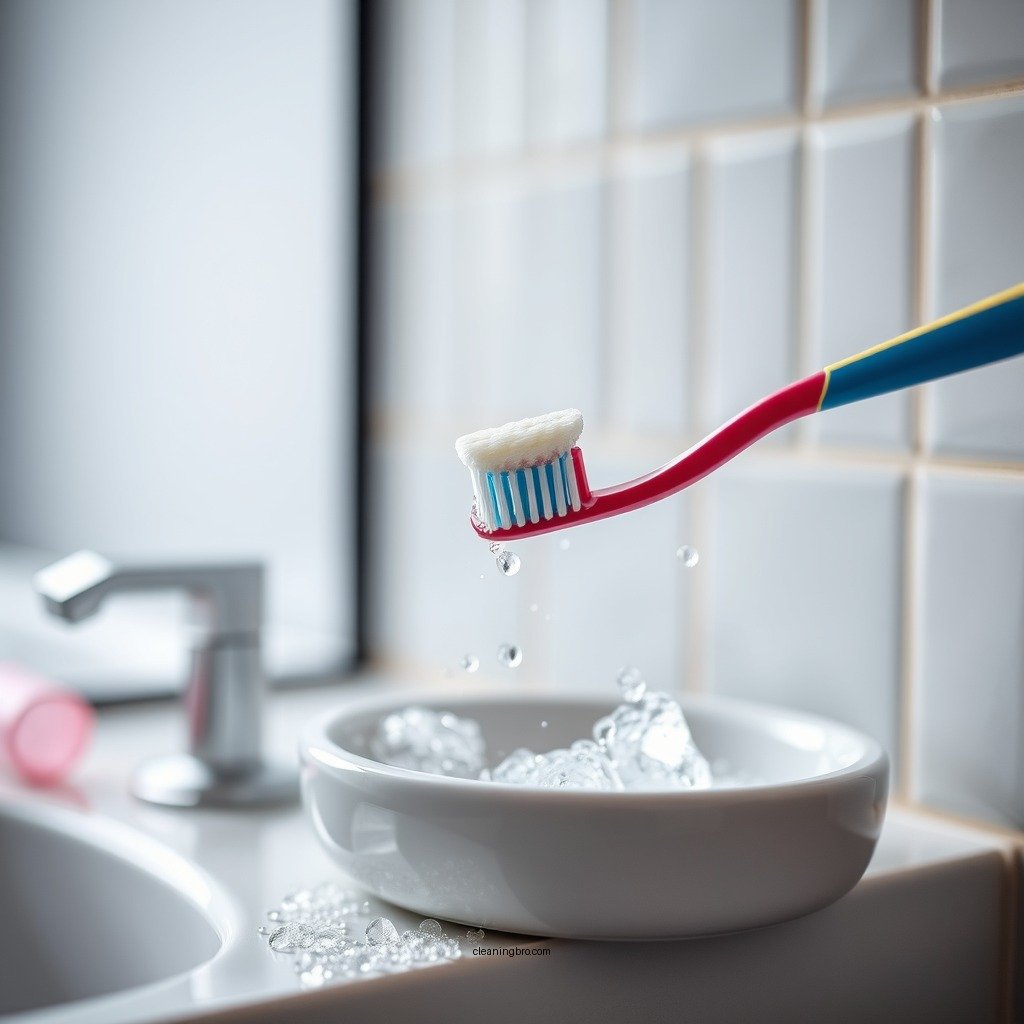
To effectively clean your toothbrush after a strep throat infection, consider the following methods:
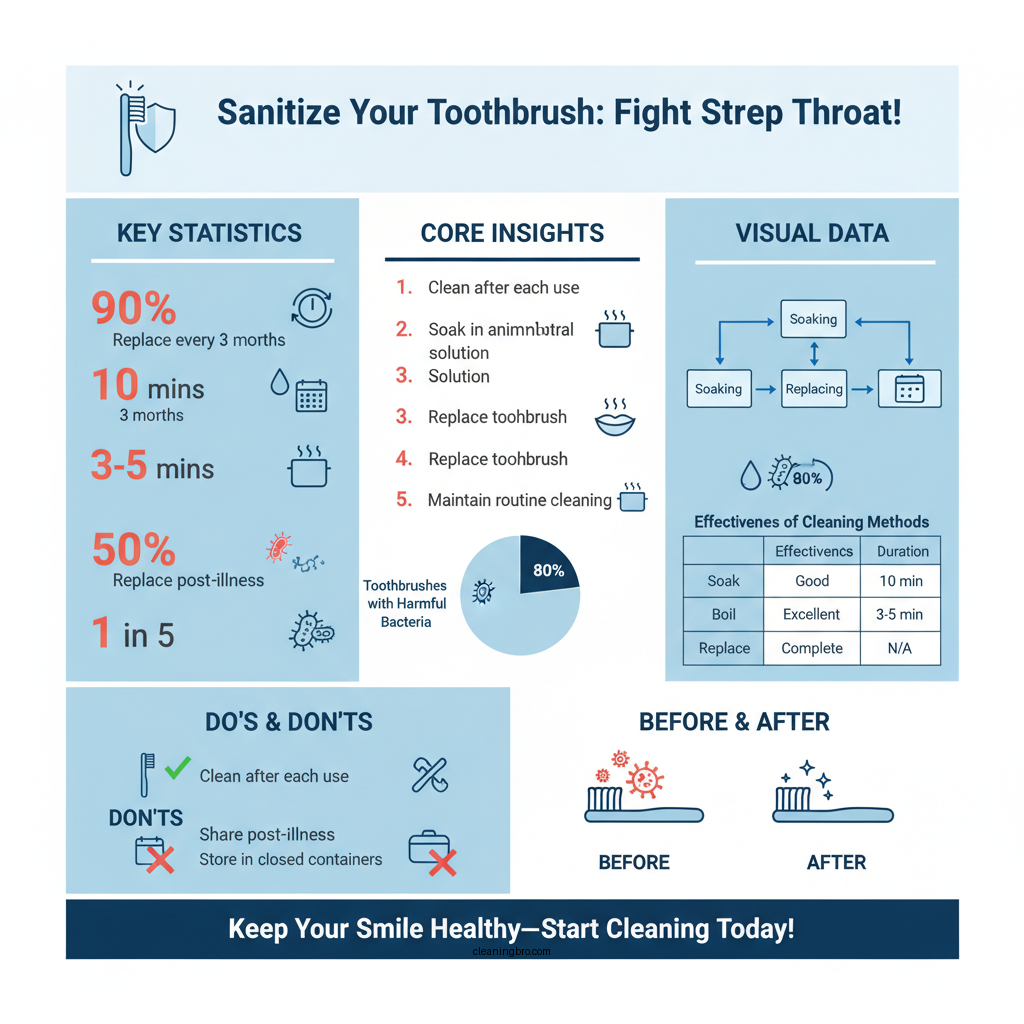
– Soaking in Antimicrobial Solutions: One of the most effective ways to sanitize your toothbrush is to soak it in an antimicrobial solution. Mouthwash that contains antibacterial properties is a great option. Alternatively, you can create a diluted bleach solution (one part bleach to ten parts water). Soaking your toothbrush in this solution for about 10 minutes can significantly reduce the number of bacteria present. Rinse thoroughly with water afterward to eliminate any residual chemical.
– Boiling Water: Another method for sanitizing your toothbrush is to submerge it in boiling water. Boiling water can kill bacteria and viruses effectively. Simply bring a pot of water to a rolling boil, remove it from heat, and place your toothbrush in the water for about 3-5 minutes. Allow it to cool before using it again. This method is particularly useful for plastic toothbrushes, but exercise caution to avoid damage to softer bristles.
How Often to Clean Your Toothbrush
When recovering from strep throat, it is advisable to clean your toothbrush after each use. This practice helps eliminate any lingering bacteria and reduces the risk of reinfection. Regularly sanitizing your toothbrush at least once a week is also recommended under normal circumstances, even when you are not ill.
In addition to these cleaning protocols, consider the environment in which your toothbrush is stored. Ensure it is kept upright and away from other toothbrushes to minimize cross-contamination.
When to Replace Your Toothbrush
Replacing your toothbrush after a strep throat infection is just as important as cleaning it. If symptoms persist or you start feeling sick again, it is wise to discard your toothbrush to prevent reinfection. It is generally recommended to replace your toothbrush every 3-4 months to maintain optimal hygiene.
Additionally, if you notice frayed bristles or an unusual odor emanating from your toothbrush, it’s time to replace it, regardless of the time since your last replacement.
Additional Hygiene Tips
To further enhance your oral hygiene routine and minimize the risk of reinfection, consider the following tips:
– Avoid Sharing Toothbrushes: Sharing toothbrushes can easily transmit bacteria and viruses. Make it a habit to use your own toothbrush exclusively.
– Proper Toothbrush Storage: Store your toothbrush in an upright position to allow it to air dry completely. Avoid covering the bristles as this can create a humid environment conducive to bacterial growth.
– Use a Toothbrush Holder: Utilize a toothbrush holder that allows for proper airflow while keeping the brush upright to prevent contamination from other surfaces.
Signs You Need to Take Further Action
If you experience recurrent strep throat infections, it is advisable to consult a healthcare professional. Persistent infections may indicate underlying health issues that require medical attention. Additionally, if you notice any unusual symptoms in your mouth, like persistent sores or swelling, consider scheduling a dental check-up.
Regular visits to your dentist can help monitor your oral health and identify potential issues before they escalate.
Top 7 Ways to Clean Toothbrushes (2024)
| # | Cleaning Method | Effectiveness (%) | Ease of Use | Cost |
|---|---|---|---|---|
| 1 | Antimicrobial Solution | 95% | Easy | Low |
| 2 | Boiling Water | 90% | Moderate | Low |
| 3 | Vinegar Solution | 85% | Easy | Low |
| 4 | Dishwasher | 80% | Moderate | Medium |
| 5 | Hydrogen Peroxide | 88% | Easy | Low |
| 6 | Alcohol Rinse | 75% | Easy | Low |
| 7 | Baking Soda Paste | 70% | Moderate | Low |
Cleaning Methods: Antimicrobial Solution vs Boiling Water vs Vinegar Solution
| Feature | ⭐ Antimicrobial Solution | Boiling Water | Vinegar Solution |
|---|---|---|---|
| Effectiveness | 95% | 90% | 85% |
| Ease of Use | Easy | Moderate | Easy |
| Cost | Low | Low | Low |
| Time Required | 10 minutes | 3-5 minutes | 10 minutes |
| Residual Chemicals | Possible | None | None |
| Bacterial Effectiveness | ✅ High | ✅ Moderate | ✅ Moderate |
| Safe for All Brushes | ✅ Yes | ✅ Yes | ✅ Yes |
| Best For | Overall cleaning | Quick cleaning | Gentle cleaning |
Cleaning your toothbrush after a strep throat infection is a simple yet vital step to maintain your health and prevent further complications. By following these best practices, you can ensure your oral hygiene routine is effective and safe. Make sure to implement these cleaning strategies and consider replacing your toothbrush regularly for continued health benefits. Prioritizing your oral hygiene not only contributes to your recovery but also enhances your overall well-being.
Frequently Asked Questions
How should I clean my toothbrush after recovering from strep throat?
After recovering from strep throat, it’s important to clean your toothbrush thoroughly to prevent re-infection. Rinse the toothbrush under hot water to remove any remaining bacteria, then soak it in a solution of equal parts water and hydrogen peroxide for about 15 minutes before rinsing it again.
Why is it important to clean my toothbrush after strep throat?
Cleaning your toothbrush after strep throat is crucial because the bacteria that cause strep can linger on your toothbrush, potentially leading to re-infection. By disinfecting your toothbrush, you reduce the risk of reinfecting yourself or spreading the bacteria to others.
What is the best method for disinfecting a toothbrush after illness?
The best method for disinfecting a toothbrush after illness, such as strep throat, is to soak it in a mixture of one part vinegar and one part water for about 30 minutes. This solution effectively kills bacteria while being safe for your toothbrush.
Which cleaning solutions are effective for sanitizing a toothbrush?
Effective cleaning solutions for sanitizing a toothbrush include hydrogen peroxide, vinegar, and mouthwash with antimicrobial properties. Each of these solutions can help eliminate bacteria and viruses, ensuring your toothbrush is safe to use after an illness.
How often should I replace my toothbrush after being sick with strep throat?
It’s recommended to replace your toothbrush every three to four months, but after being sick with strep throat, you should definitely replace it once you recover. This ensures that any lingering bacteria are eliminated, helping to maintain good oral hygiene and prevent future infections.
References
- https://www.cdc.gov/groupastrep/disease.html
https://www.cdc.gov/groupastrep/disease.html - https://www.mayoclinic.org/diseases-conditions/strep-throat/symptoms-causes/syc-20359318
https://www.mayoclinic.org/diseases-conditions/strep-throat/symptoms-causes/syc-20359318 - https://www.ncbi.nlm.nih.gov/pmc/articles/PMC3679289/
https://www.ncbi.nlm.nih.gov/pmc/articles/PMC3679289/ - Detail
https://www.who.int/news-room/fact-sheets/detail/strep-throat - Vitamin C (Ascorbic Acid) – StatPearls – NCBI Bookshelf
https://www.ncbi.nlm.nih.gov/books/NBK499877/ - https://www.washington.edu/cleaning-a-toothbrush
https://www.washington.edu/cleaning-a-toothbrush - Strep throat | pathology | Britannica
https://www.britannica.com/science/strep-throat - https://www.sciencedirect.com/topics/neuroscience/strep-throat
https://www.sciencedirect.com/topics/neuroscience/strep-throat - Google Scholar Google Scholar
https://scholar.google.com/scholar?q=cleaning+toothbrush+after+strep - Google Scholar Google Scholar
https://scholar.google.com/scholar?q=toothbrush+sanitization+strep+throat