How Long Does a Dental Cleaning Take?
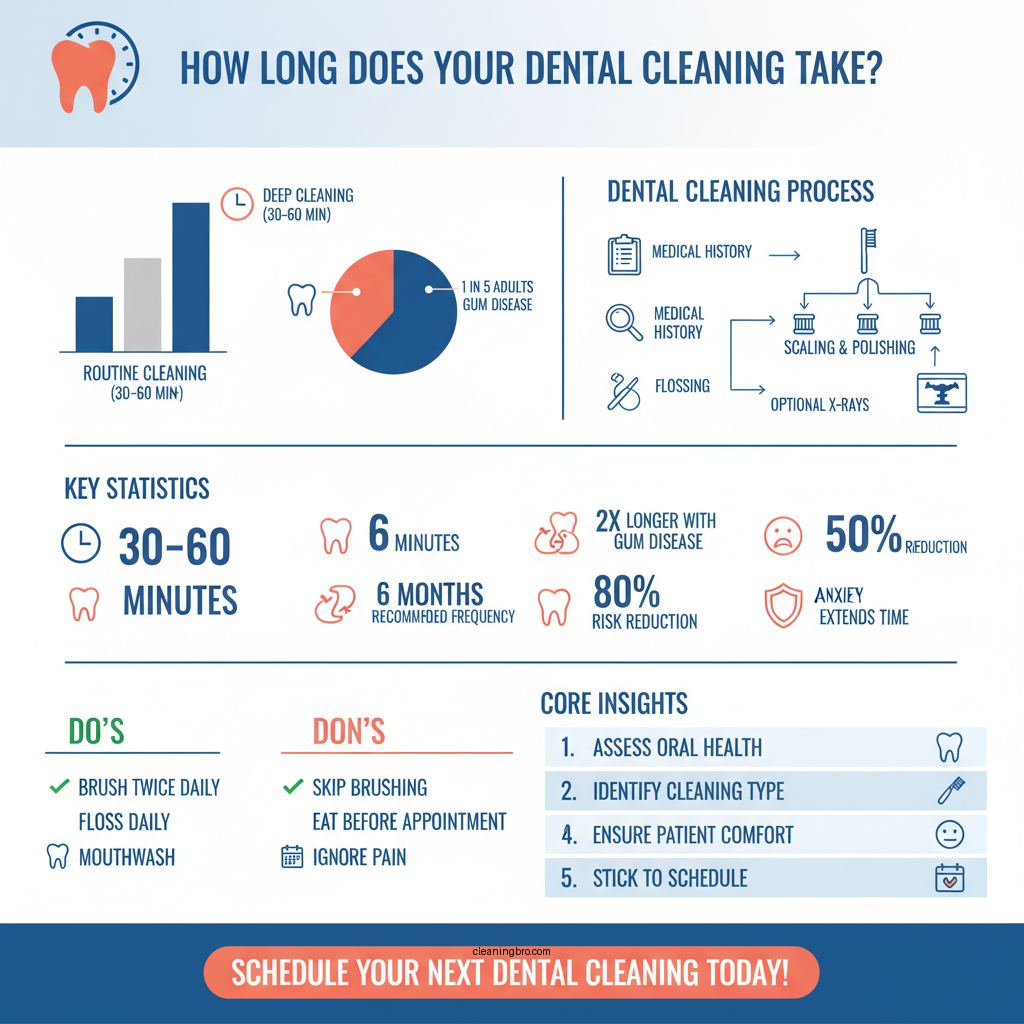
A typical dental cleaning appointment takes about 30 to 60 minutes, depending on the individual’s oral health and the complexity of the cleaning process. Regular dental cleanings are vital for maintaining optimal oral health, as they help prevent cavities, gum disease, and other dental issues. In this article, we’ll explore the factors that influence the duration of a dental cleaning, what to expect during the appointment, and tips for making the most of your visit.
Overview of Dental Cleaning

Dental cleaning, often referred to as prophylaxis, involves the removal of plaque and tartar buildup from teeth to prevent oral diseases. This procedure is typically performed by a dental hygienist and includes several steps, such as thorough brushing and flossing, the use of specialized tools to remove deposits, and sometimes, polishing the teeth with a fine paste. Regular cleanings are crucial not only for aesthetic reasons but also for overall health; research has shown a link between poor oral hygiene and systemic health problems, such as heart disease and diabetes. By attending dental cleanings every six months, individuals can significantly reduce their risk of developing serious oral health issues.
Factors Influencing Cleaning Duration
Several factors can affect how long a dental cleaning takes:
1. Individual Oral Health Status: Patients with good oral hygiene may require only a routine cleaning, while those with gum disease or significant plaque buildup may need a more extensive cleaning, which can take longer.
2. Type of Cleaning Required: Routine cleanings are generally quicker, lasting about 30 minutes, while deep cleanings, which involve scaling and root planing to treat gum disease, can take up to an hour or more.
3. Patient Cooperation: Individuals who are anxious or uncomfortable during the procedure may require additional time for the hygienist or dentist to help them feel at ease.
4. Additional Procedures: If X-rays or other diagnostic procedures are needed, this can extend the overall appointment time.
The Cleaning Process Explained
A typical dental cleaning follows a systematic process:
1. Medical History Review: The hygienist or dentist will review your medical history and any dental concerns before the cleaning begins.
2. Initial Examination: A visual examination is conducted to identify any issues, such as cavities or gum disease, that may require attention.
3. Scaling: Using a scaler, the hygienist will carefully remove plaque and tartar from the teeth, particularly in hard-to-reach areas.
4. Polishing: After scaling, the teeth are polished with a gritty toothpaste-like substance to remove surface stains.
5. Flossing: The hygienist will floss between the teeth to ensure that all plaque is removed from these tight spaces.
6. Fluoride Treatment: In some cases, a fluoride treatment is applied to strengthen the teeth and help prevent cavities.
7. Post-Cleaning Consultation: Finally, the dentist may discuss findings and recommend follow-up treatment if necessary.
Tools and Techniques Commonly Used by Dentists and Hygienists
Dental hygienists utilize a variety of tools during the cleaning process, including:
– Ultrasonic Scalers: These devices use vibrations to break apart tartar and plaque.
– Hand Scalers: Used for precise cleaning, especially in sensitive areas.
– Polishing Tools: Electric brushes and pastes help in smoothing the tooth surface.
– Floss and Interdental Cleaners: Essential for cleaning between the teeth.
What to Expect Before, During, and After
Preparation Tips Before Your Dental Visit
– Maintain Oral Hygiene: Brush and floss your teeth before the appointment to reduce plaque buildup.
– Inform Your Dentist: Notify your dentist about any medications or health changes since your last visit.
– Arrive Early: This allows time to fill out any necessary paperwork and relax before the procedure.
Common Sensations or Experiences During the Cleaning
– Sound: The noise of the scaler and polisher can be startling but is a normal part of the process.
– Pressure: You may feel pressure as the hygienist cleans and polishes your teeth.
– Sensitivity: Sensitive areas may cause mild discomfort but should not be painful.
After the cleaning, you may experience a fresh feeling in your mouth and a slight tenderness, especially if you had a deep cleaning.
Additional Services That May Extend Time
At times, additional treatments may be performed during your dental cleaning appointment, which could extend the duration:
– X-rays: Essential for diagnosing issues below the surface, X-rays can add 15-30 minutes to your appointment time.
– Fluoride Treatment: While beneficial, this additional step may add a few extra minutes.
– Discussion of Findings: If any issues are identified, the dentist may take time to explain the next steps, which could prolong your visit.
How to Maximize Your Appointment Time
To ensure a smooth and efficient dental cleaning appointment, consider the following tips:
– Be Prepared: Bring any necessary documents or health information to expedite the process.
– Communicate: Clearly express any concerns or discomfort to your hygienist or dentist during the cleaning.
– Schedule Regular Visits: Consistent cleanings will help maintain oral health and reduce the complexity of each appointment.
– Practice Good Oral Hygiene: Regular brushing and flossing at home helps minimize the time required for professional cleanings.
Summary of Key Points
| Factor | Influence on Duration |
|————————–|—————————|
| Oral Health Status | Good → Shorter Time; Poor → Longer Time |
| Type of Cleaning | Routine → 30-60 Minutes; Deep → 60+ Minutes |
| Additional Procedures | X-rays/Fluoride → Adds Time |
Conclusion
Regular dental cleanings are essential for your oral health, helping to prevent cavities and gum disease while promoting overall well-being. Understanding the factors that influence cleaning duration and knowing what to expect during your appointment can help you be better prepared. If you haven’t scheduled your next cleaning, make an appointment today to ensure your smile stays bright and healthy!
Frequently Asked Questions
How long does a typical dental cleaning appointment last?
A typical dental cleaning appointment usually lasts between 30 minutes to an hour. The duration can vary based on the condition of your teeth and gums, the complexity of the cleaning required, and any additional treatments that may be necessary.
What factors can affect the duration of a dental cleaning?
Several factors can influence how long a dental cleaning takes, including the patient’s oral health history, the amount of plaque and tartar buildup, and whether the hygienist needs to conduct a thorough examination or additional procedures, such as scaling or polishing.
Why does my dental cleaning take longer than I expected?
If your dental cleaning takes longer than expected, it may be due to a higher level of plaque or tartar buildup, which requires more time to remove. Additionally, if your dentist finds issues like cavities or gum disease, they may need to address those concerns during the cleaning, extending the appointment time.
How can I prepare for a dental cleaning to make it quicker?
To help expedite your dental cleaning, ensure you maintain good oral hygiene at home by brushing and flossing regularly. Arriving with a list of any dental concerns and being open about your medical history can also help the hygienist focus on what is necessary, potentially shortening the appointment duration.
What is the best way to minimize the time spent at the dentist for cleanings?
The best way to minimize the time spent at the dentist for cleanings is to maintain a consistent oral hygiene routine, including brushing twice a day and flossing daily. Regular dental check-ups every six months can also ensure that any oral health issues are addressed promptly, reducing the time needed for future cleanings.
References
- Page Not Found – Site Help – Mayo Clinic
https://www.mayoclinic.org/diseases-conditions/periodontal-disease/expert-answers/dental-cleaning/faq-20057862 - https://www.cdc.gov/oralhealth/publications/factsheets/dental-cleanings.html
https://www.cdc.gov/oralhealth/publications/factsheets/dental-cleanings.html - Oral health
https://www.who.int/news-room/fact-sheets/detail/oral-health - https://www.ncbi.nlm.nih.gov/pmc/articles/PMC6607785/
https://www.ncbi.nlm.nih.gov/pmc/articles/PMC6607785/ - Dental care
https://en.wikipedia.org/wiki/Dental_care - Google Scholar Google Scholar
https://scholar.google.com/scholar?q=dental+cleaning+duration - Google Scholar Google Scholar
https://scholar.google.com/scholar?q=how+long+does+a+dental+cleaning+take - Google Scholar Google Scholar
https://scholar.google.com/scholar?q=how+long+does+a+clean+at+the+dentist+take - how long does a clean at the dentist take – Search results
https://en.wikipedia.org/wiki/Special:Search?search=how+long+does+a+clean+at+the+dentist+take - https://www.ncbi.nlm.nih.gov/search/research-articles/?term=how+long+does+a+clean+at+the+dentist+take
https://www.ncbi.nlm.nih.gov/search/research-articles/?term=how+long+does+a+clean+at+the+dentist+take