How Long Does It Take for a Pool to Clear After Shock?
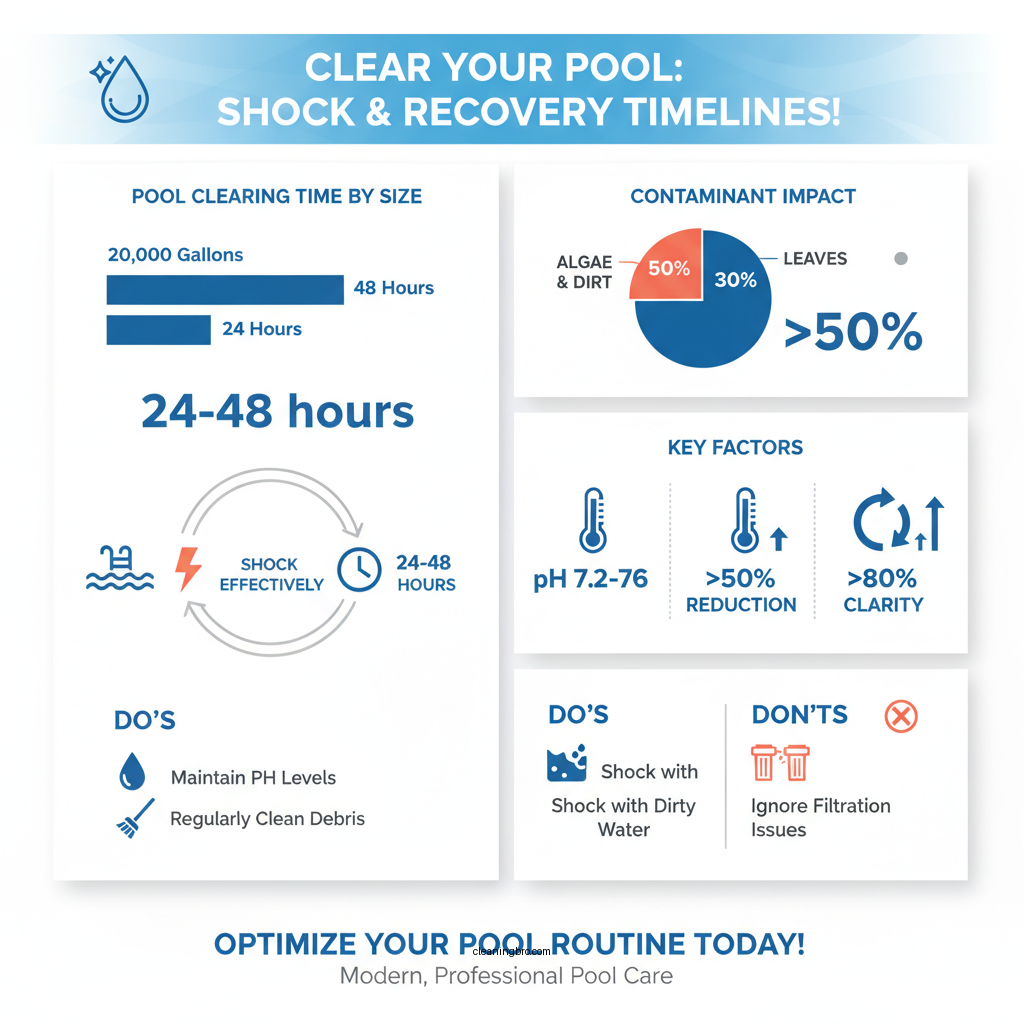
After shocking a pool, it typically takes 24 to 48 hours for the water to clear, depending on various factors such as pool size, chemical balance, and filtration efficiency. Understanding the nuances of pool shock and the subsequent clearing process can help pool owners manage their maintenance routines effectively. In this article, we will delve into the reasons for water cloudiness after shocking, the factors that influence the clearing time, and offer actionable tips to expedite the process, ensuring your pool remains a clean and inviting space.
Understanding Pool Shock and Its Effects
Pool shock is a chemical treatment that involves adding a high concentration of chlorine or other sanitizing agents to the pool water. This process is essential for eliminating harmful bacteria, viruses, and algae that can proliferate in the pool environment. However, the introduction of these chemicals can lead to temporary cloudiness in the water.
The cloudiness is primarily caused by the reaction between the shock treatment and the contaminants in the water. As the chlorine interacts with organic materials, it can create chloramines or other byproducts that contribute to discolored and cloudy water. While this is a normal part of the shocking process, it can be frustrating for pool owners who desire immediate clarity in their water.
Factors Influencing Clearing Time
Several factors can significantly influence how long it takes for a pool to clear after shock treatment:
– Pool Size: The volume of water in your pool is a crucial determinant. Larger pools may take longer to clear because there is a greater volume of water that needs to be treated. For instance, a standard 20,000-gallon pool may take longer to clear than a smaller 10,000-gallon pool.
– Chemical Levels: The balance of pH, alkalinity, and chlorine levels directly affects the efficiency of the shock treatment. If the pH is too high or too low, it can inhibit the effectiveness of the chlorine, leading to prolonged cloudiness. Ideally, pH levels should be maintained between 7.2 and 7.6 for optimal chlorine performance.
– Water Temperature: Warmer water can facilitate faster chemical reactions, which may expedite the clearing process. Conversely, cooler temperatures can slow down these reactions, extending the time it takes for the pool to clear.
– Presence of Contaminants: If the pool has a high level of organic matter, such as leaves, dirt, and algae, it may take longer to clear. Regular cleaning and maintenance can help mitigate this issue before shocking.
– Water Circulation: Proper circulation is vital for effective filtration. If the pool’s circulation system is not functioning optimally, it can lead to longer clearing times.
Clearing Time Influencing Factors Table
Factors Influencing Pool Clearing Time
| # | Factor | Impact on Clearing Time | Optimal Range |
|---|---|---|---|
| 1 | Pool Size | Larger pools take longer | N/A |
| 2 | Chemical Levels | Imbalance prolongs clearing | pH 7.2-7.6 |
| 3 | Water Temperature | Warmer speeds up reactions | 70°F – 85°F |
| 4 | Presence of Contaminants | More debris delays clearing | Minimal |
| 5 | Water Circulation | Poor circulation slows clearing | Optimal flow |
Importance of Filtration
The filtration system is a cornerstone of effective pool maintenance. A well-functioning filter plays a pivotal role in removing debris, dirt, and particles from the water, particularly after shocking. Running the filter continuously after applying shock is crucial for promoting faster water clarity.
When the pool is shocked, the filter should operate without interruption for at least 24 hours to allow it to capture the particles generated during the shocking process. This involves ensuring that the filter is clean and well-maintained, as clogs can significantly impede its effectiveness. Regular backwashing or cleaning of sand, cartridge, or diatomaceous earth filters is essential to maintain optimal performance.
Monitoring Water Clarity
Monitoring water clarity is essential to understanding how effectively the shock treatment is working. Regularly checking for changes in clarity can provide valuable insights into the pool’s chemical balance and overall health.
To effectively monitor water clarity, you should:
1. Use a Pool Test Kit: Regular testing of chemical levels, including pH, alkalinity, and chlorine, ensures they are within the recommended ranges. This helps identify any imbalances that could prolong cloudiness.
2. Visual Inspection: Look for changes in water clarity. Initial cloudiness should gradually transition to clearer water. If the water remains cloudy for an extended period, it may indicate an issue with chemical levels or filtration efficiency.
3. Clarity Tests: Use a clarity test or a simple visibility check. If the pool bottom is visible, it indicates that the clearing process is progressing well.
Additional Tips for Faster Clearing
To expedite the clearing process after shocking your pool, consider the following strategies:
– Utilize a Clarifier or Flocculant: These products can help clump together smaller particles, making it easier for the filter to capture them. Clarifiers work by aggregating particles, while flocculants cause them to settle at the bottom of the pool, where they can be vacuumed.
– Maintain Proper Water Circulation: Ensure that the skimmer and pump are clean and functioning optimally. This enhances water flow and filtration, allowing the pool to clear more quickly.
– Optimize Filter Run Time: In high-demand situations, such as heavy rainfall or high bather loads, it may be beneficial to run the filter for extended periods beyond the standard recommendation.
– Perform Regular Maintenance: Regularly clean the pool and perform routine maintenance to reduce the buildup of debris and contaminants that complicate the shocking process.
Tips for Faster Clearing Table
Strategies for Faster Water Clearing
| # | Tip | Description |
|---|---|---|
| 1 | Use a Clarifier | Helps clump particles for easier filtration |
| 2 | Keep Filter Clean | Regular maintenance ensures optimal performance |
| 3 | Optimize Filter Time | Run filter longer during high demand |
| 4 | Perform Regular Cleaning | Minimize debris build-up before shocking |
Signs That Water is Clearing
Recognizing the signs that your pool water is clearing can help you gauge the effectiveness of your shock treatment. Here are some indicators to look for:
– Gradual Color Change: The water should transition from cloudy to clearer shades. If you notice this gradual improvement, it indicates that the shock treatment is working.
– Visibility of the Pool Bottom: As the water clears, you should start to see the bottom of the pool more clearly. This is a strong sign that the filtration system is effectively capturing debris.
– Testing Clarity: Use a clarity test or a simple visibility check by dropping a white tile or a small object into the pool. If it becomes visible from the surface, it indicates progress in clearing.
By monitoring these signs, you can determine when it is appropriate to resume regular pool use.
In summary, shocking a pool is a crucial step in maintaining water quality, but it can lead to temporary cloudiness. Understanding the factors affecting clearing time and employing strategies to expedite the process can enhance your pool experience.
Keeping your pool in optimal condition will ensure faster results after shocking and enhance overall enjoyment. Regular maintenance, including monitoring chemical levels and cleaning, is essential for maintaining clear and inviting water. If you find that your pool is taking longer to clear than expected, it may be beneficial to consult a pool professional for further assistance.
Frequently Asked Questions
How long does it typically take for a pool to clear after shocking it?
After shocking your pool, it usually takes about 24 to 48 hours for the water to clear. This timeframe depends on several factors, including the pool size, water chemistry, and filtration system. Proper circulation and filtration can expedite the clearing process.
Why is my pool still cloudy after shocking it?
If your pool remains cloudy after shocking, it may be due to several reasons such as insufficient filtration, imbalanced pH levels, or high levels of contaminants. It’s essential to check your pool’s chemical levels and ensure the filter is running efficiently to promote clarity.
What can I do to speed up the clearing process after shocking my pool?
To accelerate the clearing of your pool after shocking, ensure your filter is running continuously and clean it if necessary. Additionally, brushing the pool walls and floor can help dislodge debris, while using a pool clarifier can aid in clumping particles together for easier filtration.
Which chemicals should I check after shocking my pool to ensure it clears quickly?
After shocking your pool, it’s crucial to check the pH, alkalinity, and chlorine levels. Ideally, pH should be between 7.2 and 7.6, alkalinity between 80 and 120 ppm, and chlorine levels should return to normal (1-3 ppm) to promote optimal clarity and prevent further cloudiness.
What are the signs that my pool is starting to clear after shocking?
Signs that your pool is beginning to clear after shocking include a noticeable decrease in cloudiness and a change in water color to a more inviting blue. Additionally, you may observe debris settling at the bottom, which indicates that your filtration system is effectively removing contaminants.
References
- https://www.cdc.gov/healthywater/swimming/pools/index.html
https://www.cdc.gov/healthywater/swimming/pools/index.html - https://www.mayoclinic.org/healthy-lifestyle/consumer-health/in-depth/pool-safety/art-20045404
https://www.mayoclinic.org/healthy-lifestyle/consumer-health/in-depth/pool-safety/art-20045404 - https://www.who.int/news-room/fact-sheets/detail/safe-water
https://www.who.int/news-room/fact-sheets/detail/safe-water - Chlorine | Uses, Properties, & Facts | Britannica
https://www.britannica.com/science/chlorine - https://www.sciencedirect.com/topics/earth-and-planetary-sciences/pool-water
https://www.sciencedirect.com/topics/earth-and-planetary-sciences/pool-water - https://www.ncbi.nlm.nih.gov/pmc/articles/PMC5332303/
https://www.ncbi.nlm.nih.gov/pmc/articles/PMC5332303/ - https://www.nytimes.com/2020/06/15/well/family/swimming-pool-tips.html
https://www.nytimes.com/2020/06/15/well/family/swimming-pool-tips.html - Google Scholar Google Scholar
https://scholar.google.com/scholar?q=how+long+for+pool+to+clear+after+shock - Google Scholar Google Scholar
https://scholar.google.com/scholar?q=pool+water+clarity+after+chlorination - Google Scholar Google Scholar
https://scholar.google.com/scholar?q=pool+shock+duration+clearing+time