
Cleaning your retainer should be done daily to maintain oral hygiene and prevent the buildup of bacteria and plaque. Regular cleaning not only keeps your retainer fresh but also ensures that your teeth stay healthy throughout your orthodontic treatment. Neglecting to clean your retainer can lead to a host of dental issues, including bad breath and gum disease. This article will explore the best practices for cleaning your retainer, how often to do it, and additional tips for maintaining oral health.
The Importance of Cleaning Your Retainer

Cleaning your retainer is crucial for several reasons. First and foremost, it prevents bacteria and plaque buildup that can lead to dental issues, such as cavities and gum disease. The mouth is a warm, moist environment where bacteria thrive, and a dirty retainer can become a breeding ground for harmful microorganisms.

Moreover, maintaining the clarity and appearance of your retainer is essential, especially if you have an aesthetic type like clear aligners. Regular cleaning ensures that your retainer remains transparent and free from discoloration, enhancing your smile during treatment.
Lastly, a clean retainer is more comfortable to wear and helps prevent bad odors that can arise from trapped food particles and bacteria. By establishing a regular cleaning routine, you can avoid unnecessary discomfort and health complications.
Daily Cleaning Routine
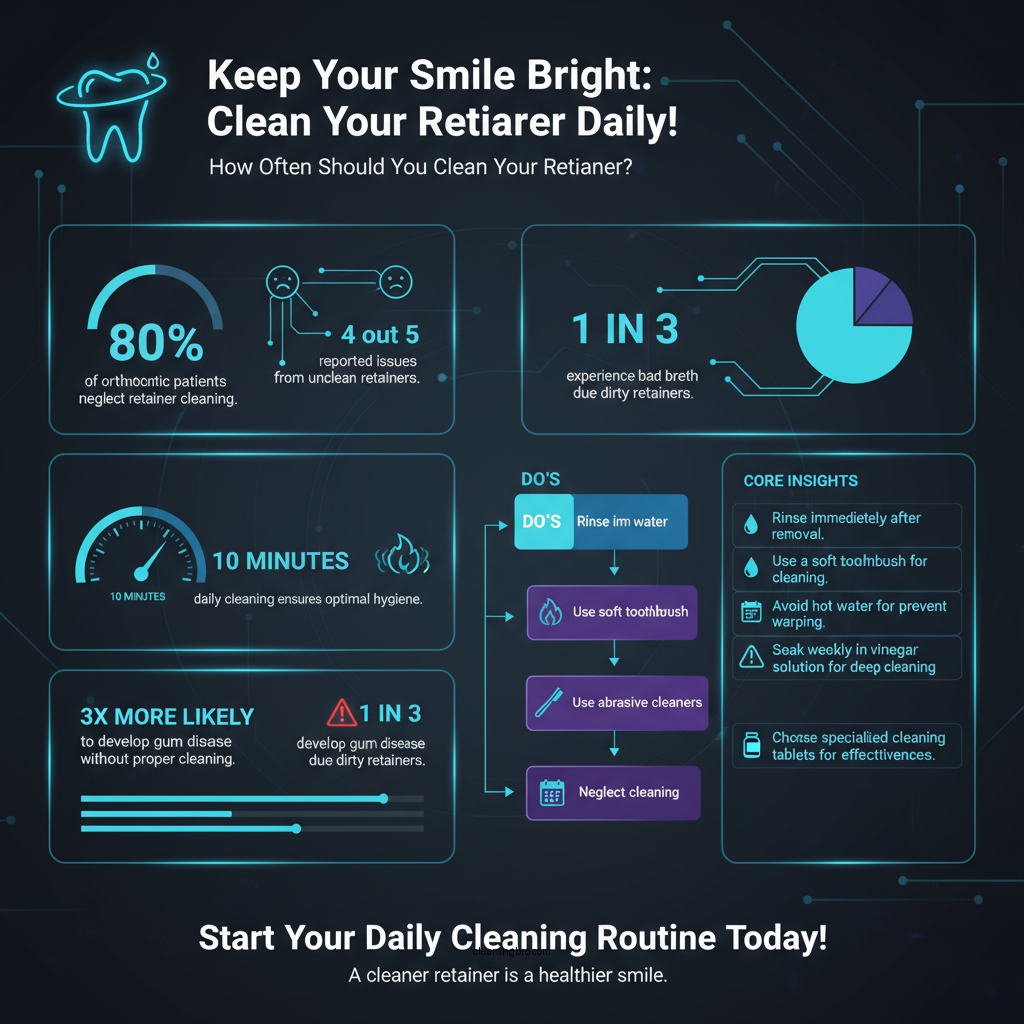

To ensure your retainer remains in optimal condition, a daily cleaning routine is essential:
– Rinse Immediately: Rinse your retainer with lukewarm water every time you remove it. This simple step helps eliminate saliva and any food particles that may have accumulated.
– Use the Right Tools: Use a soft toothbrush and a mild soap or a specialized retainer cleaner to thoroughly clean your retainer. A soft toothbrush is less likely to scratch the surface of your retainer, while abrasive cleaners can cause damage.
– Avoid Hot Water: It’s crucial to avoid using hot water, as it can warp the retainer material, leading to an improper fit. Lukewarm water is the best option to maintain the integrity of the retainer.
Weekly Deep Cleaning
In addition to your daily routine, a weekly deep cleaning is recommended to maintain your retainer’s hygiene:
– Soak Your Retainer: Soak your retainer in a cleaning solution or a mixture of equal parts vinegar and water for a deeper cleanse. This solution helps to break down stubborn plaque and kill bacteria.
– Use Retainer Cleaning Tablets: Consider using retainer cleaning tablets available at most drugstores. These tablets are designed to effectively remove stains and odors, leaving your retainer fresh and clean.
– Thorough Rinse: After deep cleaning, rinse your retainer thoroughly to ensure that no cleaning residue remains. This step is vital to avoid any potential irritation to your oral tissues.
Top 7 Retainer Cleaning Methods (2024)
| # | Cleaning Method | Effectiveness | Ease of Use | Cost |
|---|---|---|---|---|
| 1 | Vinegar & Water | ★★★☆☆ | ★★★★☆ | Low |
| 2 | Cleaning Tablets | ★★★★☆ | ★★★★☆ | Moderate |
| 3 | Mild Soap & Toothbrush | ★★★★☆ | ★★★★★ | Low |
| 4 | Hydrogen Peroxide | ★★★★★ | ★★★☆☆ | Moderate |
| 5 | Ultrasonic Cleaner | ★★★★★ | ★★☆☆☆ | High |
| 6 | Baking Soda Paste | ★★★☆☆ | ★★★☆☆ | Low |
| 7 | Listerine Mouthwash | ★★★★☆ | ★★★☆☆ | Moderate |
Signs Your Retainer Needs More Attention
Being vigilant about the condition of your retainer can help you avoid complications. Here are some signs that your retainer may need more attention:
– Discoloration or Stains: If you notice noticeable discoloration or stains on your retainer that do not come off with regular cleaning, it may be time for a deep clean or replacement.
– Foul Smell: A foul smell that persists even after cleaning is a clear indication that bacteria may be trapped in your retainer. This can lead to bad breath and other dental issues.
– Discomfort or Irritation: If your retainer causes discomfort or irritation while wearing it, it could be due to buildup or an improper fit. Always consult your orthodontist if you experience these symptoms.
Best Practices for Retainer Care
To prolong the life of your retainer and ensure optimal oral health, consider the following best practices:
– Store Properly: Always store your retainer in a protective case when not in use. This prevents damage and keeps it safe from dirt and bacteria.
– Avoid Extremes: Keep your retainer away from extreme temperatures and direct sunlight, as these can warp or damage the material.
– Regular Orthodontist Visits: Schedule regular visits to your orthodontist for professional cleaning and advice. They can provide personalized recommendations based on your specific needs.
Cleaning Solutions: Retainer Cleaner vs. Vinegar & Water vs. Baking Soda Paste
| Feature | ⭐ Retainer Cleaner | Vinegar & Water | Baking Soda Paste |
|---|---|---|---|
| Effectiveness | ★★★★☆ | ★★★☆☆ | ★★☆☆☆ |
| Ease of Use | ★★★★★ | ★★★★☆ | ★★★☆☆ |
| Cost | Moderate | Low | Low |
| Availability | Widely available | Common household item | Common household item |
| Time to Clean | 5-10 mins | 10-15 mins | 5-10 mins |
| Odor Removal | Excellent | Good | Fair |
| Stain Removal | Excellent | Fair | Good |
| Bacteria Elimination | Excellent | Good | Fair |
| Ease of Storage | Compact | Requires storage solution | Requires storage solution |
| 🏆 Best For | Convenience and effectiveness | Budget-conscious users | DIY enthusiasts |
Additional Oral Hygiene Tips
In addition to cleaning your retainer, maintaining a regular oral hygiene routine is essential for overall dental health:
– Regular Brushing and Flossing: Brush your teeth at least twice a day and floss daily to remove plaque and food particles that can lead to cavities and gum disease.
– Limit Sugary Foods: Avoid sugary foods and beverages, as they can contribute to plaque buildup and tooth decay. If you consume these items, ensure you clean your mouth afterward.
– Use Mouthwash: Incorporating an antibacterial mouthwash into your daily routine can help kill bacteria and freshen your breath, providing an additional layer of protection for your oral health.
Maintaining a clean retainer is essential for your oral health and the success of your orthodontic treatment. By following these cleaning guidelines and being attentive to your retainer’s condition, you can ensure a healthier and more comfortable experience. Make cleaning your retainer a part of your daily routine, and don’t hesitate to consult your orthodontist if you have any concerns. Regular care can lead to a brighter smile and a more pleasant orthodontic journey, allowing you to enjoy the benefits of your treatment fully.
Frequently Asked Questions
How often should I clean my retainer?
You should clean your retainer daily to prevent the buildup of bacteria and plaque. Using a soft toothbrush or a specific retainer cleaner can help maintain its hygiene. Additionally, soaking your retainer in a denture cleaner once a week can further ensure it stays fresh and free of odors.
What is the best way to clean my retainer?
The best way to clean your retainer is to use a non-abrasive toothpaste or a gentle dish soap with warm water. Avoid using hot water as it can distort the material. Regularly brushing your retainer and soaking it in a solution made for dental appliances will keep it in top condition.
Why is it important to clean my retainer regularly?
Regular cleaning of your retainer is crucial to prevent the accumulation of harmful bacteria and plaque, which can lead to oral health issues such as gum disease or bad breath. A clean retainer also ensures that it functions properly to maintain your teeth alignment, ultimately supporting your orthodontic treatment goals.
How can I remove stubborn stains from my retainer?
To remove stubborn stains from your retainer, you can soak it in a mixture of equal parts vinegar and water for about 30 minutes. After soaking, gently brush the retainer with a soft toothbrush. If stains persist, consider using specialized retainer cleaning tablets for deeper cleaning.
Which products should I avoid when cleaning my retainer?
You should avoid using bleach, alcohol-based cleaners, or abrasive materials when cleaning your retainer, as these can damage the material. Additionally, never use regular toothpaste that could scratch the surface; stick to gentle cleaning solutions specifically designed for dental appliances.
References
- https://www.mayoclinic.org/healthy-lifestyle/adult-health/in-depth/dental-care/art-20045322
https://www.mayoclinic.org/healthy-lifestyle/adult-health/in-depth/dental-care/art-20045322 - https://www.ncbi.nlm.nih.gov/pmc/articles/PMC6468157/
https://www.ncbi.nlm.nih.gov/pmc/articles/PMC6468157/ - Orthodontic Retainers: Types, Care, & Life After Braces | American Association of Orthodontists (…
https://www.aaoinfo.org/orthodontics/retainers/ - https://www.washington.edu/health/retainers/
https://www.washington.edu/health/retainers/ - https://www.colgate.com/en-us/oral-health/orthodontics/how-to-clean-your-retainer-0614
https://www.colgate.com/en-us/oral-health/orthodontics/how-to-clean-your-retainer-0614 - Google Scholar Google Scholar
https://scholar.google.com/scholar?q=how+often+do+i+clean+my+retainer - Google Scholar Google Scholar
https://scholar.google.com/scholar?q=retainer+cleaning+frequency - Google Scholar Google Scholar
https://scholar.google.com/scholar?q=oral+hygiene+and+retainers - how often do i clean my retainer – Search results
https://en.wikipedia.org/wiki/Special:Search?search=how+often+do+i+clean+my+retainer - https://www.ncbi.nlm.nih.gov/search/research-articles/?term=how+often+do+i+clean+my+retainer
https://www.ncbi.nlm.nih.gov/search/research-articles/?term=how+often+do+i+clean+my+retainer
