
How Often to Clean a K&N Air Filter
Cleaning your K&N air filter is vital for maintaining optimal engine performance, and it should be done every 50,000 miles under normal driving conditions. However, this frequency can vary based on driving habits and environmental conditions. In this article, you’ll learn about the factors that influence cleaning frequency, the benefits of regular maintenance, and the step-by-step process to clean your air filter effectively.
Understanding the K&N Air Filter

K&N air filters are engineered to outlast traditional filters, providing superior filtration and airflow. Made from a cotton gauze material, these filters are designed to be washable and reusable, making them a cost-effective choice for vehicle maintenance. Unlike disposable paper filters, K&N filters can be maintained and reused for many years, resulting in less waste and lower long-term costs. Additionally, K&N air filters are known for improving engine performance by ensuring that your engine receives a consistent supply of clean air, which is essential for combustion efficiency.
Factors Influencing Cleaning Frequency
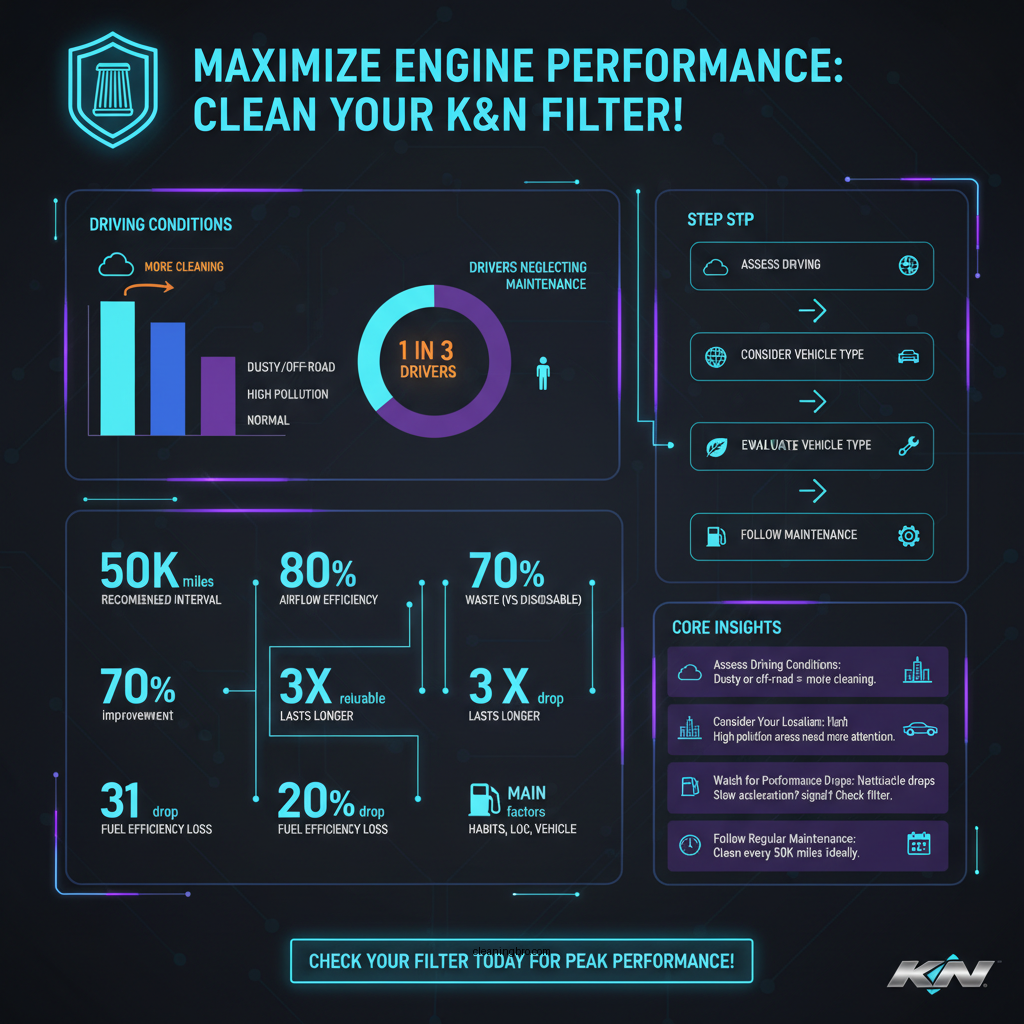

The frequency at which you should clean your K&N air filter can be influenced by several factors:
– Driving Conditions: If you frequently drive in dusty or off-road conditions, your air filter may accumulate dirt and debris more rapidly, requiring more frequent cleaning. Conversely, if you primarily drive in urban areas with less dust, you may find that your filter stays cleaner for a longer period.
– Location: Areas with high pollution levels, pollen, or other airborne contaminants can impact the lifespan of your air filter. For instance, living in a highly industrialized area or near construction sites can lead to quicker clogging of your air filter.
– Vehicle Type: Different vehicles may require different maintenance. For example, vehicles used for towing or with a performance-oriented setup might demand more frequent air filter cleaning due to the increased airflow and the strain on the filter.
Understanding these factors can help you assess when your K&N air filter needs attention, beyond the standard mileage recommendation.
Signs That Your Air Filter Needs Cleaning

Knowing when to clean your air filter is crucial. Here are some signs that indicate it may be time for a cleaning:
– Decreased Engine Performance or Acceleration: If you notice a drop in acceleration or overall engine responsiveness, a clogged air filter could be to blame. Insufficient airflow can hinder engine performance.
– Noticeable Decrease in Fuel Efficiency: A dirty air filter can lead to poor fuel combustion, resulting in decreased fuel efficiency. If you find yourself making more frequent trips to the gas station, consider checking your air filter.
– Visible Dirt or Debris on the Filter Surface: A visual inspection can reveal much about your filter’s condition. If you can see a layer of dirt or debris on the surface, it’s likely time for a cleaning.
Recognizing these signs early can save you from more significant engine problems and maintain your vehicle’s efficiency.
Benefits of Regular Cleaning
Regularly cleaning your K&N air filter provides several advantages:
– Improved Engine Efficiency and Performance: A clean air filter allows for better airflow, ensuring that your engine can breathe efficiently. This results in improved performance, especially during acceleration.
– Enhanced Air Flow, Leading to Better Fuel Economy: With optimal airflow, your engine can operate more efficiently, which can lead to better fuel economy. This is particularly beneficial in times of rising fuel prices.
– Extended Lifespan of the Air Filter: Cleaning your filter regularly can prolong its life. K&N air filters are designed to be reused many times; maintaining them properly maximizes this feature.
By prioritizing regular cleaning, you not only enhance your vehicle’s performance but also contribute to a more sustainable approach to vehicle maintenance.
How to Clean a K&N Air Filter
Cleaning a K&N air filter is a straightforward process that requires minimal tools. Here’s a step-by-step guide:
1. Gather Necessary Cleaning Supplies: You will need K&N Air Filter Cleaner, water, and a soft brush. Avoid using harsh chemicals or oils that could damage the filter.
2. Remove the Air Filter: Carefully remove the filter from your vehicle, taking care not to damage any surrounding components.
3. Rinse the Filter: Using low-pressure water, rinse the filter from the clean side (the side that faces the engine) to the dirty side. This helps to dislodge dirt and debris trapped in the filter.
4. Apply Cleaner: Spray the K&N cleaner onto the filter and allow it to sit for about 10 minutes. This will help to break down any remaining dirt and grime.
5. Rinse Again: Rinse the filter again from the clean side to the dirty side to remove the cleaner and any loosened contaminants.
6. Dry the Filter: Allow the filter to air dry completely before reinstalling it. Avoid using compressed air or heat sources, as these can damage the filter material.
7. Reinstall the Filter: Once dry, reinstall the filter securely back into the airbox.
Following these steps will ensure that your K&N air filter remains in top condition, ready to provide optimal performance.
Maintaining Your K&N Air Filter
To ensure the longevity and efficiency of your K&N air filter, consider the following maintenance tips:
– Regularly Inspect the Filter: Make it a habit to visually inspect your filter during routine vehicle maintenance. Look for any visible dirt or signs of damage.
– Use a Pre-Filter: If you frequently drive in extremely dusty environments, consider using a pre-filter. This additional layer can capture larger particles before they reach the air filter, extending its life.
– Follow the Manufacturer’s Guidelines: Always refer to K&N’s official guidelines for cleaning and maintenance. They provide specific recommendations based on your vehicle type and driving conditions.
These maintenance practices can significantly enhance the performance of your K&N air filter, ensuring that your engine continues to run efficiently.
Top 7 Factors Affecting K&N Air Filter Longevity
| # | Factor | Impact on Filter Lifespan | Recommended Cleaning Frequency |
|---|---|---|---|
| 1 | Driving Conditions | High Impact | Every 25,000 miles |
| 2 | Location | Moderate Impact | Every 40,000 miles |
| 3 | Vehicle Type | Low Impact | Every 50,000 miles |
| 4 | Air Quality | High Impact | Every 30,000 miles |
| 5 | Filter Design | Moderate Impact | Every 50,000 miles |
| 6 | Engine Type | Low Impact | Every 50,000 miles |
| 7 | Humidity | Moderate Impact | Every 40,000 miles |
| 8 | Driving Style | Moderate Impact | Every 40,000 miles |
| 9 | Maintenance Habits | High Impact | Every 25,000 miles |
| 10 | Seasonal Changes | Moderate Impact | Every 40,000 miles |
K&N Air Filter vs Traditional Filter vs Performance Filter
| Feature | ⭐ K&N Air Filter | Traditional Filter | Performance Filter |
|---|---|---|---|
| Lifespan | Up to 50,000 miles | 15,000 miles | 20,000 miles |
| Washable | ✅ | ❌ | ✅ |
| Cost | $50 | $20 | $45 |
| Airflow | ✅ High | ✅ Standard | ✅ High |
| Performance Boost | ✅ Yes | ❌ No | ✅ Yes |
| Installation | Easy | Easy | Moderate |
| Replacement Frequency | Every 50,000 miles | Every 15,000 miles | Every 20,000 miles |
| Dust Retention | Excellent | Good | Excellent |
| Environmentally Friendly | ✅ Reusable | ❌ Single-use | ✅ Reusable |
| 🏆 Best For | Cost-effective performance | Standard maintenance | Performance enthusiasts |
Your K&N air filter plays a crucial role in your vehicle’s performance, so adhering to the recommended cleaning schedule is essential. By understanding the factors that affect cleaning frequency and recognizing the signs that indicate it’s time to clean, you can ensure your engine runs efficiently. For further assistance, refer to K&N’s official guidelines or consult a professional for advice. Regular maintenance not only enhances performance but also contributes to the longevity of your engine, making it a vital part of vehicle care.
Frequently Asked Questions
How often should I clean my K&N air filter?
It is generally recommended to clean your K&N air filter every 50,000 miles under normal driving conditions. However, if you drive in dusty or off-road environments, you may need to clean it more frequently, such as every 25,000 miles. Regular maintenance ensures optimal airflow and engine performance.
What signs indicate that my K&N air filter needs cleaning?
Common signs that your K&N air filter needs cleaning include decreased engine performance, poor fuel efficiency, or an increase in engine noise. Additionally, if you notice a significant accumulation of dirt and debris on the filter’s surface, it’s time to perform a cleaning to maintain airflow and engine efficiency.
Why is it important to clean my K&N air filter regularly?
Regular cleaning of your K&N air filter is crucial because a dirty filter can restrict airflow, leading to reduced engine performance and increased fuel consumption. Keeping the filter clean not only enhances engine efficiency but also prolongs the lifespan of the filter itself, saving you money on replacements.
What is the best way to clean a K&N air filter?
The best way to clean a K&N air filter is to use a K&N air filter cleaning kit, which includes a special cleaner and oil. First, remove the filter and spray the cleaner on both sides, allowing it to soak for about 10 minutes. Rinse the filter with low-pressure water, let it dry completely, and then reapply the oil before reinstalling it.
Which tools do I need to clean my K&N air filter?
To clean your K&N air filter, you will need a K&N air filter cleaning kit, which includes a cleaner and oil. Additionally, having a soft-bristle brush, low-pressure water source, and a clean, dry workspace will help ensure an effective cleaning process while preventing damage to the filter.
References
- Air Cleaners and Air Filters in the Home | US EPA
https://www.epa.gov/indoor-air-quality-iaq/air-cleaners-and-air-filters-home - https://www.ncbi.nlm.nih.gov/pmc/articles/PMC4294474/
https://www.ncbi.nlm.nih.gov/pmc/articles/PMC4294474/ - https://www.mayoclinic.org/healthy-lifestyle/consumer-health/in-depth/air-purifiers/art-20448004
https://www.mayoclinic.org/healthy-lifestyle/consumer-health/in-depth/air-purifiers/art-20448004 - https://www.sciencedirect.com/science/article/pii/S2352847817301209
https://www.sciencedirect.com/science/article/pii/S2352847817301209 - https://www.who.int/news-room/fact-sheets/detail/indoor-air-pollution
https://www.who.int/news-room/fact-sheets/detail/indoor-air-pollution - https://www.cdc.gov/air/air-pollution.html
https://www.cdc.gov/air/air-pollution.html - https://www.britannica.com/science/air-filter
https://www.britannica.com/science/air-filter - https://www.nature.com/articles/s41598-020-72498-5
https://www.nature.com/articles/s41598-020-72498-5 - Google Scholar Google Scholar
https://scholar.google.com/scholar?q=how+often+to+clean+K&air+filter - Google Scholar Google Scholar
https://scholar.google.com/scholar?q=air+filter+maintenance+guidelines