Mistakes to Avoid When Cleaning Your Coffee Machine
When cleaning your coffee machine, avoid using harsh chemicals that can corrode parts and ruin flavor. Don’t skip regular cleanings—daily rinses and monthly descaling keep it working smoothly. Always follow the manufacturer’s instructions to prevent damage or voiding warranties. Be sure to thoroughly clean removable parts like the drip tray and water reservoir to avoid buildup. Keep these tips in mind, and you’ll protect your machine while making great coffee—there’s more handy advice coming up.
Using Harsh Chemicals That Damage Your Machine
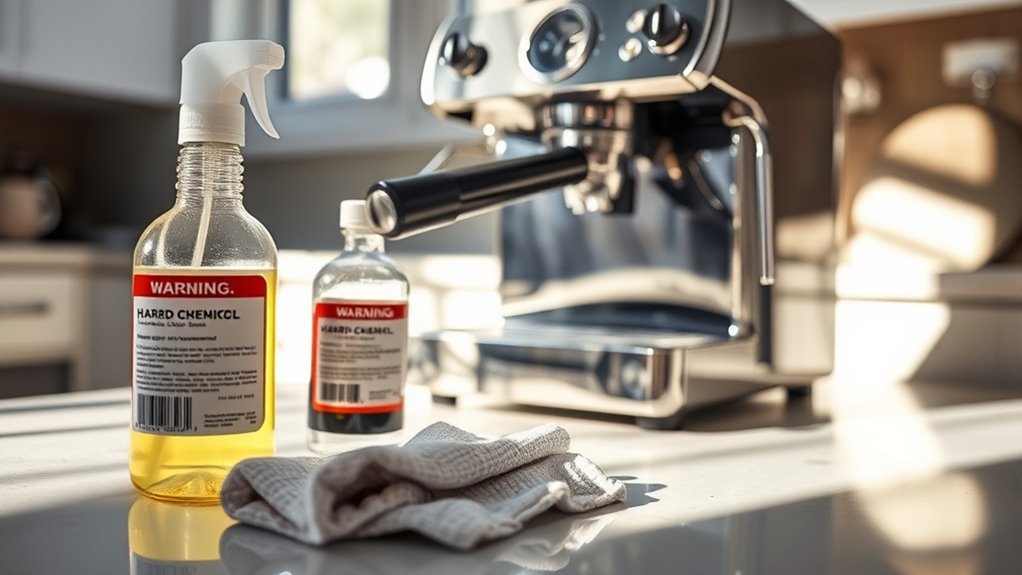
While it might seem like a quick fix, using harsh chemicals to clean your coffee machine can actually cause serious damage. You want your machine to last and perform well, so relying on chemical alternatives is key. Harsh cleaners can corrode internal parts, ruin seals, and leave harmful residues that spoil your brew. Instead, opt for safe cleaning methods like vinegar solutions, baking soda, or specialized eco-friendly products designed specifically for coffee machines. These options protect your machine’s components while effectively removing buildup. Choosing chemical alternatives gives you freedom from worrying about costly repairs or replacements. By embracing safe cleaning, you maintain both your machine’s longevity and the pure taste of your coffee—without compromising your health or the environment.
Neglecting Regular Cleaning Schedules
If you don’t stick to a regular cleaning schedule, your coffee machine will quickly accumulate oils, coffee grounds, and mineral deposits that affect its performance. Maintaining consistent cleaning frequency keeps your machine running smoothly and extends its lifespan. Slacking on maintenance habits can lead to clogs, off-flavors, and costly repairs, restricting your freedom to enjoy great coffee anytime.
Here’s a simple guideline to help you stay on track:
| Cleaning Task | Recommended Frequency |
|---|---|
| Daily rinse | After each use |
| Weekly deep clean | Once a week |
| Descaling | Every 1-3 months |
| Water filter replacement | Every 2-3 months |
Stick to these habits, and your machine will reward you with reliability and freedom to savor every cup.
Ignoring Manufacturer’s Cleaning Instructions
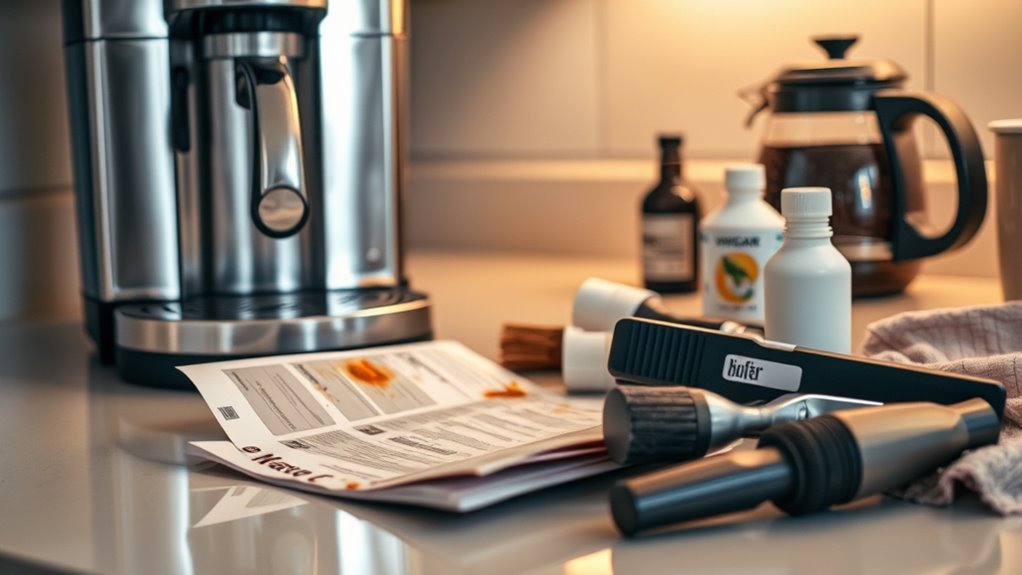
Keeping up with a cleaning schedule is a great start, but it won’t do much good if you ignore the manufacturer’s specific instructions. You might feel tempted to freestyle your cleaning routine, but skipping the step of reading manuals can lead to damage or void warranties. Following guidelines guarantees you’re using the right methods and products designed for your machine, extending its life and maintaining ideal performance. Manuals often include essential tips that aren’t obvious, like water temperature limits or recommended cleaning solutions. Embracing these instructions doesn’t limit your freedom—it actually frees you from costly repairs and frustration. So, take a moment to read the manual thoroughly before you start. It’s the smartest way to keep your coffee machine running smoothly without unnecessary risks.
Failing to Clean Removable Parts Thoroughly
Even though removable parts are designed for easy cleaning, many people don’t give them the thorough attention they need. Failing to clean your coffee machine’s removable components properly can lead to residue buildup, affecting taste and machine performance. To keep your freedom from unwanted flavors and breakdowns, follow these maintenance tips.
| Removable Component | Cleaning Tip |
|---|---|
| Drip Tray | Wash with warm soapy water |
| Filter Basket | Rinse after each use |
| Water Reservoir | Clean weekly with vinegar |
Overlooking the Importance of Descaling Regularly

Since mineral deposits build up inside your coffee machine over time, overlooking regular descaling can cause serious issues. If you skip descaling, mineral buildup will clog internal parts, reducing water flow and affecting the taste of your coffee. To keep your machine running smoothly and your brews tasting fresh, sticking to a proper descaling frequency is essential. Depending on your water hardness and usage, descaling every one to three months is usually recommended. Don’t let neglect limit your freedom to enjoy great coffee whenever you want. Regular descaling prevents damage and extends your machine’s lifespan, saving you from costly repairs or replacements. Make descaling a non-negotiable part of your routine—your coffee machine, and your taste buds, will thank you.
Frequently Asked Questions
How Often Should I Replace the Water Filter in My Coffee Machine?
You should replace your coffee machine’s water filter every two to three months to keep your brew tasting fresh and your machine running smoothly. Regular filter replacement guarantees peak water quality, which directly impacts the flavor of your coffee and prevents buildup inside the machine. If you want the freedom to enjoy great coffee without hassle, sticking to this schedule helps maintain consistent taste and extends your machine’s lifespan.
Can I Use Vinegar Instead of Commercial Descaling Solutions?
You can use vinegar instead of commercial descaling solutions, and it offers some benefits like being affordable and natural. However, vinegar’s strong smell and acidity might affect your coffee machine’s parts over time. When exploring descaling methods, it’s good to weigh vinegar’s pros and cons against specialized products designed for your machine. If you want freedom from harsh chemicals, vinegar’s worth trying occasionally, but don’t rely on it exclusively.
What Is the Best Way to Clean the Coffee Grinder Attachment?
To keep your coffee grinder attachment in top shape, you’ll want to follow some grinder maintenance tips. Start by unplugging it, then remove and brush out any leftover grounds. Use a damp cloth for the exterior, but avoid water inside the mechanism. For cleaning frequency guidelines, aim to clean it every few weeks if you grind daily, or monthly if not. This’ll guarantee fresh, flavorful coffee every time without hassle.
Should I Leave the Coffee Machine Lid Open After Cleaning?
You want freshness, you want longevity, you want freedom from mold and odors. So yes, leaving the coffee machine lid open after cleaning is a smart move. It helps your machine dry thoroughly, preventing moisture buildup and keeping your coffee machine maintenance on point. Following this simple cleaning tip guarantees your machine stays fresh and ready, giving you the freedom to enjoy each brew without worry or hassle.
How Do I Remove Mold Buildup Inside the Coffee Machine?
To remove mold buildup inside your coffee machine, start by unplugging it and disassembling removable parts. Soak them in a mixture of equal parts white vinegar and water for 30 minutes, then scrub gently. Run a vinegar-water cycle through the machine, followed by several water-only cycles to rinse. To keep mold at bay, stick to a regular cleaning frequency—ideally once a week—and always dry parts thoroughly. That way, you enjoy fresh coffee without worry!