Mistakes to Avoid When Cleaning Your Mold
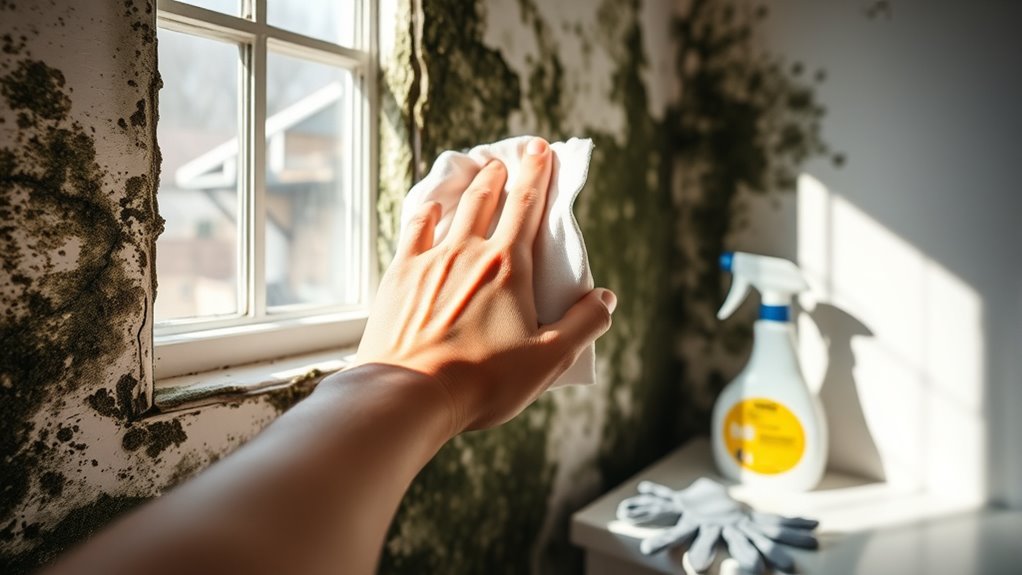
When cleaning mold, don’t use bleach on porous surfaces—it won’t reach mold roots and can lead to regrowth. Always address moisture sources first, or mold will return. Wear protective gear like gloves and masks to avoid health risks. Don’t overlook hidden mold in places like vents or behind walls. Ventilate areas well and moisten mold before scrubbing to prevent spores spreading. Properly dry and dispose of moldy materials. If you want to avoid common pitfalls, keep exploring these essential tips.
Using Bleach on Porous Surfaces
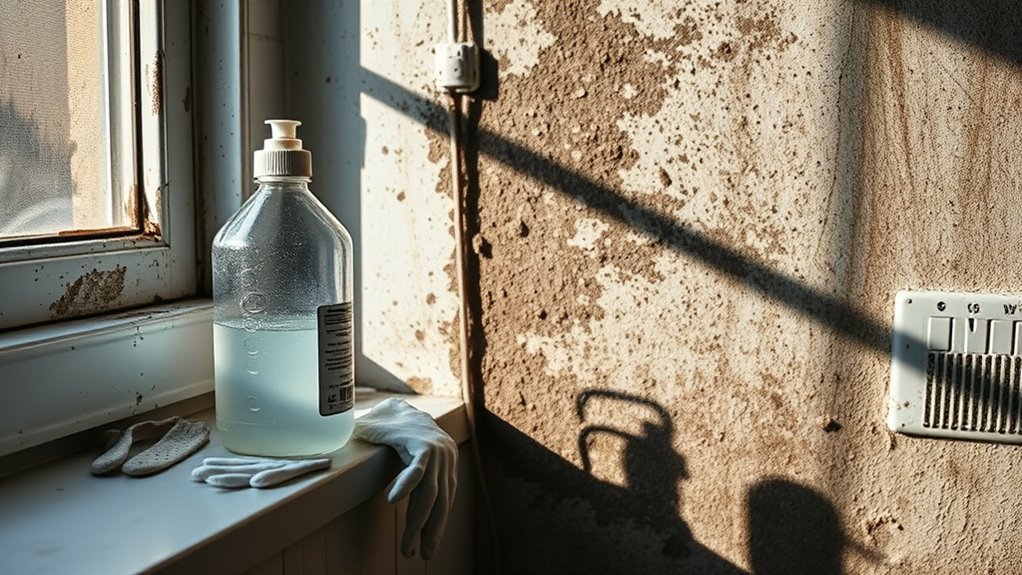
Although bleach is often recommended for mold removal, you shouldn’t use it on porous surfaces like wood or drywall. Many mold misconceptions surround bleach effectiveness, leading you to believe it’s a cure-all. In reality, bleach can’t penetrate porous materials deeply, so mold roots remain, ready to regrow. If you rely solely on bleach, you’re only treating the surface, not the problem, limiting your freedom from recurring mold issues. Instead, opt for products designed to penetrate and eliminate mold within porous surfaces or consider professional help. Understanding this lets you take control, avoiding wasted effort and frustration. Don’t let common myths restrict your ability to fully reclaim your mold-affected spaces. Choose smarter, more effective solutions to maintain your freedom from mold’s persistent hold.
Ignoring the Source of Moisture
You can’t fully get rid of mold without finding where the moisture is coming from. If you ignore leaks or humidity issues, the mold will just come back. Fixing the source of moisture is key to stopping mold from returning.
Identify Moisture Origins
Before you start cleaning mold, pinpointing where the moisture is coming from is crucial. Without identifying moisture sources, your efforts will be temporary at best. You might clean the visible mold but miss the hidden cause, allowing it to return unchecked. Look for leaks, condensation, or poor ventilation that could be feeding mold growth. Keeping an eye on humidity control is important; too much moisture in the air creates the perfect environment for mold to thrive. By locating and addressing these moisture origins, you’re taking the first step toward true freedom from mold problems. Don’t just mask the issue—understand it, and you’ll gain lasting control over your space’s health and comfort.
Prevent Recurring Mold Growth
If the root cause of moisture isn’t dealt with, mold will keep coming back no matter how often you clean it. To truly free yourself from mold’s grip, you’ve got to tackle the source head-on. That means taking preventative measures—like fixing leaks, improving ventilation, and controlling humidity levels—to stop moisture from creating a cozy environment for mold growth. Using mold resistant products in vulnerable areas can also give you an extra layer of protection, making it harder for mold to take hold again. Remember, it’s not enough to just wipe away the visible mold; you need to break the cycle by eliminating the dampness that feeds it. Taking these steps guarantees your space stays mold-free, giving you the freedom to live comfortably and confidently.
Not Wearing Proper Protective Gear
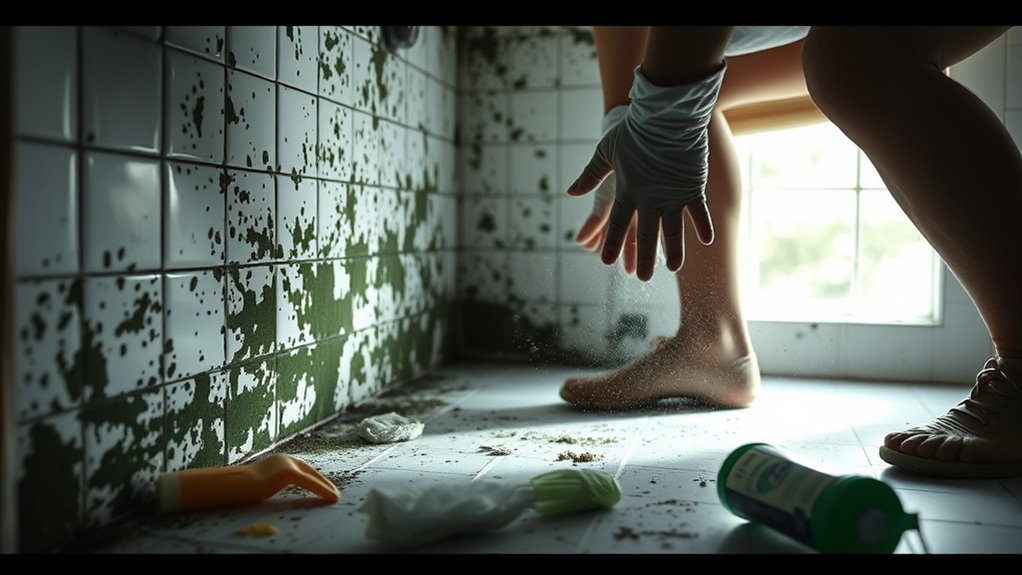
Skipping proper protective gear when cleaning mold puts your health at serious risk. Mold exposure can lead to severe health risks like respiratory issues, allergic reactions, and skin irritation. You want to free yourself from these dangers by suiting up correctly before you start cleaning. Don’t underestimate the power of simple gear to shield you from invisible spores that can wreak havoc on your body.
| Protective Gear | Purpose | Health Benefit |
|---|---|---|
| Gloves | Prevent skin contact | Avoids irritation and infection |
| Mask (N95 or better) | Filters airborne spores | Protects lungs from mold spores |
| Goggles | Shields eyes | Prevents eye irritation |
| Long sleeves | Covers skin | Reduces skin exposure |
| Respirator | For heavy mold presence | Guards against severe exposure |
Gear up and reclaim your freedom to breathe easy!
Overlooking Hidden Mold Areas
Wearing the right protective gear is just the first step in tackling mold safely. Don’t let hidden mold catch you off guard—it often lurks in places you wouldn’t expect, like behind walls, under carpets, or inside vents. If you skip a thorough mold inspection, you risk missing these spots, allowing mold to spread and compromise your freedom to enjoy a healthy space. Be proactive: check less obvious areas and trust your instincts when something feels off. Remember, just cleaning visible mold isn’t enough; hidden mold can cause lingering issues if ignored. Taking the time for a detailed mold inspection empowers you to reclaim control over your environment and avoid future headaches. Stay vigilant and don’t let hidden mold limit your freedom.
Failing to Ventilate the Space
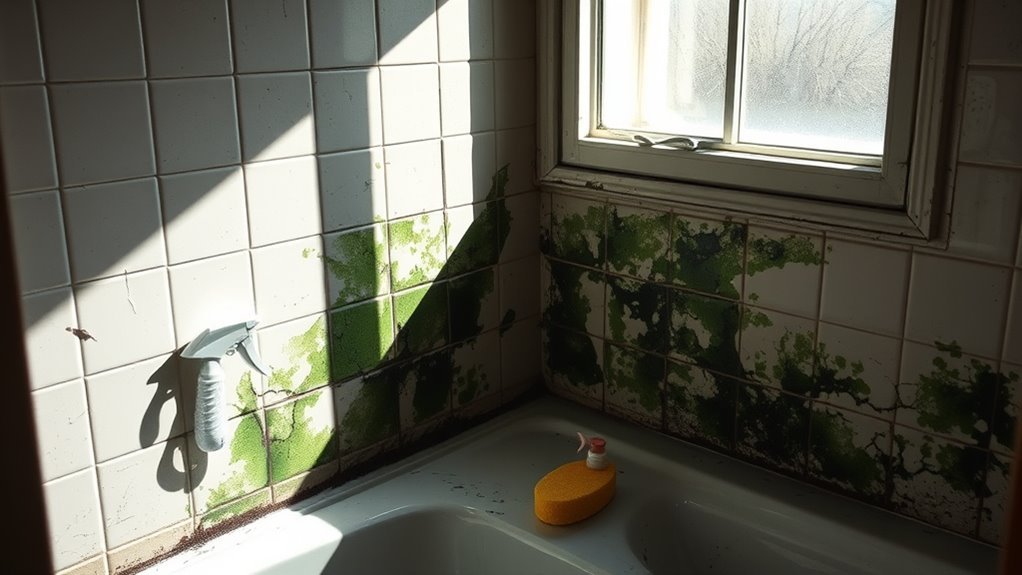
One of the biggest mistakes you can make when cleaning mold is failing to ventilate the space properly. Without adequate ventilation, mold spores linger in the air, limiting your freedom to breathe clean, fresh air. To avoid this, follow these essential ventilation techniques:
- Open windows and doors to boost natural air circulation.
- Use fans to direct airflow out of the room, pushing mold spores outside.
- Turn on exhaust fans in bathrooms or kitchens to remove humid air quickly.
- Avoid sealing the area completely during cleaning; air needs to flow freely.
Using a Vacuum Cleaner Without a HEPA Filter
You might think any vacuum will work for cleaning mold, but without a HEPA filter, you could be spreading spores into the air. Standard vacuums don’t trap tiny mold particles effectively, increasing health risks. Using the right tools, like a vacuum with a HEPA filter, is essential for safe mold removal.
Importance of HEPA Filters
Although it might seem convenient to use any vacuum cleaner when dealing with mold, using one without a HEPA filter can actually spread mold spores rather than contain them. You want to protect your space and breathe freely, so here’s why HEPA filters matter:
- HEPA benefits include trapping 99.97% of particles as small as 0.3 microns, which standard vacuums miss.
- They prevent mold spores from recirculating back into the air, improving your indoor air quality.
- Using a HEPA filter reduces allergy and asthma symptoms linked to mold exposure.
- They help you maintain a cleaner, healthier environment without extra effort.
Choosing a vacuum with a HEPA filter isn’t just smart—it’s essential for freedom from mold’s hidden dangers.
Risks of Standard Vacuums
While HEPA filters trap tiny mold spores effectively, standard vacuums without them can do more harm than good when cleaning mold. When you use a vacuum lacking a HEPA filter, the spores get stirred up and released back into the air, defeating your efforts. Plus, many standard vacuums don’t have the suction power needed to capture these microscopic particles properly. Over time, poor vacuum maintenance can worsen this problem, as clogged filters or worn parts reduce efficiency and spread mold further. If you want to keep your space mold-free and breathe easy, relying on a regular vacuum isn’t the way. Choose tools designed to contain and remove mold safely, so you don’t trade one problem for another. Your freedom to live healthy starts with smart choices.
Proper Mold Removal Tools
If a vacuum cleaner without a HEPA filter is your only option, it’s essential to take extra precautions to minimize mold spore spread. Using this tool demands careful steps to maintain freedom from contamination while applying mold removal techniques effectively. Here’s how you can proceed:
- Wear a mask and gloves to protect yourself from airborne spores.
- Seal off the cleaning area with plastic sheets to prevent spores from drifting.
- Vacuum slowly and methodically to avoid stirring up mold particles.
- Immediately dispose of the vacuum bag or clean the canister outdoors to stop spores from re-entering your space.
Pair these steps with effective cleaning solutions for thorough mold removal. This approach helps you maintain control and freedom during your mold cleanup.
Scrubbing Mold Without Moistening It First
Before you start scrubbing mold, it’s essential to moisten the affected area to prevent the spores from becoming airborne. If you skip this step, you risk spreading mold spores around your space, making the problem worse and potentially harming your health. Using the right mold removal techniques means applying an appropriate cleaning solution that dampens the mold, loosening it for easier removal. This approach not only protects your lungs but also makes your cleaning more effective and efficient. So, don’t rush into scrubbing dry mold—take a moment to spray or wipe with a suitable cleaning solution first. It’s a small step that gives you greater control and freedom over your environment, keeping it safe and mold-free.
Disposing of Moldy Materials Improperly
When you’re getting rid of moldy materials, how you dispose of them matters a lot. If you don’t follow safe disposal methods, you risk spreading mold spores to other areas. Let’s look at how to avoid cross-contamination during cleanup.
Safe Disposal Methods
You’ll often find that improper disposal of moldy materials can lead to contamination spreading to other areas of your home. To keep your space safe and free, you need a solid plan for safe disposal of mold materials. Here’s how you can do it right:
- Seal moldy items tightly in plastic bags to prevent spores from escaping.
- Label the bags clearly as “mold-contaminated” to alert anyone handling them.
- Dispose of these bags promptly in outdoor trash bins rather than indoor garbage cans.
- Avoid breaking or crushing moldy materials, which can release spores into the air.
Avoiding Cross-Contamination
Since improper disposal can easily spread mold spores, it’s essential you handle moldy materials carefully to avoid cross-contamination. When tossing out contaminated items, seal them tightly in plastic bags to contain mold particles and prevent them from becoming cross contamination sources. Don’t just leave moldy debris lying around or mix it with regular trash—that’s a quick way to spread spores throughout your space. Always dispose of moldy materials promptly and separately from other waste. Wearing gloves and cleaning tools after handling these materials further reduces risks. By taking these steps, you’re actively preventing spread and protecting both your environment and your freedom to live mold-free. Remember, the right disposal habits keep mold contained and your home safe.
Relying Solely on DIY Methods for Extensive Mold
Although tackling small patches of mold yourself might seem manageable, relying solely on DIY methods for extensive mold can lead to incomplete removal and health risks. You want freedom from mold without compromising safety. Here’s why DIY cleaning strategies might fall short:
- Extensive mold often hides in walls or HVAC systems, beyond what surface cleaning can fix.
- DIY mold testing methods might not detect all toxic spores, leaving risks unnoticed.
- Without professional tools, you may spread mold spores, worsening contamination.
- Health hazards like allergic reactions or respiratory issues can arise from improper handling.
For your freedom and safety, consider professional assessment and remediation when mold covers large areas. It guarantees thorough removal and peace of mind, freeing you from lingering problems.
Neglecting to Dry the Area Thoroughly After Cleaning
Even after you’ve removed mold, failing to dry the area thoroughly can undo all your hard work. Moisture is mold’s best friend, so mastering effective drying techniques is key to preventing its return. Don’t just wipe surfaces and call it a day—use fans, dehumidifiers, or open windows to speed up moisture evaporation. Remember, moisture control isn’t just about cleaning; it’s about creating an environment where mold can’t thrive. Neglecting this step means you’re leaving doors wide open for mold to come back and multiply. By prioritizing thorough drying, you take control of your space’s health and freedom, ensuring the problem stays solved and your home stays fresh and mold-free.
Frequently Asked Questions
Can Mold Cause Health Problems Even in Small Amounts?
Yes, even small amounts of mold exposure can cause health risks, especially if you’re sensitive or have allergies. You might experience symptoms like sneezing, coughing, or skin irritation, which can limit your freedom to enjoy your space comfortably. It’s important to address mold early so you don’t have to deal with ongoing health issues. Taking care of mold lets you breathe freely and live without unnecessary restrictions.
How Long Does It Take for Mold to Grow After Water Damage?
You’ll typically see mold growth within 24 to 48 hours after water damage, but the mold growth timeline can vary depending on water damage factors like humidity, temperature, and the type of material affected. If the area stays damp and warm, mold can spread faster. Staying on top of drying and repairs lets you control the situation and keep mold from taking over your space, giving you the freedom to enjoy your home safely.
Are Natural Mold Cleaning Solutions Effective Compared to Commercial Products?
You might wonder if natural remedies can match the cleaning efficiency of commercial products when tackling mold. While natural solutions like vinegar or tea tree oil offer a safer, eco-friendly approach, they might not always be as powerful on stubborn mold. If you value freedom from harsh chemicals and want to try natural remedies first, they can work well for light mold. But for tougher jobs, commercial products might be more effective.
Can Mold Return After Professional Remediation?
Yes, mold can return after professional remediation if mold regrowth prevention steps aren’t followed. Even the best remediation effectiveness depends on addressing moisture issues and keeping your space dry. You’ll want to maintain good ventilation and fix leaks promptly to keep mold from coming back. Staying proactive gives you the freedom to enjoy a clean, healthy home without worrying about mold sneaking back in.
Is It Safe to Stay in a Home With Visible Mold During Cleanup?
It’s generally not safe to stay in a home with visible mold during cleanup because mold exposure can cause serious health risks, especially for those with allergies, asthma, or weakened immune systems. You want the freedom to breathe easy, so it’s best to avoid the area until professionals finish the job and confirm the space is mold-free. Taking this precaution protects your health and helps you feel secure in your living space.