Common Mistakes When Cleaning Curtains
When cleaning curtains, don’t ignore care labels—they guide proper washing to avoid damage. Avoid harsh detergents or bleach that can weaken fibers and fade colors. Overwashing or high-heat drying can ruin fabric texture and vibrancy. Skipping regular vacuuming lets dust settle, dulling curtains and harming air quality. Always test cleaning methods on a hidden spot to prevent surprises. Improper drying, like hanging while wet, may also cause issues. Keep these tips in mind to maintain your curtains beautifully and learn how to avoid more pitfalls.
Ignoring Care Labels and Fabric Types
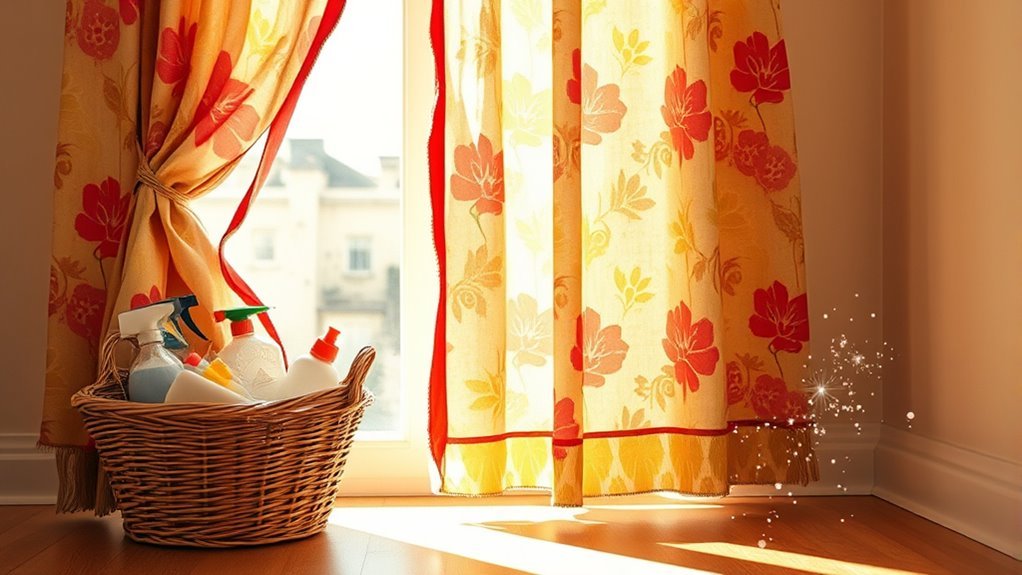
Before you start cleaning your curtains, it’s crucial to check the care labels and understand the fabric type. Ignoring fabric care instructions can lead to damage or color fading, limiting your freedom to enjoy your home’s vibe. Each fabric demands a specific cleaning frequency—some need gentle washing monthly, while others thrive with less frequent care. By respecting these guidelines, you’re not just preserving your curtains’ appearance but also extending their lifespan. When you choose to follow the care labels, you avoid unnecessary stress and wasted effort. Taking a moment to understand fabric care empowers you to keep your space fresh without restrictions. So, don’t skip this step; it’s the key to maintaining your curtains’ beauty and your cleaning freedom.
Using Harsh Detergents or Bleach
Once you know what your curtains are made of and how to care for them, it’s important to choose the right cleaning products. Using harsh detergents or bleach can damage delicate fibers, fade colors, and shorten the lifespan of your curtains. Instead of reaching for strong chemicals, consider detergent alternatives that are gentle yet effective. These options protect your fabric’s integrity while still tackling dirt and stains. Bleach substitutes are also a smart choice; they brighten fabrics without the risk of weakening threads or causing yellowing. By opting for milder solutions, you give yourself the freedom to refresh your curtains safely and sustainably. Protect your investment and maintain the beauty of your curtains by avoiding harsh products and embracing gentler cleaning methods.
Overwashing or Excessive Drying
You might think washing your curtains often keeps them fresh, but overwashing can actually damage the fabric. Excessive drying, especially at high heat, can cause colors to fade and weaken fibers. It’s important to find the right balance to protect your curtains’ look and longevity.
Fabric Damage Risks
Although keeping your curtains clean is important, overwashing or excessive drying can cause serious fabric damage. Different fabric types react uniquely to various cleaning methods, so pushing them too hard risks weakening fibers or shrinking the material. For example, delicate silks or linens may lose their texture if washed too frequently or dried on high heat. Even sturdy cottons and synthetics can become brittle or distorted if exposed to harsh cycles repeatedly. Instead, you should follow care labels closely, use gentle cleaning methods, and space out washes to preserve your curtains’ integrity. Avoid the urge to overclean just for freshness—sometimes airing them out or spot cleaning can do the trick. Protecting fabric means giving your curtains the freedom to last longer without unnecessary wear.
Color Fading Issues
When curtains get washed or dried too often, their colors can quickly lose vibrancy. You want your curtains to brighten your space, not fade into the background. Overwashing and excessive drying strip away dyes, making fabrics look dull and worn out. To keep that fresh, lively look, follow simple color protection tips and fabric maintenance strategies. Here’s a quick guide:
| Common Mistake | Better Approach |
|---|---|
| Frequent washing | Wash only when necessary |
| High heat drying | Air dry or use low heat |
| Strong detergents | Use mild, color-safe soaps |
Skipping Regular Vacuuming or Dusting
Even if your curtains don’t look dirty, skipping regular vacuuming or dusting can cause dust and allergens to build up over time. You might think occasional cleaning is enough, but maintaining a consistent vacuum frequency is key to keeping your curtains fresh and healthy. Dust accumulation not only dulls the fabric’s appearance but can also affect indoor air quality, limiting your freedom to enjoy a clean space. By making vacuuming or dusting a regular part of your routine, you prevent stubborn grime and allergens from settling deep into the fibers. This simple habit lets you breathe easier and keeps your curtains looking vibrant without the hassle of intensive cleaning sessions. Don’t let neglect hold you back—stay on top of your curtain care for lasting freedom.
Neglecting to Test Cleaning Methods on Small Areas
Before you apply any cleaning method to your curtains, always test it on a small, hidden area first. This simple step helps you avoid unexpected fabric damage or discoloration. Skipping this could turn a quick clean into a costly mistake.
Spot Testing Importance
How can you be sure a cleaning method won’t damage your curtains? That’s where spot testing comes in. Before diving into a full wash, you’ve got to check fabric compatibility on a small, hidden patch. This simple step saves you from costly mistakes and ruined curtains.
Here’s how to do it right:
- Choose an inconspicuous area on your curtain.
- Apply a small amount of your chosen cleaner.
- Wait and observe for any discoloration, shrinkage, or texture changes.
Avoiding Fabric Damage
If you skip testing cleaning methods on a small area, you risk causing irreversible damage to your curtains. Different fabric types react uniquely to various cleaning methods, so a quick test is essential. Without it, colors might fade, textures could change, or the fabric might weaken. Protect your freedom to refresh your space without regrets by always testing first.
| Fabric Type | Recommended Cleaning Method | Test Area Result to Check |
|---|---|---|
| Cotton | Mild detergent, cold water | Colorfastness, shrinkage |
| Silk | Dry clean or gentle soap | Texture change, color bleeding |
| Polyester | Warm water, mild detergent | Color retention, fabric strength |
| Linen | Hand wash, air dry | Wrinkling, color fading |
| Velvet | Dry clean preferred | Pile distortion, color consistency |
Hanging Curtains While Wet or Improper Drying
While it might seem quicker to hang your curtains right after washing, doing so when they’re still wet can cause them to stretch, lose shape, or develop mildew. Proper curtain care means mastering drying techniques that preserve their look and longevity. To avoid common pitfalls:
Hanging curtains wet risks stretching, losing shape, and mildew—drying properly preserves their look and longevity.
- Always air-dry curtains flat or draped over a clean surface to maintain their shape.
- Avoid direct sunlight during drying to prevent fading or fabric damage.
- Make certain curtains are completely dry before rehanging to stop mildew growth and odors.
Frequently Asked Questions
How Often Should Curtains Be Professionally Cleaned?
Imagine the soft glow of sunlight filtering through your curtains, untouched and fresh. You might wonder about the ideal curtain cleaning frequency to keep that feeling alive. Typically, having your curtains professionally cleaned every 12 to 18 months guarantees they stay vibrant and allergen-free. Professional cleaning benefits include deep cleansing that DIY methods can’t match, giving you the freedom to enjoy your space without worry or hassle.
Can Steam Cleaning Damage Delicate Curtain Fabrics?
You might wonder if steam cleaning can damage delicate curtain fabrics. The truth is, it depends on the fabric types. Some materials, like silk or velvet, are sensitive to heat and moisture, so steam cleaning could cause shrinkage or color fading. If you want to keep your curtains looking fresh without risking harm, always check the care label or test a small hidden area first. That way, you’re free to enjoy clean curtains safely!
What Is the Best Way to Remove Pet Hair From Curtains?
Funny how pet hair loves curtains just as much as your furry friend loves you, right? To tackle it, you’ve got some trusty cleaning tools like a lint roller, rubber gloves, or even a vacuum with a brush attachment. Just glide them over your curtains, and watch the pet hair vanish. It’s quick and keeps your space feeling fresh—giving you freedom from clingy fur without much fuss.
Are There Eco-Friendly Alternatives to Traditional Curtain Cleaning?
You can definitely choose eco-friendly products for cleaning your curtains that won’t harm the environment. Opt for natural cleaning solutions like vinegar, baking soda, or lemon juice—they’re effective and safe. These alternatives let you keep your space fresh without harsh chemicals, giving you freedom from toxins. Plus, making your own cleaning mix is simple and budget-friendly, so you’re in control and doing good for the planet at the same time.
How Do I Prevent Curtains From Fading in Sunlight?
Think of your curtains as guardians of your personal sanctuary, shielding you from harsh realities. To keep their colors vibrant, you’ll want to use fabric treatments with UV protection—like a shield against the sun’s relentless gaze. Installing UV-blocking window films or sheer liners can also help. These steps let you enjoy sunlight’s warmth freely, without sacrificing the beauty and life of your curtains, preserving your space’s spirit and freedom.