How to Clean Hearing Aid Domes: A Step-by-Step Guide
Cleaning hearing aid domes is crucial for both performance and hygiene. To effectively clean these components, it’s essential to use a soft, dry cloth and mild soap, while handling them with care to prevent any damage. This guide provides a comprehensive overview of the best practices for cleaning hearing aid domes, ensuring that your devices remain in optimal condition and continue to provide high-quality sound.
Understanding Hearing Aid Domes

Hearing aid domes are the soft silicone tips that fit snugly in your ear canal, serving as a critical interface between the hearing aid and your ear. Their primary function is to transmit sound from the hearing aid directly into your ear, enhancing the clarity and quality of the audio you receive. However, due to their location and use, hearing aid domes can accumulate earwax, moisture, and dirt over time. This accumulation can significantly impact sound quality, leading to muffled hearing and discomfort. Regular cleaning helps to maintain optimal sound transmission and prolongs the life of your hearing aids.
Tools You’ll Need for Cleaning
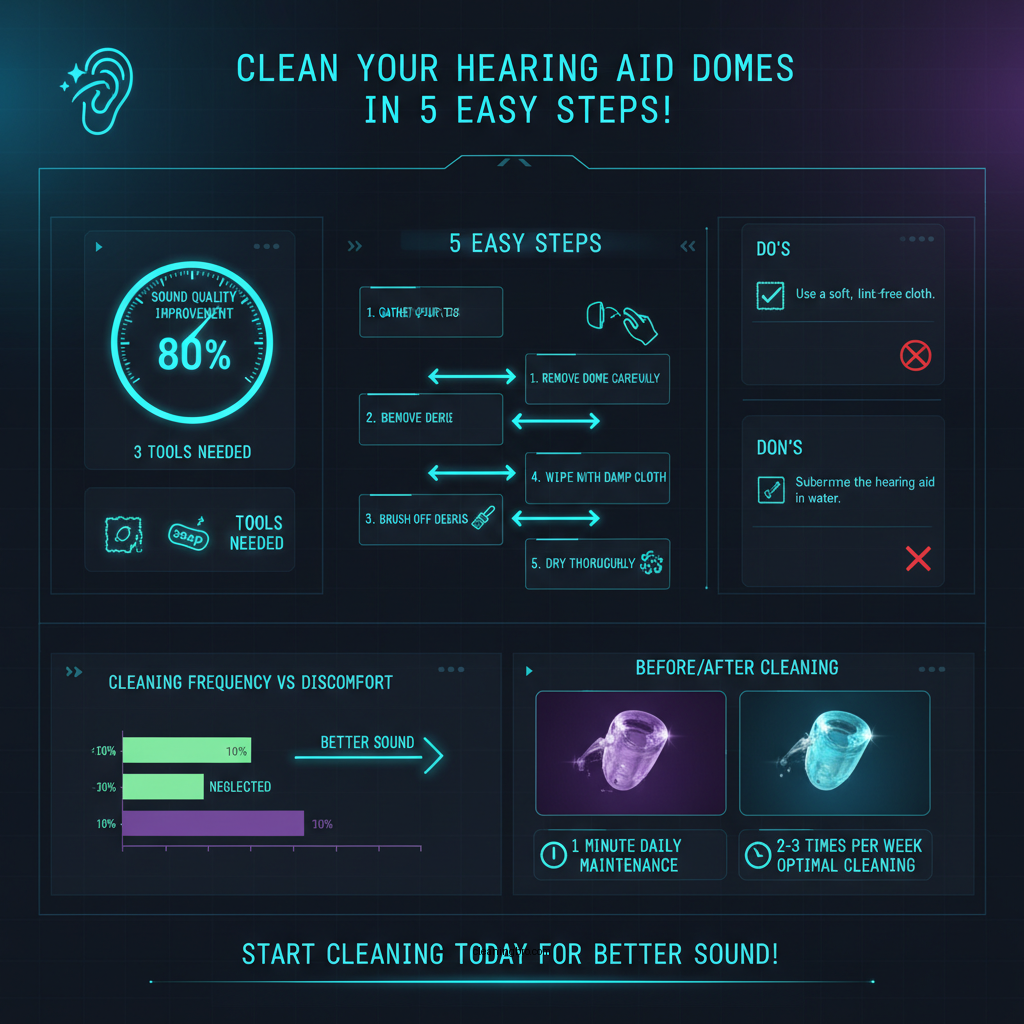
Before diving into the cleaning process, gather the necessary tools to ensure a thorough job:
– Soft, lint-free cloth: Ideal for wiping down the domes without scratching the surface.
– Mild soap and warm water: For deeper cleaning, particularly if there is stubborn buildup.
– Small brush or toothpick: Effective for gently removing debris from the crevices of the dome.
These tools will help you maintain not just the hygiene of your hearing aids, but also their performance.
Step-by-Step Cleaning Process

1. Remove the dome from the hearing aid carefully: Grasp the dome gently with your fingers and pull it straight off the hearing aid. Avoid twisting to prevent damage to the attachment point.
2. Clean the dome with a brush: Use a small brush or toothpick to carefully remove any visible debris or wax buildup from the dome. Be cautious not to damage it while doing this.
3. Wipe with a damp cloth: After brushing, take a soft, damp cloth and wipe down the dome to remove any remaining dirt. Ensure that the cloth is just slightly moist and not wet, as excess water can damage the hearing aid.
4. Soak if necessary: If the dome is particularly dirty, prepare a solution of mild soap and warm water. Submerge the dome for a few minutes, then rinse thoroughly under running water to remove soap residue.
5. Final rinse and dry: Rinse the dome under clean water to ensure all soap is washed away, then pat it dry with a lint-free cloth.
Drying and Reattaching the Domes

After cleaning, it’s vital to allow the domes to air dry completely. Place them on a clean, dry surface away from direct sunlight. This step is crucial, as moisture can damage the internal components of the hearing aids.
Before reattaching, inspect the domes for any signs of wear or damage. Look for cracks, discoloration, or any structural issues that could affect the fit or performance. If everything looks good, gently push the dome back onto the hearing aid until it clicks into place securely.
Tips for Regular Maintenance
To ensure your hearing aids continue functioning optimally, consider the following regular maintenance tips:
– Clean your hearing aid domes at least once a week: Regular cleaning prevents the buildup of wax and dirt, ensuring consistent sound quality.
– Avoid harsh chemicals: Stick to mild soap and water; harsh substances can degrade the materials of the dome or the hearing aid.
– Use a drying kit: Consider investing in a hearing aid drying kit to keep moisture at bay, especially if you live in a humid environment or are prone to sweat.
When to Replace Hearing Aid Domes
Even with regular cleaning, there comes a time when replacement is necessary. Monitor your domes for the following signs:
– Discoloration or wear: If the color has faded significantly or if you see cracks, it’s time for a change.
– Poor fit: If the dome no longer fits snugly in your ear, it may not provide effective sound amplification and could require replacement.
– Decreased sound quality: If you notice a drop in audio quality and cleaning doesn’t help, it may be time to replace the domes.
Common Hearing Aid Dome Types and Their Lifespan
| # | Dome Type | Material | Lifespan | Comfort Rating |
|---|---|---|---|---|
| 1 | Silicone Dome | Silicone | 3-6 months | ★★★★☆ |
| 2 | Ventilated Dome | Polyurethane | 4-8 months | ★★★★★ |
| 3 | Closed Dome | PVC | 3-6 months | ★★★☆☆ |
| 4 | Tulip Dome | Silicone | 3-6 months | ★★★★☆ |
| 5 | Open Dome | Silicone | 6-12 months | ★★★★★ |
| 6 | Custom Molded Dome | Silicone | 12-24 months | ★★★★★ |
Hearing Aid Dome Replacement Frequency
In summary, cleaning your hearing aid domes regularly ensures better sound quality and hygiene. Make it a part of your weekly routine, and don’t hesitate to consult your audiologist if you have any concerns about your hearing aids. Regular maintenance and timely replacement of domes can significantly enhance your overall hearing experience, leading to a more enjoyable and effective use of your hearing devices.
Frequently Asked Questions
How often should I clean my hearing aid domes?
You should clean your hearing aid domes at least once a week to prevent wax buildup and maintain optimal performance. Regular cleaning helps to ensure clear sound quality and prolongs the lifespan of your hearing aids, making it essential for effective hearing aid maintenance.
What is the best method to clean hearing aid domes?
The best method to clean hearing aid domes involves using a soft, dry cloth or a specialized cleaning brush to gently remove earwax and debris. For deeper cleaning, you can use a mild soap solution and a soft toothbrush, ensuring that you rinse thoroughly and let them dry completely before reattaching them to your hearing aids.
Why is it important to clean hearing aid domes regularly?
Regularly cleaning hearing aid domes is important to prevent earwax build-up, which can obstruct sound delivery and affect hearing performance. Additionally, maintaining clean domes helps reduce the risk of ear infections and ensures your hearing aids function at their best, providing you with the clarity you need.
Which products are safe for cleaning hearing aid domes?
Safe products for cleaning hearing aid domes include mild soap and water, alcohol-free wipes specifically designed for hearing aids, and a soft brush or cloth. Avoid using harsh chemicals or abrasive materials, as they can damage the dome or the hearing aid itself.
How can I tell if my hearing aid domes need cleaning?
You can tell if your hearing aid domes need cleaning if you notice a decrease in sound quality, feedback noises, or visible earwax buildup on the domes. Regularly inspecting your hearing aids for debris and ensuring they are clean will help maintain their effectiveness and your overall hearing experience.
References
- https://www.mayoclinic.org/diseases-conditions/hearing-loss/in-depth/hearing-aids/art-20046304
https://www.mayoclinic.org/diseases-conditions/hearing-loss/in-depth/hearing-aids/art-20046304 - Hearing Aids — Styles/Types & How They Work | NIDCD
https://www.nidcd.nih.gov/health/hearing-aids - https://www.cdc.gov/nceh/hearing_loss/what_to_know.html
https://www.cdc.gov/nceh/hearing_loss/what_to_know.html - Hearing Aids
https://www.asha.org/public/hearing/hearing-aids/ - https://www.who.int/news-room/fact-sheets/detail/hearing-loss
https://www.who.int/news-room/fact-sheets/detail/hearing-loss - https://www.ncbi.nlm.nih.gov/pmc/articles/PMC6472704/
https://www.ncbi.nlm.nih.gov/pmc/articles/PMC6472704/ - https://www.bbc.com/future/article/20210329-how-to-clean-your-hearing-aid
https://www.bbc.com/future/article/20210329-how-to-clean-your-hearing-aid - Google Scholar Google Scholar
https://scholar.google.com/scholar?q=how+to+clean+hearing+aid+domes - Google Scholar Google Scholar
https://scholar.google.com/scholar?q=hearing+aid+maintenance+cleaning - Google Scholar Google Scholar
https://scholar.google.com/scholar?q=hearing+aid+care+and+cleaning+techniques