Step-By-Step Guide to Cleaning Baseboards
To clean your baseboards effectively, start by gathering soft cloths, a gentle brush, warm water, and mild detergent. Move furniture to clear the area, then dust off loose dirt using a microfiber cloth. Apply a gentle cleaning solution suitable for your baseboard material, dampening your cloth without soaking it. Gently scrub stubborn spots, dry thoroughly, and inspect for missed areas. Following these careful steps guarantees spotless baseboards—and if you want, there’s more detail on techniques and tips ahead.
Gather Your Cleaning Supplies
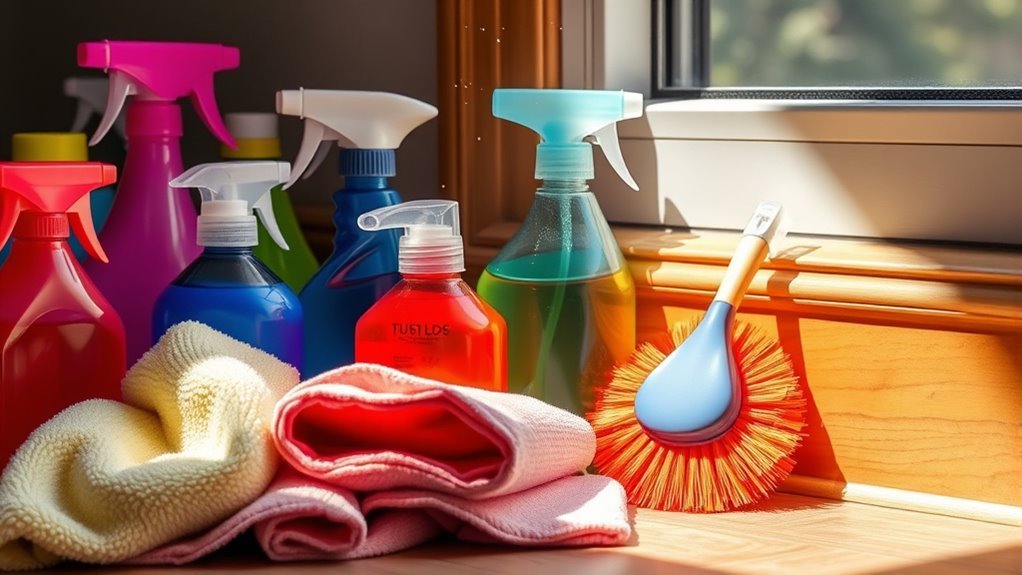
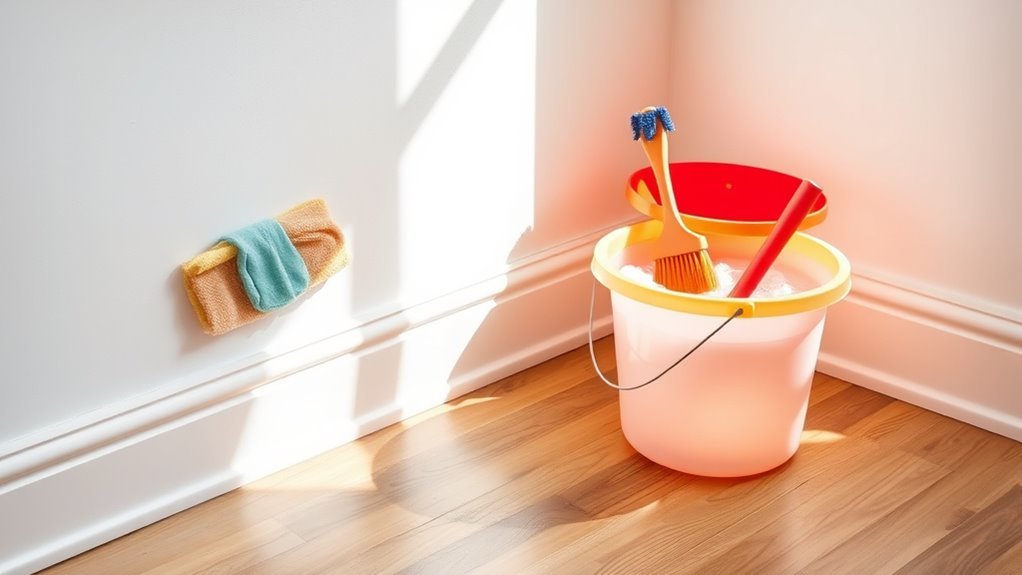
Before you begin cleaning your baseboards, you’ll need to gather a few essential supplies. Choosing the right cleaning tools is vital for maintaining the freedom to clean efficiently without damaging the surface materials. You’ll want a soft cloth or microfiber duster to trap dust without scratching. A gentle brush can help reach tight corners, and a bucket with warm water mixed with mild detergent will work well for most baseboard materials. Avoid harsh chemicals that might harm delicate surfaces like wood or painted finishes. Having these tools ready empowers you to tackle the job swiftly and effectively, giving you control over the process and results. Gathering the proper supplies upfront guarantees your cleaning experience is smooth and hassle-free, supporting your desire for a clean, liberated home environment.
Prepare the Area Around the Baseboards
Start by clearing the area around your baseboards to make cleaning easier and prevent damage to nearby items. Move furniture and rugs away so you can access the baseboard materials without obstruction. This also helps you maintain your preferred cleaning frequency without hassle.
Here’s a quick guide to prep based on baseboard type and cleaning intervals:
| Baseboard Material | Recommended Cleaning Frequency |
|---|---|
| Wood | Weekly to bi-weekly |
| MDF | Bi-weekly to monthly |
| Vinyl | Monthly |
Clearing the space guarantees you can clean thoroughly and protect your freedom to enjoy a fresh, tidy room without dragging heavy items around later. Keep this step simple, so your cleaning routine stays efficient and stress-free.
Dust and Remove Loose Dirt
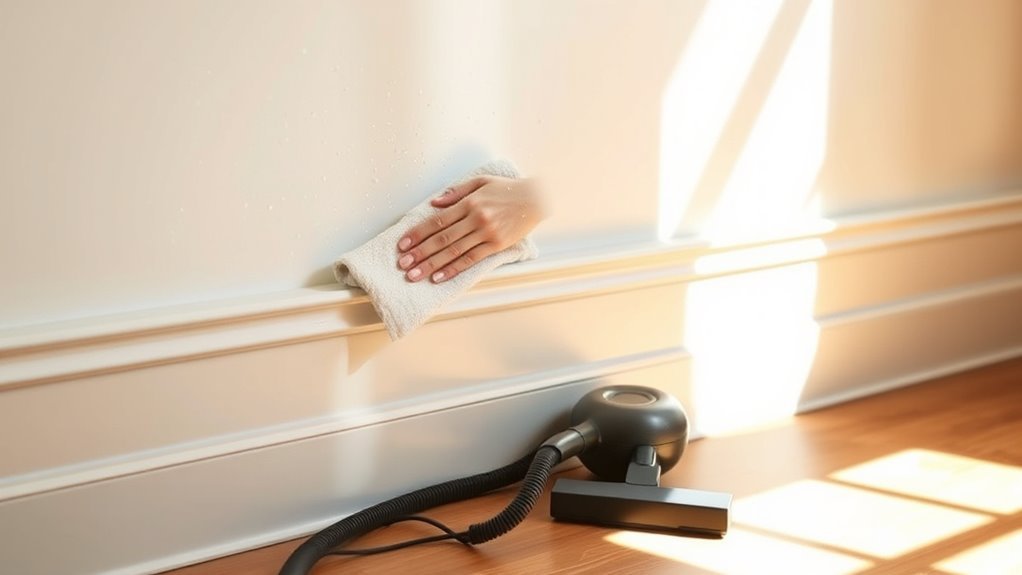
With the area cleared, you can focus on dusting and removing loose dirt from your baseboards. Grab a microfiber cloth or a soft brush to gently sweep away dust, cobwebs, and debris. This simple step is essential for effective baseboard maintenance and prevents dirt buildup that can be hard to remove later. Pay close attention to corners and crevices, where dust tends to accumulate. Establishing a regular cleaning frequency—like once a month—helps keep your baseboards looking fresh without taking up too much time. Staying consistent not only preserves the appearance of your walls but also gives you the freedom to enjoy a cleaner, healthier space without unnecessary hassle. Dusting thoroughly sets the stage for deeper cleaning steps ahead.
Apply Cleaning Solution
Now that the dust is cleared, it’s time to pick the right cleaning solution for your baseboards. You’ll want to use a gentle cleaner that won’t damage the paint or finish. Apply it carefully with a cloth or sponge, focusing on even coverage without soaking the wood.
Choosing Cleaning Solutions
Although selecting the right cleaning solution might seem straightforward, it’s important to pick one that’s effective yet safe for your baseboards’ material. You want a product that cleans well without causing damage or leaving residues. Consider exploring natural alternatives if you prefer eco-friendly options that still pack a punch. To help you choose wisely, keep these points in mind:
- Match the cleaner to the baseboard’s finish (wood, painted, vinyl).
- Check product effectiveness for removing dust, grime, and stains.
- Opt for natural alternatives like vinegar or baking soda solutions when possible.
- Avoid harsh chemicals that can degrade paint or wood over time.
Choosing the right solution gives you freedom from worry and guarantees your baseboards stay fresh and intact.
Proper Application Techniques
Start by dampening a soft cloth or sponge with your chosen cleaning solution, making certain it’s not too wet to avoid damaging the baseboards. Hold the cloth at the proper angle—around 45 degrees—to guarantee effective contact without scraping. Use gentle pressure application; pressing too hard can strip paint or damage wood.
| Step | Tip | Why It Matters |
|---|---|---|
| Dampen Cloth | Avoid soaking | Prevents water damage |
| Hold Properly | 45-degree angle | Maximizes cleaning |
| Apply Pressure | Light but firm pressure | Protects baseboards |
Scrub and Wipe Down Thoroughly
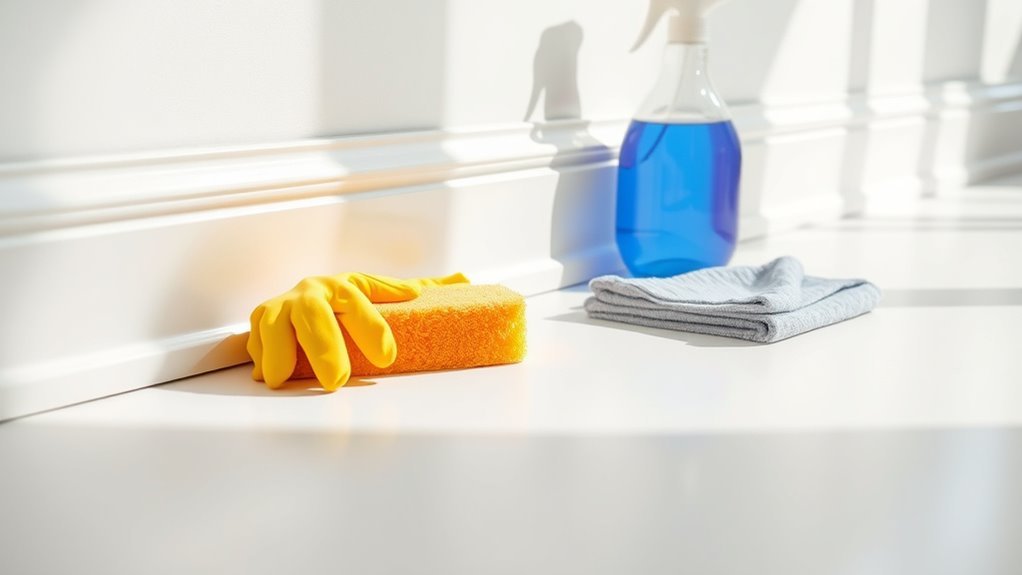
Grab a sponge or a soft brush to scrub the baseboards gently, focusing on areas with stubborn dirt or stains. Using the right scrubbing techniques and effective tools will make this task easier and more satisfying. Don’t rush; take your time to loosen grime without damaging the surface. Here’s how you can approach it:
- Use circular motions to lift dirt effectively.
- Apply gentle pressure on delicate spots to avoid scratches.
- Dip your tool frequently in your cleaning solution to keep it fresh.
- Pay extra attention to corners and crevices where dust hides.
This approach lets you reclaim your space’s crisp look, freeing you from the hassle of lingering dirt. You’ve got this—just stick with it until the baseboards shine!
Dry and Inspect for Missed Spots
After wiping, grab a soft cloth to dry the baseboards gently. Make sure to check the corners carefully, as dirt often hides there. This way, you’ll catch any missed spots before finishing up.
Use a Soft Cloth
A soft cloth is essential for gently drying your baseboards without causing damage. Using the right cleaning cloth types guarantees you protect the paint and finish while effectively removing moisture and residue. The soft cloth benefits include preventing scratches and trapping dust particles, leaving your baseboards spotless and smooth. After wiping, take a moment to inspect for any missed spots so your baseboards look flawless.
- Choose microfiber or cotton for ideal softness and absorbency
- Avoid abrasive materials that can harm surfaces
- Lightly dampen the cloth for better dust pickup
- Use a clean cloth to avoid spreading dirt
Check Corners Carefully
Two key areas often overlooked during baseboard cleaning are the corners, so you’ll want to dry and inspect them carefully. Corner cleaning requires a detailed inspection because dust and grime tend to hide in these tight spots. After wiping, use a dry cloth to catch any dampness and reveal missed areas. This step guarantees your baseboards look flawless and prevents mold or damage from lingering moisture.
| Task | Tool Needed | Tip for Freedom |
|---|---|---|
| Dry corners | Soft, dry cloth | Reach all angles easily |
| Inspect closely | Good lighting | Spot hidden dirt and debris |
| Touch-up cleaning | Cotton swabs | Access tight corners freely |
Mastering this detailed inspection liberates you from repeat cleanings later.
Frequently Asked Questions
How Often Should Baseboards Be Cleaned?
Think of your home like a garden; neglecting the weeds lets chaos grow. Similarly, baseboard maintenance frequency keeps your space feeling fresh and free. You don’t need strict rules, but cleaning schedule recommendations suggest every 1-3 months, depending on dust and traffic. By tending to your baseboards regularly, you’re reclaiming control over your environment, letting it breathe and shine without feeling chained to endless chores.
Can I Use a Vacuum Cleaner on Baseboards?
You can totally use a vacuum cleaner on baseboards, but make sure to grab the right vacuum attachments first. Soft brush attachments work best, especially if your baseboard materials are delicate or painted wood, so you don’t scratch them. It’s a quick way to free yourself from tedious dusting. Just glide the vacuum gently along the edges, and you’ll have clean baseboards without much effort or damage to your surfaces.
What if My Baseboards Are Painted With Lead-Based Paint?
Did you know lead paint was banned in homes after 1978 due to health risks? If your baseboards have lead paint, you’ve got to take safety precautions seriously. Avoid dry dusting or vacuuming, which can spread toxic dust. Instead, gently wipe with a damp cloth and use a HEPA-filter vacuum if needed. Protect yourself with gloves and a mask—your freedom from exposure starts with smart, careful cleaning.
Are There Eco-Friendly Cleaning Solutions for Baseboards?
Absolutely, you can keep your baseboards sparkling without harming the planet. Try eco-friendly recipes using natural cleaners like vinegar, baking soda, and lemon juice—these work wonders on grime and are safe for your home. Mix equal parts water and vinegar with a few drops of essential oil for a fresh scent. You’ll enjoy cleaning with freedom, knowing you’re using gentle, effective solutions that respect both your space and the environment.
How Do I Prevent Mold Growth on Baseboards?
Think of your baseboards as a fortress against mold invasion. To keep mold at bay, focus on mold prevention by controlling humidity levels in your home—you don’t want moisture sneaking in like an unwelcome guest. Use dehumidifiers or air conditioners to maintain dryness, and guarantee proper ventilation in damp areas. Regularly wipe down baseboards to remove any dampness, letting your space breathe freely and stay fresh without being trapped by mold worries.