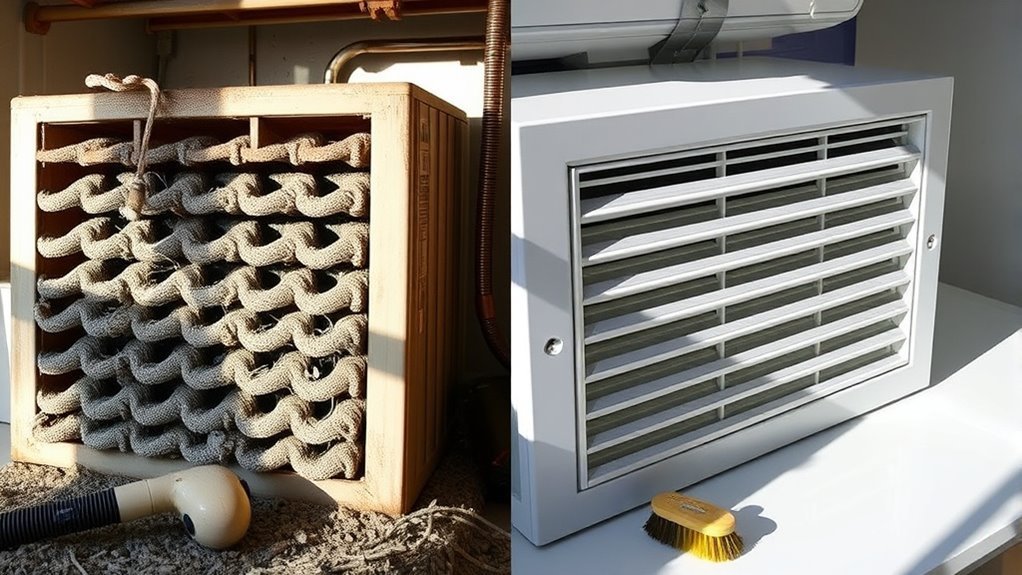
Cleaning Tips Before and After AC
You should regularly inspect and replace your AC’s air filters to keep air clean and systems running efficiently. Clean the evaporator and condenser coils to improve cooling and lower energy use. Clear the drain line and pan to avoid water damage, and check the blower fan for dust buildup. Don’t forget to remove debris from the outdoor unit and lubricate moving parts. Test the thermostat’s function, and schedule professional maintenance yearly. Keep going to uncover more ways to keep your AC in top shape.
Inspecting and Replacing Air Filters
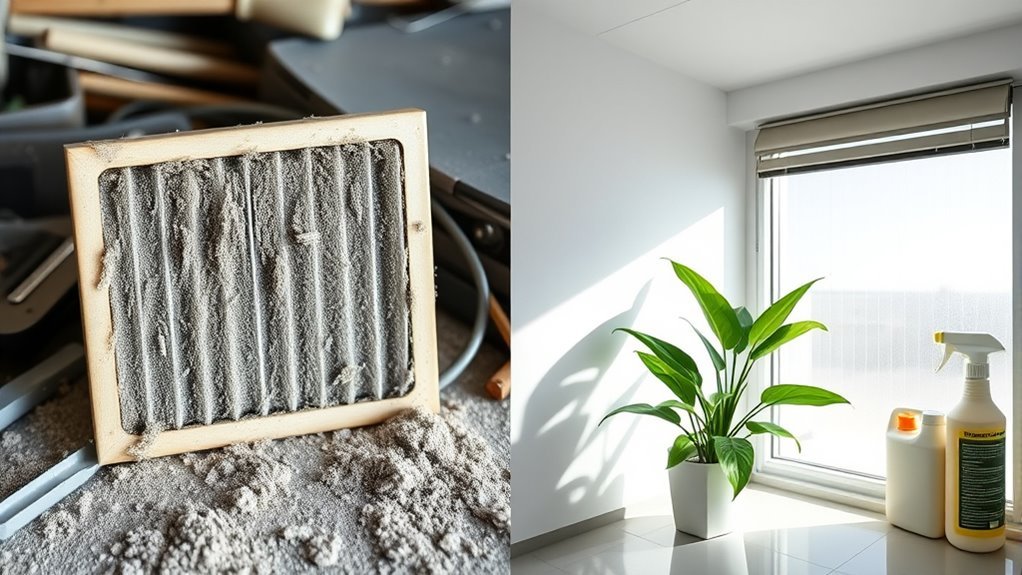
Before you plunge into cleaning your AC, it’s crucial to inspect and replace the air filters regularly. Doing this not only keeps your unit running smoothly but also grants you the freedom to breathe cleaner air without hassle. There are various filter types available, from fiberglass to pleated and even HEPA filters, each offering unique benefits. Choosing the right filter type can improve air quality, reduce allergens, and boost your AC’s efficiency. By swapping out dirty filters on time, you avoid unnecessary energy costs and potential breakdowns. Staying on top of this simple task empowers you to maintain control over your environment and enjoy uninterrupted comfort. So, make inspecting and replacing your air filters a priority—it’s a small step with big benefits.
Cleaning the Evaporator and Condenser Coils
You’ll want to clean your evaporator and condenser coils regularly to keep your AC running efficiently and prevent breakdowns. I’ll walk you through a simple step-by-step cleaning process that you can do yourself. Plus, I’ll share some common maintenance tips to help extend the life of your coils.
Importance of Coil Cleaning
When your AC’s evaporator and condenser coils get dirty, they can’t absorb or release heat efficiently, which makes your system work harder and use more energy. Keeping these coils clean is key to maintaining coil efficiency, allowing your AC to cool your space effortlessly. Dirty coils force your unit to run longer, increasing energy consumption and utility bills, which can feel like a restriction on your freedom to enjoy comfort without worry. By prioritizing coil cleaning, you’re not only extending your AC’s lifespan but also revealing significant energy savings. This simple maintenance step frees you from unnecessary expenses and environmental impact, giving you more control over your home’s climate and budget. Clean coils mean your AC works smarter, not harder—keeping your comfort hassle-free.
Step-by-Step Cleaning Guide
Cleaning the evaporator and condenser coils involves a few straightforward steps that you can easily follow to keep your AC running efficiently. First, turn off the power to your unit for safety. For the evaporator coil inside, remove the access panel and gently brush off dust with a soft brush. Then, spray a no-rinse coil cleaner to dissolve grime during your spring cleaning. For the condenser coil outside, clear away debris like leaves and dirt. Use a garden hose with gentle pressure to rinse the coil from the inside out, avoiding damage. Let everything dry before reassembling. Incorporating this into your seasonal maintenance helps your AC work freely, saving energy and extending its life. It’s a simple way to embrace freedom from costly repairs.
Common Coil Maintenance Tips
Although maintaining your AC coils might seem tedious, regular care is vital to keep your system running smoothly and efficiently. Proper coil cleaning prevents dirt buildup, improving airflow and energy efficiency. To enjoy uninterrupted freedom from costly repairs, stick to a consistent maintenance frequency. Here are common coil maintenance tips for your evaporator and condenser coils:
- Inspect coils monthly for dirt and debris
- Clean coils at least twice a year or more in dusty environments
- Use a soft brush or coil cleaner spray for gentle removal
- Avoid high-pressure water to prevent damage
- Confirm coils are completely dry before reassembling
Following these straightforward steps lets you take control of your AC’s performance, guaranteeing cool comfort without hassle.
Clearing the Drain Line and Pan
You’ll want to check your drain line for any blockages that could cause water buildup. Cleaning the drain pan regularly helps prevent mold and mildew from forming. Let’s go over simple techniques to keep both clear and working properly.
Identifying Drain Line Blockages
When your AC isn’t draining properly, it’s usually because of a clogged drain line or pan. Identifying drain line blockages early lets you avoid costly repairs and keep your unit running smoothly. Watch out for these blockage signs to stay ahead:
- Water pooling around the indoor unit
- Unpleasant musty odors from your vents
- Increased humidity levels inside your home
- The AC shutting off unexpectedly
- Slow or no water flow from the drain line’s exit point
Cleaning Techniques for Drain Pan
Since drain line blockages often start in the drain pan, keeping it clean is key to preventing backups and leaks. You’ll want to first switch off the AC and locate the drain pan under the evaporator coil. Use a wet-dry vacuum or a cloth to remove any standing water and debris. Next, apply a mild cleaning solution—like a mix of water and vinegar or a commercial cleaner—directly to the drain pan. Let it sit for a few minutes to break down gunk and grime. Afterward, scrub gently with a soft brush to clear away buildup. Finally, rinse thoroughly and dry the pan before turning your AC back on. Regular maintenance of the drain pan with proper cleaning solutions keeps your system running freely without interruption.
Preventing Mold and Mildew
Keeping the drain pan clean helps reduce the chances of mold and mildew growth, but you also need to make certain the drain line is clear. Clogged drain lines can cause water backup, creating the perfect environment for mold and mildew. For effective mold prevention and mildew control, regularly inspect and clear the drain line to keep your AC running smoothly.
Here’s how you can do it:
- Use a wet/dry vacuum to suck out blockages from the drain line.
- Flush the drain line with a mixture of water and vinegar to kill mold spores.
- Check the drain pan for standing water and clean it frequently.
- Confirm the drain line slopes downward for proper drainage.
- Schedule periodic professional inspections for thorough cleaning.
Taking these steps gives you freedom from unwanted mold and mildew problems.
Checking and Cleaning the Blower Fan
One essential step in maintaining your AC is checking and cleaning the blower fan, as it plays a key role in circulating air efficiently. Regular blower fan maintenance guarantees your system runs smoothly and keeps your indoor air fresh. Start with a thorough blower fan inspection to spot dust buildup or any signs of wear. You can gently vacuum the fan blades or wipe them with a damp cloth to remove dirt. Keeping the blower fan clean not only improves airflow but also boosts energy efficiency, giving you more freedom from high utility bills. Don’t skip this simple task—it prevents bigger issues down the line and keeps your AC ready to deliver cool comfort whenever you need it.
Removing Debris From Outdoor Unit
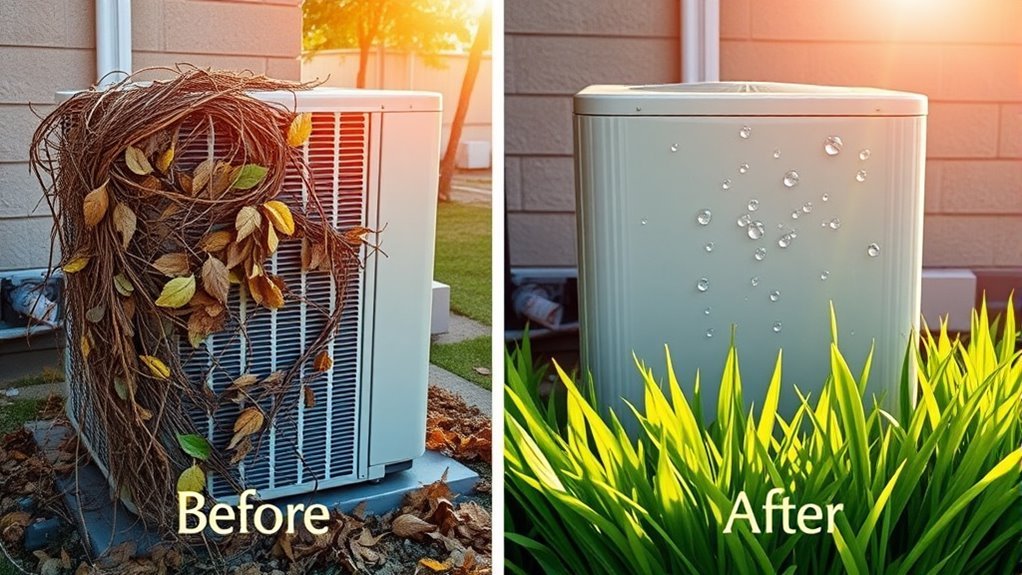
To keep your outdoor AC unit running smoothly, start by clearing away any surrounding vegetation that might block airflow. Take a close look and remove leaves, twigs, and other debris that have gathered around or inside the unit. Regularly inspecting and cleaning this area helps prevent damage and improves efficiency.
Clear Surrounding Vegetation
You should regularly clear at least two feet of vegetation around your outdoor AC unit to prevent leaves, branches, and other debris from blocking airflow. Proper vegetation management is key to keeping your system running efficiently and avoiding costly repairs. Use simple landscaping tips to maintain a clear area, ensuring your AC unit can breathe freely and operate without strain.
Here are some effective ways to manage vegetation around your unit:
- Trim back shrubs and bushes regularly
- Remove tall grass and weeds nearby
- Avoid planting trees or large plants too close
- Keep mulch and soil levels low to prevent buildup
- Clear fallen leaves and sticks promptly
Following these steps gives you control over your outdoor environment, protecting your AC while enjoying the freedom of a well-kept space.
Inspect and Remove Debris
Keeping the area around your AC unit clear is just the first step; regularly inspecting and removing debris from the unit itself helps maintain peak performance. You want to prevent debris accumulation like leaves, twigs, and dirt that can clog the fins and reduce airflow. Take a few minutes during your outdoor maintenance routine to carefully lift the unit’s cover and remove any visible buildup. Use a soft brush or your hands to clear away debris without damaging delicate components. Staying on top of this keeps your AC running efficiently, saves energy, and extends its life. By committing to regular inspections and timely debris removal, you’re giving yourself the freedom to enjoy cool, worry-free air without unexpected breakdowns or costly repairs.
Inspecting and Sealing Ductwork
A thorough inspection of your ductwork can reveal leaks and gaps that waste energy and reduce your AC’s efficiency. Taking time for a proper ductwork inspection guarantees your system delivers peak airflow efficiency, keeping your space comfortable without unnecessary energy costs. Here’s what you should focus on:
- Check for visible cracks, holes, or disconnected joints.
- Listen for hissing sounds indicating air leaks.
- Inspect insulation around ducts to prevent energy loss.
- Use mastic sealant or metal tape to seal leaks.
- Verify ducts are properly supported and not sagging.
Sealing your ductwork not only boosts airflow efficiency but also gives you the freedom to enjoy consistent cooling and lower utility bills. Don’t let hidden leaks hold you back—take control by inspecting and sealing your ducts regularly.
Lubricating Moving Parts
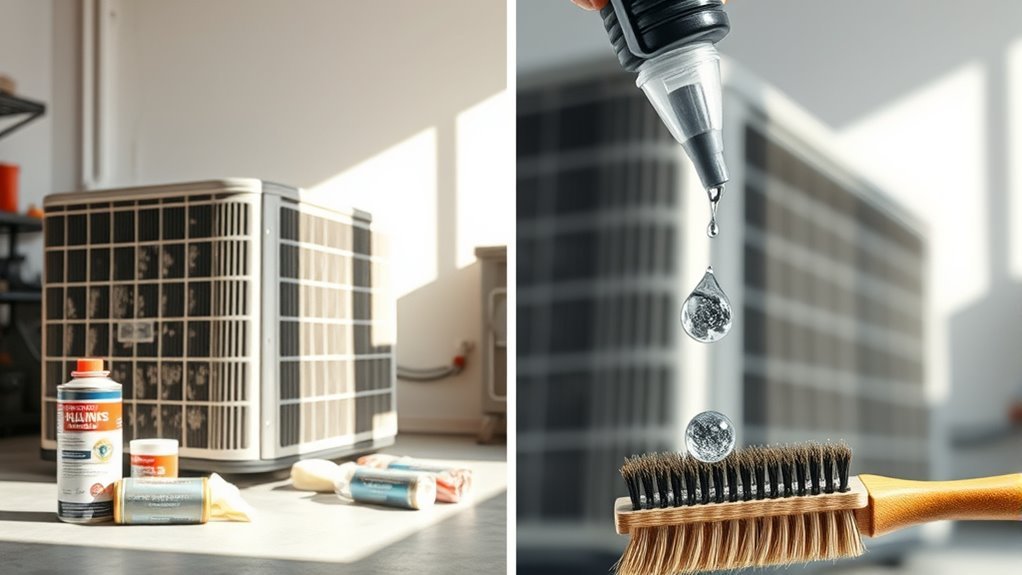
Although your AC works hard to keep you cool, its moving parts need occasional lubrication to run smoothly and quietly. You’ll want to focus on lubrication techniques that are simple yet effective, like using a few drops of lightweight oil on the motor shaft and fan bearings. This moving part maintenance reduces friction, preventing wear and tear that could limit your freedom from costly repairs. Before you start, make sure the unit is off and unplugged for safety. Avoid over-lubricating, which can attract dust and cause buildup. By regularly applying proper lubrication techniques, you’ll keep your AC’s components agile and efficient, ensuring it runs quietly and reliably when you need it most. This small effort lets you enjoy the comfort you deserve without interruptions.
Testing Thermostat Functionality
How do you know if your thermostat is working correctly? Proper thermostat calibration and functionality testing are key to ensuring your AC runs efficiently and keeps you comfortable. You don’t want to be stuck in a heatwave because your thermostat is off. Here’s how to test it yourself:
- Set the thermostat to a temperature lower than the current room temperature.
- Listen for the AC unit to turn on within a few minutes.
- Check if the air coming out is cool and consistent.
- Raise the temperature setting and verify the AC shuts off promptly.
- Use a separate thermometer to compare room temperature with your thermostat reading.
Scheduling Professional Maintenance
Since your AC system has many complex parts that need regular attention, scheduling professional maintenance is crucial to keep it running smoothly. You don’t want to be stuck sweating on a hot day because something was overlooked. By setting a consistent scheduling frequency—typically once or twice a year—you guarantee your unit stays efficient and dependable. Professionals bring the expertise needed to spot issues you might miss, like worn-out components or hidden leaks. This proactive approach not only extends your AC’s lifespan but also frees you from unexpected breakdowns and costly repairs. Trusting experts means you can relax, knowing your cooling system is in good hands and ready to deliver comfort whenever you need it. Make that maintenance appointment part of your routine—you deserve that peace of mind.
Preparing the AC for Off-Season Storage
When the cooling season ends, you’ll want to prepare your AC for off-season storage to keep it in good shape. Proper off season maintenance guarantees your unit stays ready for next summer without unnecessary wear. Start by cleaning the filters and coils to remove dust and debris. Drain any remaining water to avoid mold growth. Then, unplug the unit and cover it with a protective covering to shield it from dust and moisture. Store the AC in a cool, dry place away from direct sunlight.
Here’s your checklist for off-season storage:
- Clean and dry all removable parts
- Drain water completely
- Unplug and disconnect power
- Use a protective covering
- Store in a dry, shaded area
These steps help preserve your freedom to enjoy cool air whenever you need it.
Frequently Asked Questions
How Often Should I Clean My AC Filters During Peak Summer Months?
You should clean your AC filters every two weeks during peak summer months to keep things running smoothly. Regular filter maintenance not only improves air quality but also boosts efficiency, helping you stay cool without extra energy costs. Following these summer tips lets you enjoy freedom from unexpected breakdowns and high bills. Keeping up with this routine guarantees your AC works its best when you need it most, giving you peace of mind all season long.
Can Using a Dirty AC Unit Impact Indoor Air Quality?
Did you know that indoor air can be 2 to 5 times more polluted than outdoor air? If you’re using a dirty AC unit, you’re basically circulating airborne pollutants throughout your space. This can lead to unpleasant health effects like headaches, allergies, or respiratory issues. Keeping your AC clean frees you from these risks and lets you breathe easy, enjoying fresh air without feeling trapped by poor indoor quality.
What Are Signs My AC System Needs Immediate Professional Repair?
If you notice a sudden drop in cooling efficiency or your AC is struggling to keep your space comfortable, it’s a clear sign you need professional help. Unusual noises like banging, rattling, or hissing are red flags you shouldn’t ignore. Don’t let these issues steal your freedom to relax—getting your system checked promptly guarantees it runs smoothly, so you can enjoy effortless comfort without unexpected breakdowns.
Is It Safe to Use Chemical Cleaners on AC Coils?
You might’ve heard using chemical cleaners on AC coils is risky, but with proper chemical safety, it’s actually effective for coil maintenance. You just need to pick the right cleaner designed for coils and follow instructions carefully to avoid damage or health hazards. When done correctly, it keeps your system efficient and prolongs its life. So, don’t shy away—using chemical cleaners can be safe and beneficial if you handle them responsibly.
How Do Pets Affect the Cleanliness of My AC System?
Pets can really impact your AC system’s cleanliness because pet hair tends to get sucked into the vents and filters. This buildup can reduce airflow and make your AC work harder. Plus, if you suffer from allergy symptoms, pet hair and dander trapped in your system can worsen them. To keep your freedom to breathe easy, make sure you regularly clean or replace filters and consider using air purifiers to minimize pet-related debris.