Mistakes to Avoid When Cleaning Your Mirror
When cleaning your mirror, don’t use harsh chemicals like bleach or ammonia, which can damage the surface. Avoid spraying too much cleaner or water directly on it to prevent streaks and damage. Steer clear of abrasive cloths or paper towels that can scratch or leave lint—opt for a clean microfiber cloth instead. Also, don’t clean in direct sunlight, and always dust the mirror and frame before wiping. If you want tips to keep your mirror flawless, there’s more to discover.
Using Harsh Chemicals That Damage the Mirror Surface
Anyone who’s cleaned a mirror knows the temptation to grab the strongest cleaner available, but using harsh chemicals can actually damage the mirror’s surface. When you use aggressive cleaners, you risk triggering unwanted chemical reactions that eat away at the delicate mirror coatings protecting the glass. These coatings are essential—they keep reflections sharp and clear. If you want your mirror to last and look flawless, it’s best to avoid anything with ammonia, bleach, or abrasive ingredients. Instead, choose gentle, non-abrasive solutions that respect the mirror’s surface. By doing so, you maintain its integrity and free yourself from the cycle of constant replacements or repairs. Freedom in your cleaning routine means making smart choices that protect your belongings, not harm them.
Cleaning Mirrors in Direct Sunlight
When you clean mirrors in direct sunlight, you might notice streaks and smudges appearing more easily. The heat causes cleaning solutions to dry too quickly, making it hard to wipe them away smoothly. To avoid this, try cleaning your mirrors in the shade or during cooler times of the day.
Streaks and Smudges
One common mistake that leads to streaks and smudges is cleaning your mirror in direct sunlight. When the sun hits the glass while you’re wiping, the cleaning solution dries too fast, making streak prevention nearly impossible. To free yourself from this hassle, pick a shaded spot or clean during cooler parts of the day. For effective smudge removal, use a microfiber cloth paired with a gentle, streak-free cleaner. Avoid paper towels—they often leave lint behind, creating more smudges. Remember, light and quick wiping motions work best; too much pressure can spread dirt instead of removing it. By steering clear of direct sunlight and adopting these simple habits, you’ll enjoy a flawlessly clean mirror that reflects your freedom beautifully, without frustrating streaks or smudges.
Rapid Drying Issues
Avoiding streaks and smudges often means steering clear of cleaning your mirror in direct sunlight. When you clean in bright, hot conditions, rapid evaporation causes your cleaning solution to dry too quickly, leaving behind streaks and spots. This lack of moisture control means you won’t get that flawless finish you’re aiming for. Instead, choose a shaded spot or clean during cooler parts of the day to let the solution work properly.
| Problem | Cause | Solution |
|---|---|---|
| Streaky surfaces | Rapid evaporation | Clean in shade |
| Uneven drying | Direct sunlight | Use microfiber cloth |
| Residue buildup | Poor moisture control | Spray solution lightly |
Taking these steps lets you enjoy the freedom of a crystal-clear mirror without hassle.
Applying Excessive Water or Cleaner
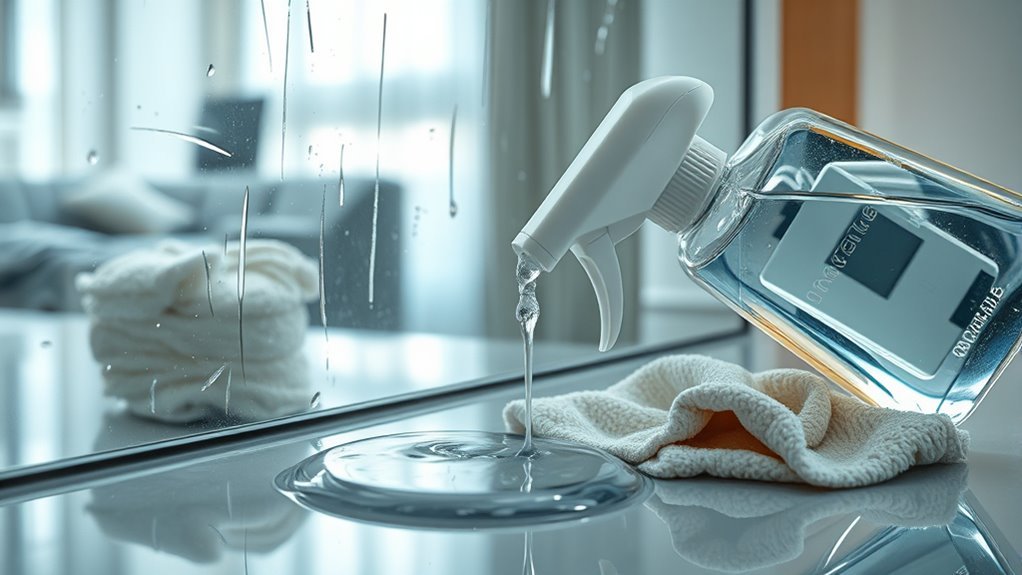
If you use too much water or cleaner, you risk damaging the mirror’s surface or causing streaks that are hard to remove. Excessive moisture can seep into the edges or backing, leading to warping or deterioration over time. Plus, using too much cleaner often leaves behind stubborn cleaner residue, making your mirror look cloudy instead of crystal clear. To keep things simple, spray your cleaner onto a cloth rather than directly on the mirror. This way, you control the amount and avoid over-saturating the glass. Remember, a little goes a long way. By avoiding excessive moisture and cleaner residue, you maintain your mirror’s clarity and longevity without hassle, giving you the freedom to enjoy a spotless reflection every time.
Using Abrasive Cloths or Paper Towels
You might not realize that using abrasive cloths or paper towels can cause tiny scratches on your mirror’s surface. These materials often leave behind lint and residue, making your mirror look less clear. To keep your mirror spotless, it’s best to choose soft, non-abrasive cloths designed for delicate surfaces.
Surface Scratches Risks
Though it might seem convenient, using abrasive cloths or paper towels to clean your mirror can cause tiny scratches on the surface. These scratches compromise surface protection and make scratch prevention harder. To keep your mirror pristine and maintain its clarity, avoid rough materials that grind against the glass.
| Material Type | Scratch Risk Level | Recommended Use |
|---|---|---|
| Abrasive Cloths | High | Avoid for mirrors |
| Paper Towels | Moderate to High | Not recommended |
| Microfiber Cloths | Low | Best for surface protection |
| Soft Cotton Cloths | Low | Gentle cleaning option |
| Sponge (non-abrasive) | Low | Suitable if used carefully |
Choose soft, non-abrasive cloths to guarantee your mirror’s surface stays smooth and scratch-free, giving you freedom to enjoy clear reflections.
Lint and Residue Issues
While abrasive cloths and paper towels can scratch your mirror, they also leave behind lint and residue that dull its surface. You want your mirror clear and sparkling, so avoid materials that trap fibers or smear cleaning products. Instead, focus on tools and cleaners that respect your mirror’s clarity.
- Choose lint free cloths to prevent tiny fibers from sticking to the glass.
- Use residue free cleaners to avoid streaks and build-up that reduce shine.
- Avoid scrubbing aggressively, which can embed lint and residues deeper.
- After cleaning, gently buff with a dry lint free cloth for a flawless finish.
Optimal Cloth Choices
One common mistake people make is reaching for abrasive cloths or paper towels to clean mirrors. These materials might seem convenient, but they often scratch the surface or leave lint behind, limiting your freedom to achieve a spotless shine. Instead, choose cloth materials like microfiber, which offer exceptional benefits. Microfiber’s soft, non-abrasive texture lifts dirt and oils without damaging your mirror. Plus, it absorbs moisture efficiently, reducing streaks and residue. By opting for microfiber, you protect your mirror’s surface and enjoy a clearer reflection every time. So, skip the paper towels and rough cloths—embrace microfiber benefits to clean smarter, not harder, and keep your mirrors pristine with less effort. Your freedom to shine starts with the right cloth choice.
Neglecting to Dust Before Cleaning
Dust buildup might seem harmless, but skipping this step before cleaning your mirror can cause streaks and smudges. When you don’t remove dust accumulation first, your cleaning efforts become less effective, and you might even scratch the glass. To maintain a clear, flawless mirror, make dusting a non-negotiable part of your cleaning frequency. Here’s why you should always dust first:
- Dust traps moisture and dirt, leading to streaky surfaces.
- Cleaning without dusting spreads particles, creating smudges.
- Dust particles can scratch the mirror when wiped with a damp cloth.
- Regular dusting reduces the need for intense cleaning sessions.
Ignoring the Frame and Edges

Three common areas people overlook when cleaning mirrors are the frame and edges, but these spots can gather dirt and grime just like the glass. If you want your mirror to look truly spotless, don’t skip frame maintenance. Dust and oils build up there, dulling the overall appearance. Use a soft cloth or a gentle brush to clean delicate frames without damaging them. Edge cleaning is just as important—dirt often settles in these narrow spaces, inviting mold or moisture damage if ignored. By paying attention to these areas, you’ll extend your mirror’s life and keep it looking fresh. Taking the time for proper frame maintenance and edge cleaning frees you from repeated cleanings and keeps your space feeling open and polished.
Rushing the Drying Process
Although it’s tempting to speed things up after cleaning, rushing the drying process can leave streaks and water spots on your mirror. To keep your mirror spotless and free from marks, mastering proper drying techniques is vital. Taking your time not only enhances clarity but also extends the life of your mirror.
Here are some mirror maintenance tips to help you dry effectively:
- Use a clean, lint-free microfiber cloth to gently absorb moisture.
- Avoid wiping in circular motions; instead, opt for vertical or horizontal strokes.
- Let your mirror air dry briefly before touching it to prevent smudges.
- Refrain from using paper towels, which can leave fibers and cause scratches.
Following these simple steps guarantees your mirror stays clear and streak-free, giving you the freedom to enjoy a flawless reflection.
Frequently Asked Questions
Can Vinegar Damage Mirror Backing Over Time?
You might wonder about vinegar effects on your mirror backing. While vinegar is great for cleaning glass, it can damage the mirror’s backing if it seeps behind the glass. This can reduce mirror longevity by causing the reflective surface to deteriorate. To keep your mirror free and clear, avoid letting vinegar touch the edges or backing. Stick to gentle cleaning methods, and your mirror will shine bright for years without harm.
How Often Should I Clean My Bathroom Mirror?
Think of your bathroom mirror as a canvas that reflects your daily vibe. You don’t need to go overboard with daily cleaning, but keeping a regular cleaning frequency—about once a week—is usually enough to keep it sparkling and streak-free. If your bathroom fogs up constantly or gets splattered often, wiping it down more frequently won’t cramp your style. Just keep it clear enough to see your true reflection without any hassle.
Is It Safe to Use a Steam Cleaner on Mirrors?
You might wonder about steam cleaner effectiveness on mirrors. While steam can loosen grime, you’ve got to be cautious about mirror safety concerns. High heat and moisture can damage the backing or cause warping. If you want to try it, keep the steam cleaner at a distance and avoid soaking the edges. That way, you’ll enjoy a streak-free shine without risking any damage to your mirror’s surface or structure.
What Is the Best Way to Prevent Mirror Fogging?
Imagine your mirror as a clear window to freedom, not a foggy barrier. To keep it crystal, you’ll want to grab an anti fog spray—it’s like a magic shield against steam. Combine that with good bathroom ventilation, letting fresh air chase away moisture like a breeze on a hot day. Together, they’ll keep your mirror clear, so you’re never trapped behind fog when you want to see yourself clearly.
Can Mirrors Be Cleaned With Lemon Juice Safely?
You can use lemon juice safely for mirror cleaning, thanks to lemon juice benefits like natural antibacterial properties and streak-free shine. However, it’s acidic, so you’ll want to dilute it with water to avoid damaging the mirror’s backing. If you’re seeking mirror cleaning alternatives, consider vinegar solutions or commercial glass cleaners. These options give you the freedom to keep your mirrors sparkling without worrying about harsh chemicals or damage.