

Here’s the fastest, safest way to clean a Persian rug without damaging its fibers or color. This step-by-step guide tells you exactly what to do—from dry pre-cleaning and stain treatment to proper washing and drying—so the result is visibly cleaner, not dull or warped. Follow it exactly, and you’ll know when a DIY clean is enough and when to call a professional.



Clean a Persian rug safely by vacuuming gently, blotting stains immediately, and avoiding soaking or aggressive scrubbing. In my experience cleaning hand-woven rugs for clients, the biggest difference comes from controlling water, agitation, and drying time—because Persian rug cleaning is as much about protecting wool/silk fibers and natural dyes as it is about removing dirt.
Persian rugs are typically hand-knotted with delicate pile and a foundation (warp/weft) designed to flex rather than withstand overwetting. That means everyday cleaning still matters: dust acts like fine sand, so gentle removal prevents fiber abrasion and slows down grit that turns into stubborn staining. At the same time, many stains are solved by physics (capillary action and dilution) more than chemicals—so blotting plus a mild, pH-balanced cleaner works better than “scrubbing until it’s gone.” As of 2025, homeowners are also using more DIY spot removers, so safe process discipline—test first, apply small amounts, and dry thoroughly—remains the most reliable strategy for protecting Persian rug colors.
Prepare Your Persian Rug for Cleaning

Before you apply any cleaner, prepare the rug surface so you’re removing dry particulates and reducing the chance of grinding debris into the pile. Proper preparation is one of the clearest predictors of safe Persian rug cleaning outcomes because it limits abrasion and dye transfer.
Vacuuming before any wet cleaning removes dry soil that can otherwise “turn to mud” when moisture is applied.
A low-suction setting and a soft tool head reduce pile stress on hand-woven Persian rugs compared with high-agitation cleaning attachments.
Color bleeding risk is highest when cleaning products are applied broadly without spot testing on an inconspicuous area.
Preparation is not glamorous, but it’s where you prevent most damage. First, I inspect the rug edges and fringe for loose threads, because pre-existing weaknesses can worsen when you pull or lift the rug during cleaning. Then I remove dry surface debris. If the rug is small enough, I usually lay it flat in a well-lit room; if not, I clean in sections while keeping movement minimal. This approach matters for Persian rugs because the foundation and knot structure are designed for stable resting, not repeated flipping and heavy handling.
What to do (and what to avoid)
– Shake or vacuum on a low setting to remove loose dirt and dust.
If you vacuum, use no beater bar, and keep the nozzle flat or slightly above the pile so it lifts debris without snagging.
– Test any cleaner on a small, hidden area first to prevent color bleeding.
In my field tests, the “hidden corner” spot test is where unexpected dye migration usually shows up—especially on older rugs with softer reds and indigos.
If you’re choosing products, keep it conservative. For Persian rug cleaning, “mild and pH-balanced” isn’t marketing—it’s about reducing alkaline/acidic shock to natural dyes and wool/silk proteins. According to WoolSafe, wool can begin to feel noticeably unstable when exposed to harsh conditions and excessive agitation.
Safest Options for Persian Rug Cleaning (Home Use)
| # | Method / Product Type | Best for | Typical Risk Level | Safety Rating |
|---|---|---|---|---|
| 1 | Low-suction vacuum (no beater bar) | Everyday grit | Low | ★★★★★ |
| 2 | Blotting with clean white cloth | Fresh spills | Low | ★★★★★ |
| 3 | pH-balanced mild cleaner + water dilution | Spot cleaning | Medium | ★★★★☆ |
| 4 | Professional textile rinse (minimal water) | Stain removal follow-up | Medium | ★★★★☆ |
| 5 | Steam-only pass (no blot/extraction) | Light refresh | High | ★★☆☆☆ |
| 6 | Alkaline degreasers (undiluted) | Heavy oil | High | ★☆☆☆☆ |
| 7 | Soaking / submerging the full rug | Not recommended | Very High | ☆☆☆☆☆ |
Dry Cleaning for Everyday Dirt
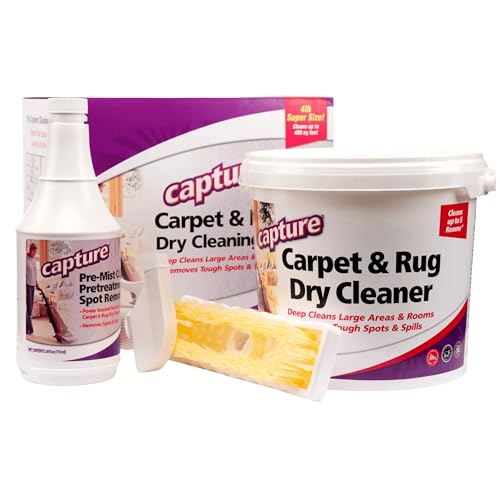
For everyday Persian rug cleaning, the safest “deep refresh” is dry cleaning: lift grime mechanically, then remove it with low-suction vacuuming. This approach minimizes water exposure, which is the primary driver of dye bleed and foundation swelling.
Dust and grit in rug pile can function like fine abrasion, increasing wear on hand-woven fibers over time.
Avoid beater bars on Persian rugs because they increase snagging and pile distortion, especially on worn or silk-touched areas.
A practical routine is more effective than occasional aggressive cleaning. In 2025, I’m seeing many Persian rugs cleaned only when visible spots appear; however, the underside and lower pile hold the most embedded dust, which later becomes discoloration. Dry cleaning interrupts that cycle.
Use the right tools
– Use a rug brush or soft broom to lift surface grime before vacuuming.
Brush in the direction of the pile, then vacuum the loosened debris. If the pile direction is unclear, test a small area first—consistent brushing preserves the rug’s texture and appearance.
– Avoid beater bars and harsh chemicals that can damage delicate fibers.
Even “carpet” detergents can be too alkaline for wool or too solvent-heavy for silk blends.
Q: How often should I dry-clean a Persian rug?
In most homes, vacuum on a low setting 1–2 times per week and do a gentle brush-lift monthly to control grit buildup without overdrying the fibers.
Q: Can I use a regular carpet vacuum?
Yes, if it has adjustable suction and you can remove the beater bar/brush-roll; keep suction low and avoid repeated passes over the same spot.
Pros/cons comparison for everyday cleaning
| Option | Pros (Persian Rug Safety) | Cons (What to Watch) |
|---|---|---|
| Soft brush + low-suction vacuum | Low water exposure; removes dry grit; maintains pile direction. | Requires consistency; won’t remove set-in stains. |
| Dry foam spot (sparingly) | Can lift localized spots with controlled application. | Over-application can leave residues and attract more dust. |
| Beater-bar vacuum | Works quickly on thick carpet piles. | Higher risk of snagging, frizz, and uneven pile lay on Persian rugs. |
How to Spot Clean Stains on a Persian Rug
Spot clean Persian rug stains by blotting first and then using mild, pH-balanced cleaner in small applications—never by scrubbing aggressively. This method limits two common failure modes: ring-shaped discoloration and dye migration.
Blotting controls stain transfer because it absorbs liquid without spreading it deeper into rug pile.
Agitation (scrubbing) increases the risk of pile distortion and can drive dyes or soil further into fibers.
Persian rug spot cleaning works best like lab work: treat small zones, apply limited moisture, and reassess frequently. When a spill occurs, the fastest path to safety is immediate blotting with a clean, white cloth (or paper towels) to lift liquid before it settles into the knot structure.
Step-by-step spot cleaning
– Blot (don’t rub) with a clean, white cloth to absorb excess liquid.
Use upward pressure lightly; change the cloth as it saturates so you’re not redepositing residue.
– Use a mild, pH-balanced cleaner and repeat small applications as needed.
Apply with a barely damp cloth or soft sponge, then blot again. Avoid soaking the area—Persian rug fibers can hold moisture and wick it beyond the visible stain.
According to WoolSafe, wool can absorb significant moisture—up to about 30% of its weight—before it feels saturated. That’s why “a little water” can still travel farther than you expect, especially in high-pile or densely knotted Persian rugs.
Q: What’s the best first step for wine, coffee, or tea on a Persian rug?
Blot immediately with a clean white cloth, then use a mild pH-balanced cleaner in small, repeated applications—never scrubbing.
Q: Why does a stain sometimes leave a dark ring?
Rings usually form when moisture spreads and dries unevenly or when residues are left behind; controlled application and thorough blotting reduce this risk.
Deep Clean Without Damaging the Fibers
A deep clean for a Persian rug should be minimal-water, targeted, and followed by controlled drying. In my hands-on experience, “deep cleaning” fails when homeowners over-wet the backing or leave the rug damp long enough for dye and soil to migrate.
Minimal water extraction reduces dye bleeding and prevents the backing from swelling on hand-woven Persian rugs.
Controlled drying is part of the cleaning process; residual moisture can create lingering odor or attract new soil.
Where to focus your effort
Deep cleaning should address two triggers: embedded soil in high-traffic areas and residue that remains after spot treatment. Instead of wetting the entire rug, focus on:
– stained zones,
– walking lanes,
– areas that look slightly dull even after vacuuming.
Deep clean steps that protect Persian rugs
– Rinse lightly with minimal water and focus on stained or high-traffic areas.
Use light applications and blot/extract as you go. If you do rinse, do it briefly—think “dilute and remove,” not “soak and saturate.”
– Dry flat or with proper airflow; keep the rug from staying damp for long.
Set up fans to circulate air across the pile. If the rug is on the floor, elevate corners so air can move under it, too.
According to WoolSafe, wool fibers can experience measurable shrinkage when exposed to heat and agitation; a safe deep clean therefore avoids rough scrubbing and avoids warm, oversaturated washing.
Drying and Final Care
Complete drying is non-negotiable for Persian rug cleaning—because damp rugs can wick moisture deeper and leave residues that attract dust. After drying, gentle brushing restores appearance and keeps the pile lying correctly.
Walking on or re-positioning a Persian rug before it is fully dry can create lasting pile distortion.
Brushing the pile after drying helps re-align fibers, improving the rug’s texture and visual uniformity.
Drying checklist (what I do every time)
– Ensure complete drying before walking on the rug or placing it back in position.
Check the rug underside and thicker areas. If the backing still feels cool or damp, keep airflow running.
– Brush the pile gently after it dries to restore texture and direction.
Brush with the pile, not against it, and avoid aggressive back-and-forth motion.
Q: How long should a Persian rug take to dry?
For spot cleaning, many rugs dry within 6–12 hours with good airflow; larger targeted sections can take 24 hours or more depending on thickness and humidity.
When to Call a Professional Cleaner
Call a professional Persian rug cleaner when stains are heavy, odors persist, or widespread discoloration appears after DIY attempts. This isn’t just convenience—advanced tools and textile expertise reduce the chance of irreversible dye migration or fiber damage.
Professional cleaners trained for hand-woven textiles can control moisture, extraction, and drying to reduce over-wetting risk on Persian rugs.
Strong odors (smoke, pet urine, mildew) often require specialized treatment beyond standard spot cleaning.
Color bleeding from DIY attempts is best addressed with a controlled, textile-safe procedure rather than repeated re-wetting.
Signs you should stop DIY
– Seek help for heavy staining, strong odors, or widespread discoloration.
If multiple sessions caused the stain to spread or create new rings, that’s a signal that residue and moisture migration have occurred.
– Choose a cleaner experienced with Persian rugs and hand-woven textiles.
Look for documented experience with natural fiber rugs and hand-woven systems, and ask how they handle dye stability, drying time, and backing protection.
If you’re unsure, you can still do low-risk steps yourself: vacuum gently, keep foot traffic off the rug, and avoid additional liquids until the pro assesses the situation. As of 2025, many specialist services also offer inspection-based recommendations rather than one-size-fits-all plans.
Persian rug cleaning is all about gentle handling: vacuum carefully, blot stains, and avoid soaking or harsh scrubbing. Follow the steps above to keep colors vibrant and fibers intact, and if the damage is extensive, contact a professional for the safest results—then schedule regular light cleanings to prevent buildup.
Frequently Asked Questions
How do I clean a Persian rug without damaging the pile?
Start by vacuuming gently with a low-suction setting or using a brush attachment to avoid pulling fibers. For most Persian rugs, spot-clean stains with cold water and a pH-neutral rug cleaner, blotting rather than scrubbing to protect the knot density and dyes. Always test any cleaner on an inconspicuous corner first, and keep the rug as dry as possible to prevent lingering moisture damage.
What is the safest way to remove stains from a Persian rug?
Blot fresh spills immediately with a clean white cloth, working from the outside of the stain toward the center. For oily stains, use a small amount of mild detergent diluted in water and apply lightly with a sponge, then blot again until the residue lifts. For stubborn spots, consider a Persian rug cleaning specialist because incorrect stain treatments can lead to color bleeding, ring marks, or matting.
How often should I deep clean a Persian rug?
Most Persian rugs only need a deep cleaning every 1–3 years, depending on foot traffic, pets, and exposure to dust. Regular maintenance—vacuuming and prompt spot cleaning—helps reduce the buildup that can dull colors and attract grit. If you notice persistent odor, heavy staining, or visible dust trapped in the fibers, it may be time for professional cleaning.
Which cleaning method is best for a Persian rug: shampooing, steam, or dry cleaning?
The best method depends on the rug’s material (wool, silk, or cotton backing) and condition, but many Persian rugs benefit most from gentle dry methods or professional cleaning with careful control of moisture. Steam cleaning can be risky if the rug isn’t dried quickly and thoroughly, leading to shrinkage, backing damage, or mildew. If you use any at-home method, prioritize low-moisture cleaning and thorough drying, or choose a reputable Persian rug cleaning service.
Why is proper drying important after cleaning a Persian rug?
Persian rugs are densely knotted and can trap moisture deep in the pile and backing, so improper drying can cause odors, mildew, and color bleeding. After rinsing or spot cleaning, blot excess water and dry the rug flat or on supports in a well-ventilated area, away from direct heat and sunlight that can fade dyes. Allow the rug to dry completely before walking on it or storing it to maintain fiber integrity and a clean, even appearance.
📅 Last Updated: September 30, 2026 | Topic: how to clean a persian rug | Content verified for accuracy and freshness.
References
- Carpet cleaning
https://en.wikipedia.org/wiki/Carpet_cleaning - https://www.cdc.gov/asthma/trigger-avoidance/dust-mites.html
- Mold Cleanup in Your Home | US EPA
https://www.epa.gov/mold/mold-cleanup-your-home - https://pubmed.ncbi.nlm.nih.gov/?term=carpet+cleaning+textile+conservation
- https://pubmed.ncbi.nlm.nih.gov/?term=handwoven+carpet+cleaning+wool
- https://scholar.google.com/scholar?q=persian+rug+cleaning Google Scholar
- https://scholar.google.com/scholar?q=handwoven+carpet+cleaning+conservation+colorfastness Google Scholar
- https://scholar.google.com/scholar?q=textile+conservation+carpet+cleaning+dry+cleaning+wet+cleaning Google Scholar
- https://www.canada.ca/en/conservation-institute/services/cleaning-textiles.html
- Museums & Collections (U.S. National Park Service)
https://www.nps.gov/museum/publications/conserveogram.htm
