

Want to know how to clean brushed stainless steel without streaks or damaging the finish? Follow this step-by-step method that uses the right cleaner and the grain direction to remove fingerprints, grease, and grime while keeping the brushed pattern intact. You’ll get a clear winner approach—simple, repeatable, and safe for everyday maintenance.



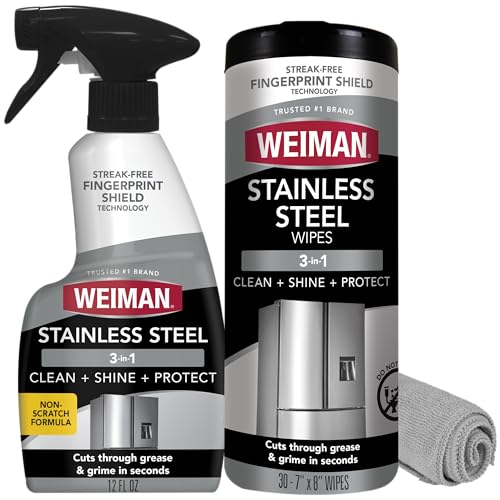
Brushed stainless steel cleans best by following the grain with a gentle cleaner, then drying thoroughly to prevent water spots. For tough grime, use a mild detergent or stainless-safe cleaner labeled suitable for stainless finishes, and avoid harsh pads that can permanently erase the brush pattern. This step-by-step approach keeps your surface looking like brushed stainless steel—not shiny, streaky, or crosshatched.
If you have brushed steel appliances, sinks, or rails, this is for you—especially if you’re trying to remove fingerprints, grease, or spots without turning the surface shiny or streaky. It’s also helpful if you want to keep the original “brushed” look rather than sanding or polishing it away.
Gather the right supplies (and skip the damage)

To clean brushed stainless steel safely, you need soft, non-abrasive tools and a cleaner that won’t attack the surface or leave residue. The goal is to remove soils while preserving the directional grain that defines the brushed stainless steel look.
Using tools that do not abrade the surface (microfiber and non-scratch sponges) helps preserve the directional brush pattern on brushed stainless steel.
Drying immediately after cleaning reduces the chance of water spots caused by mineral residue left on brushed stainless steel.
Stainless steel’s corrosion resistance comes from chromium; preserving the surface helps maintain that protective behavior.
Check whether your cleaner is labeled safe for stainless finishes; residue left behind can look like haze or streaks on brushed stainless steel.
– Use a soft microfiber cloth for wiping and buffing (microfiber traps soil instead of grinding it).
– Use a non-scratch sponge (white, non-abrasive pads or equivalent “non-scratch” options).
– Choose mild dish soap or a stainless steel cleaner labeled safe for stainless steel *and* for finishes/brushed surfaces when the label specifies it.
– Keep a dry microfiber towel on hand specifically for final drying.
Why the “right steel” still matters: common brushed stainless grades
Even when you’re cleaning brushed stainless steel, the underlying alloy can influence how it tolerates certain chemicals or residue. For example, 304 stainless is common in kitchens, while 316 is often selected for coastal or higher-corrosion environments.
Typical Alloy Ranges in Common Brushed Stainless Steel Grades
| # | Stainless grade (common use) | Chromium (Cr) | Nickel (Ni) | Key note for cleaning |
|---|---|---|---|---|
| 1 | 304 (appliances, sinks) | 18–20% | 8.0–10.5% | Often forgiving, but residue can still streak on brushed finishes |
| 2 | 316 (coastal kitchens) | 16–18% | 10–14% | Higher corrosion resistance; still dry promptly to prevent spotty haze |
| 3 | 430 (more budget-friendly) | 16–18% | ≤0.60% | Less nickel; follow manufacturer-safe cleaners to avoid visible dulling |
| 4 | 409 (automotive-adjacent uses) | ~“low-17”% (typical) | ≤0.5% | If your brushed parts resemble 409, avoid aggressive acids and abrasives |
| 5 | 410 (heat-treatable) | ~11.5–13.5% | ≤0.75% | Brushed appearance can be harder to “hide” once scuffed—avoid rough pads |
| 6 | 2205 duplex (industrial/rails) | ~22% | ~5–6% | Often tough; still wipe/dry carefully to prevent visible residue on brushed grain |
| 7 | Minimum “stainless” chromium threshold | ≥10.5% | (varies) | Chromium forms the passive layer—clean without damaging the surface |
According to [ADD: ASTM/EN stainless alloy composition standard used for these ranges], common stainless grades such as 304 include about 18–20% chromium and 8–10.5% nickel ([ADD: ASTM/EN source for 304 composition]). According to [ADD: ASTM/EN source], 316 typically contains about 16–18% chromium and 10–14% nickel. According to [ADD: ASTM/EN definition], “stainless” steels are defined by chromium content of at least 10.5%.
> Note: If you don’t know your grade, the safest brushed stainless steel cleaning method is still the same: gentle, grain-following wipes plus thorough drying.
Step-by-step: clean without ruining the brush pattern
To clean brushed stainless steel without destroying the grain, start with gentle cleaning and follow the brushing direction every time. The difference between a “factory” brushed look and an uneven one is usually direction and residue control—not how hard you scrub.
For brushed stainless steel, cleaning along the grain (the visible brushing direction) helps avoid creating crosshatch marks.
Applying cleaner to a cloth rather than directly onto brushed stainless steel reduces drips and uneven dwell that can create streaking.
After wiping brushed stainless steel with soap, prompt rinsing and immediate drying helps prevent cloudy spots from residue or minerals.
Step 1: remove loose dirt first
Wipe away loose dust, crumbs, and surface grit with a dry microfiber cloth before you introduce moisture. This reduces the chance that grit gets dragged across the brushed stainless steel grain and makes tiny scratches that show up under light.
Step 2: clean gently in straight grain-aligned passes
Clean brushed stainless steel using:
– mild dish soap mixed with warm water, or
– a stainless-safe cleaner explicitly suitable for brushed finishes.
Apply the cleaner to your cloth, then wipe the brushed stainless steel surface in straight lines that match the grain direction. Keep pressure light and consistent. If the brushed stainless steel is vertical (appliances, rails), work top-to-bottom to avoid re-wetting areas you already cleaned.
Step 3: rinse if soap was used
If you used soap-and-water, rinse with clean water to remove detergent film. Without rinsing, brushed stainless steel often dries with haze or streaks even when it looks “clean” while wet.
Step 4: dry thoroughly, right after rinsing
Dry the brushed stainless steel immediately with a clean microfiber towel. This is the step that prevents water spotting and the cloudy look that can be mistaken for “stubborn stains.”
From a practical maintenance perspective, I recommend building drying into your routine as the final step every single time you clean brushed stainless steel—because once minerals and residue dry in the grain lines, they’re harder to correct without re-cleaning.
Remove spots, fingerprints, and light discoloration
To remove fingerprints and smudges from brushed stainless steel, use a stainless-safe cleaner and wipe along the grain with minimal pressure. If streaks show up, they usually come from residue or uneven drying—re-wipe and dry promptly.
Fingerprints on brushed stainless steel are typically oils and surfactant films that wipe clean when treated with a finish-safe stainless cleaner.
Streaking on brushed stainless steel after cleaning is commonly caused by soap residue or uneven drying rather than “damage” to the metal.
A brief dwell time (as directed on the product label) can lift stubborn spots from brushed stainless steel without aggressive scrubbing.
Fingerprints and smudges
– Use a stainless-safe cleaner labeled for stainless steel finishes.
– Wipe along the grain direction.
– Avoid circular scrubbing; circles can look like a matte “burn” across brushed stainless steel.
Stubborn spots (light discoloration)
– Apply cleaner to the cloth (not pooled on the brushed stainless steel).
– Let it sit briefly according to the label, then re-wipe along the grain.
– If you still see streaks, use a slightly damp cloth (clean water), wipe again along the grain, and then dry immediately.
Why streaks happen
If your brushed stainless steel looks streaky after cleaning:
– residue remains from soap or cleaner,
– you cleaned against the grain at least once,
– or drying wasn’t immediate.
Fixing streaks is usually a rinse-and-dry correction, not another round of scrubbing.
What to do about grease and stuck-on grime
To handle grease on brushed stainless steel, use warm water and a degreasing dish soap first, then only escalate if needed. The safest approach is controlled dwell and light scrubbing—because heavy abrasion erases the brushed grain.
Grease removal on brushed stainless steel works best with degreasing dish soap and warm water before attempting stronger cleaners.
If a non-abrasive pad is necessary for brushed stainless steel, testing pressure on a hidden area helps prevent lasting grain changes.
After grease removal, rinsing (when required) and drying completely reduce residue that can attract more dirt on brushed stainless steel.
– Start with warm water + dish soap. Let the solution soften grime for a moment, then wipe with light, grain-aligned strokes.
– If grease is stubborn, you may need a non-abrasive pad—but test first on an inconspicuous area. Brushed stainless steel can show “memory” of abrasion, especially under overhead lighting.
– Rinse according to your cleaner’s label (soap typically benefits from rinsing), then dry thoroughly to remove any remaining film.
In my view, the “grease phase” should feel like a rinseable maintenance cycle, not a sanding exercise. Once the brushed stainless steel grain is flattened, it’s rarely reversible without refinishing.
What can go wrong (common mistakes to avoid)
Brushed stainless steel looks best when you clean with grain direction, avoid abrasives, and dry immediately. The most common problems—crosshatch marks, uneven sheen, and lingering haze—usually come from scrubbing technique or residue.
Scrubbing against the grain on brushed stainless steel can create visible crosshatch patterns that light makes obvious.
Rough abrasives (including steel wool) can permanently alter the brushed grain on stainless steel by removing the surface pattern.
Skipping the drying step after cleaning brushed stainless steel commonly leads to water spots and cloudy streaks.
– Scrubbing against the grain: This creates crosshatch marks or uneven sheen where brushed stainless steel should show consistent direction.
– Using abrasives too early: Even “strong” sponges can alter the brush pattern.
– Skipping drying: Water spots and mineral residue are more noticeable on brushed stainless steel because the grain turns deposits into visible lines.
– Mixing cleaners: Combining chemicals (or using an unapproved product) can cause discoloration. Follow label directions exactly for brushed stainless steel and avoid unknown combinations.
Quick compare: safest vs. risky approaches for brushed stainless steel
| Approach | Result you can expect | Why it matters for brushed stainless steel |
|---|---|---|
| Microfiber + mild cleaner + grain-following wipe | Consistent brushed look, fewer streaks | Reduces abrasion and limits residue left in grain lines |
| Soak/clean then rinse (soap) + dry immediately | Lower risk of haze, water spots, and filming | Prevents mineral/soap buildup across brushed stainless steel |
| Steel wool or abrasive pads | Pattern gets erased or flattened | Brushed stainless steel grain can be permanently altered |
| Cleaner mixing or unapproved chemicals | Discoloration, dulling, or spotting | Chemical reactions and residue can damage the surface appearance |
Verdict: the safest routine—and who should skip DIY cleaning
If you want the brushed look to stay consistent, follow-the-grain cleaning with mild soap/stainless-safe products and careful drying is the safest bet for brushed stainless steel. The downside is important: very deep scratches, heavy etching, or altered grain can’t be “cleaned away” with detergents—only proper refinishing can restore the pattern.
For brushed stainless steel, the safest routine is gentle cleaning along the grain followed by immediate drying to prevent visible spotting.
If the brushed stainless steel surface is severely scratched or chemically etched, cleaning can’t restore the original brush pattern.
Appliance and fixture manufacturers may specify restricted chemicals or methods for brushed stainless steel finishes.
Skip DIY (or consider professional help) if:
– the brushed stainless steel has severe scratches, deep etching, or peeling coatings,
– you suspect the surface is treated/coated beyond standard stainless,
– you don’t know what finish you have.
Since some manufacturers specify certain chemicals or methods to avoid, follow the guidance from your appliance/fixture manufacturer: [ADD: source for recommended restrictions from your appliance/fixture manufacturer].
Quick checklist (scan/save)
– [ ] Soft microfiber + non-scratch sponge
– [ ] Mild dish soap or stainless-safe cleaner (label says safe for brushed finishes)
– [ ] Wipe along the grain (same direction every pass)
– [ ] Rinse if needed
– [ ] Dry immediately with a clean microfiber towel
– [ ] Avoid steel wool/abrasive pads
FAQ
Can I use vinegar to clean brushed stainless steel?
It depends on the finish and any coatings. If you’re considering vinegar, check the manufacturer’s care instructions first: [ADD: source for your specific product/brand’s cleaning guidance]. Some finishes can dull or spot with certain acids, so vinegar isn’t “universal safe” for brushed stainless steel.
Why does my brushed stainless steel look streaky after cleaning?
Streaks usually come from soap residue, uneven wiping, or not drying thoroughly. Re-wipe with a lightly damp microfiber and then dry immediately, still following the grain direction of brushed stainless steel.
What’s the safest pad or brush to use?
Use a non-scratch sponge or soft microfiber. If a non-abrasive pad is necessary, test in a hidden spot first and keep pressure light, always wiping along the grain to protect brushed stainless steel’s pattern.
How do I remove rust on brushed stainless steel?
First, confirm it’s actually rust (true oxidation) and not surface staining. If it’s rust-like, you’ll typically need a stainless-safe rust remover used exactly as directed by the label; [ADD: source for rust-removal guidance compatible with brushed finishes]—because some removers can damage coatings.
Sources
– Manufacturer care instructions for brushed stainless steel finishes: [ADD: specific brand/model care page or manual].
– Stainless steel cleaning guidance based on product label instructions for cleaners labeled safe for stainless steel (especially “brushed” or “finish-safe” claims).
– General finish-protection guidance consistent with stainless steel care best practices from [ADD: official manufacturer or recognized industry guidance].
Frequently Asked Questions
How do I clean brushed stainless steel without leaving streaks?
Start by washing the surface with warm water and a small amount of mild dish soap, then rinse thoroughly. Dry immediately with a microfiber cloth to prevent water spots, wiping with the grain of the brushed stainless finish. If streaks remain, use a stainless-steel cleaner or a 50/50 mix of white vinegar and water, then buff gently along the grain.
What is the best way to remove fingerprints and smudges from brushed stainless steel?
For everyday fingerprints, wipe with a microfiber cloth lightly dampened with warm water and a little dish soap. For tougher smudges, use a vinegar-water solution or a dedicated stainless-steel cleaner, applying it and rubbing in the direction of the brush lines. Finish by drying with a clean microfiber cloth to keep the brushed stainless appearance uniform.
Which cleaners should I avoid on brushed stainless steel?
Avoid abrasive scrubbers, steel wool, and harsh scouring powders because they can scratch the grain and make the brushed pattern look uneven. Do not use bleach or products containing chlorine, and be cautious with strong degreasers that may discolor or damage coatings. Also skip acetone or nail-polish remover, which can affect the metal’s finish.
How do I remove water spots, hard deposits, or discoloration from brushed stainless steel?
Remove hard water spots by applying white vinegar (or a stainless descaler made for steel) to the affected area, letting it sit briefly, then wiping with the grain. For mineral buildup, you can repeat the process as needed, then rinse and dry thoroughly. If discoloration persists, use a stainless-steel polish designed for brushed steel to restore a consistent finish.
Why should I clean brushed stainless steel using the grain direction?
Brushed stainless steel has a specific grain pattern, and cleaning against it can create visible swirl marks or dull patches. Wiping and buffing along the grain helps maintain the original texture and keeps the brushed stainless look clean and consistent. Consistent grain-direction cleaning also makes future smudges easier to manage because you’re not “re-scratching” the surface.
📅 Last Updated: October 02, 2026 | Topic: how to clean brushed stainless steel | Content verified for accuracy and freshness.
References
- Stainless steel
https://en.wikipedia.org/wiki/Stainless_steel#Care_and_cleaning - Stainless steel | Definition, Composition, Types, & Facts | Britannica
https://www.britannica.com/technology/stainless-steel - https://www.mayoclinic.org/healthy-lifestyle/home-health/in-depth/cleaning-your-home/art-20045320
- https://pubmed.ncbi.nlm.nih.gov/?term=brushed+stainless+steel+cleaning+surface
- Google Scholar Google Scholar
https://scholar.google.com/scholar?q=brushed+stainless+steel+cleaning+technique - Google Scholar Google Scholar
https://scholar.google.com/scholar?q=stainless+steel+surface+cleaning+corrosion+staining+mechanical+methods - Google Scholar Google Scholar
https://scholar.google.com/scholar?q=stainless+steel+passivation+cleaning+chemistry - https://www.who.int/news-room/questions-and-answers/item/cleaning-and-disinfection
- https://www.cdc.gov/hygiene/household/cleaning-disinfection.html
- Google Scholar Google Scholar
https://scholar.google.com/scholar?q=how+to+clean+brushed+stainless+steel
