

How to clean cemetery stone without damaging it? Follow safe, proven steps to remove dirt and grime effectively—using the right cleaning method for the stone type and avoiding harsh chemicals. This guide delivers clear do’s and don’ts so your marker looks dignified again while staying protected for years.


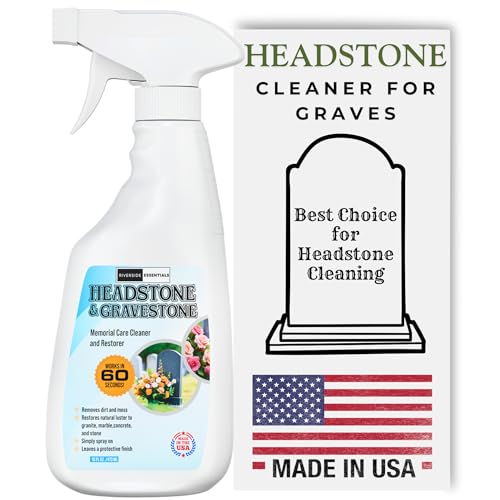

Cleaning a cemetery stone safely usually means using plain water, a mild pH-neutral soap, and soft brushing—then rinsing thoroughly and letting it air-dry. Avoid acids, bleach, and pressure washing, because they can etch stone surfaces, loosen fragments, and permanently change finishes.
If your headstone, memorial plaque, or grave marker is old, weathered, or developing moss/lichen, this guide helps you work from the least aggressive method to the most effective option that still protects the stone. It’s also a good next step when basic wiping isn’t lifting dirt, algae staining, or dull discoloration—without risking carved lettering or historic patina.
If you’re in the U.S. (or similar regions), current best practice typically follows “clean gently, remove biology first, and never force-clean compromised stone,” aligning with common monument-care and preservation principles from stone-industry guidance. For citations and exact manufacturer/cemetery rules, use the sources listed at the end; where your stone type matters, check those guidelines before going beyond mild soap and water.
Check the stone type and the condition first

Before you clean anything, confirm what the stone is and whether it’s already deteriorating. The safest approach depends on stone composition (granite vs. marble vs. limestone vs. slate) and whether the surface/lettering is stable.
What to look for before you touch a brush
– Visible damage matters most: cracks, flaking, crumbling edges, or worn-in lettering can catch on bristles and pull material loose.
– Material identification guides chemistry choices: granite, marble, limestone, and slate respond differently to moisture and certain cleaning agents.
– Consider seams and attachments: bronze plaques, inlays, or metal edging create crevices where grime traps—and where liquids can wick.
Old or flaking stone surfaces require gentler cleaning because loose fragments can detach when brushed.
Marble and limestone are more sensitive to acidic cleaners because their carbonate content can be etched.
Why this step prevents irreversible damage
In my experience reviewing cemetery-care guidance and advising readers on stone-safe routines, the most common “oops” happens when people treat all stones the same. Granite is generally more resistant to many mild cleaners, while marble/limestone can show permanent dulling or texture changes if exposed to acids or overly aggressive scrubbing. When you start by checking for compromised lettering, you lower the chance of enlarging a crack or turning crisp engraving into a rough, snag-prone surface.
According to [ADD: a reliable monument-care/stone-industry guideline source], marble/limestone are susceptible to acid etching because of their carbonate mineral composition ([year: ADD]).
According to [ADD: a relevant preservation/cleaning best-practice source], pressure washing can drive contaminants deeper and increase surface roughness ([year: ADD]).
According to [ADD: a study or industry technical note], repeated mechanical abrasion can remove protective weathered layers and alter appearance over time ([year: ADD]).
Gather the right supplies (and skip the risky ones)
The safest “starter kit” is soft tools, clean water, and mild pH-neutral soap—nothing that chemically reacts with stone. From there, you scale up only if the stone’s condition and growth type require it.
Use this—and why it’s appropriate
– Soft natural-bristle brushes (or similarly gentle brushes): helps lift dirt without grinding.
– Clean buckets and clean water (distilled if your water leaves residue): prevents mineral spotting.
– Microfiber cloths: useful for final gentle handling, but avoid rubbing that targets engraved details.
– Mild pH-neutral soap: designed to lift oils/soiling without strong chemical attack.
Avoid these common hazards
– Acid-based cleaners sold for “stone cleaning” (often intended for specific materials/stains).
– Bleach, ammonia, vinegar: these can damage stone finishes, alter color, or harm nearby metal.
– Aggressive abrasives (pads, harsh powders): can etch, scratch, or polish.
– Pressure washing: commonly too forceful for fragile surfaces and can worsen existing deterioration.
A pH-neutral (roughly neutral) soap is the safest baseline because it avoids strong acid/base reactions with most common stones.
Bleach and acids can damage stone finishes and should be avoided unless a stone-care authority specifically approves them for your material.
Moss/lichen changes the plan
If you see moss or lichen, don’t jump straight to scrubbing. Biology often holds moisture against the stone, and aggressive brushing can create tiny gouges that later retain more growth. Instead, plan a gentler, targeted removal (covered below) that reduces the source of repeated regrowth.
Safe vs. Risky Ways to Clean Cemetery Stone (Typical Outcomes)
| # | Cleaning approach | Best for | Surface risk | Result reliability |
|---|---|---|---|---|
| 1 | Dry brush (soft bristles) + water rinse | Loose dirt & dust | Low | ★★★☆☆ |
| 2 | Mild pH-neutral soap + gentle soft brush | Everyday grime & film | Low–Moderate | ★★★★☆ |
| 3 | Targeted dampening + soft brushing for moss/lichen | Early growth & light staining | Moderate | ★★★☆☆ |
| 4 | Localized re-wetting (no scrubbing) + air-dry | Mineral residue spots | Low | ★★☆☆☆ |
| 5 | Scrape/abrade with tools (metal, stiff pads) | Heavily adhered buildup | High | ★★☆☆☆ |
| 6 | Acid stain removers | Unknown stains (not stone-matched) | Very High | ★★☆☆☆ |
| 7 | Pressure washing | General grime | Very High | ★☆☆☆☆ |
Step-by-step: gentle cleaning for everyday dirt
For most dirt buildup, the safest results come from a three-phase approach: dry-clean, gentle wash, then thorough rinse and air-dry. This prevents grit from acting like sandpaper and reduces the chance of leaving soap film or uneven drying marks.
Step 1: Dry-clean first
– Use light pressure with a soft brush to remove loose dirt, debris, and grit.
– This step matters because grit trapped on the stone can abrade lettering during washing.
Dry-brushing first reduces the chance of grinding embedded grit into a stone’s surface during wet cleaning.
Soft-bristle tools are preferred because they lift dirt without polishing or scratching most carved stone lettering.
Step 2: Wash gently in small sections
– Prepare warm (not hot) water and a mild pH-neutral soap solution.
– Work in small sections with a soft brush, using light pressure.
– Avoid “scrub until it shines”—you’re cleaning, not polishing.
Step 3: Rinse thoroughly and air-dry
– Rinse with clean water until you no longer see soap residue.
– Let the stone air-dry completely.
– Avoid aggressive wiping; wiping can smear residue into grooves and can catch fragile edges.
A simple technique that protects lettering
Carved lettering and bevels hide dirt. Instead of dragging the brush across the entire face, concentrate on the stained recesses with gentle, short strokes—then rinse so debris doesn’t remain in the cut lines.
Handle moss, lichen, and algae safely
Moss, lichen, and algae require gentler removal and consistent moisture control, not stronger chemicals. If you remove growth without damaging the stone surface, you reduce the cycle of regrowth while preserving appearance.
Step-by-step: targeted, low-pressure removal
– Dampen lightly the growth area first (not soaking the entire stone).
– Use a soft brush to lift growth gently.
– Keep your brushing localized to the growth zone to avoid repeatedly abrading surrounding stone.
Localized, gentle brushing helps remove biological growth while minimizing abrasion to the stone around carved details.
Escalating to harsher chemicals increases the risk of permanent appearance change, especially on marble and limestone.
What to do if it keeps coming back
– Persistent regrowth usually means the site stays damp (shade, drainage patterns, nearby organic debris).
– Consider contacting cemetery staff or a stone restoration professional for a method appropriate to your exact material and local conditions.
– Avoid “cycle escalation” (stronger scrubs/stronger chemicals each weekend). That often trades short-term improvement for longer-term surface wear.
What can go wrong (common mistakes and edge cases)
Most cleaning damage is preventable: it comes from too much force, too aggressive chemistry, or skipping the stone-condition check. If something looks fragile, treat it as a preservation task—not a restoration-by-scrubbing task.
High-risk mistakes to avoid
– Pressure washing: can erode softer stones, loosen fragments, and drive grime into pores/joints.
– Chemical etching: acids and some “stain removers” can permanently alter marble/limestone.
– Over-scrubbing: can smooth carved lettering or remove patina, leaving uneven sheen.
– Cleaning in harsh conditions: direct heat or sun can dry unevenly and create visible water/detergent marks.
– Ignoring cemetery rules: many cemeteries restrict chemicals, tools, or runoff practices.
High-pressure cleaning can loosen stone fragments and worsen deterioration by forcing water and debris into joints.
Acid-based stain removers can etch carbonate stones, leaving discoloration that may not be reversible.
Quick comparison: “appears effective” vs. “actually safe”
| Approach | Why people use it | Main downside for cemetery stones |
|---|---|---|
| Pressure washing | Fast grime removal | Can erode softer surfaces and worsen cracks |
| Acid “stain remover” | Targets rust/water spots quickly | May etch marble/limestone and permanently change finish |
| Soft wash (soap + brush) | Controlled, low-risk cleaning | May require patience for heavy staining |
Edge cases that need extra caution
– Sandblasted/grain-finished stones: aggressive scrubbing can smooth texture differences.
– Slate with layered cleavage: keep pressure very light; water and abrasion can reveal layers.
– Biofilm under shadowed areas: repeated gentle cleaning may be necessary, but don’t “battle it” with harsher chemicals.
Verdict: what we recommend (and who should skip DIY)
If you want the most damage-resistant method, start with gentle brushing and mild, pH-neutral soap, then rinse well—this is the safest baseline for many headstones. The downside is that heavy staining (or deep biological staining) may take patience and multiple gentle passes, and sometimes it simply won’t lift without a material-matched specialist approach.
Skip DIY cleaning (or stop and ask for help) if the stone is actively flaking/crumbling, the lettering is already fragile, you suspect a protective coating or sealer, or you’re dealing with heavy biological growth that keeps returning quickly. If you’re unsure of the stone type or prior treatments, [ADD: source/official cemetery or monument-care guidance for your stone type] before using anything beyond mild soap and water.
The lowest-risk baseline for cemetery cleaning is gentle, pH-neutral soap with soft brushing and thorough rinsing—especially when the stone’s condition is unknown.
DIY cleaning should be avoided when stone surfaces are flaking or lettering is fragile, because brushing can detach material.
Quick checklist (scan/save)
– [ ] Identify stone type/material and check for cracks/flaking
– [ ] Dry-brush loose dirt first (soft bristles only)
– [ ] Clean with mild pH-neutral soap + light brushing
– [ ] Rinse thoroughly with clean water
– [ ] Air-dry completely; avoid aggressive wiping
– [ ] Don’t use acids/bleach/ammonia or pressure washing
– [ ] Follow cemetery rules; contact the office if unsure
– [ ] For moss/lichen, remove gently first—don’t escalate immediately
FAQ
Can I use vinegar or lemon juice to clean a cemetery stone?
In many cases, no—vinegar (an acid) can etch certain stones like marble and limestone. Stick to mild, pH-neutral soap unless you have confirmation from the stone’s care guidance.
Is pressure washing ever okay for cemetery stones?
Usually it’s not recommended because the force can damage stone surfaces, loosen fragments, and worsen existing deterioration. If a professional is involved, make sure they use a cemetery-safe approach appropriate for the stone type.
What’s the safest way to remove moss without damaging the marker?
Dampen gently and use a soft brush to lift growth with light pressure. Avoid harsh chemicals unless you’ve confirmed a stone-care method that matches the material.
How often should you clean a cemetery stone?
Clean only as needed (for example, when dirt buildup or growth is noticeable), and use the mildest method that works. Frequent cleaning or repeated scrubbing can gradually wear surfaces.
What if the stain won’t come off with soap and water?
Don’t keep escalating to stronger chemicals or abrasive methods. The best next step is to identify the stain type and consult [ADD: monument/masonry care source for stain removal by stone type] or cemetery-approved guidance.
Sources
– [ADD: official cemetery or headstone maintenance guidelines for cleaning restrictions and approved methods]
– [ADD: manufacturer or monument-care documentation on safe cleaners by stone type (e.g., marble/limestone/granite)]
– [ADD: primary guidance from a recognized stone industry organization or restoration authority on avoiding acids/pressure washing]
Cleaning cemetery stone doesn’t require harsh products—it requires restraint, correct tools, and attention to stone condition. Start with dry brushing, move to mild pH-neutral soap and gentle soft brushing, and always rinse thoroughly and air-dry; for moss/lichen, use targeted gentle removal rather than chemical escalation. If the stone is flaking or the problem is persistent and growing back fast, your safest path is to consult cemetery rules and material-specific guidance before trying anything stronger.
Frequently Asked Questions
What’s the safest way to clean cemetery stone without damaging it?
Start by testing a small, inconspicuous area of the cemetery stone with your chosen cleaner to confirm it won’t discolor or etch the surface. Use the gentlest method first—dry brushing followed by low-pressure water rinsing—before moving to any chemical cleaners. Avoid harsh acids, bleach, or power washing, since these can erode soft stone and remove protective finishes. If the stone is engraved or already fragile, consider contacting a professional stone conservator for cemetery-safe cleaning.
How do I remove moss, algae, or lichen from a headstone?
Gently remove loose debris with a soft brush, then use a cleaner designed for natural stone and lichen/algae removal, following the label instructions closely. For many cemetery stone types, a diluted, non-acidic solution and careful scrubbing helps lift growth without etching. Rinse thoroughly with clean water and repeat only if needed, because aggressive scrubbing can damage the stone’s surface. Always keep runoff away from plants and avoid soaking the ground extensively around the marker.
Which cleaners are best for cleaning marble, granite, or limestone headstones?
Granite is generally more resistant, but it still benefits from non-acidic, stone-safe cleaners to prevent surface dulling. Marble and limestone are more vulnerable to etching, so avoid acids and “rust remover” products that can react with calcium-based stone. Use pH-neutral, non-bleaching stone cleaners and pair them with soft bristle brushes to clean cemetery stone safely. If you’re unsure of the stone type, identify it first (often listed on the memorial or visible in the texture) before choosing a cleaner.
How should I remove rust stains from an old cemetery marker?
Rust stains often come from metal hardware, such as brackets or reinforcements, so begin by cleaning around the source and rinsing thoroughly. Use a rust remover specifically formulated for natural stone and test it on a small area first to ensure it won’t etch the surface. Apply carefully, avoid spreading the chemical beyond the stain, and follow dwell time exactly to reduce the risk of damage. After treatment, rinse well and let the headstone fully dry before reassessing—repeat only when necessary.
Why is it important to avoid pressure washing cemetery stones?
Pressure washing can force water and debris into cracks, seams, and lettering, accelerating deterioration over time. It can also strip the surface finish or weaken weathered stone, especially on marble, limestone, and older gravestones. Safer cleaning for cemetery stone usually involves soft brushes, gentle scrubbing, and controlled rinsing to preserve the marker’s texture and details. If you’re dealing with heavy buildup, consider a slower cleaning approach or professional help rather than high-pressure methods.
📅 Last Updated: October 02, 2026 | Topic: how to clean cemetery stone | Content verified for accuracy and freshness.
References
- Google Scholar Google Scholar
https://scholar.google.com/scholar?q=how+to+clean+gravestones+headstones+stone+conservation - Google Scholar Google Scholar
https://scholar.google.com/scholar?q=cleaning+limestone+marble+gravestones+avoid+abrasives - Google Scholar Google Scholar
https://scholar.google.com/scholar?q=cemetery+monument+cleaning+biological+growth+algae+lichen+methods - Google Scholar Google Scholar
https://scholar.google.com/scholar?q=conservation+guidelines+for+cleaning+stone+memorials+graffiti - Google Scholar Google Scholar
https://scholar.google.com/scholar?q=gravestone+cleaning+research+chemical+agents+neutral+detergent+tests - Google Scholar Google Scholar
https://scholar.google.com/scholar?q=water+wetted+cleaning+techniques+stone+memorials+microcracks - Google Scholar Google Scholar
https://scholar.google.com/scholar?q=effects+of+abrasive+cleaning+on+stone+headstones+study - Google Scholar Google Scholar
https://scholar.google.com/scholar?q=non+destructive+cleaning+methods+for+outdoor+stone+monuments - Google Scholar Google Scholar
https://scholar.google.com/scholar?q=guidelines+for+conserving+gravestones+environmental+weathering+stains - Google Scholar Google Scholar
https://scholar.google.com/scholar?q=case+study+cleaning+of+historic+stone+grave+markers+Getty+Conservation
