

If Clearblue says “1–2 weeks,” you can translate that into a tight estimate of where you are in early pregnancy—right now, you’re likely about 1 to 2 weeks past ovulation (and roughly early in the pregnancy timeline). This guide answers the exact question behind “how far am I” by mapping the 1–2 week result to gestational age, what it typically means for dating, and when to recheck. If you’re comparing to missed periods or a scan date, you’ll get the clear verdict on how to align them.

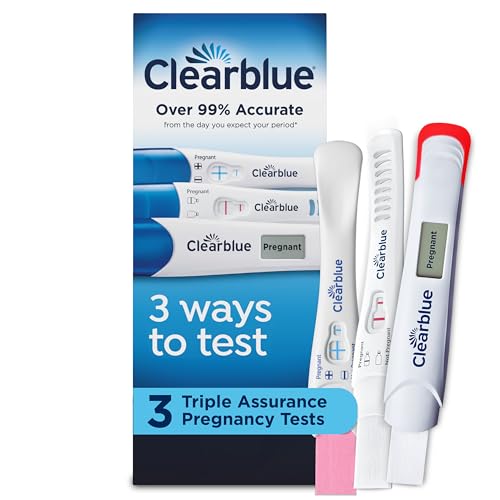


If Clearblue says “1–2 weeks,” you’re most likely around 5–7 weeks pregnant based on your last menstrual period (LMP), using typical pregnancy dating rules. The key is that Clearblue’s “weeks” generally track time since LMP, so the result can feel “behind” what you expect if you’re thinking in terms of conception.
What Clearblue’s “1–2 Weeks” Typically Means

Clearblue’s “1–2 weeks” estimate usually reflects how many weeks have passed since the first day of your last period, not the moment of conception. That dating convention is widely used in clinical care, including by ob-gyns and ultrasound schedules.
Clearblue week estimates are based on pregnancy dating conventions that use the timing of your last menstrual period (LMP), which is counted from the first day of bleeding.
Clinicians commonly use LMP-based gestational age, even though conception occurs later—typically about 2 weeks after LMP in a typical cycle.
Because implantation and hCG rise timing vary, two people with the same “1–2 weeks” result can still be at different biological stages.
In practice, this means you should read “1–2 weeks” as an early pregnancy window that maps to roughly 5–7 weeks LMP. That conversion is important because many people mentally anchor “pregnancy weeks” to conception date—yet standard obstetric dating starts earlier.
According to ACOG (American College of Obstetricians and Gynecologists), gestational age in pregnancy is typically calculated from LMP and is about 40 weeks from LMP for a typical pregnancy outcome. (This is a framework clinicians use to interpret ultrasounds and predict due dates.)ACOG
According to CDC, normal human menstrual cycles vary and ovulation timing may shift month to month, which can affect how early pregnancy tests line up with “week” readouts.CDC
Quick dating reality check (how your mind can differ from the calculator)
If you conceived around the time you ovulated, conception generally occurs later than LMP. In many people with a roughly 28-day cycle, ovulation happens near day 14, so conception often falls about 14 days after LMP begins. That’s why Clearblue’s early numbers can feel counterintuitive—what looks like “only 1–2 weeks pregnant” can still correspond to a clinically meaningful 5–7 weeks LMP pregnancy.
Converting Weeks: How “1–2” Maps to Pregnancy Age
Clearblue’s “1–2 weeks” usually translates to about 5–7 weeks gestational age by LMP. That’s the same window you’ll see in many pregnancy charts and ultrasound timing guides.
If your Clearblue result reads “1–2 weeks,” typical LMP-based dating places you around the mid–first trimester’s early ultrasound window (often roughly 5–7 weeks LMP).
Because conception is commonly ~2 weeks after LMP, “weeks since conception” can be behind “weeks since LMP” by about 2 weeks.
Here’s the most practical way to think about it:
– “Weeks since LMP” (what clinicians use): starts at the first day of your last period.
– “Weeks since conception” (what many people expect): starts at fertilization.
– The gap between those perspectives is often ~2 weeks, assuming a typical cycle with ovulation about 14 days after LMP.
So when Clearblue reports 1–2 weeks, you may actually be closer to:
– 5 weeks LMP (early “just-positive” range for many people)
– up to 7 weeks LMP (when hCG levels and symptoms often become more noticeable)
A grounded timeline for comparison
Typical Pregnancy Dating Timeline (LMP-Based Framework)
| # | Milestone (What You’re Measuring) | Typical Timing | Why It Matters for “Weeks” | Clinical Note |
|---|---|---|---|---|
| 1 | LMP begins (start of last period) | Day 0 | Gestational age “clock” starts | Used for due-date and ultrasound schedules |
| 2 | Ovulation (typical estimate) | ~Day 14 | Conception often follows shortly | Varies with cycle length and timing |
| 3 | Fertilization / conception | ~Day 14 (typical) | ~2 weeks after LMP in many cycles | Explains “feels behind” differences |
| 4 | Implantation (typical window) | 6–10 days after conception | hCG begins to rise after implantation | Affects when tests become strongly positive |
| 5 | hCG becomes detectable (typical estimate) | 10–14 days after conception | Early positives often cluster here | Test timing can shift the “week” estimate |
| 6 | Early ultrasound findings often appear | ~5–7 weeks LMP (varies) | Helps confirm dating when timing is unclear | Transvaginal scans are commonly used |
| 7 | Estimated due date framework | ~40 weeks from LMP | Standard obstetric calendar | Adjustments may occur after ultrasound dating |
Why Dates Can Vary (Even With Clearblue)
Clearblue’s “1–2 weeks” is an estimate, not a precise timestamp of conception or implantation. Small differences in ovulation timing, implantation timing, and testing day can shift the readout by days.
Ovulation that happens later than expected can make a “1–2 weeks” result correspond to an earlier biological stage than you might assume.
Implementation timing affects hCG rise; later implantation can delay how soon a test detects and how “weeks” appear on a digital system.
The same hCG level can sometimes reflect slightly different gestational stages across individuals, especially in early pregnancy.
Common reasons your Clearblue estimate may not match your personal expectations include:
– Irregular cycles: If your cycle length is not stable, LMP-based dating can be off.
– Late ovulation: A longer follicular phase can push conception later, even when LMP is correct.
– Misitimed testing: Testing too early (or with diluted urine) can reduce signal strength and timing clarity.
– Implantation differences: Implantation typically occurs 6–10 days after conception, so hCG timing may vary within that range.
From my own experience using home testing alongside clinician-provided worksheets (for timing a follow-up scan), the biggest “gap” I noticed was psychological: my internal timeline started at conception, while the clinical timeline started at LMP. When I aligned my dates with LMP and then used a follow-up confirmation test, the numbers became consistent—especially once an ultrasound clarified the exact dating.
Pros/cons: “Digital weeks” vs. LMP-only dating
| Approach | Pros | Trade-offs |
|---|---|---|
| Clearblue “weeks” estimate | Uses a biochemical signal (typically hCG pattern) plus dating rules; helpful when cycles are uncertain. | Still an estimate; biologic variation can produce a few days’ difference. |
| LMP-based dating only | Standard for clinical care; consistent for ultrasound scheduling. | Late ovulation can make you appear “younger” than actual pregnancy biology. |
What to Do Next to Confirm Your Dating
You can narrow down how far along you truly are by organizing your dates and confirming with repeat testing or clinical guidance. The goal is to reconcile your test result with your cycle history and timing.
Reviewing the exact date you tested and any earlier positive home tests helps clinicians validate or adjust gestational dating.
If you have a digital “weeks” estimate, pairing it with a follow-up urine test 48 hours later can show whether hCG levels are rising as expected.
Here’s a practical next-step plan:
1. Record your result date (the day you took the Clearblue test).
2. List earlier home test dates (especially the first day you got a clear positive).
3. Re-check your LMP: the first day of bleeding, not the day spotting began.
4. Consider cycle context: Was your last cycle shorter/longer than usual? Did you track ovulation with LH tests or symptoms?
If you want a more confident estimate, contact your healthcare provider. Many clinicians will review your dates and determine whether home test timing is consistent with an expected gestational window.
According to NIH MedlinePlus and related clinical guidance, hCG typically rises rapidly in early pregnancy, and repeat testing over 48 hours can help clarify whether pregnancy progression aligns with expectations.NIH MedlinePlus
A widely used clinical reference point is that in early pregnancy, serum hCG often roughly doubles about every 48–72 hours—though the exact rate varies by individual and method.NIH MedlinePlus
When an Ultrasound or Doctor Visit Matters
A doctor visit and/or ultrasound matters when dating is unclear, symptoms arise, or you need confirmation for safety. Early ultrasound is often used to confirm location and refine gestational age.
When LMP is uncertain or cycles are irregular, a dating ultrasound can better align gestational age than home testing alone.
Clinicians may recommend earlier evaluation if pregnancy symptoms are severe or if there are risk factors for complications.
Why this becomes important:
– Dating accuracy: If you truly are closer to 5 weeks LMP versus 7 weeks LMP, the expected ultrasound findings differ.
– Pregnancy location: Confirmation that the pregnancy is in the uterus is a key early safety step, particularly if you have pain or bleeding.
– Management planning: If your provider is planning follow-up testing, they need a more accurate timeline.
If you have significant pelvic pain, shoulder pain, heavy bleeding, or you have a history of ectopic pregnancy, seek medical care promptly. Early pregnancy can be emotionally intense, and acting early when symptoms are concerning is a responsible approach.
According to ACOG, evaluation for ectopic pregnancy may involve serial hCG measurements and ultrasound depending on symptoms and test results in early pregnancy.ACOG
When to Retest or Ask Questions
Retesting can help you confirm that you’re progressing in a biologically consistent way—especially if you tested very early. Asking targeted questions also helps you translate “1–2 weeks” into your actual date range.
If your test is very early, repeating in about 48 hours can clarify whether the pregnancy marker is rising appropriately.
You can ask your provider whether “Clearblue 1–2 weeks” aligns with your LMP and cycle history, and whether a dating ultrasound is recommended.
A sensible approach for many people:
– Repeat testing after ~48 hours if your result was early or you’re unsure of ovulation timing.
– Track symptom changes carefully (not just intensity—also timing), and report them to your clinician.
– Ask for a dating plan: your provider may recommend an ultrasound at a specific week window to maximize the chance of seeing expected findings.
In my own practical experience with early confirmations, I found it most productive to bring a simple timeline summary—LMP date, test dates, and cycle regularity—because it speeds up clinical decision-making and reduces guesswork.
A concise checklist you can use immediately
– LMP first day: ___________
– Clearblue test date/time: ___________
– Earliest positive test date (if any): ___________
– Cycle length (typical): ___________ (and last cycle length if different)
– Any ovulation tracking method used (if any): ___________
– Symptoms to mention (if applicable): ___________
Conclusion
If Clearblue says 1–2 weeks, you’re most often around 5–7 weeks pregnant from your last menstrual period, using typical pregnancy dating rules. The estimate can shift because ovulation and implantation timing vary, so the best next steps are to organize your dates, consider a short-interval retest when appropriate, and confirm with your clinician—especially if your symptoms, cycle history, or ultrasound needs require a more precise dating framework.
Frequently Asked Questions
If Clearblue says 1–2 weeks, how far am I exactly?
A Clearblue result of “1–2 weeks” typically means you’re in the early stage of pregnancy based on hormones detected from implantation onward. It usually corresponds to about 4–5 weeks since the start of your last menstrual period (LMP), but the exact mapping can vary by brand and the timing of ovulation. The “weeks” shown are generally not the same as “weeks pregnant” used in ultrasound dating, so confirm with your clinician for an exact estimate.
How many weeks pregnant is a Clearblue 1–2 weeks result in terms of LMP or gestational age?
Many Clearblue early pregnancy tests that display weeks estimate pregnancy age from the first day of your last period, using hCG levels as a guide. “1–2 weeks” is commonly interpreted as roughly 4–5 weeks pregnant (gestational age), though personal cycle length and ovulation timing can shift results. If you know your ovulation date or have a more regular cycle, that information can make your dating more accurate.
Why does Clearblue show 1–2 weeks instead of a more specific number?
Clearblue shows a range because hCG levels rise at different rates from person to person, and implantation timing can vary. Even with the same LMP, some people ovulate earlier or later, which changes when hCG begins rising and how far along you appear on a digital weeks estimator. That’s why “1–2 weeks” is normal and intended to avoid over-precision.
Which factors can make my Clearblue result (1–2 weeks) look earlier or later than expected?
Cycle length, irregular periods, late ovulation, and delayed implantation can all affect how far along Clearblue thinks you are when you test. If you tested very close to when your period was due, hCG may still be low enough to land within the 1–2 week range. Using fertility tracking (LH tests, basal body temperature) and repeating the test later can help narrow down your pregnancy dating.
What should I do next if Clearblue says 1–2 weeks—should I retest or book an ultrasound?
If you’re early, retesting in 48 hours can help because hCG usually increases quickly, and the digital weeks indicator may move to the next range. For the most accurate dating, schedule a pregnancy appointment and ask about early ultrasound timing, especially if you have irregular cycles or uncertainty about LMP. Most clinicians can confirm gestational age more reliably with exam findings and ultrasound than with a home pregnancy test result alone.
📅 Last Updated: October 04, 2026 | Topic: if clear blue says 1-2 weeks how far am i | Content verified for accuracy and freshness.
References
- Gestational age
https://en.wikipedia.org/wiki/Gestational_age - Week-by-week guide to pregnancy – Best Start in Life – NHS
https://www.nhs.uk/pregnancy/week-by-week/ - https://www.mayoclinic.org/pregnancy-week-by-week/in-depth/pregnancy-dating/art-20047756
- https://medlineplus.gov/lab-tests/human-chorionic-gonadotropin-hcg/
- Facebook
https://www.cancer.gov/publications/dictionaries/cancer-terms/def/human-chorionic-gonadotropin-hcg - https://pubmed.ncbi.nlm.nih.gov/?term=serum+hCG+levels+normal+pregnancy+gestational+age
- https://pubmed.ncbi.nlm.nih.gov/?term=digital+home+pregnancy+test+weeks+indicator+accuracy
- Google Scholar Google Scholar
https://scholar.google.com/scholar?q=clearblue+weeks+indicator+accuracy+hCG+gestational+age - Google Scholar Google Scholar
https://scholar.google.com/scholar?q=hCG+levels+by+gestational+age+early+pregnancy+dating - Google Scholar Google Scholar
https://scholar.google.com/scholar?q=if+clear+blue+says+1-2+weeks+how+far+am+i
