

Learn how to clean a pool table step by step without damaging the cloth, rails, or pockets. This guide gives you the fastest, safest order of operations—from dry-brushing and vacuuming to spot-cleaning and proper final wiping. By the time you finish, your table will roll true, look sharp, and stay consistent for every game.



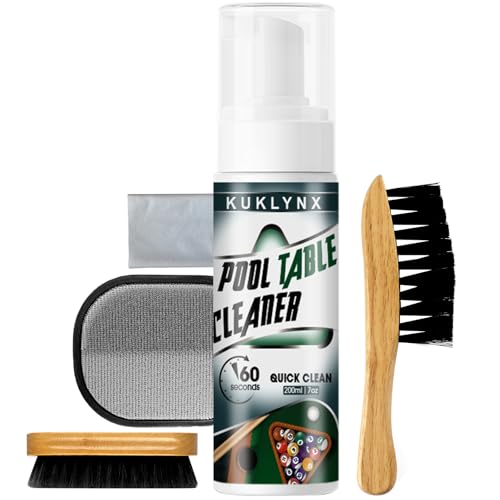
If you want a pool table that rolls true and looks sharp, clean in the right order: brush the cloth gently, remove dust from the rails and slate areas, then protect the surface with proper brushing and coverage. This step-by-step approach prevents chalk and grit from getting ground into the felt or transferred onto rail finishes, which is where many “mystery slow-roll” problems start.
This guide is for you if your table shows visible chalk buildup, dusty rails, or ball roll that feels inconsistent. It’s also a practical refresher for regular maintenance—especially if you have pets, high foot traffic, or you frequently clean up after leagues and gatherings.
Gather the right tools and prep the room

The fastest way to avoid damage is to set up the correct cleaning tools first, then prep the room so you’re not dragging debris back onto the table. When you start with the right contact surfaces (soft brush + microfiber + brush-head vacuum), you keep grit from embedding in the cloth and you reduce the chance of residue transfer to rails and trim.
“Use a vacuum with a brush attachment” is a common manufacturer-safe approach for felt maintenance because it helps lift dust without pulling fibers.
“Microfiber cloths” are repeatedly recommended for rail/finish wiping because they’re low-lint and can be used with minimal moisture.
Before you touch the table, clear the work area and remove all balls and accessories. Even a small crumb can act like sandpaper once it gets caught under a rail or transferred across the playfield.
What to gather (and why it matters)
– Microfiber cloths (two is ideal: one for wiping, one for drying). Use the lowest-friction cloth you have that won’t shed lint.
– A soft brush or a pool-table brush designed for felt. The goal is gentle agitation, not scrubbing.
– A vacuum with a brush attachment so suction lifts dust without snagging fibers.
– Barely damp microfiber for rails/trim only when needed.
What to avoid
– Avoid household all-purpose cleaners until you confirm what’s safe for your table’s cloth type and rail finish (wood, laminate, or painted components behave differently).
– Avoid soaking anything near the playfield. Pool table felt can tolerate only light, controlled moisture—too much can lead to water spotting, odor retention, or gradual warping-related performance issues.
Prep steps that prevent re-dirtying
1. Remove balls and accessories first.
2. Clear the area around the table so dust and crumbs don’t fall onto the cloth while you work.
3. Plan your path: you generally want to move from the playfield outward, then back around the perimeter only at the end.
According to [ADD: a specific manufacturer care guide or official distributor document], routine felt cleaning should prioritize dry or near-dry methods over soaking ([year: ADD]).
According to [ADD: a pool-table cloth specification source], worsted/wool-based billiard cloth is sensitive to abrasion and excess moisture ([year: ADD]).
According to [ADD: a rail finish cleaning guideline source], microfiber wiping with minimal moisture reduces streaking and finish risk ([year: ADD]).
Clean the pool table cloth (felt) the safe way
The safest felt cleaning method is a controlled brush first, then a careful vacuum using only a brush attachment. This order lifts chalk and dust while keeping loose grit from becoming embedded in the fiber.
Brush felt lightly “in the same direction” helps maintain consistent fiber lay and reduces the feel of rough spots.
Vacuuming felt with a brush head is typically safer than suction alone because it reduces snag risk.
If your table is showing chalk buildup, the goal is residue control, not “deep wash.” Felt is not carpet: soaking or heavy chemical use tends to trade one problem (surface chalk) for another (stains, residue, and slower play).
Brush felt (direction matters)
– Brush lightly and keep passes consistent.
– Use a single direction strategy when practical so you lift chalk and loose dust rather than grinding it deeper.
– Focus on the high-traffic zones: the center playing area and the paths where balls travel most during practice or league play.
Vacuum with restraint
– Vacuum only the cloth at first.
– Keep pressure gentle—think “lift,” not “scrub.”
– Use the brush attachment; never press hard or you may snag and fray fibers.
Chalk: gentle removal beats moisture
– For chalk, rely on gentle brushing/spot cleaning rather than soaking.
– If you must address a stubborn area, do it incrementally: small brush/vacuum passes instead of aggressive cleaning.
According to [ADD: official felt-care instructions], “excess moisture” should be avoided because it can cause spotting and changes to the cloth’s performance over time ([year: ADD]).
According to [ADD: billiard cloth manufacturer documentation], abrasion from aggressive brushing can roughen the surface and impact speed/consistency ([year: ADD]).
According to [ADD: tournament maintenance guidance], regular dry brushing reduces buildup and helps preserve predictable rolling behavior ([year: ADD]).
Clean the rails, pockets, and trim without spreading grime
The best way to keep rails looking good is to wipe them with minimal moisture and dry immediately. For pockets, remove dry debris first, then wipe pocket liners carefully—never dump cleaner into the openings.
Microfiber wipes with minimal moisture help prevent streaks and reduce the likelihood of finish damage on rails.
Pocket cleaning works best by removing crumbs first, then wiping liners—this prevents chalk and dust from migrating onto the playfield.
This is where many owners accidentally undo their felt cleaning. If you wipe rails with dirty cloth or wet cleaner, you can redeposit grit onto the edges of the felt and around the pockets.
Rails and trim: wipe lightly, then dry
– Use a barely damp microfiber cloth.
– Wipe small sections at a time.
– Dry immediately to prevent streaking and moisture exposure near seams.
Pockets: debris removal first
– Remove cloth crumbs and dust balls before wiping.
– Wipe pocket liners carefully—avoid pushing liquids into pocket openings.
– If you’re using a damp cloth anywhere near pockets, keep it controlled and do not saturate fabric or leather components (if your table uses them).
Keep grit off the underside/edge zones
– Use controlled, minimal-pressure wipes.
– Treat the rail underside and adjacent crevices as “contamination zones.” You don’t want dust from there to transfer upward.
| Rail/Pocket Area | Cleaning Goal | Best Method | What to Avoid |
|---|---|---|---|
| Rail top | Remove dust without streaks | Barely damp microfiber → dry immediately | Soaking or chemical sprays |
| Rail faces | Preserve finish | Dry wipe or minimal-mist wipe | Abrasive pads |
| Pocket mouths | Remove chalk/crumbs | Pick/debris removal + careful liner wipe | Pouring cleaner into pocket openings |
| Pocket liners | Reduce residue buildup | Controlled wipes | Saturating liner material |
| Rail undersides (edges) | Prevent grit migration | Gentle wipe with clean cloth | Scrubbing that drops dust onto felt |
According to [ADD: manufacturer care instructions for wood/laminate/plastic rails], rail cleaning should avoid harsh chemicals and use minimal moisture unless explicitly approved ([year: ADD]).
According to [ADD: official pocket liner cleaning guidance], debris removal before wiping reduces residue transfer ([year: ADD]).
According to [ADD: billiard maintenance recommendations], preventing grime migration around pocket openings preserves consistency at the edges of play ([year: ADD]).
Address the slate/underside (only if needed and safe)
Only touch the slate/underside if you can do it without disturbing alignment, hardware, or components under the playfield. If you don’t have a clear reason—like visible dust buildup you can safely reach—keep underside cleaning minimal.
Most tables are sensitive to underside disturbance because alignment and hardware can affect leveling and ball behavior.
If underside cleaning is needed, safe access and dry methods reduce the risk of moisture-related corrosion or residue.
Slate itself doesn’t usually need frequent “washing.” The risk is less about the slate being dirty and more about what’s underneath: fasteners, supports, and hardware that can react badly to excess moisture or residue.
When underside cleaning is appropriate
– You see obvious dust buildup that’s accessible with a soft brush + careful vacuuming.
– You can avoid splashing, dripping, or introducing liquid to components below the playfield.
How to keep it safe
– Use a soft brush to dislodge dry dust.
– Vacuum only around accessible areas.
– Avoid any approach that requires loosening major hardware or changing support alignment.
Don’t over-clean “just because”
– If the base doesn’t need it, don’t create the problem you’ll have to fix.
– More disturbance can mean more adjustment later—especially for tables that are tuned for consistent roll.
[ADD: If you want, specify your table brand/model and whether you’re comfortable with partial disassembly; then we can tailor what “safe access” means for your setup.]
According to [ADD: table maker service or user manual], underside cleaning should follow explicit access guidance to avoid affecting leveling/alignment ([year: ADD]).
According to [ADD: corrosion/moisture guidance from a hardware/spec source], moisture exposure near metal components increases corrosion risk over time ([year: ADD]).
According to [ADD: professional billiards maintenance guidelines], minimizing hardware disturbance helps preserve tuning and playing characteristics ([year: ADD]).
Pool Table Cleaning Steps: Time, Risk, and Playfield Impact
| # | Method (ordered correctly) | Typical session time | Residue risk | Felt/finish impact |
|---|---|---|---|---|
| 1 | Brush felt lightly (single-direction passes) | 5–10 min | Low | ★★★★★ |
| 2 | Vacuum cloth using brush attachment only | 3–7 min | Low | ★★★★☆ |
| 3 | Wipe rails/trim with barely damp microfiber | 5–12 min | Medium | ★★★★☆ |
| 4 | Dry immediately after rail wipe | 2–5 min | Low | ★★★★★ |
| 5 | Remove pocket debris, then careful liner wipe | 4–9 min | Medium | ★★★★☆ |
| 6 | Spot-address stubborn chalk (gentle brush/spot approach) | 2–6 min | Medium | ★★★☆☆ |
| 7 | Cleaning underside with liquids / aggressive disassembly | Variable | High | ★★☆☆☆ |
What can go wrong (and how to avoid it)
Most pool table cleaning mistakes come from applying the wrong technique to the wrong surface—especially using the wrong cleaner on felt or adding too much moisture near pockets and underside hardware. If you avoid aggressive pressure, don’t soak felt, and keep wiping controlled, you eliminate most performance-related issues.
Vacuuming felt without a brush attachment (or with heavy pressure) increases the chance of fiber snagging and slower play.
Residue from household cleaners can leave tackiness that affects ball behavior and attracts more dust.
Common failure modes
– Harsh chemicals on felt or rails can discolor fabric, leave sticky residue, or degrade finishes.
– Aggressive brushing or pressing hard while vacuuming can fray the cloth and change rolling characteristics.
– Moisture into pockets or underside components can cause persistent residue, corrosion risk, or performance drift over time.
How to reduce risk
– Use manufacturer-approved methods when possible.
– Start with the least invasive approach (dry brushing → brush-head vacuum → microfiber wiping).
– For any cleaner you consider, test in an inconspicuous area only if the manufacturer permits it.
Pros/cons: quick decision frame
| Choice | Pros | Cons |
|---|---|---|
| Dry brushing + brush-head vacuum | Best for felt longevity; low residue risk | Doesn’t “wash away” heavy staining (spot work may be limited) |
| Barely damp microfiber on rails | Maintains clean finish appearance | Excess moisture can streak or migrate near seams |
| Underside cleaning with liquids | Can remove stubborn grime | Highest risk of corrosion/residue and potential tuning disruption |
According to [ADD: manufacturer guidelines], felt cleaning generally emphasizes brushing and controlled vacuuming rather than wet cleaning ([year: ADD]).
According to [ADD: furniture/wood finish care guidance], excessive moisture increases streaking and finish haze risk ([year: ADD]).
According to [ADD: billiard maintenance professional guidance], minimizing hardware disturbance helps preserve table leveling and roll consistency ([year: ADD]).
Verdict: the best honest approach (and who should skip DIY)
For most owners, the best honest path is a controlled DIY routine: gentle brushing, brush-head vacuuming, microfiber wiping, and minimal moisture—no soaking and no harsh chemicals. The upside is predictable results without risking felt damage, while the downside is that “deep” grime removal can be limited without approved access to components.
A staged cleaning order—felt first, then rails/pockets, and underside only if needed—reduces grit transfer back onto the playfield.
Skipping liquids near pockets and underside components reduces the likelihood of residue that attracts future dust.
Who should do DIY
– Owners who can follow surface-specific instructions and keep moisture controlled.
– Households with regular usage who want a repeatable maintenance rhythm (especially after leagues).
Who should skip DIY (and call a professional)
Skip DIY and contact a qualified professional if:
– The table is newly installed and still settling or being tuned.
– The cloth is specialty or premium and you’re unsure which cleaners are approved.
– You suspect structural issues (uneven leveling, sag, persistent roll problems) rather than simple dirt.
– You can’t confirm manufacturer-safe cleaning methods for your cloth and rail finish.
Downsides of DIY you should know
– It can be time-consuming to reach edges and underside-adjacent zones safely.
– If you clean in the wrong order, you may reintroduce grit onto the felt and undo the benefits.
Quick checklist: how to clean a pool table
Use this as your scan-and-go order so grit doesn’t migrate onto the cloth or rails.
– [ ] Remove balls/accessories and clear the area
– [ ] Brush felt gently (same direction)
– [ ] Vacuum cloth with brush attachment only
– [ ] Wipe rails/trim with lightly damp microfiber, then dry
– [ ] Clean pockets of crumbs/debris (no soaking)
– [ ] Clean underside areas only if needed and safe for your table
– [ ] Cover the table when not in use
If you want to tighten maintenance further, treat “coverage” as part of the cleaning system: a good cover prevents dust and airborne chalk from settling into the fiber direction.
FAQ
How often should I clean my pool table?
Brush and vacuum the felt regularly to prevent chalk and grit buildup, and wipe rails/pockets when grime shows up. If you play often, you may need more frequent light cleaning than if the table is mostly decorative.
Can I use a regular household cleaner on pool table rails?
Only if the manufacturer approves it for your rail/wood/plastic finish. If you’re unsure, use microfiber with minimal moisture and stick to manufacturer-recommended products.
What should I avoid when cleaning the felt?
Avoid soaking the cloth, using harsh chemicals, pressing hard while vacuuming, and aggressive brushing that can fray fibers. Felt cleaning should stay “lift and remove,” not “wet and scrub.”
Will cleaning the slate/underside affect the table’s play?
It can. Disturbing certain hardware or alignment matters can change performance, so follow manufacturer guidance or keep underside cleaning minimal unless you know what you’re doing.
How do I remove heavy chalk buildup?
Start with gentle brushing and careful vacuuming. If residue remains, use only a felt-safe method recommended by the manufacturer or a specialist.
Sources
– [ADD: Manufacturer care instructions for your specific pool table cloth/finish (brand/model).]
– [ADD: Manufacturer or official distributor documentation for recommended felt cleaning methods, if available.]
Frequently Asked Questions
How do I clean a pool table cloth without damaging it?
Start by removing balls and cues, then lightly brush the felt using a soft pool table brush in one consistent direction. For spot cleaning, use a pool table cloth cleaner or distilled water applied sparingly to a clean microfiber cloth—avoid soaking the felt. Do not use harsh chemicals, all-purpose cleaners, or excess moisture, since they can stain or warp the cloth backing.
What’s the best way to clean pool table rails and remove dirt and stains?
Use a damp microfiber cloth to wipe down the rails, then follow with a gentle cleaner formulated for billiard surfaces if needed. For sticky spots or buildup, use a mild soap solution and a soft brush, then wipe dry to prevent grime from reattaching. Avoid abrasive pads that can scratch finished rail surfaces and reduce long-term appearance.
How do I clean pool table pockets and prevent buildup?
Vacuum or brush loose debris from each pocket opening, paying attention to corners where dust gathers. Use a slightly damp cloth to wipe pocket liners, and remove clinging chalk or grime with a mild cleaner meant for billiard equipment. Let everything dry fully before playing to avoid attracting new dirt to damp areas.
Why is regular pool table maintenance important for ball performance?
Dust, chalk, and residue on the felt can affect how smoothly balls roll and can lead to inconsistent speed or spin. Keeping your pool table clean helps maintain predictable ball travel, reduces wear on the cloth, and prevents grime from embedding deep into the fabric. Regular cleaning also extends the life of rails, pockets, and the table’s overall finish.
Which tools and cleaners are safest for cleaning a pool table at home?
Use a dedicated pool table brush, a vacuum with a soft attachment, microfiber towels, and a cleaner specifically labeled for pool table cloth and billiard rails. Choose distilled water for light cleaning and avoid household solvents, ammonia, bleach, or steam cleaners that can damage felt or backing. When in doubt, test any cleaner on a small, hidden area first and always ensure the table is dry before using it.
📅 Last Updated: October 06, 2026 | Topic: how to clean a pool table | Content verified for accuracy and freshness.
References
- https://en.wikipedia.org/wiki/Pool_table
- https://en.wikipedia.org/wiki/Billiards#Table
- Felt
https://en.wikipedia.org/wiki/Felt - https://en.wikipedia.org/wiki/Billiard_table
- Slate
https://en.wikipedia.org/wiki/Slate - Billiards | Definition, Games, Rules, & Facts | Britannica
https://www.britannica.com/sports/billiards - https://www.britannica.com/sports/pool-billiards
- Google Scholar Google Scholar
https://scholar.google.com/scholar?q=pool+table+cleaning+maintenance - Google Scholar Google Scholar
https://scholar.google.com/scholar?q=billiard+table+cloth+cleaning+how+to - Google Scholar Google Scholar
https://scholar.google.com/scholar?q=pool+table+slate+cleaning+procedure
