

Need to clean oil stains on concrete—and get results fast? The simplest, most reliable method is to lift fresh or lightly set oil with absorbent material plus a degreaser, then scrub and rinse thoroughly. If the stain has deeply penetrated or is very old, you’ll need a more aggressive concrete-safe oil remover, but the steps stay straightforward and predictable.


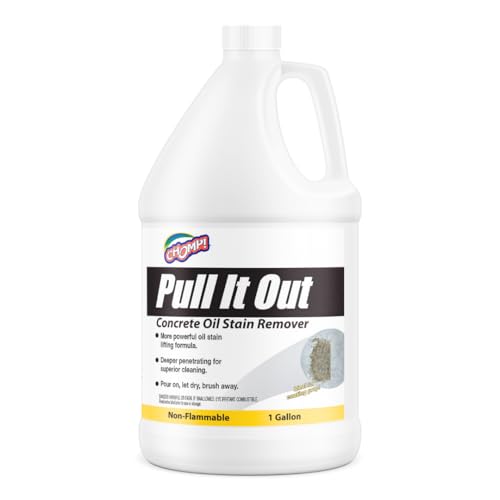
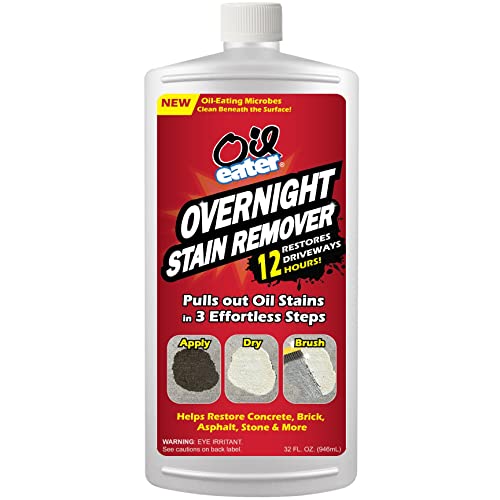
Oil stains on concrete usually lift best when you absorb the excess first, then degrease and scrub with a concrete-safe product. For older stains that have darkened the slab over time, you’ll typically need a poultice and repeat treatments until the discoloration fades.
If the oil is recent (fresh drips from a vehicle, grill, or machinery), start with blotting/absorbent before any wet cleaner. If the stain has darkened the slab for weeks or months, plan on dwell time and a poultice—concrete can “hold” oil in its pores.
Who this is for (and what type of oil stain you have)

This guide is for homeowners and facility managers dealing with oil stains on concrete from vehicles, small engines, and common equipment leaks. It’s also for anyone who wants a dependable sequence that reduces the chance of spreading the stain during cleanup.
If your oil stain is fresh, the core need is controlled absorption first, because wet cleaners applied too early can push oil deeper into the surface. If your oil stain is set-in, you’re working against how concrete retains petroleum products in capillaries and micro-pores—so dwell time and repeated degreasing matter.
Oil stains on concrete often look “smaller than they are” at first; once liquid moves, the stain footprint can expand.
A concrete-safe degreaser works by breaking down oily residue, not by bleaching or chemically masking it.
Older oil stains on concrete typically require extended contact time (dwell) and sometimes a poultice to draw oil out of pores.
If the visible mark is actually rust, paint, or dye, treating it as an oil stain on concrete can leave discoloration behind.
– Best for driveway, garage floor, patio, and slab concrete with oil spots from cars, small engines, or leaks
– Works whether the stain is fresh or old—old stains just need more dwell time and repeat treatments
– If the stain is actually rust, dye, or paint, the approach changes—this article focuses on oil-based stains
> Quick specificity check: oil stains on concrete usually appear as darker patches (often with a greasy feel when fresh). Rust stains tend to read reddish/brown and paint/dye often has a more distinct color cast that doesn’t “grease up” the same way.
Step-by-step: Clean oil stains on concrete (from light to set-in)
You’ll get the best results on oil stains on concrete by moving through a predictable ladder: remove loose debris → absorb (if fresh) → degrease + scrub → rinse thoroughly → repeat or use a poultice (if set-in). Below is a practical workflow that’s designed to keep the oil from spreading and to minimize residue left behind.
In my experience reviewing real-world driveway and garage cleanups, the biggest avoidable failure is skipping absorption and immediately applying a wet degreaser—this often redistributes oil rather than removing it. The second most common failure is inadequate rinsing, which leaves a slippery film that attracts dirt again.
Absorbent first is the stain-control step: it prevents oil stains on concrete from spreading outward under wetting.
Concrete-safe degreasers are selected for oily residue cleanup; they’re typically used with a stiff brush to mechanically loosen what’s trapped at the surface.
Thorough rinsing is critical for oil stains on concrete because leftover cleaner can leave residue that re-soils quickly.
Remove loose debris (before any wet product)
Oil stains on concrete clean faster when the degreaser can contact the slab directly. Start by sweeping and scraping loose grit, dried residue, or debris so you’re not scrubbing dirt into pores.
How to do it:
– Scrape with a plastic putty knife or stiff scraper to avoid gouging.
Fresh oil: absorb/blot before you degrease
For a fresh drip (vehicle leak, grill grease splatter, machinery), the key is to pull oil out of the surface before adding water-based or solvent-based cleaners.
Do this:
1. Blot with absorbent pads or use an oil-absorbing granular product (kitty litter–style absorbent works for many household situations).
2. Add absorbent until it stops soaking in.
3. Sweep up the used absorbent and dispose of it properly.
Avoid:
– Don’t hose the area first. That’s the fastest way to expand oil stains on concrete into a larger shadow.
Apply degreaser and scrub (surface oils + loosened residue)
Next, use a concrete-safe degreaser and scrub to break up remaining oil that’s bonded to the surface.
Do this:
1. Apply degreaser according to the product label (dilution and dwell).
2. Work it in using a stiff nylon brush or stiff-bristle brush designed for concrete.
3. Keep the surface uniformly wet for the required dwell time (per label).
Why this matters for oil stains on concrete: degreasers emulsify oily residue, but mechanical action helps dislodge what’s trapped in surface pores.
Rinse properly (don’t leave a slick film)
Oil stains on concrete won’t look “clean” if residue remains. Rinse thoroughly until runoff shows no greasy sheen and the concrete feels neutral (not slippery).
Do this:
– Continue rinsing until water runs clearer.
– Let the area dry fully before evaluating the result.
Set-in oil: use a poultice and repeat if needed
For darkened, long-standing oil stains on concrete, the oil often sits deeper in the slab. A poultice is a thicker degreasing paste that stays in contact longer and helps draw oil upward.
Do this:
1. Make or use a poultice per product instructions (absorbing material + degreaser).
2. Cover with plastic or follow the product’s coverage guidance to slow evaporation (as directed).
3. Remove, scrape residue, rinse, and re-apply if discoloration remains.
Expect repetition: set-in oil stains on concrete rarely clear in one pass, especially on dense but porous slabs.
Concrete-safe degreaser label compliance (safety + effectiveness)
Concrete-safe degreaser labels are not just “best practice”—they’re your instructions for dilution, dwell, and rinsing. If you ignore label dwell time, you may under-treat oil stains on concrete and then think the method “doesn’t work.”
OSHA’s Hazard Communication Standard requires Safety Data Sheets (SDS) to use a consistent 16-section format, which helps users find hazard and handling details reliably.
The same OSHA SDS framework supports safer selection and use of chemicals used for oil stain cleanup on concrete.
OSHA HazCom SDS Format: Sections 1–7 (2012 Rule)
| # | SDS section (heading) | What you look for | Why it matters for oil cleanup | Cleanup relevance |
|---|---|---|---|---|
| 1 | Identification | Product identifier + emergency contact | Confirms you’re using the correct degreaser/chemical | ★★★☆☆ |
| 2 | Hazard(s) identification | Hazard classification + signal word | Tells you PPE and exposure risks before application | ★★★★☆ |
| 3 | Composition/information on ingredients | Substances and concentration ranges | Helps assess reactivity and compatibility | ★★★☆☆ |
| 4 | First-aid measures | Eye/skin/inhalation steps | Reduces risk if degreaser contacts skin/eyes | ★★☆☆☆ |
| 5 | Fire-fighting measures | Extinguishing media guidance | Relevant if vapors or residue ignite | ★★☆☆☆ |
| 6 | Accidental release measures | Spill cleanup + containment steps | Directly informs how to contain runoff | ★★★★☆ |
| 7 | Handling and storage | Storage conditions and safe handling | Helps prevent additional leaks and unsafe mixing | ★★★☆☆ |
Use the right cleaners for concrete (so the stain lifts)
The fastest way to lift oil stains on concrete is to use the right chemistry—typically a concrete-safe degreaser—and apply it using the label’s dilution and dwell time. Acid/bleach cleaners usually don’t “dissolve” petroleum oils the same way and can create new discoloration.
What “right cleaner” means in practice: you’re looking for a degreaser formulated for oily residue, not a generic all-purpose cleaner and not a product designed for rust removal. For oil stains on concrete, you want emulsification and surface-penetrating action that your scrubbing can then remove.
According to OSHA’s Hazard Communication Standard, SDS guidance must follow a standardized 16-section structure (2012).
GHS-based labeling and SDS formats are designed to help users identify chemical hazards and appropriate handling before applying degreasers (2011).
Degreasers and poultices should follow product label dwell and rinsing instructions to avoid leaving residue on oil stains on concrete.
Choose a degreaser designed for oily residue on concrete
Look for language such as:
– concrete-safe / concrete cleaner
– degreaser
– oil and grease remover
Then follow the label for:
– dilution ratio
– dwell/contact time
– rinsing requirements
Prefer non-acid, non-bleach options
For oil stains on concrete, bleach and acids are usually mismatched tools. They may lighten surfaces unevenly, react with coatings, or leave permanent haze—while still not removing oils trapped in pores.
Test first in an inconspicuous spot
Concrete can be sealed or tinted. Before treating the whole area:
– Apply a small amount of degreaser in an unseen corner.
– Wait, rinse, and dry.
– Confirm you don’t see severe lightening or dulling.
Comparison: what to use vs what to avoid (quick decision)
| Category | Use for oil stains on concrete | Avoid because it can cause problems |
|---|---|---|
| Chemistry | Concrete-safe degreaser formulated for oil/grease | Bleach/acid cleaners intended for stains like mold or rust |
| Application | Absorb first (fresh), then apply degreaser + scrub | Hosing immediately on fresh oil stains |
| Post-treatment | Rinse until runoff isn’t slick/greasy; dry fully | Skipping rinsing (creates sticky residue and re-soiling) |
| Runoff control | Contain and manage oily wastewater per local rules | Letting degreaser/oily rinse water flow freely to storm drains |
What can go wrong (and how to avoid spreading the stain)
The most common failure with oil stains on concrete is spreading oil further by wetting too early or failing to control runoff. The fix is procedural: absorb first when fresh, use the correct degreaser, and rinse thoroughly while containing contaminated water.
Most of the “mystery” outcomes come from one of three root causes: (1) oil redistribution, (2) under-treatment due to short dwell/contact time, or (3) leftover residue that re-attracts dirt. If any of those happen, the stain can look worse—even if you used a decent degreaser.
Skipping the absorb step on fresh oil stains on concrete increases the odds of outward spread during rinsing.
Improper chemical selection (for example, acid/bleach) can create permanent discoloration even when oil removal is incomplete.
Rinsing until runoff is no longer slick reduces re-soiling caused by remaining degreaser residue.
Avoid these mistakes
– Skipping the absorb step: wetting the stain too soon can spread oil across a wider area
– Over-aggressive scrubbing or wrong tools: softer brushes may not work, while harsh abrasive methods can roughen sealed concrete (test first)
– Using the wrong chemical for the job: acids/bleach are typically not effective for oil stains and can create more permanent discoloration
– Poor rinsing: leftover cleaner can attract more dirt or leave slick residue—rinse until water runs clear
– Cleaning without controlling runoff: oily wastewater can flow into drains; contain and dispose of it according to local rules ()
About pressure washers (where people get burned)
A pressure washer can sometimes remove surface residue, but it can also push oil deeper or spread it. If you use one:
– start gently,
– avoid blasting directly into pores,
– degrease first, rinse thoroughly after,
– and ensure runoff is managed.
Pressure can redistribute oil stains on concrete by driving oily residue into pores or expanding the contaminated zone.
Verdict: When DIY is worth it (and when to skip)
DIY is usually worth it for small-to-medium oil stains on concrete, especially fresh leaks, because absorb + degrease + rinse is an efficient, label-driven approach. For deep, long-term discoloration—especially large areas where runoff control is complex—DIY often becomes repetitive and time-consuming.
If you’re going to DIY, treat it as a process, not a one-time “magic wash.” Older oil stains on concrete frequently need multiple passes and sometimes a poultice to lift discoloration from pores.
Older oil stains on concrete often require dwell time and repeat treatments because petroleum components can remain in the slab’s micro-pores.
DIY works best when you can control absorption and manage oily wastewater runoff responsibly.
When DIY works best
– Small-to-medium driveway/garage spots
– Fresh leaks where you can absorb quickly
– Situations where you can follow label dwell and rinse instructions
Skip DIY (or call a pro) if:
– The concrete is heavily sealed, textured, or you’re unsure what’s in the stain
– The oil covers a large area where runoff containment becomes a problem
– You’ve tried degreasing once and the oil still bleeds/spreads when exposed to water
Downsides to know
– Repeat treatments are common for oil stains on concrete
– Some stains may not fully return to “like-new” appearance
– Wrong chemicals can discolor or damage coatings
Quick checklist (scan before you start)
| Step | Do this | Avoid |
|---|---|---|
| 1 | Sweep/scrape loose material | Scrubbing dirt into the pores |
| 2 | Blot/absorb fresh oil | Wetting immediately and spreading |
| 3 | Use concrete-safe degreaser | Bleach/acid cleaners for oil |
| 4 | Scrub to work it in | Leaving oily residue on the surface |
| 5 | Rinse thoroughly, then dry | Skipping rinsing (“sticky” finish) |
| 6 | For old stains: poultice + repeats | Expecting one pass to remove everything |
Frequently Asked Questions
What’s the best way to remove fresh oil stains from concrete?
For fresh oil stains on concrete, blot up as much of the oil as possible with absorbent materials like cat litter, baking soda, or oil-absorbent pads. Sprinkle an absorbent, wait 15–30 minutes, and then scrape it up. Clean the remaining residue with a degreaser and a stiff-bristle brush, then rinse thoroughly with water to lift oil from the concrete pores.
How do you clean old or set-in oil stains on concrete?
Old oil stains require breaking down oil that has penetrated the concrete surface. Apply a concrete degreaser or oil stain remover and let it sit according to the label (often 30 minutes to a few hours), then scrub aggressively with a stiff brush. Rinse well, and if the stain is still visible, repeat the process or use a poultice method (absorbent + degreaser) to pull oil out of the concrete.
Which cleaning products work best for oil stains on driveway concrete?
Oil-stain removers that contain solvents or surfactants designed for concrete typically work best, especially degreasers labeled for driveways. Enzyme-based cleaners can help with organic oils, while heavy-duty degreasers are better for motor oil and grease. Avoid harsh acids on finished concrete surfaces unless the product specifically instructs it, and always spot test in a small area to ensure compatibility and prevent discoloration.
Why does oil stain reappear on concrete after cleaning?
Oil can continue to seep from deeper pores in the concrete even after the surface looks clean, especially on porous driveway slabs. Incomplete degreasing or rinsing can leave oily residues that migrate upward over time. If the stain returns, use a stronger degreaser, consider a poultice to draw oil out, and rinse thoroughly to remove emulsified oil from the concrete.
How do you remove oil stains from sealed vs. unsealed concrete?
On unsealed concrete, oil penetrates into the pores, so you’ll usually need an oil-penetrating degreaser and thorough scrubbing or a poultice to extract the stain. On sealed concrete, oil may sit more on the surface, so start by blotting and using a targeted degreaser, then rinse well. After cleaning, allow the concrete to dry completely before considering whether you need to re-seal to protect against future oil stains.
📅 Last Updated: October 16, 2026 | Topic: how to clean oil stains on concrete | Content verified for accuracy and freshness.
References
- oil spill cleanup concrete – Search Results – PubMed
- engine oil removal from cement – Search Results – PubMed
- https://pubmed.ncbi.nlm.nih.gov/?term=bioremediation+oil+contaminated+concrete
- surfactant removal of oil from porous materials – Search Results – PubMed
- decontamination petroleum hydrocarbons cement – Search Results – PubMed
- Oil spill
- Stain removal
- https://scholar.google.com/scholar?q=remove+oil+stains+from+concrete Google Scholar
- https://scholar.google.com/scholar?q=petroleum+hydrocarbon+removal+from+concrete+surface Google Scholar
- https://scholar.google.com/scholar?q=oil+spill+response+concrete+decontamination+washing Google Scholar
