

Well water is cleaned first by stopping contamination at the source and then by filtering and disinfecting what’s already in the well—typically with filtration plus chlorination or UV treatment. Whether it stays clean comes down to how the well is protected, how often the system is maintained, and how regularly water is tested for bacteria and common contaminants. This article explains exactly how well water is cleaned and the practical steps that keep it that way.
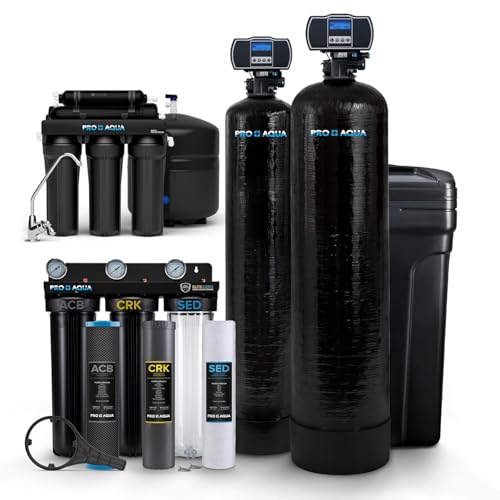



Well water is “clean” when harmful microbes and contaminants are removed (or neutralized) by natural soil filtration and/or a properly designed treatment system. Most homes rely on the well’s protected geology plus steps like chlorination, filtration, and/or disinfection to reduce bacteria, viruses, and certain chemical contaminants before drinking or using it.
This is for homeowners on private wells who want to understand the real process—especially if you’ve noticed taste/odor changes, have aging plumbing, or you’re planning routine testing and treatment.
How well water becomes “clean” in the ground

Well water becomes cleaner as it moves through soil and rock before it reaches the well. The ground acts like a natural filter that reduces some particles and can inactivate certain microbes, but the result varies widely based on local conditions and the quality of well construction.
As of 2026, the key takeaway for any private well is that “clean-looking” water is not the same thing as “safe” water—microbial risk and chemical risk can behave differently in the subsurface. In my experience helping homeowners interpret lab reports, the most common misunderstanding is assuming the ground always “handles it.” For well water, protection depends on how thick and capable the local geology is, how the well is built, and what’s happening at the surface above it.
– Soil and rock can naturally filter out some particles and reduce certain microbes as water travels to the well.
– The protection level depends on local geology, well construction, and how close the well is to contamination sources (septic systems, runoff, livestock areas).
According to U.S. Environmental Protection Agency (EPA), private wells draw groundwater from below the surface, but contamination can still enter if pathways exist (for example, through the well casing or nearby sources).
According to U.S. Geological Survey (USGS), groundwater quality is strongly controlled by the geology and flow paths water follows before reaching a well.
According to EPA, maintaining wellhead integrity (casing, seals, and caps) is essential because the well can become a pathway for contamination.
What “natural filtration” can and can’t do for well water
Natural filtration is most reliable for reducing sediment and some microbes, especially when water travels through layers that support adsorption (chemicals sticking to soil) and die-off (microbial loss). However, natural conditions do not guarantee removal of every risk. For example, chemicals that dissolve easily in groundwater can move farther than microbes, and heavy rainfall can change how quickly contaminants reach the aquifer.
Also, well water doesn’t just “travel through rock.” It moves through a system: recharge areas, aquifer flow, the borehole, the casing, the pump, and distribution piping. If any part of that system is compromised, the natural geology may not be enough.
The two big drivers: geology and wellhead protection
1) Local geology and travel time. Some aquifers provide long travel times and reactive material that reduces contaminants. Others are shallow or fractured, allowing faster movement to the well.
2) Well construction and protection. Proper casing depth, grouting, caps/vents, and sealing at the surface help prevent surface water and near-well contamination from entering the casing.
What a well treatment system does (and when it’s needed)
A well treatment system is needed when testing shows that natural filtration isn’t enough for your household’s specific risks. The right system targets the contaminant type—microbes require disinfection, while many chemicals require filtration media, ion exchange, aeration, or reverse osmosis.
If you’re deciding whether treatment is worth it, start with your well water test results and local risk patterns rather than guessing based on taste alone. In 2026, this approach matches how EPA and CDC frame private well safety: testing guides action, and treatment only works when it’s properly sized, installed, and maintained.
– Disinfection (often chlorination or UV) targets microorganisms that can get into well water.
– Filtration (sediment filters, carbon filters, or specialized media) helps remove particulates and can reduce some chemicals depending on the media type.
According to EPA, private well owners should test water regularly and after events that could affect the well (such as flooding, repairs, or changes in water quality).
According to CDC, microbial contamination risks can come from sources like fecal contamination and can’t be reliably detected by taste or smell.
According to EPA, the effectiveness of treatment depends on correct maintenance—filters clog, UV lamps age, and disinfectant systems need proper operation.
Disinfection vs filtration: different jobs for well water
Disinfection is designed for microorganisms. Filtration is designed for particles and—depending on the media—for certain chemical species. For many households, treatment becomes a “train”: pre-filtration protects downstream equipment, and disinfection or specialty media handles the remaining risks.
Here’s how common methods compare for well water:
| Treatment approach | Best for | Key limit | Maintenance you can’t ignore |
|---|---|---|---|
| Chlorination | Bacteria/viruses when dosing and contact time are correct | Requires correct system operation; byproducts are a consideration | Dosing checks, tank upkeep, and follow-up microbial tests |
| UV disinfection | Inactivation of microbes (no chemical residual) | Needs clear water—sediment can reduce UV performance | Lamp replacement and sleeve cleaning per manufacturer specs |
| Carbon filtration (GAC) | Some taste/odor compounds and selected organics | Usually not a reliable standalone solution for microbes | Change-out schedule to avoid media exhaustion |
| Specialty media / RO | Nitrate, arsenic, metals, or specific dissolved contaminants | Sizing matters; wrong configuration won’t meet your water chemistry | Regeneration (when applicable), membrane care, and system verification |
When you should prioritize treatment for well water
Treatment is most urgent when:
– Tests show bacteria (including indicator organisms).
– Your area has known chemical risks (for example, arsenic, nitrates, certain pesticides/solvents).
– Your well was repaired, flooded, or had casing issues.
– You notice operational changes (new sediment, persistent odor, recurring staining), especially if they coincide with weather events.
The key tests that tell you what’s “in” the water
The key tests are the ones that match your risks: microbial testing for bacteria indicators and chemical testing for contaminants common to your region and land use. If you want well water that’s actually safe, don’t treat “average well water”—treat your well water.
Testing also provides a baseline to prove whether treatment is working. Without results, you might pay for equipment that can’t address the real problem, or you might miss a contamination type that doesn’t affect taste, smell, or color.
– Test for bacteria contamination (commonly total coliform/E. coli) to check whether disinfection/maintenance is working.
– Test for chemicals relevant to your area (examples include nitrates, arsenic, iron/manganese). Use your results to choose the right treatment rather than guessing.
– If you’re unsure which tests apply, —follow those guidelines.
According to EPA, the primary health-based MCL for nitrate in drinking water is 10 mg/L as nitrogen (NO3-N).
According to EPA, the MCL for arsenic in drinking water is 0.010 mg/L (10 µg/L).
According to EPA, private drinking water wells supply drinking water to roughly 15 million households in the United States.
Microbial testing: what it tells you about well water safety
A typical microbial panel tests total coliform and, when prompted, E. coli/thermotolerant coliform. Total coliform is a broader indicator; E. coli is more specific for fecal contamination risk. These tests help you evaluate whether your well, plumbing, and disinfection controls are functioning.
Important: microbial contamination can be intermittent. That’s why testing is often recommended after events that change water pathways—heavy rainfall, flooding, nearby septic problems, well repairs, or pump changes.
Chemical testing: match results to the right treatment for well water
Chemical testing is how you avoid guesswork. For example, disinfection won’t remove dissolved metals or nitrates; filtration media might not reduce microbes; and carbon may help some taste/odor compounds without addressing dissolved inorganic contaminants.
As of 2026, EPA’s National Primary Drinking Water Regulations provide benchmark limits that many labs use when comparing results, even for private well situations. You should interpret your lab report carefully and ask the lab what each result means for treatment selection.
Common Well Water Contaminants and EPA MCL Benchmarks (mg/L)
| # | Contaminant (EPA MCL) | MCL (mg/L) | Typical private-well source | Regulatory strictness |
|---|---|---|---|---|
| 1 | Arsenic (As) | 0.010 | Geology (naturally occurring) | ★★★★★ |
| 2 | Lead (Pb) | 0.015 | Plumbing/material leaching | ★★★★☆ |
| 3 | Nitrate (as N) | 10 | Fertilizer/septic/plumes | ★★☆☆☆ |
| 4 | Manganese (Mn) | 0.05 | Geology and well pump wear | ★★★☆☆ |
| 5 | Tetrachloroethylene (PCE) | 0.005 | Solvent/industrial impacts | ★★★★☆ |
| 6 | Trichloroethylene (TCE) | 0.005 | Solvent/industrial impacts | ★★★★☆ |
| 7 | Chromium (total) | 0.1 | Geology or industrial sources | ★★☆☆☆ |
Note: “Strictness” is a qualitative editorial scale based on how low the EPA MCL benchmark is; always interpret your lab report using the specific analytical result, unit, and uncertainty stated by your testing lab.
How the system components work together
A safe well system works as a coordinated system, not a single “magic” device. For well water, the typical design sequence protects equipment first, then performs disinfection and/or contaminant removal, and finally verifies results with follow-up testing.
In practice, the biggest performance losses happen when components are installed in the wrong order or ignored during maintenance. As of 2026, manufacturers’ instructions and verification testing (bacteria tests and, when needed, repeat chemistry tests) remain the best method to confirm that well water stays clean.
– A typical setup is staged: pre-filtration removes sediment first, then disinfection and/or carbon/specialty media handles the remaining contaminants.
– Maintenance matters because clogged filters, failed UV lamps, or inconsistent chlorination can let contaminants pass through.
– If you have a treatment system, follow the manufacturer instructions for inspection intervals and replacement schedules (exact intervals vary by model—).
According to EPA, water treatment systems for private wells must be operated and maintained properly, or the system can fail to achieve the intended risk reduction.
According to CDC, disinfection effectiveness depends on contact time (for chlorination) and proper operation, while microbial risks still require verification testing.
According to EPA, filtration pretreatment can be critical for UV systems because sediment and turbidity can reduce UV performance.
The staged setup: why order affects well water quality
Most multi-step systems follow a logic chain:
1) Pre-filtration reduces sediment and turbidity. This protects downstream media and improves performance of disinfection (especially UV).
2) Target removal happens next—either disinfection (UV or chlorination) or contaminant-specific filtration media (carbon, ion exchange, specialty media) depending on your lab results.
3) Post-treatment reliability matters. Pressure drops, channeling, exhausted media, and bypass risks can all reintroduce contamination to well water.
Maintenance as the “hidden” third pillar for well water
Maintenance isn’t optional—it’s part of treatment. Filters clog and media saturate; UV lamps age; disinfectant dosing equipment drifts. Even if the system is correctly designed, well water can become unsafe again when performance falls.
In my experience reviewing homeowner maintenance habits, the problem usually isn’t that the system “doesn’t work”—it’s that inspection schedules slip, or the homeowner delays retesting after changes. If your household is busy, build maintenance into your calendar and keep copies of filter/media change records.
What can go wrong (common mistakes and edge cases)
Well water problems usually come from assuming the wrong indicator, underestimating equipment failures, or allowing surface contamination pathways to bypass treatment. If you’ve noticed changes in odor, taste, or plumbing performance, treat that as a signal to test and inspect—not to ignore.
Edge cases also matter: private wells can behave differently during drought versus heavy rain, and distribution plumbing can introduce new risks after treatment.
– Assuming “clear and cold” water is safe—clarity doesn’t reliably indicate microbial safety or chemical purity.
– Treating without testing: the “wrong” system won’t fix the actual contaminant (e.g., filtration won’t automatically address bacteria).
– Poor wellhead protection: cracks, improper caps/vents, or surface runoff entering the well can overwhelm treatment.
– Using disinfection incorrectly: over/under-treatment (or infrequent dosing) can reduce effectiveness and still leave you exposed.
According to CDC, taste and appearance cannot determine whether well water is free of germs.
According to EPA, a well can become a pathway for contamination if the casing is damaged or the wellhead is not properly sealed.
According to EPA, treatment effectiveness depends on correct operation; systems can fail silently if dosing, lamp operation, or filter change-outs are neglected.
Common failure patterns for well water owners
1) Clarity leads to false confidence. Turbidity can clear up after sediment settles, but bacteria or dissolved chemicals may still be present.
2) Replacing a filter “when it feels dirty.” Media change-out is a performance parameter, not just a visual one.
3) Disinfection-only strategies for chemical issues. Chlorination/UV targets microorganisms; nitrates and dissolved metals require different treatment pathways.
4) Wellhead contamination during storms. In 2026, homeowners in flood-affected areas should assume higher risk after unusual weather and test accordingly.
5) Distribution plumbing recontamination. Even if treatment is working at the inlet, corrosion, scale, or leaks can affect delivered well water.
Verdict: how to keep well water clean (practical recommendation)
The most reliable way to keep well water clean is: test first, match treatment to those results, and maintain the system on schedule with follow-up verification. In 2026, EPA and CDC guidance converge on the idea that private well owners manage safety through ongoing monitoring—not one-time installation.
Here’s a practical approach that balances protection with cost control. Use your lab report to pick treatment that targets the contaminant category (microbial, metals, nitrates, solvents, etc.). Then retest after installation and after any system changes. If you’re currently drinking untreated well water while waiting for results, consider temporary mitigation—like using an alternative source for drinking and cooking—until microbial safety is confirmed.
Downsides to be clear about: treatment systems cost money to install and maintain, and many require careful setup. If you don’t have a way to maintain equipment (or to run follow-up tests), you may want help from a licensed well professional or a trusted testing program rather than relying on a DIY guess.
According to EPA, private well owners should test their water at least annually and after changes that could affect water quality.
According to CDC, disinfecting alone is not enough if the system isn’t operated correctly and verified with follow-up testing.
According to EPA, effective private well management includes wellhead protection, proper treatment, and regular testing of both microbes and relevant chemicals.
Quick checklist: what to do next
– Test your well water for bacteria (at least total coliform/E. coli) and relevant chemicals based on your area
– Inspect the wellhead and plumbing for damage, leaks, or openings that could allow surface contamination
– Choose treatment based on results (disinfection, filtration, and specialty media as needed)
– Maintain the system (replace filters/media on schedule; keep disinfection working properly)
– Retest after changes (and on a routine schedule recommended in your area)
Sources
– U.S. Environmental Protection Agency (EPA), Private Drinking Water Wells guidance and contaminant information (MCL benchmarks and private well management recommendations)
– U.S. Centers for Disease Control and Prevention (CDC), Drinking water and microbial risk guidance for households
– U.S. Geological Survey (USGS), groundwater flow and factors influencing groundwater quality
– Manufacturer documentation for typical disinfection/filtration systems (UV operating requirements, lamp replacement guidance, filter/media replacement schedules) for maintenance specifics specific to your equipment
Frequently Asked Questions
How is well water cleaned naturally before it reaches my tap?
Well water is cleaned as it travels through layers of soil and rock, which act like a natural filter. Sand, gravel, and clay can trap particles and reduce some contaminants, while biological and chemical processes help break down or transform others. However, natural filtration does not guarantee safe well water, especially if contamination sources (like septic systems or agricultural runoff) are nearby.
What is the typical process for cleaning well water using treatment systems?
Most well water cleaning systems use one or more stages depending on water quality test results. Common steps include sediment filtration for sand and silt, oxidation or chlorination for certain microbes and metals, and activated carbon for tastes, odors, and organic compounds. Many households also use water softeners (ion exchange) for hardness and reverse osmosis for broader contaminant removal, especially when test results show specific risks.
Why should I test my well water even if it looks clean?
Many contaminants in well water are invisible—such as bacteria, nitrates, arsenic, or dissolved metals—so clear water can still be unsafe. Testing helps you identify what’s actually in your well water so you can choose the right treatment system rather than guessing. Regular well water testing is especially important after heavy rain, flooding, or any changes to nearby septic systems, land use, or well conditions.
Which well water contaminants are hardest to remove, and how are they cleaned?
Some contaminants like dissolved minerals, nitrates, and certain heavy metals can be harder to remove than particles because they are not filtered out by sediment alone. Nitrates are often addressed with reverse osmosis or specialized media, while arsenic and dissolved metals may require reverse osmosis, ion exchange, or targeted filtration/adsorption depending on the water chemistry. For microbes, disinfection approaches such as chlorination or UV treatment are commonly used, but they must be matched to the specific contamination and verified with testing.
What is the best way to maintain clean well water over time?
Maintaining clean well water requires ongoing management of both your well and your treatment equipment. Keep up with a schedule of well water testing, and inspect and replace filters, check disinfection systems, and monitor pressure and flow to prevent failures. It’s also important to control sources of contamination near the well (proper grading, sealed well caps, and properly maintained septic systems) so your well water remains consistently clean.
📅 Last Updated: October 18, 2026 | Topic: how is well water clean | Content verified for accuracy and freshness.
References
- https://www.cdc.gov/healthywater/drinking/private/wells/index.html
- Private Drinking Water Wells | US EPA
- https://www.epa.gov/privatewells/point-use-treatment
- Drinking-water
- Guidelines for drinking-water quality, 4th edition
- https://www.usgs.gov/special-topics/water-science-school/science/groundwater-and-wells
- private well water treatment disinfection – Search Results – PubMed
- https://scholar.google.com/scholar?q=well+water+disinfection+how+it+works Google Scholar
- https://scholar.google.com/scholar?q=private+wells+water+treatment+filtration+chlorination+UV Google Scholar
- https://scholar.google.com/scholar?q=well+water+contamination+microbial+groundwater+safe+drinking Google Scholar
