

Looking for the best products to clean the edges on a butcher block countertop? Choose this edge-focused approach: use a food-safe mineral oil to nourish and a gentle, non-scratch cleaner for grime, then seal with a compatible finish to stop water from creeping into the exposed grain. If you want the fastest, cleanest results without drying out the wood, this specific combo is the clear winner for edge work.



Use pH-neutral dish soap with warm water and a soft brush to clean butcher block edges safely, then dry thoroughly. Afterward, recondition the edges with food-grade mineral oil to keep end-grain protected and looking even, not dull or dry.
Who this is for (and when it applies)

If you’re seeing grime, sticky residue, or water marks specifically along the seams and edge line, this approach is for you. It’s also ideal when your normal wipe-down leaves the butcher block edges looking dull, dry, or uneven.
Most butcher block edge issues come from where liquids linger: seams, corners, and the end-grain strip. When you use the wrong cleaner (too strong, too foamy, or too abrasive), the damage is often cosmetic at first—then it becomes structural if moisture is trapped long enough to swell the wood.
Butcher block edges collect residue in seams and at end-grain, so gentle cleaning plus fast drying is usually safer than “scrub harder” cycles.
For food-contact surfaces, sanitizing steps must follow label directions and only apply the product that’s permitted for food-contact use.
If your countertop has a branded finish (or you aren’t sure whether it’s oil-only, waxed, or sealed), treat that unknown finish as the governing constraint. Follow the manufacturer’s care instructions before you go beyond mild soap on butcher block edges.
Best products for cleaning the edges (by task)
The best products for butcher block edges are task-specific: mild soap for washing, soft tools for scrubbing, and food-grade mineral oil for reconditioning. This combination cleans without stripping finish and helps end-grain stay sealed.
Using the right “product type” matters because butcher block edges aren’t all the same surface. The edge seam is more like a thin joint line (it can trap residue), while end-grain is thirsty and can look dried-out quickly if you remove protective oils or leave moisture behind.
pH-neutral dish soap is formulated to be close to neutral pH (around 7), which is generally less likely to react aggressively with wood finishes than highly acidic or caustic cleaners.
Food-grade mineral oil is a commonly recommended reconditioning product for oil-finished butcher blocks to reduce dryness and restore sheen.
Best product types, aligned to the task
– Daily grime: pH-neutral dish soap + warm water in a small bowl (kept controlled, not soaking).
– Scrubbing the edge line: soft nylon brush/toothbrush + microfiber cloths (to avoid scratching).
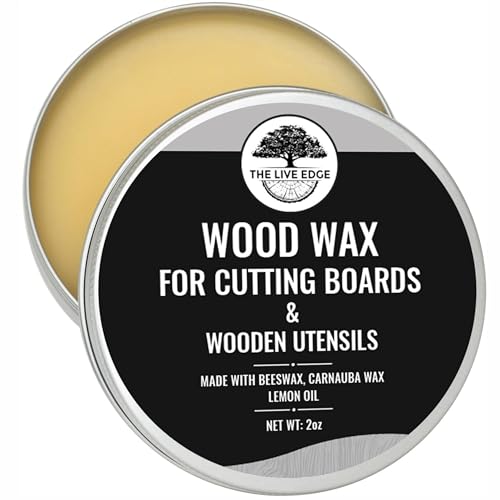
– Ongoing protection: food-grade mineral oil for reconditioning the edges after cleaning (and optional food-safe wax if your finish calls for it).
Recommended “tool stack” for butcher block edges
Think of your edge process as a sequence: loosen → wash → scrub lightly → wipe clean → dry fast → re-oil. That sequence keeps moisture controlled and reduces the chance that loosened grit turns into abrasion on the seam and end-grain.
Product Types for Butcher Block Edge Care (What They Do)
| # | Product type | Best for | Key compatibility note | Edge-safety rating |
|---|---|---|---|---|
| 1 | pH-neutral dish soap | Daily wash | Generally safe for oil-waxed surfaces when used with minimal water | ★★★★★ |
| 2 | Warm water (controlled) | Residue removal | Use damp cloth/brush, not puddles, on butcher block edges | ★★★★☆ |
| 3 | Soft nylon detail brush | Edge seam scrubbing | Nylon bristles avoid gouging typical to metal/scouring tools | ★★★★★ |
| 4 | Microfiber cloth | Wipe + dry control | Absorbs residue without abrasive action on finish | ★★★★☆ |
| 5 | Food-grade mineral oil | Reconditioning end-grain | Restores moisture barrier on oil-finished butcher blocks | ★★★★★ |
| 6 | Food-safe wax (only if approved) | Top sheen + maintenance | Can alter traction/appearance; confirm compatibility with your finish | ★★★☆☆ |
| 7 | Abrasive pads / steel wool | Avoid on edges | Can scratch wood and dull or strip protective films on butcher block edges | ★☆☆☆☆ |
Step-by-step: clean the edges without ruining the finish
You can clean butcher block edges safely by loosening debris first, washing gently with mild soap, then drying completely before re-oiling. That sequence prevents trapped moisture and protects the end-grain where problems start.
This is where many edge-damage mistakes happen: people flood the seam, over-scrub until they roughen fibers, or skip the reconditioning oil step after cleaning. For butcher block edges, “less water + more drying + correct re-oiling” is the pattern that keeps appearance consistent.
Dry-brushing crumbs before washing reduces the chance of grinding grit into the seam and end-grain of butcher block edges.
Leaving moisture in edge seams increases the risk of wood swelling and a raised, rough grain look compared with towel-drying and air-drying quickly.
Step-by-step workflow (edge-focused)
– Loosen first: dry-brush crumbs/dust off the edge line, then wipe with a barely damp cloth.
– Wash gently: apply the soap solution to a cloth or brush (not puddles), scrub lightly along the edge seam/end-grain, then wipe clean.
– Dry completely: towel-dry right away, then leave to air-dry; once dry, re-oil the edges per your finish recommendations.
How to apply “controlled dampness” in practice
Controlled dampness means you can see the cleaner on your cloth or brush, but you don’t leave liquid sitting in seams. If you notice puddling at the edge, you’ve crossed from “wash” into “soak,” and that’s when butcher block edges start to swell, curl, or look uneven.
Reconditioning after washing (the step people skip)
If your butcher block edges are oil-finished, reconditioning with food-grade mineral oil after cleaning is what prevents dryness at the end-grain. Apply lightly, allow it to penetrate, wipe off excess, and repeat only as directed for your specific product. This keeps the edge from going matte or chalky after frequent cleanings.
Choose products based on your butcher block finish
The safest cleaner for butcher block edges depends on whether your countertop is oil-and-wax finished, sealed, or coated. When you match the cleaning product to the finish type, you reduce the risk of dulling, stripping, or cloudy edge lines.
Finish compatibility is the core decision point. Mineral-oil/wax systems can be disrupted by harsh degreasers, while sealed/laminated-style coatings (polyurethane and similar) require the cleaner type approved for that coating.
Oil-and-wax finished butcher blocks generally require mild cleaning agents because strong degreasers can strip the protective oil film.
If a butcher block surface is sealed or coated, the finish manufacturer’s “safe cleaners” list governs what you can use on the edges.
Finish-based recommendations
– Mineral-oil/wax finished (common): stick to mild soap and non-abrasive tools; avoid harsh degreasers that can strip the oil film.
– Sealed or coated surfaces (polyurethane/laminate-style finish): use the cleaner the finish manufacturer recommends for that coating type (follow any “safe cleaner” list).
– Bare or heavily worn edges: clean gently, dry thoroughly, then recondition; if the edge is splitting or delaminating, cleaning products won’t fix the underlying damage.
Pros/cons: oil-finished vs coated edges (what it changes)
| Scenario | Pros (for cleaning edges) | Cons / watch-outs |
|---|---|---|
| Oil/wax-finished butcher block | Mild soap + re-oiling restores appearance and moisture barrier. | Harsh cleaners can strip oil; abrasives dull the edge line. |
| Sealed/coated butcher block | Surface is more stain-resistant; wiping often feels straightforward. | Wrong cleaner can damage the coating, causing haze or wear at the edges. |
What can go wrong (and how to prevent it)
Most butcher block edge problems come from excess water, abrasive tools, or chemicals that don’t match the finish. If you avoid those three categories and dry thoroughly, you eliminate the majority of edge wear.
Edge seams are where moisture collects, and end-grain is where moisture is absorbed quickly. When water is left along the edge seam, wood fibers can swell, leaving a raised or rough texture that looks like “the edge is failing,” even if the board isn’t actually structurally broken.
Wood dimensional change is strongly driven by moisture content; shrinkage/swelling can be several percent across common moisture swings, which is why quick drying matters for butcher block edges.
Abrasive pads (including steel wool and aggressive scrubbing tools) can dull or strip protective films, especially where butcher block edges meet seams and end-grain.
Common mistakes (and the edge-safe fix)
– Water trapped in seams: leaving moisture along the edge can cause swelling or a rough, raised grain look—use controlled dampness and dry fast.
– Abrasives that remove finish: scouring pads, steel wool, or melamine (“magic eraser”) type sponges can dull or strip finishes on edges.
– Using the wrong stronger chemicals: bleach/ammonia/strong acids (and sometimes even vinegar) can discolor wood or interfere with protective coatings—when in doubt, use mild soap and follow the finish guidance.
Hygiene-focused reality check (sanitizers vs. “cleaning”)
If you’re sanitizing for food prep, remember: edge cleaning and sanitizing are distinct. Cleaning removes soil (visible residue), while sanitizing reduces microbial contamination on cleaned surfaces.
According to the FDA Food Code, sanitization guidance for food-contact surfaces requires the use of sanitizers that meet label instructions and the correct concentration/contact time for the method used (FDA Food Code, ). In the same system, chlorine-based sanitizers are commonly specified in the tens-to-low-hundreds of ppm range (for example, 50–200 mg/L depending on the sanitizer and method) (FDA Food Code, ).
Also note: mineral oil reconditioning is not a sanitizer. It’s a moisture barrier, not a disinfectant.
Verdict: best overall products (with downsides)
For most butcher block owners, the best overall edge-cleaning product plan is pH-neutral dish soap + a soft nylon brush + microfiber, followed by food-grade mineral oil after drying. This combination cleans residue without over-wetting seams and keeps end-grain protected.
Here’s the honest tradeoff: mineral oil is great for restoring appearance and moisture barrier performance, but it doesn’t replace food-contact sanitizing procedures when your workflow requires it (like high-traffic food prep). For critical hygiene situations, you’ll need to follow food-contact surface sanitizer guidance compatible with your finish.
For oil-finished butcher block edges, re-oiling after washing is what helps prevent end-grain from looking dry, matte, or uneven.
If sanitizer use is required, follow FDA Food Code-aligned food-contact sanitizing directions rather than substituting mineral oil for disinfection (FDA Food Code, ).
Downsides to know
– Mineral oil doesn’t “disinfect” in the way a sanitizer does—so hygiene-critical settings must follow food-contact guidance and use compatible sanitizers (with required rinse/no-rinse steps).
– If your butcher block edges are already cracking, separating, or delaminating, cleaning products won’t repair structural failure—refinishing or repair is usually required.
Who should skip DIY edge cleaning
Skip DIY edge cleaning (or escalate) if you see cracking, separation, or persistent moisture damage at the edges. In those cases, repeating “clean + re-oil” can mask worsening problems without stopping them.
Quick checklist (scan or save)
| Edge cleaning step | What to use | Why it helps |
|---|---|---|
| Remove debris | Dry brush + dry microfiber | Prevents grinding grit into wood |
| Wash | pH-neutral dish soap + warm water on damp cloth/brush | Cleans without stripping harshly |
| Scrub edges | Soft nylon toothbrush/detail brush | Reaches seams and end-grain gently |
| Rinse/wipe clean | Clean damp cloth (minimal water) | Removes residue that can leave sticky film |
| Dry + protect | Dry towels + air-dry, then food-grade mineral oil | Restores the moisture barrier on end-grain |
– Keep everything controlled: damp, not wet.
– After cleaning, don’t skip the dry + re-oil step for oil-finished blocks.
Frequently Asked Questions
What are the best products for cleaning the edges of a butcher block countertop?
Look for food-safe cleaners designed for wood, such as mineral oil soap, gentle pH-neutral dish soap, or dedicated butcher block cleaners. For built-up grime along the edge, a soft wood-safe scrubber (like a microfiber pad or nylon brush) paired with a cleaner works well. If the edge looks dry or dull after cleaning, finish with food-grade mineral oil or butcher block conditioner to restore protection.
How do I clean butcher block edges without damaging the finish or soaking the wood?
Use a lightly damp cloth with a pH-neutral wood cleaner, and avoid soaking the seam lines and edge grain where water can wick in. Work in small sections, scrubbing gently with a soft brush or microfiber along the edge, then immediately wipe dry with a clean towel. After drying, reapply a thin layer of mineral oil to keep the edges from drying out.
Which scrubbers or brushes are safest for reaching the crevices on butcher block edges?
Choose non-scratch tools like microfiber cloths, soft nylon brushes, or an ultra-soft cleaning pad specifically labeled safe for wood surfaces. For rounded edges, a small detailing brush can help lift residue from the corners without gouging the grain. Avoid steel wool, abrasive pads, and harsh scrub brushes that can dull the surface and create rough spots that trap dirt.
Why do butcher block edges get dirty faster than the flat surface, and what cleaning products help?
The edges collect water, oils, and food residue from cutting and splashing, and the end grain can absorb grime more quickly than the top. Enzyme-based or plant-based wood cleaners help break down food soils without relying on harsh chemicals. Regular spot-cleaning with a mild butcher block cleaner plus periodic conditioning with mineral oil helps prevent buildup and keeps the edges sealed.
Which is better for edge maintenance: mineral oil, butcher block conditioner, or wax?
Mineral oil is a classic, food-safe option for restoring dryness and maintaining butcher block countertop edges, especially after cleaning. Butcher block conditioner blends can be convenient because they often include additional protective components, but still ensure it’s food-safe and appropriate for countertops. Wax can add a temporary surface sheen, but it may not fully penetrate end grain, so it’s best used as a light supplemental finish rather than the only product for edge protection.
📅 Last Updated: October 24, 2026 | Topic: Best Products for Cleaning the Edges on a Butcher Block Countertop | Content verified for accuracy and freshness.
References
- https://www.cdc.gov/healthywater/hygiene/household/cleaning-disinfecting.html
- https://www.foodsafety.gov/food-safety-basics/cleaning-and-sanitizing
- https://extension.psu.edu/how-to-clean-and-sanitize-cutting-boards-and-knives
- https://www.who.int/publications/i/item/cleaning-and-disinfection-of-environmental-surfaces-in-the-context-of-covid-19
- Cutting board
- Mineral oil
- https://www.epa.gov/coronavirus/how-to-clean-and-disinfect-your-facility-or-workplace
- https://scholar.google.com/scholar?q=best+way+to+clean+wooden+cutting+boards+safely Google Scholar
- https://scholar.google.com/scholar?q=butcher+block+countertop+care+food+safe+mineral+oil+sanding Google Scholar
- https://scholar.google.com/scholar?q=wooden+surface+disinfection+bleach+sanitizer+study Google Scholar
