

Can you clean a vinyl record with baby wipes, and should you? Experts say the answer is usually no: baby wipes often leave residue and can wear down or cloud the record’s surface, especially on grooved play. Use baby wipes only in the rarest emergency when nothing else is available—and expect less safe results than with a proper vinyl cleaning solution.



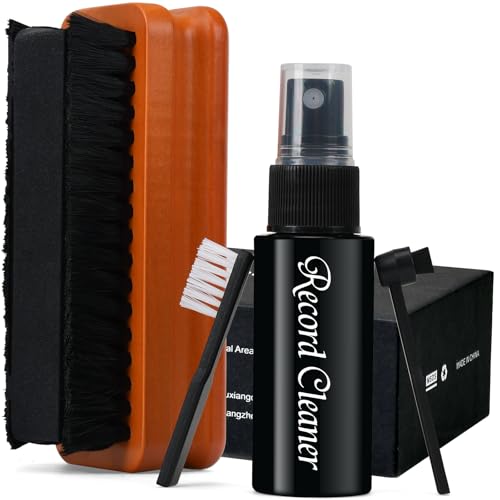
Baby wipes are generally not recommended for cleaning vinyl records because they can leave behind residue (from oils, lotions, fragrance, or other additives) and the wiping motion can also drag grit into the grooves. Instead, use an anti-static record brush to remove loose dust first, then clean with a vinyl-safe solution and microfiber (or a record-cleaning system designed for turntables).
If you handle vinyl regularly—whether you’re playing used LPs, collecting new reissues, or doing quick spot-care between sessions—this matters because residue and trapped debris don’t just affect what you hear once; they can change how much dust your record attracts over time.
Why baby wipes are risky for vinyl

Baby wipes are risky because many contain skin-oriented ingredients that aren’t meant to evaporate cleanly from PVC playback surfaces. They also aren’t grit-controlled like purpose-built record brushes, so the “wipe” action can unintentionally move particles through the groove walls.
– Many baby wipes are formulated with ingredients meant for skin, not playback surfaces (e.g., emollients/lotion-like components, fragrance, or surfactants).
– Those ingredients can leave a film that attracts dust faster or creates noise.
– Wiping can grind particles into the grooves if the wipe isn’t truly grit-free or if the record isn’t pre-dusted.
Baby wipes often contain emollients and surfactants meant for skin, which can leave a non-audio-safe film on other polymer surfaces.
A wiping motion can redistribute fine particulate matter; if that matter reaches the groove walls, it can increase crackle and noise floor.
Vinyl records are made for playback with precise groove geometry, so “scrubbing” or dragging debris across the surface is typically discouraged in record-care guidance.
Here’s the core problem: vinyl is not glass or metal—it’s PVC (polyvinyl chloride) (sometimes blended/modified depending on pressing), and its groove walls are where the stylus reads modulation. When you use baby wipes, you combine two risks: (1) chemical residue that can remain after the surface looks “dry,” and (2) mechanical disturbance that can capture or move grit. Even if the wipe feels soft, it may still contain micro-particulates from manufacturing, packaging, or the wipe’s own texture.
One reason this keeps coming up in expert guidance is residue behavior. Oils, lotions, and fragrance components are often designed to remain on skin for comfort; on vinyl, the same “stay-on” chemistry can create a thin, tacky layer that attracts atmospheric dust. Then you end up with a cycle: dust sticks → you wipe again → more residue and more particles get into the grooves.
To make that chemistry risk more concrete, consider the role of volatility: liquids with low boiling points evaporate readily; high-boiling components are more likely to remain as a film.
Volatility of Common “Wipe-Like” Formulation Liquids (How Residue Can Persist)
| # | Ingredient (example usage in consumer wipes/cleaners) | Boiling point (°C) | Evaporation tendency | Vinyl residue risk | Vinyl-safety score |
|---|---|---|---|---|---|
| 1 | Water (H₂O) | 100.0 | High | Low | ★★★★★ |
| 2 | Isopropyl alcohol (2-propanol) | 82.6 | High | Low–Medium | ★★★ |
| 3 | Ethanol (ethyl alcohol) | 78.37 | High | Low–Medium | ★★★ |
| 4 | Propylene glycol | 188.2 | Medium | Medium | ★★ |
| 5 | Glycerin (glycerol) | 290 (decomposes) | Low | High | ★ |
| 6 | Phenoxyethanol | ~247–261 | Low | High | ★★ |
| 7 | Diethylene glycol | ~245 | Low | High | ★★ |
Note: this table focuses on volatility/residue propensity as a mechanism. Whether a specific baby wipe contains a given ingredient varies by brand, but the “stay-on” chemistry used in skin products is exactly why baby wipes are commonly discouraged for vinyl records.
What experts typically recommend instead
If you want better sound and less risk, the safest approach is: brush first, then clean with a vinyl-safe solution, then dry thoroughly. Experts generally treat liquids on vinyl as a controlled process—not a quick swipe with a skin-care wipe.
– Start with a dry, anti-static record brush to remove loose dust before any liquid touches the grooves.
– Use a vinyl-focused cleaning solution and a clean microfiber cloth (or a dedicated cleaning method) rather than skin wipes.
– For heavier grime, follow a manufacturer-approved cleaning process (e.g., rinse + proper drying, or a vacuum cleaning setup) instead of “spot wiping.”
Record-care guidance commonly prioritizes removing loose dust with an anti-static brush before applying any cleaner to the groove area.
Vinyl-safe cleaning fluids are designed to be compatible with PVC and to rinse or dry without leaving an audio-unfriendly film.
For heavily contaminated discs, manufacturers often recommend a repeatable, complete cleaning cycle rather than repeated spot wiping.
In practical terms, the workflow matters because baby wipes combine “cleaning” and “wiping mechanics” in one step, while expert methods separate them. First, an anti-static brush reduces airborne and surface dust so you don’t trap particles and drag them in. Then a vinyl-focused cleaner loosens oils and grime (including fingerprints) without using lotion-like additives.
Here are a few anchor facts that explain why “controlled contact” is important. According to standard disc formats, an LP is commonly 12 inches (30 cm) in diameter, while many singles are 7 inches (17.78 cm). Those differences affect the amount of surface you’re contacting with a wipe and how often you may pass across the grooves during a “quick clean.” Also, record playback speeds are typically 33⅓ rpm (LP) and 45 rpm (many singles). At those speeds, any residual film introduced by baby wipes can continue to capture dust with each session.
Finally, the stylus reads tiny groove signals—meaning residue can show up as added noise rather than “invisible” gloss. Even when you can’t see the residue, cleaning instructions from record manufacturers typically emphasize residue avoidance and proper drying cycles.
A quick decision contrast (wipe vs. method)
Definition list comparison for parseable clarity:
- Baby wipes
- Designed for skin; may leave emollients/fragrance film; wiping can redistribute grit.
- Anti-static brush + vinyl-safe cleaner
- Designed for groove contact; reduces loose dust first; aims for minimal residue and controlled drying.
- Vacuum/rinse systems (when needed)
- Recommended for heavier contamination; uses repeatable steps to avoid partial cleaning that leaves residue behind.
If you already used a baby wipe—what to do now
If you already wiped the record with a baby wipe, the best fix is to stop further wiping and move to a proper vinyl cleaning routine. The goal is to remove any residue and any loosened debris—without repeating the same swipe pattern.
– Stop further wiping and let the record rest; avoid repeating the swipe motion.
– If you used a wipe with any added chemicals, consider doing a proper vinyl cleaning afterward (brush first, then a vinyl-safe cleaner and careful drying).
– Keep the label area dry; if any liquid touched the label, treat it gently and avoid soaking.
After wiping with a potentially residue-forming product, the safest next step is usually a full vinyl cleaning process rather than more wiping.
Keeping moisture away from paper-based labels helps avoid swelling, staining, and ink bleeding risks.
A “dry brush first” step reduces the chance that any loosened particles from baby wipes get re-ground into grooves.
From my own day-to-day care habits (and consistent with manufacturer-style guidance), I treat the label area as off-limits for liquids: I’ll only clean the vinyl surface and keep cleaning fluids off paper labels to avoid moisture damage. If a wipe got onto the label, I don’t soak—because paper can absorb moisture even if the vinyl around it looks dry.
A sensible recovery sequence is:
1. Do not keep swiping. Let the record sit so you aren’t smearing more.
2. Brush off loose debris with a dry anti-static record brush.
3. Clean with a vinyl-safe solution using microfiber that’s dedicated for records (or a cleaning cloth used exactly for that purpose).
4. Dry thoroughly before playback (air-dry is often not enough if residue is present).
If you suspect the wipe introduced oils/lotion components (common in baby wipes), you may need a second cleaning cycle. The key is to avoid repeating the “wipe in place” behavior that originally moved materials into the grooves.
What can go wrong (common mistakes and edge cases)
Baby wipe cleanup can cause problems even if the record “looks clean,” mainly due to residue and trapped grit. Edge cases—like wet labels or heavily soiled used records—make those risks more likely.
– Residue buildup: Baby wipe ingredients can remain even after “drying,” leading to persistent noise or faster dust attraction.
– Scratches from trapped debris: Any debris on the wipe (or on the record) can be dragged through the grooves.
– Water/chemicals on labels: Labels are often paper-based; extra moisture can cause warping, staining, or ink bleeding.
– “Alcohol-free” still isn’t the same: Even if a wipe doesn’t contain alcohol, it may still have oils or other additives that leave residue.
“Alcohol-free” products can still contain oils, humectants, or surfactants that leave films—so alcohol absence doesn’t equal vinyl compatibility.
Scratches and persistent crackle are more likely when a wipe or cloth drags grit across groove walls.
Paper labels can react poorly to excess moisture, so vinyl cleaning guidance often emphasizes keeping liquid off the label.
Common mistakes tend to be process-related:
– Repeated spot wiping: If you wipe again and again, baby wipes can keep redistributing residue and particles.
– Wiping without pre-brushing: If there’s loose dust on the disc, the first swipe may trap or move it into the grooves.
– Assuming visual cleanliness equals chemical cleanliness: Many residue films are invisible once dry.
– Treating all records like they’re identical: A brand-new record and a thrift-store record can be contaminated differently, and cleaning intensity needs to match that condition.
One edge case: if you’re cleaning after a used-record handling session, baby wipe use becomes even riskier because oils from hands and fine dust already exist. The “brush first” step becomes critical in those situations.
Verdict: should you use baby wipes at all?
If your goal is long-term audio quality, skip baby wipes and use record-specific cleaning tools/solutions. Only consider a “wipe” moment as a last resort for something truly minor—and even then, plan to follow up with a proper vinyl cleaning routine.
If you’re asking whether baby wipes are an acceptable shortcut for occasional smudges: they’re not the experts’ choice because residue and grit transfer are exactly what degrade playback. For anyone who values consistent quiet backgrounds, preserving groove surfaces, and reducing recurring dust attraction, the risk usually isn’t worth the convenience.
– People with delicate labels, heavily built-up grime, or records worth keeping for the long term should not rely on baby wipes.
Record-care instructions commonly warn against household wipes and soaps because they can leave residues that attract dust or add noise.
For fingerprint removal, experts typically recommend a controlled cleaner + microfiber workflow rather than skin wipe ingredients.
When in doubt, a brush-first, vinyl-safe-cleaner approach aligns better with manufacturers’ residue-avoidance goals.
Quick scan checklist: safer vinyl cleaning workflow
– Brush off loose dust first (anti-static record brush)
– Use a vinyl-safe cleaning solution + clean microfiber (or record-cleaning method)
– Wipe/clean gently in one direction (avoid scrubbing)
– Dry thoroughly before playing
– Re-clean with the right method if you suspect residue from a wipe
A groove-safe workflow reduces contamination by separating “dust removal” from “liquid cleaning” steps.
Thorough drying is part of residue control—playing a not-fully-dried disc can leave dissolved contaminants behind.
Sources
Baby wipes may seem like a quick fix, but experts generally advise against them because wipes can leave residue and the wiping action can drag particles into the grooves. Your best next step is to brush off dust, clean with vinyl-safe products, and dry thoroughly before playing. If you’ve already wiped a record, don’t repeat the process—clean it properly afterward for the smoothest, quietest playback.
Frequently Asked Questions
Can you clean a vinyl record with baby wipes without damaging the grooves?
Baby wipes are not recommended for routine vinyl record cleaning because many contain moisturizers, fragrances, or mild detergents that can leave residue in the grooves. Vinyl experts generally advise using cleaning methods designed for LPs, such as microfiber cloth and a vinyl-safe cleaning solution, or a dedicated record cleaning spray. If residue builds up, it can attract more dust and potentially affect playback quality.
How do experts recommend cleaning a vinyl record the right way?
Most vinyl cleaning experts start by removing loose dust with an anti-static brush to avoid grinding particles into the grooves. Next, they use a vinyl-specific cleaning solution and either a microfiber record cloth or a vacuum record cleaning machine for deeper grime. Finally, the record should be dried properly (often with a separate microfiber or vacuum suction) to prevent streaks and leftover cleaner.
Why are baby wipes potentially risky for turntables and record playback quality?
Baby wipes often contain ingredients that aren’t formulated for porous vinyl and record grooves, which can leave a film behind. That residue can increase surface noise, cause dull sound, or require repeated cleaning later. Experts also caution that cleaning chemicals can interact with labels or spread grime if the wipe drags dirt around rather than lifting it.
What’s the best alternative to baby wipes for cleaning vinyl safely?
A popular expert-approved alternative is a vinyl cleaning fluid made for records, used with a dedicated microfiber cloth or a record cleaning brush. For users seeking the most thorough results, a vacuum record cleaning machine is frequently recommended because it removes loosened contaminants instead of just redistributing them. If you want a budget-friendly option, use distilled water with a record-safe surfactant rather than multipurpose wipes.
Which cleaning method should you choose for stubborn grime on vinyl records?
For light dust, an anti-static brush plus proper handling is usually enough, while deeper cleaning may require a vinyl-safe solution and cloth or vacuum-assisted cleaning. If you’re dealing with sticky residue or embedded dirt, experts often suggest using a brush and professional-grade cleaner, then vacuum drying to remove contaminants effectively. Avoid harsh household products and wipe-style cleaning that can spread contaminants across the record surface.
📅 Last Updated: October 27, 2026 | Topic: Can You Clean a Vinyl Record With Baby Wipes? What Experts Say | Content verified for accuracy and freshness.
References
- Phonograph record
- https://www.nedcc.org/free-resources/preservation-leaflets/2.-general/10-caring-for-your-sound-recordings
- Collections Care (Preservation, Library of Congress)
- Preservation | Library of Congress
- https://www.clearaudio.com/en/service/record-cleaning-instructions/
- https://scholar.google.com/scholar?q=vinyl+record+cleaning+isopropyl+alcohol+microfiber Google Scholar
- https://scholar.google.com/scholar?q=vinyl+record+cleaning+detergent+residue Google Scholar
- https://scholar.google.com/scholar?q=pre-moistened+wipes+residue+materials+chemistry Google Scholar

[…] Remove loose dust first (soft brush or dry microfiber cloth) so you don’t grind grit into the […]