

You can get your SodaStream reusable CO₂ bottle clean enough for crisp, fresh-tasting sparkling drinks without lingering syrupy odors or sticky residue. Follow simple, safe steps that take minimal effort and require only warm water, mild dish soap, and a dedicated bottle brush or soft sponge. We’ll walk you through what to do, what to avoid, and how to dry it properly so your next refill is ready to go.



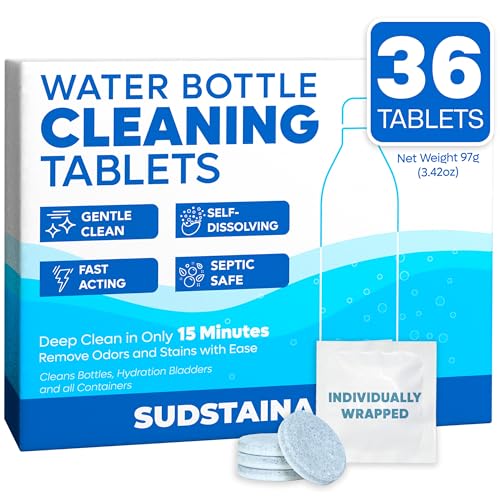
Clean SodaStream bottles by rinsing right after use, then washing with warm water and mild dish soap (no abrasives). For lingering smells or cloudy buildup, do a deeper soak and scrub, then rinse thoroughly and let the bottle dry completely before reassembling—so flavors don’t mix and residue doesn’t affect taste.
If you’re getting “off” flavors, odors, or a film on your SodaStream bottle, this is for you—especially if the bottle sat for a few days, you switched drinks often, or you notice cloudiness. The steps below are written to work for most SodaStream bottle types, but always double-check your specific model’s manual for any material-specific limits.
Cleaning basics: what to use (and what to avoid)

The safest way to clean a SodaStream bottle is with gentle, non-abrasive supplies that won’t change the surface. Here’s why this matters: soda and flavorings can leave sugar-rich residue that clings to micro-scratches, and scratches can also make odors linger even after washing.
– Use warm water and mild dish soap; pair it with a soft bottle brush or non-abrasive sponge.
– Avoid abrasive cleaners, steel wool, and harsh chemicals that can scratch or degrade the bottle surface.
– If your bottle has a gasket or seal, handle it gently and don’t try to pry or stretch it.
To make the “what to use” decision easier, here’s a quick reference of common cleaning agents (and what they typically target) so you can choose the least risky option for your SodaStream bottle.
Bottle-Safe Cleaning Options: Typical Strengths & Suitability
| # | Cleaning option | Typical active strength | Best for | Suitability score |
|---|---|---|---|---|
| 1 | Warm water + mild dish soap | Soap diluted (label-specific) | Daily residue removal | ★★★★★ |
| 2 | White distilled vinegar | ~5% acetic acid (typical retail) | Mild mineral & odor help | ★★★★☆ |
| 3 | Baking soda | Sodium bicarbonate (~100%) | Film loosening (non-scratch use) | ★★★☆☆ |
| 4 | Hydrogen peroxide (food/household grade) | ~3% concentration (typical) | Odor control support | ★★★☆☆ |
| 5 | Citric acid (powder) | Food-grade powder (often ~100%) | Scale & haze | ★★★☆☆ |
| 6 | Unscented household bleach | ~5–6% sodium hypochlorite (typical) | Strong sanitation (manual-dependent) | ★☆☆☆☆ |
| 7 | Dishwasher detergents / rinse aids | Varies by product (label-specific) | Convenience wash | ★★☆☆☆ |
This kind of “tool selection” is the foundation of cleaning SodaStream bottles properly—because the wrong chemical or abrasive can leave a surface that later traps odor and flavor.
Quick rinse after every use (best habit)
The best quick clean for a SodaStream bottle is a warm-water rinse immediately after you empty it. This prevents syrupy flavor residues from drying into a sticky film that’s harder to remove—and film is exactly what causes “off” tastes later.
– Empty the bottle, then rinse with warm water right away to prevent syrupy residue from setting.
– Give the inside a gentle swirl, then rinse again until the water runs clear.
– Let the bottle air-dry on a rack (or towel-dry carefully) before storing with the cap off.
From a safety perspective, keeping beverage-contact surfaces clean matters beyond taste. According to the World Health Organization, around 600 million people get sick from contaminated food each year (WHO, 2015). While your SodaStream bottle isn’t a restaurant kitchen, the principle is the same: residues provide nutrients for microbes, and moisture helps growth persist.
In my own household routine, I treat SodaStream bottles like reusable drinkware and rinse them right away—because waiting a day is where odors start to “stick.” . The key point is that prompt rinsing keeps odor from migrating into the bottle’s smallest crevices.
Deep clean when bottles smell or look cloudy
A deep clean for a SodaStream bottle is the move when rinsing isn’t enough—especially if the bottle looks cloudy or smells noticeably “off.” Here’s why: haze and odor typically come from a mix of sugar residue, carbonation minerals, and biofilm-like buildup in hard-to-reach seams or the base.
– Wash with warm, soapy water and scrub the inside seams and base where residue collects.
– If odor or film remains, do a soaking step using a mild, bottle-safe solution—.
– Rinse very thoroughly afterward so no cleaning residue affects the next drink.
When you choose a soak for a SodaStream bottle, remember that residue isn’t just “dirt”—it can form layered buildup that’s more resistant than plain grime. According to biofilm research, biofilms can be up to 10–1,000 times more resistant to removal than free-floating microbes (Costerton et al., 1999). That’s why soaking plus targeted scrubbing often beats soap alone.
Practical deep-clean methods (choose one)
Use these options as frameworks—then verify what your SodaStream bottle manual allows for your specific bottle material.
| Deep-clean approach for SodaStream bottles | Pros | Cons / watch-outs |
|---|---|---|
| Warm soapy scrub + extended soak in manual-approved solution | Targets both film and odor; gentle on most surfaces | Requires thorough rinsing to avoid taste carryover |
| Targeted seam/base cleaning (brush focus) before soaking | Improves results in hard-to-reach areas where haze starts | If you use abrasive tools, you can create odor-trapping micro-scratches |
| Sanitize cycle methods (manual-approved only) | Helps with persistent odor after residue removal | Dishwasher heat can be too aggressive for some bottle plastics/rubber parts |
The deep-clean goal for SodaStream bottles isn’t “chemical strength”—it’s removing the residue that’s causing the smell or cloudiness, then rinsing until taste-neutral.
Clean the parts that can trap residue
The fastest way to fix stubborn odor in a SodaStream bottle is to clean the removable parts (and the seal areas) more carefully than the main cylinder. Odor and film often hang around threads, gaskets, and connectors—places where rinse water can’t reach fully.
– Remove any removable components (like caps or seals, if your bottle design allows) and wash them separately.
– Check for buildup around threads and any rubber seals; residue there can cause persistent odors.
– Wipe and rinse the cap/connector surfaces so they’re clean before you reassemble.
For SodaStream bottles, the gasket or rubber seal is a “small but critical” zone. If sugar residue dries there, you can get lingering aromas even after the inside looks clean. That’s also why “it looks washed” isn’t always the same as “it will taste neutral.”
As you reassemble SodaStream bottles, handle seals gently—don’t stretch them and don’t use tools that could nick the rubber. Then do a visual check for residue around the threads and mating surfaces. If you see any film, re-wash those parts before closing the bottle. This prevents the same odor from being sealed back inside.
What can go wrong (common mistakes and edge cases)
The most common reason SodaStream bottles still taste “off” after cleaning is that residue gets locked in—by time, abrasives, or reassembly while wet. Avoiding these pitfalls usually solves the problem without needing harsher chemicals.
– Letting syrupy liquid dry inside the bottle makes film harder to remove—rinsing promptly helps prevent this.
– Using abrasive powders or scrubbers can leave micro-scratches that hold onto smells over time.
– Reassembling while the bottle is still wet can trap moisture and contribute to lingering odors—dry fully first.
– If you see cracks, warping, or a degraded seal, don’t keep using the bottle—.
Dishwashers deserve a special note because heat and detergents can vary by model and bottle material. If you use a dishwasher, confirm sanitization behavior and compatibility in your SodaStream manual rather than relying on “it worked once.” For context, according to NSF requirements for dishwasher sanitizing performance, sanitizing cycles are tied to meeting specific high-temperature conditions (NSF, 2010s). Not all bottle materials tolerate that kind of heat, especially around seals.
Edge case to watch: flavored syrups with oils (some cream soda or dessert-style flavors) can leave a film that soap alone may not fully lift on the first try. In those cases, thorough scrubbing plus an approved soak (per your manual) usually fixes the problem. If the odor persists despite repeated cleaning, stop using the SodaStream bottle and follow the replacement guidance for your exact model.
Verdict: reliable routine + fast checklist
The reliable approach for SodaStream bottles is a quick rinse every time, followed by mild soap washing as your default. Use deep cleaning only when you see cloudiness or smell persistence—and always align any soak/deodorizing method with the instructions for your bottle material.
Downsides and who should skip anything more aggressive: if your SodaStream bottle is visibly cracked, warped, or has a damaged seal, extra cleaning won’t restore it. Also, avoid stronger disinfectants unless your manual explicitly approves them—some chemicals can leave taste residues or degrade plastics and gaskets over time.
Quick checklist for cleaning SodaStream bottles
– Rinse right after emptying (warm water).
– Wash with mild dish soap and a soft brush.
– Clean seams/base gently; don’t use abrasives.
– Clean seals/threads if your bottle design allows access.
– Rinse until water runs clear; then air-dry fully before reassembly.
– Deep clean (approved soak + scrub) only when cloudy or smelly.
| Task | Do this | Avoid |
|---|---|---|
| After each use | Quick warm-water rinse | Letting residue dry inside |
| Regular wash | Mild dish soap + soft brush | Abrasive cleaners/scrubbers |
| Deep clean | Soak + thorough rinse if cloudy/smelly | Leaving detergent/solution residue |
| Drying | Air-dry fully before reassembly | Reassembling while wet |
| Inspection | Check seals/threads for buildup or wear | Using damaged/cracked bottles |
Frequently Asked Questions
How do I clean my SodaStream bottles safely?
Start by emptying the bottle completely and removing any remaining carbonation. Rinse it under warm running water, then wash with mild dish soap using a bottle brush to reach the inner walls and threads. Rinse thoroughly until there’s no soap residue, then let the bottle air-dry fully before reassembling. Avoid using harsh chemicals or abrasive scouring pads that can damage the plastic.
What’s the best way to remove odors or sticky residue from SodaStream bottles?
For light odor or residue, wash with warm water and dish soap, then rinse well and air-dry. If odors persist, soak the bottle for 30–60 minutes in a solution of warm water and baking soda, then scrub gently and rinse thoroughly. For stubborn buildup, a vinegar rinse can help—use a diluted vinegar solution, let it sit briefly, then rinse multiple times to prevent the smell from lingering. Always make sure the bottle is completely dry before using it with your SodaStream system.
How often should I clean SodaStream bottles?
It’s a good habit to rinse the bottle after every use, especially if you’re storing it between refills. Do a full wash with mild dish soap after a few uses or whenever you notice a taste, odor, or visible residue. Regular cleaning helps maintain carbonation performance and keeps your reusable SodaStream bottle tasting fresh. If you use flavored syrups, clean more frequently since sugars can leave a sticky film.
Why is it important to clean the threads and cap area on a SodaStream bottle?
The threads and cap area are where residue and flavor concentrates can collect, which may affect the seal and cause leaks. Clean these areas by running warm soapy water through the threads and using a soft brush or cloth to remove buildup. Rinse thoroughly so no soap or syrup remains in the gasket or connection points. Keeping the sealing surfaces clean helps ensure a reliable fit and consistent carbonation.
Which cleaning method works best for SodaStream bottles if they have limescale?
If you see mineral deposits or cloudiness from hard water, use a diluted vinegar soak to dissolve limescale. Fill the bottle with the vinegar solution, let it soak for about 15–30 minutes, then scrub gently and rinse very well. Follow with multiple water rinses to remove any vinegar taste before use. Let the SodaStream bottle air-dry completely to prevent moisture buildup and odors.
📅 Last Updated: November 17, 2026 | Topic: how to clean soda stream bottles | Content verified for accuracy and freshness.
References
- https://www.cdc.gov/coronavirus/2019-ncov/community/disinfecting-building-facility.html
- https://www.fsis.usda.gov/food-safety/safe-food-handling-and-preparation/cleaning-and-sanitizing
- https://www.who.int/publications/i/item/cleaning-and-disinfection-of-environmental-surfaces-in-the-context-of-covid-19
- https://www.epa.gov/coronavirus/learn-about-cleaning-and-disinfecting-your-home
- Dishwashing
- https://scholar.google.com/scholar?q=how+to+clean+sodastream+bottles Google Scholar
- https://scholar.google.com/scholar?q=sodastream+bottle+cleaning+sanitizing Google Scholar
- https://scholar.google.com/scholar?q=carbonated+beverage+maker+bottle+cleaning+instructions Google Scholar
