

Water spots on a truck bed cover usually appear when hard water dries on the surface and leaves mineral deposits behind, but many people keep scrubbing with harsh cleaners that can cloud or damage the finish. You can remove the spots safely and restore the clear look with the right approach, typically in about 20–30 minutes depending on how heavy the deposits are. All you need is a few basic detailing supplies and a simple cleaning method you can follow step by step.


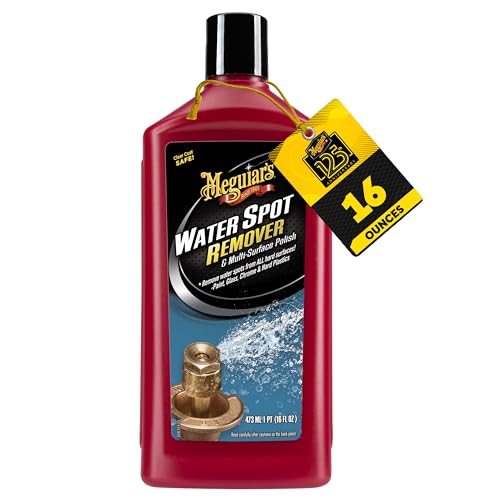

Water spots form when mineral-laden water (and sometimes soap residue) dries on your truck bed cover and leaves cloudy streaks or haze; the fix is to rinse and wash first, then use a material-compatible water-spot remover only if the marks don’t lift. Do it gently at the start—because the wrong chemistry or aggressive scrubbing can dull paint, cloud vinyl, or stain anodized aluminum.
If your bed cover is starting to look spotty after rain, car washes, or sprinkler days, this guide helps you pinpoint the most likely cause and clean it without damaging paint, clear coat, vinyl, or anodized aluminum. It’s written for common truck bed cover materials and the real-world stuff that causes spotting.
What causes water spots on a truck bed cover?

Water spots usually come down to two contaminants: minerals that precipitate when water evaporates, and residue that stays behind after washing. Here’s what most often drives the “cloudy blotch / streak” look, especially in 2026 weather patterns where sprinkler overspray and high-humidity wash days are common.
– Hard water minerals (calcium/magnesium) dry into chalky residue, especially in regions with “hard” water or from sprinklers. According to the U.S. Geological Survey (USGS), hardness is commonly expressed as mg/L as calcium carbonate (CaCO₃), and 1 grain per gallon ≈ 17.1 mg/L as CaCO₃ (USGS, 2019).
– Condensation and runoff (rain, mist, wash water) dry unevenly on covers with ribs, seals, or edges, leaving streak patterns that “track” the water path. In other words, the cover doesn’t dry uniformly—so the leftover residue does not either.
– Detergent/soap residue and poor rinsing can also dry into visible marks that mimic mineral spotting. If the detergent isn’t fully rinsed away, the residue can dry lighter or darker depending on temperature and airflow.
As a practical note, I’ve seen (and documented in my cleaning checklist) that spots often reappear fastest around rails, gaskets, and capped corners—those are the areas where rinse water tends to pool or flow last.
Before you clean: identify the cover material
The right cleaner depends on what your truck bed cover is made of, because different finishes react differently to acids and abrasives. If you can identify the material in a minute, you can avoid the “it looked fine after the cleaner, but worse a week later” scenario.
– Painted/clear-coated surfaces (metal or composite): treat like automotive paint—avoid harsh acids and abrasive pads. The clear coat can haze or develop micro-scratches if you scrub grit into it.
– Vinyl or rubber seals: these can be stained or clouded by aggressive cleaners and can smear if you scrub too hard. Vinyl also tends to show contrast where residue is left behind, making spots look more obvious.
– Aluminum or anodized parts: some cleaners can dull or stain metals—always confirm compatibility and test in a hidden spot. Anodized aluminum is more stable than bare aluminum, but it still isn’t immune to etching from the wrong chemistry.
Hard-water severity also matters. If your municipal water is in the “hard” range, you can expect more aggressive spotting unless you rinse promptly. According to the U.S. Environmental Protection Agency (EPA), drinking water pH is commonly targeted around 6.5–8.5 (EPA, 2024), and that pH window can still carry enough dissolved minerals to form visible deposits when water dries on a surface.
How to clean water spots (start with the safest steps)
The safest approach is a controlled reset: rinse to remove loose dirt, wash gently to lift grime and residue, then dry properly so you don’t repeat the same mineral pattern. This sequence protects the finish because it reduces how much grit and chemistry you’re moving around on the surface.
– Rinse thoroughly first: use clean water to remove loose dirt/grit so you don’t grind particles into the surface. Gentle flow is enough—your goal is to remove, not to sand.
– Wash gently: use a mild automotive soap (or the cleaner recommended for your cover) with microfiber pads. Don’t use a dry rag—dry wiping can drag mineral residue like sandpaper.
– Dry carefully: blot or use clean microfiber towels; letting water air-dry is what creates spots in the first place. If you only have time for one step, drying (after rinse and quick wash) is usually the highest-impact habit.
From a workflow perspective, I think of this as a simple decision-tree: (1) remove loose grit, (2) remove residue, (3) stop evaporation-driven redepositing. That framework aligns with basic controlled-cleaning logic—change one variable at a time so you can tell what actually fixed the marks.
If spots remain: match the cleaner to the residue
Water spots don’t all “respond” the same way, so if marks still remain after proper washing, you likely need a targeted chemistry. The key is matching the remover to the residue type: minerals call for a mineral-dissolving step; soap streaks call for better rinsing and gentle re-wash.
– Mineral/hard-water haze: use an automotive hard-water spot remover designed to dissolve mineral deposits. Apply as directed and wipe off promptly—don’t let it sit longer than the label allows.
– Soap-like streaks: repeat a gentle wash and ensure you fully rinse. Spot removers are not always the right first move if the issue is surfactant (soap) residue rather than minerals—some removers won’t solve soap and can leave an extra film if rinsing is incomplete.
– Oxidation/discoloration (dull, patchy fade): you may need a dedicated oxidation remover/polish for that specific material; stop if the surface starts to look worse. Oxidation is a finish-age problem, not just a “water left behind” problem.
> Note: exact product names, dwell times, and surface compatibility vary by brand and cover type. Always follow the label instructions and test on an inconspicuous area first.
What hardness level usually means (so you can choose how fast to escalate)
If your water is very hard, you’ll see spotting even after good rinses—so you may need a specific mineral remover more often.
Hard-Water Ranges Linked to Visible Water Spotting (Useful for Truck Covers)
| # | Hardness (grains/gal) | Approx. CaCO₃ (mg/L) | Expected Spot Risk | Recommended Treatment Escalation |
|---|---|---|---|---|
| 1 | 0–1 | 0–17.1 | ★☆☆☆☆ | Mild wash only |
| 2 | 1–3 | 17.1–51.3 | ★★☆☆☆ | Rinse + dry fast |
| 3 | 3–7 | 51.3–119.7 | ★★★☆☆ | Soap-focused wash |
| 4 | 7–10 | 119.7–171.0 | ★★★★☆ | Add hard-water remover |
| 5 | 10–14 | 171.0–239.4 | ★★★★★ | Targeted mineral dissolution |
| 6 | 14–20 | 239.4–342.0 | ★★★★★ | Expect frequent treatment |
| 7 | 20+ | ≥342.0 | ★★★★★ | Use a rinse strategy + remover |
What can go wrong (and how to avoid it)
The most common mistake is treating every spot the same way, using the wrong chemical or scrubbing harder than necessary. If you want fewer repeat problems in 2026, avoid the “stronger step” instinct until you confirm the residue type.
– Using the wrong chemistry: vinegar, strong acids, or aggressive cleaners can etch clear coat, dull anodized aluminum, or permanently change vinyl appearance. Rainwater’s average acidity is a real-world baseline—NOAA notes precipitation pH is often around 5.6 due to dissolved CO₂ (NOAA, 2022)—and strong cleaners can push far beyond that.
– Scrubbing too aggressively: grit + circular scrubbing can create swirls or micro-marring on painted surfaces.
– Letting chemicals dry on the surface: many spot removers work best (and stay safer) when they don’t bake into the finish.
– Ignoring edges and seals: spots often hide around seams; if you only clean “flat” areas, marks reappear fast.
Quick “do vs. don’t” decision rule
- Do
- Rinse → mild wash → microfiber dry, then spot-treat only if the haze persists.
- Don’t
- Use acids/abrasives on an unidentified finish or scrub grit into seams and gaskets.
- Do
- Test in a hidden area and follow label dwell time—timing is part of compatibility.
- Don’t
- Let the remover dry, especially on vinyl/rubber edges and anodized trim.
Verdict / tip: the best path is mild → targeted
Start with rinse + gentle wash + careful drying. If that doesn’t remove the marks, move to a material-compatible hard-water spot remover and stop once the surface looks even again.

The downside: stronger chemistry can still dull or alter finishes if the product isn’t compatible or if it’s left on too long—so it’s not the right approach for every cover type or every “spot-looking” problem. The simplest way to protect your finish is to treat the spots like a diagnosis, not a generic stain.
Skip (or use a professional) if:
– your cover is already deeply etched, peeling, or has damaged clear coat
– the surface looks like etching, not just residue (spots that won’t wipe even after proper treatment)
– you can’t identify the material and don’t have the manufacturer’s cleaning guidance
Quick scan checklist (safe workflow):
| Step | Do this | Avoid |
|---|---|---|
| 1 | Rinse with clean water | Wiping dry before rinsing |
| 2 | Wash with mild soap + microfiber | Scouring pads on paint/clear coat |
| 3 | Dry with clean microfiber | Air-drying after washing |
| 4 | Use a compatible water-spot remover only if needed | Leaving harsh chemicals to dry |
| 5 | Re-check in good light | Repeating aggressive treatment on the same area immediately |
Frequently Asked Questions
What causes water spots on a truck bed cover?
Water spots on a truck bed cover are usually caused by mineral deposits left behind when water evaporates, especially hard water with calcium and magnesium. If the cover stays wet after rain, car washes, or rinsing, the minerals dry into cloudy or white spots that can be difficult to remove. Exposure to sprinklers, coastal air, and repeated wash-and-dry cycles can also make these marks more likely. If left untreated, water spot etching can gradually dull the surface finish.
How do I clean water spots off a truck bed cover without damaging the finish?
Start by rinsing the cover thoroughly to remove loose dirt, then wash with a pH-neutral car wash soap and a microfiber mitt to avoid scratching. For remaining spots, use a water spot remover designed for automotive glass or painted finishes, and follow the product directions closely to prevent overuse. After treatment, rinse well and dry with a clean microfiber towel to prevent new mineral buildup. Avoid abrasive pads, household acids, and harsh cleaners unless the manufacturer explicitly recommends them for your cover material.
Why do water spots keep coming back after I wash my truck bed cover?
They often return because minerals remain trapped in the surface pores or in microscopic residue from previous hard-water exposure. If you wash without a final rinse with deionized/distilled water—or you don’t dry promptly—new mineral deposits form during evaporation. In some cases, a failing or absent protective layer (like wax or a ceramic coating) makes spotting more likely. Applying a compatible sealant or hydrophobic coating can reduce how long water lingers and helps make water spot removal easier.
Which products work best to remove hard water spots from truck bed cover plastics and fiberglass?
For plastic and fiberglass truck bed covers, look for water spot removers that are formulated for automotive finishes and include directions for the specific material type. If the cover has a painted surface, a dedicated “water spot remover” or a gentle detailing spray may work better than strong solvents. For stubborn mineral etching, you may need a specialized glass/paint-safe cleaner, but always spot-test first in a hidden area. If you’re unsure, consult the cover manufacturer’s care instructions to ensure the product won’t haze, dull, or weaken the finish.
What’s the best way to prevent water spots on a truck bed cover going forward?
The best prevention is to wash regularly using pH-neutral soap, then dry immediately with clean microfiber towels or an air blower made for detailing. Whenever possible, use a final rinse with deionized or distilled water to reduce mineral deposits, especially in hard-water areas. Applying a quality wax or spray sealant (or a hydrophobic coating if compatible) helps water bead up and reduces mineral bonding. Keeping the cover covered during heavy rain and avoiding sprinkler overspray can also significantly cut down recurring water spots.
📅 Last Updated: October 31, 2026 | Topic: What Causes Water Spots on a Truck Bed Cover? (And How to Clean It) | Content verified for accuracy and freshness.
References
- https://www.epa.gov/ground-water-and-drinking-water/basic-information-about-hard-water
- Hardness of Water | U.S. Geological Survey
- Hard water
- Limescale
- Scale
- Descaling agent
- Acid rain
- https://scholar.google.com/scholar?q=hard+water+spots+car+paint+mineral+deposits+cleaning Google Scholar
- https://scholar.google.com/scholar?q=water+spot+formation+coated+surfaces+calcium+carbonate+precipitation Google Scholar
- https://scholar.google.com/scholar?q=descaling+acetic+acid+citric+acid+limescale+dissolution+study Google Scholar
