Natural Cleaning Hacks for Your Window
You can easily get streak-free, sparkling windows using natural cleaners like a vinegar and water mix or a baking soda paste for tough grime. Lemon juice cuts grease, while cornstarch adds extra gloss. For quick drying, try a rubbing alcohol solution. Using old newspapers to wipe leaves no lint behind, and adding a few drops of essential oils freshens the air while boosting cleaning power. Keep exploring, and you’ll uncover even more eco-friendly tips.
Using Vinegar and Water for Streak-Free Shine
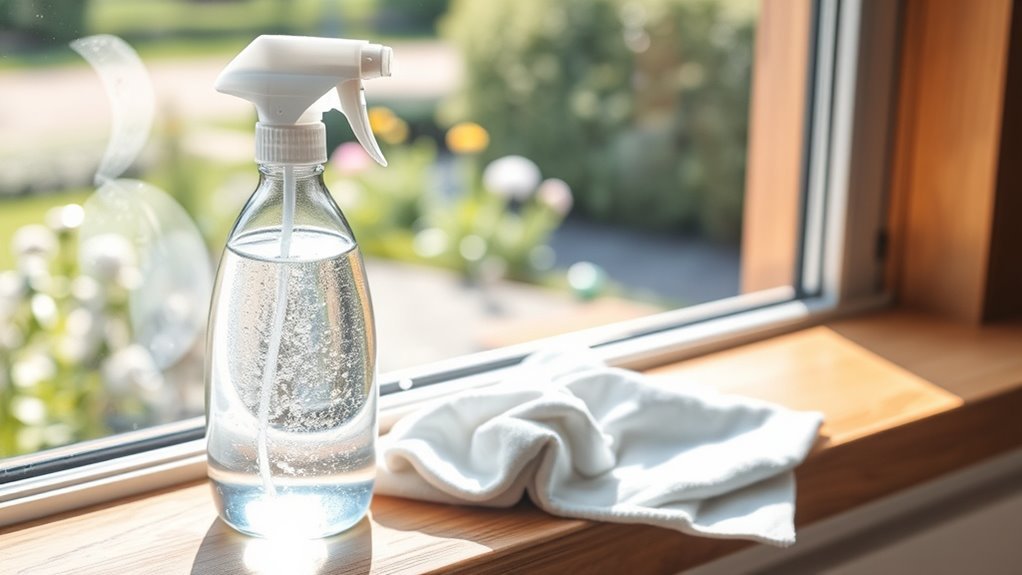
One simple way to get your windows sparkling without streaks is by using a mixture of vinegar and water. You’ll love the vinegar benefits—it naturally cuts through grime and leaves glass crystal clear without harsh chemicals. To get it right, mix one part vinegar to two parts water in a spray bottle. This water ratio balances cleaning power and ease of rinsing, so you won’t end up with streaks or residue. Spray the solution on your windows, then wipe with a microfiber cloth or newspaper for a flawless finish. Embracing this natural method gives you freedom from toxic cleaners and lets you maintain your home in a way that’s both effective and eco-friendly. It’s simple, affordable, and puts you in control of your cleaning routine.
Baking Soda Paste for Tough Grime
If you’re dealing with stubborn grime on your windows, baking soda paste is a great natural solution. Just mix baking soda with a little water until you get a thick paste. Then, apply it directly to the tough spots and let it sit before scrubbing gently.
Making Baking Soda Paste
Mixing up a baking soda paste is a simple way to tackle tough grime on your windows. You’ll appreciate how baking soda’s natural cleaning properties make this paste both effective and gentle. Just combine baking soda with water to create a thick paste that clings to surfaces, ready to break down stubborn dirt.
| Ingredient | Amount | Purpose |
|---|---|---|
| Baking soda | 3 tablespoons | Abrasive cleaner |
| Water | 1 tablespoon | Binder to form paste |
| Optional | Few drops lemon juice | Boosts cleaning power |
This mix lets you clean freely without harsh chemicals, giving you control over a sparkling view outside your window.
Applying Paste on Grime
Once your baking soda paste is ready, it’s time to apply it directly onto the stubborn grime on your windows. To maximize grime removal, make sure your paste consistency is just right—thick enough to stick but spreadable. Here’s how you can do it:
- Use a clean cloth or sponge to scoop up some paste.
- Gently press and spread the paste over the grimy areas, covering them completely.
- Let the paste sit for 10-15 minutes to loosen the grime without drying out.
This simple step frees you from harsh chemicals and lets you reclaim your window’s sparkle naturally. Afterward, just wipe away the paste with a damp cloth, and watch the grime disappear, revealing a crystal-clear view.
Lemon Juice as a Natural Degreaser
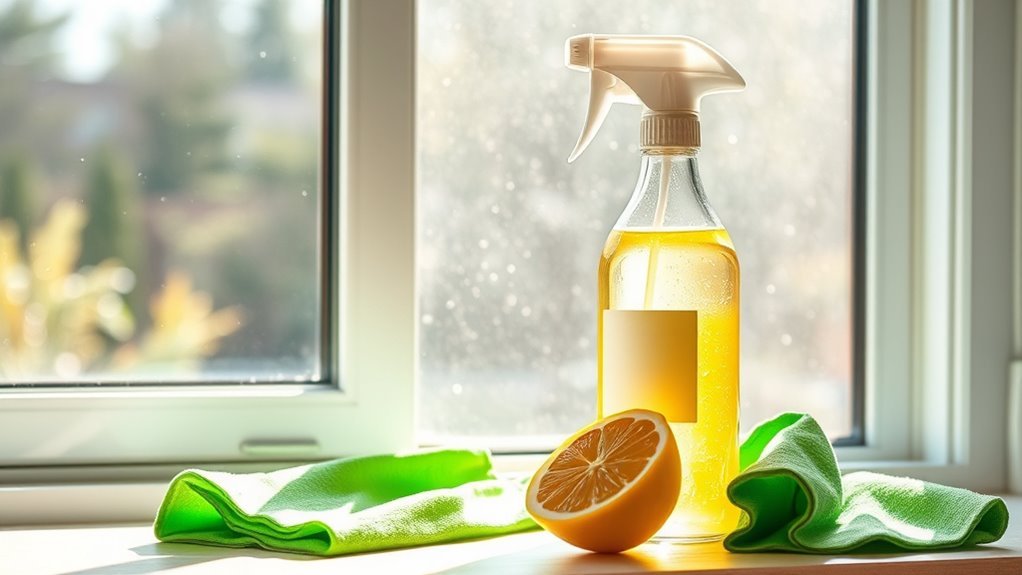
You’ll find lemon juice is great at cutting through grease on your windows without harsh chemicals. Just apply it with a cloth, let it sit briefly, then wipe clean for sparkling results. Plus, it’s a natural option that’s safe and eco-friendly compared to conventional cleaners.
Lemon’s Grease-Breaking Power
Although lemon juice might seem simple, it’s incredibly effective at cutting through grease on your windows. When you use lemon, you’re tapping into nature’s powerful degreaser with a fresh citrus aroma that leaves your space feeling clean and free. Here’s why lemon juice works wonders:
- The natural acidity breaks down oily residues effortlessly.
- Lemon zest adds a mild abrasive texture, enhancing scrubbing power without scratching.
- The bright citrus aroma naturally freshens your environment, eliminating chemical smells.
Application Tips for Windows
Using lemon juice effectively on your windows means knowing the right way to apply it for maximum grease-cutting power. For high-quality window care and glass maintenance, you want to follow these simple steps that free you from stubborn grime without harsh chemicals.
| Step | Tip |
|---|---|
| Preparation | Mix lemon juice with water (1:2) |
| Application | Use a spray bottle for even coverage |
| Cleaning | Wipe with a microfiber cloth |
| Finishing Touch | Buff dry with a lint-free cloth |
Spraying lemon juice diluted keeps your glass spotless and shiny while protecting your freedom from toxic cleaners. Apply gently but thoroughly, focusing on greasy spots, then wipe away residue. With this simple method, you gain clear, streak-free windows while embracing natural glass maintenance.
Benefits Over Chemical Cleaners
While chemical cleaners might promise quick results, lemon juice offers a safer and more natural way to cut through grease on your windows. Choosing lemon juice means embracing eco friendly alternatives that protect both your space and the planet. You’ll enjoy:
- Health benefits — avoiding harsh chemicals reduces respiratory irritation and skin contact risks.
- Environmental freedom — lemon juice biodegrades quickly, leaving no toxic residue behind.
- Cost-effectiveness — it’s affordable and readily available, freeing you from expensive, synthetic products.
Cornstarch Solution for Extra Gloss
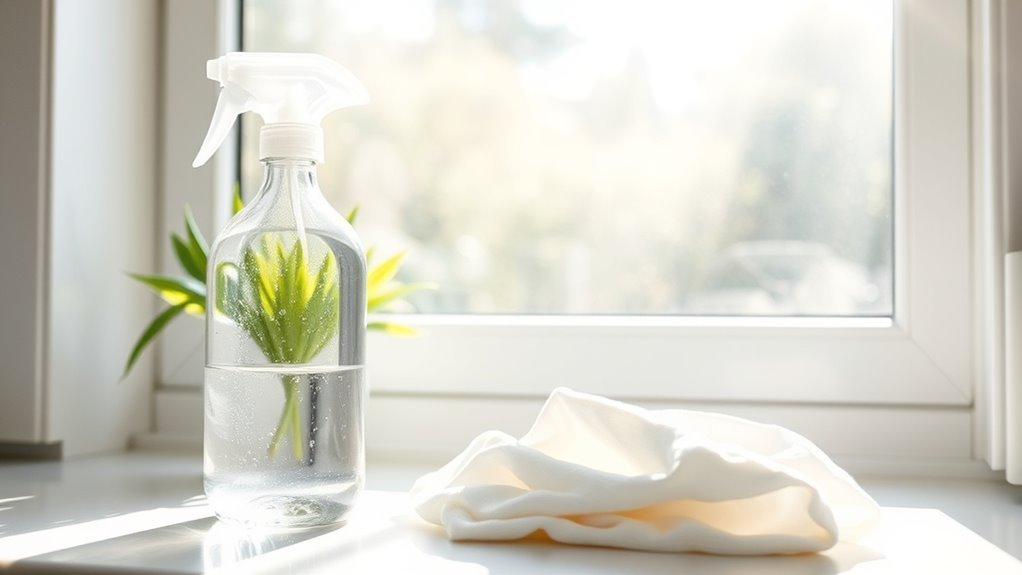
If you want your windows to shine with an extra glossy finish, a simple cornstarch solution can do the trick. Cornstarch benefits go beyond cooking—its natural properties help lift dirt and add a brilliant shine without harsh chemicals. To create this solution, mix one tablespoon of cornstarch with two cups of warm water until fully dissolved. For an even better effect, add a splash of white vinegar to cut through grime. When you apply this mix, use a soft cloth or spray bottle, wiping your windows in circular motions. This cornstarch application not only cleans but leaves a protective film that repels dust longer. It’s a freeing way to maintain sparkling windows naturally, giving you control over what touches your home.
Rubbing Alcohol for Quick Drying
After giving your windows a glossy clean with cornstarch, you might want a quicker way to speed up drying and prevent streaks. That’s where rubbing alcohol comes in. Its quick evaporation is perfect for freedom-seeking cleaners who want spotless windows fast. Here’s how to use it effectively:
- Mix a solution of equal parts rubbing alcohol and water in a spray bottle.
- Spray your windows lightly and use smooth, circular rubbing techniques with a microfiber cloth.
- Let the alcohol solution evaporate naturally—no need to wipe dry, which saves time and avoids streaks.
This simple hack cuts down waiting time and leaves your windows clear and streak-free, giving you more freedom to enjoy the view without hassle.
Newspaper as an Eco-Friendly Wiping Tool
Anyone looking for an eco-friendly and effective way to wipe down windows should consider using old newspapers. Not only do they provide streak-free shine, but they also reduce waste by repurposing what you already have. The newspaper benefits go beyond just cleaning—they’re a smart eco friendly alternative to paper towels or synthetic cloths that contribute to landfill. When you use newspapers, you embrace a simple, sustainable choice that aligns with your desire for freedom from harmful chemicals and disposable products. Plus, the ink on newspapers helps lift grime without leaving residue, making your windows sparkle naturally. So next time you’re ready to clean, grab that stack of old papers and enjoy a green, budget-friendly method that respects both your home and the planet.
Essential Oils for a Fresh Scent and Cleaning Boost
Adding essential oils to your window-cleaning routine not only freshens the air but also boosts the cleaning power of your solutions. You can create your own essential oil blends to match your mood and enhance effectiveness. Here are three scent combinations to try:
- Lemon, eucalyptus, and peppermint – invigorating and great for cutting grease.
- Lavender, tea tree, and rosemary – calming with antibacterial benefits.
- Orange, cedarwood, and frankincense – warm and grounding, perfect for cozy vibes.
Just add a few drops to your natural cleaning spray for a burst of freshness and extra cleaning punch. These essential oil blends let you break free from harsh chemicals while enjoying a personalized scent experience. Your windows will sparkle, and your space will feel alive with natural energy.
Frequently Asked Questions
Can Natural Cleaning Hacks Be Used on Tinted Windows?
Imagine using a quill to clean your car’s tinted windows — sounds odd, right? When it comes to tinted window cleaning, you want to avoid harsh chemicals that can damage the film. You can totally use natural tint care methods like diluted vinegar or mild soap with water to keep your freedom from expensive replacements. Just steer clear of abrasive tools, and you’ll keep your tint looking fresh without risking damage.
How Often Should I Clean My Windows Naturally?
You should follow frequency guidelines based on your environment—usually, cleaning every 1 to 3 months works well. Seasonal cleaning is a great way to keep your windows sparkling without feeling tied down. For instance, a thorough clean in spring and fall helps remove grime and pollen buildup. But if you love that fresh, clear view, feel free to clean more often. It’s all about what fits your lifestyle and keeps you feeling free.
Are Natural Cleaning Methods Safe for Window Frames?
You’ll find that natural cleaning methods are generally safe for most window frame types, especially when you use eco friendly materials like vinegar, baking soda, or lemon juice. These options are gentle yet effective, so they won’t damage wood, vinyl, or aluminum frames. Just be sure to test a small area first to avoid any surprises. This way, you maintain your freedom to clean confidently without harsh chemicals ruining your frames.
Can These Hacks Remove Hard Water Stains From Windows?
You bet you can tackle hard water stains with natural stain removal methods! These hacks often use ingredients like vinegar or lemon juice, which break down mineral deposits without harsh chemicals. You’ll feel free to clean without worrying about toxins, and your windows will shine again. Just apply the solution, let it sit, then scrub gently. It’s a simple, eco-friendly way to reclaim your clear view and enjoy freedom from stubborn hard water buildup.
What’S the Best Way to Clean Windows on a Cloudy Day?
You’d think cleaning windows on a cloudy day is like trying to catch a shadow—impossible! But actually, the cloudy benefits are huge: no harsh sunlight means no streaks, so your window visibility stays crystal clear. You can freely scrub away without rushing, enjoying the freedom to perfect every inch. So grab your favorite cleaner and a microfiber cloth, and let the gentle light work in your favor for streak-free, sparkling windows!