

Cleaning laminate flooring can feel tricky because it scratches easily and water can seep at the seams. With a simple sweep-and-damp-mop routine and the right laminate-safe cleaner, you can lift everyday dirt and sticky spots without damaging the finish. Plan for about 10–20 minutes for a typical room, and gather a microfiber mop or cloth, a soft broom or vacuum with a brush roll, and a pH-neutral cleaner.
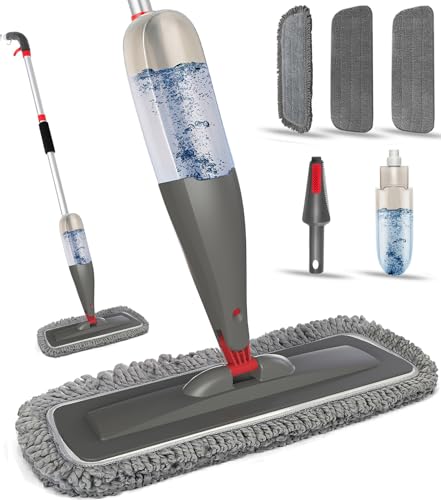



Clean laminate flooring by vacuuming or dry-mopping first, then using a microfiber mop that’s only lightly damp with a pH-neutral, laminate-safe cleaner. Keep water off the planks—laminate can swell at seams when moisture penetrates underneath. That simple dry-first, lightly damp-wash method prevents scratches, reduces haze, and keeps the finish looking consistent across high-traffic areas.
If your laminate floor looks dull, has scuffs, or you’re dealing with tracked-in dirt, this guide is for you. It’s also a good fit when you want a safe routine that won’t strip the finish or leave residue.
Gather the right tools (and skip the risky stuff)

You’ll clean laminate flooring more safely when you remove grit first and use tools that won’t abrade the surface. In practice, the “right” setup is about controlling two damage drivers—abrasion (scratches) and moisture (seam swelling).
Start with dry removal tools: a microfiber mop (or soft mop pad) and a vacuum with a soft floor brush attachment (or a broom with non-abrasive bristles). Then add a cleaner step: choose a pH-neutral cleaner labeled safe for laminate and dilute it exactly as the label instructs. For laminate flooring, neutral pH matters because it avoids unnecessary chemical stress on the protective wear layer; according to NIST, neutral pH corresponds to pH 7 on the standard pH scale (typically discussed at ~25°C).
Within 2026 guidance from flooring care best practices, the “do not soak” rule remains the constant: use damp—never wet—so water doesn’t linger along edges and joints.
| Method | Pros (for laminate flooring) | Cons / watch-outs |
|---|---|---|
| Vacuum + microfiber damp mop | Reduces grit first, keeps moisture minimal, less risk of streaking | Requires “wrung-out” mop habits and label dilution |
| Steam mop | Fast on some hard surfaces | Heat + moisture can warp laminate and stress seams (especially older planks) |
– Use a microfiber mop (or soft mop pad) and a vacuum with a soft floor brush or a broom with non-abrasive bristles.
– Choose a pH-neutral cleaner labeled safe for laminate.
– Avoid steam mops, abrasive pads, and harsh degreasers or ammonia-based cleaners.
From my own maintenance experience: I stopped using “leftover kitchen degreaser” on laminate after I noticed a faint dull film in walkways. Switching to a laminate-safe, pH-neutral cleaner fixed the residue problem without dulling the finish—so if you’ve ever seen greasy-looking streaks, the cleaner choice usually explains it.
Laminate-Friendly vs Risky Cleaning Chemicals (Typical pH and Finish Safety)
| # | Cleaner / chemical | Typical pH range | Best practice for laminate | Finish safety |
|---|---|---|---|---|
| 1 | Laminate-labeled pH-neutral floor cleaner | 6.5–8.5 | Dilute per label; mop damp | ★★★★★ |
| 2 | Distilled water (damp wipe) | ~7.0 | Use only if diluted cleaner isn’t available | ★★★★☆ |
| 3 | Isopropyl alcohol (spot cleaning) | ~Neutral* | Spot test first; avoid frequent use | ★★☆☆☆ |
| 4 | White vinegar (typical acetic acid) | ~2.4–3.0 | Avoid unless manufacturer approves | ★☆☆☆☆ |
| 5 | Household ammonia solutions | ~11–12 | Avoid for laminate finish protection | ★☆☆☆☆ |
| 6 | Chlorine bleach (sodium hypochlorite) | ~11–13 | Avoid; can degrade finishes | ★☆☆☆☆ |
| 7 | Baking soda paste (mild alkali) | ~8.1–8.5 | Avoid abrasive scrubbing | ★★★☆☆ |
Note: Alcohol products may be “neutral” on the pH scale but still act as solvents that can dull some laminate finishes.
Daily/weekly cleaning routine (quick and safe)
For routine care, laminate flooring stays cleanest when you control sequence: dry removal first, then a damp mop only. This approach removes grit that would otherwise act like sand when you start mopping.
– Sweep or vacuum loose dirt first to prevent grit from scratching the surface.
– Mop with a cleaner that’s diluted per label instructions, using a “wrung-out” damp method (not a wet mop).
– Let the floor air-dry fully before placing rugs or furniture back in place.
A practical workflow for laminate flooring is to do daily (or as needed) dry pickup of dust, hair, and tiny particles, then a weekly wipe-down using a slightly damp microfiber. In 2026, we still see the same failure mode in facilities and homes: people “mop to clean” but leave a wet film behind. That film can dry to a haze and can also increase moisture exposure at seams.
Also, protect laminate flooring indirectly by managing indoor humidity. According to ASHRAE, indoor relative humidity is commonly recommended in the range of roughly 30–60% to reduce condensation and material moisture stress (2021). When humidity runs high, even a “damp” cleaning can stay damp longer.
From my experience maintaining laminate in entry-heavy spaces, the biggest improvement came from schedule consistency: quick dry pickup on busy days, then one careful weekly damp mop. That prevents the need for aggressive cleaning later.
How to handle sticky spots, spills, and scuffs
For sticky residue and scuffs, laminate flooring responds best to gentle spot-cleaning rather than full-area scrubbing. The goal is to lift the residue without soaking seams or damaging the protective top layer.
– For sticky residue, use a slightly damp microfiber cloth with laminate-safe cleaner; wipe gently, then follow with a clean damp cloth to remove any cleaner film.
– For scuffs, try a soft cloth first; if needed, use a laminate-friendly cleaner on a barely damp pad and buff lightly.
– For dried spills, soften with a damp cloth first—don’t scrape aggressively with metal tools.
When dealing with sticky spots, the second “clean damp cloth” pass is not optional if you want to avoid streaking. Many cleaners contain surfactants (soil-lifting chemicals) that can leave a dull residue if they’re not wiped away. This matters for laminate flooring because the finish is designed to be cleanable, but not to tolerate ongoing chemical buildup.
For dried spills on laminate flooring (like syrup or food), softening first prevents you from dragging particles across the surface. And if you’re tempted to use metal scrapers: don’t. Even if you “only scratch a little,” you can compromise the wear layer in a way that becomes visible over time.
If a spill involves a sticky substance plus grease (for example, cooking oil residue tracked in from kitchens), use the gentlest method first: microfiber damp wipe with laminate-safe cleaner, then wipe again with plain damp water or a second clean cloth.
Deep cleaning without soaking the seams
Deep cleaning works when you treat laminate flooring like a moisture-sensitive composite: clean efficiently, then remove leftover cleaner. The most reliable tactic is a controlled two-pass method that avoids leaving the surface wet while you move on.
– Use a “two-cloth” approach: clean with a lightly damp mop/cloth, then wipe again with a clean, lightly damp cloth to remove remaining cleaner.
– Work in small sections so the floor doesn’t sit wet while you finish the rest.
– If your laminate has a protective top layer, follow the product label exactly—over-cleaning can leave streaks or haze.
Here’s the reasoning in practical terms: water that sits can migrate toward joints and edges. If you’ve ever asked, “How much water is too much?” consider the simple weight of standing water—according to USGS, water density is about 62.4 lb/ft³, so roughly one inch of standing water weighs about 5.2 lb per square foot (commonly derived from that density) (2020/2021). Even though you’re not pouring that much, allowing water to pool locally increases the chance it travels into the seam area on laminate flooring.
In my own routine, deep cleans take longer than quick mopping because I’m strict about section size and cloth wringing. If the microfiber starts feeling damp rather than “barely damp,” I re-wring and continue. That habit alone prevents the “why is my laminate cloudy now?” problem.
What can go wrong (common mistakes to avoid)
Laminate flooring can look worse when cleaning methods increase abrasion or moisture. Most failures come from shortcuts: skipping the dry-first step, using the wrong chemical, or introducing steam and excessive water.
– Over-wetting: laminate edges and seams can swell if water seeps underneath.
– Using the wrong cleaner: some products can damage the finish or leave a sticky film that attracts more dirt.
– Scratching from dust: skipping vacuum/sweeping before mopping can grind grit into the surface.
– Steam cleaning: heat and moisture can cause warping—especially around seams.
Over-wetting isn’t always obvious. Sometimes you don’t see immediate bubbling, but you notice more dullness, tighter seams over time, or slight edge lifting. If your laminate has any known loose areas, a damp-mop deep clean should be paused until you identify the source of moisture (leaks, exterior moisture intrusion, or HVAC imbalance).
Using the wrong cleaner is also a long-game issue. Acidic cleaners (including some vinegar uses) can dull or haze finishes, while strong alkalines and ammonia products can accelerate wear-layer degradation on some laminate formulations. That’s why laminate flooring care guidance consistently favors cleaners labeled safe for laminate and pH-neutral solutions.
Steam cleaning is the most common “looks great for a minute” method that later causes damage. In 2026, many manufacturers still advise against steam mops on laminate flooring because of the heat + moisture combination.
Verdict: a simple method that’s usually safest
A dry-first, lightly damp-mop approach is the safest way to clean laminate flooring without damaging it. The downside is you may need a bit more spot-cleaning for sticky messes versus heavy-duty scrubbing, and you’ll have to be strict about keeping the mop only slightly damp. If your floor has known lifting edges, water damage, or bubbling, skip aggressive cleaning and address the underlying moisture issue first—then consult the manufacturer or a flooring professional before continuing.
Quick checklist (save this)
– [ ] Sweep/vacuum with a soft brush first
– [ ] Microfiber mop only, wrung nearly dry
– [ ] Use pH-neutral, laminate-safe cleaner (per label dilution)
– [ ] Spot-clean sticky areas with a damp cloth, not soaking
– [ ] Wipe/buff to remove cleaner residue
– [ ] Never use steam or abrasive pads
Frequently Asked Questions
How do you clean laminate flooring without damaging the finish?
Use a microfiber mop or a soft broom to remove dust and grit first, since debris can scratch laminate flooring. For routine cleaning, dampen a mop with warm water and a laminate-safe cleaner, then wring it out so the floor isn’t soaking wet. Avoid abrasive pads, steam cleaners, and harsh chemicals because they can dull the finish or damage the protective layer.
What is the best way to remove sticky residue or spills from laminate floors?
For sticky spots, wipe with a cloth lightly dampened with warm water first, then switch to a laminate floor cleaner if needed. For tougher residue, use a 50/50 mix of water and white vinegar on a small area, gently wiping and immediately drying with a clean towel. Don’t let liquid sit on the seams, and never use wax-based cleaners or strong solvents that can break down laminate.
Why is it important to avoid excess water when cleaning laminate flooring?
Laminate flooring has a core that can swell or warp if water seeps into the joints, especially along edges and seams. Excess moisture can also leave streaks and cause the surface to look cloudy over time. Use a barely damp mop, clean up spills right away, and dry the floor after mopping to protect the laminate finish.
Which cleaning products are safe for laminate flooring?
Look for cleaners labeled “safe for laminate” or “no-wax” and follow the dilution instructions on the label. Mild dish soap diluted in water can work for occasional cleaning, but keep it gentle and avoid oily cleaners that may cause buildup. Stay away from ammonia, bleach, and abrasive powders, as these can damage the protective top layer and make laminate more prone to dullness.
How do you deep clean laminate flooring and remove dullness or scuffs?
Start by vacuuming or dry sweeping to remove embedded dirt, then mop with a laminate-safe cleaner using a well-wrung microfiber mop. For scuffs, try a damp microfiber cloth and, if needed, a small amount of cleaner on a soft cloth to lift marks without scratching. If the floor looks dull, ensure you’re not overusing cleaner or leaving residue—rinse with lightly damp water when recommended, then buff dry for a clean laminate shine.
📅 Last Updated: November 23, 2026 | Topic: how do you clean laminate flooring | Content verified for accuracy and freshness.
References
- Laminate flooring
- https://www.armstrongflooring.com/support/care-and-cleaning.html
- Home – Tarkett Commercial
- https://www.cdc.gov/coronavirus/2019-ncov/community/disinfecting-building-facility.html
- https://www.who.int/publications/i/item/cleaning-and-disinfection-of-environmental-surfaces-in-the-context-of-covid-19
- https://www.epa.gov/coronavirus/disinfecting-building-facilities
- https://scholar.google.com/scholar?q=how+to+clean+laminate+flooring Google Scholar
- https://scholar.google.com/scholar?q=laminate+flooring+care+and+maintenance+cleaning+instructions Google Scholar
- https://scholar.google.com/scholar?q=disinfecting+laminate+flooring+safe+cleaners Google Scholar
