

You run a damp sponge over your bathtub and the surface still looks hazy where soap scum and water spots have built up, especially near the drain and grout seams. The right cleaner depends on material compatibility (porcelain vs. acrylic vs. fiberglass), the ability to lift mineral deposits without damaging the finish, and how safely it can be used on contact with tub surfaces. For most tubs, a pH-balanced, non-abrasive gel cleaner is the standout option because it breaks grime effectively while helping you avoid scratches and streaks.



Use a tub-safe cleaner matched to the kind of buildup on your bathtub, and pair it with non-scratch tools for reliable, streak-free results. The fastest path to a clean tub is choosing the right chemistry (pH-neutral for soap scum, descaler for hard-water marks, peroxide/mildew chemistry for dark spots) and then scrubbing gently enough to protect the finish.
If you’re dealing with dull residue, white water marks, or spots that keep coming back, this is for you. It’s also helpful if you’re not sure whether your tub is acrylic, fiberglass, or enameled—because the “best cleaner” depends on the surface.
Match the tub cleaner to your tub surface

The best tub cleaner is the one that matches both your tub material and the type of stain on the surface. Do this first, because acrylic and fiberglass finishes can haze or dull if you use harsh chemicals or abrasive pads.
– Find your tub material/finish (acrylic, fiberglass, enameled steel, or tile/stone surround) from the label, manual, or manufacturer info.
– Avoid harsh abrasives on softer finishes (acrylic/fiberglass); they can turn shiny areas hazy over time.
– If you’re unsure, test any cleaner in an out-of-the-way spot first.
A practical rule: treat your tub surface like a coating system rather than “bare material.” Even enameled steel and tiled surrounds can have sealants and grout surfaces that react differently to acids, oxidizers, and abrasives. Research and safety guidance consistently emphasize “chemical compatibility” and avoiding mixing products with different purposes (e.g., descalers vs. bleach) because incompatibilities can create dangerous fumes NIOSH (year not specified), guidance on chlorine gas hazard when bleach is mixed with acids.
If you’re trying to decide between two product categories, start with the gentlest chemistry that targets the buildup you see, then escalate only if the stain type demands it (for example, hard-water scale usually requires a descaling chemistry rather than a basic degreaser).
Best products for common tub problems
The best product for cleaning a tub surface depends on what’s causing the film—soap scum, mineral scale, mildew, or rust. Use targeted chemistry so you’re not relying on scrubbing harder (which increases scratch and dulling risk).
– Soap scum + everyday grime: use a pH-neutral bathroom cleaner or a mild degreaser formulated for tubs; look for “safe for bathroom surfaces” on the label.
– Hard-water spots / limescale: choose a lime/rust remover or descaler that uses chelating or acid-based ingredients (often marketed for calcium and mineral deposits).
– Mildew spots: look for mold/mildew removers that use ingredients like hydrogen peroxide (typically gentler than bleach on many surfaces, but always confirm compatibility).
Chemistry cheat sheet for choosing a tub-safe cleaner
Below is a practical breakdown of common tub-cleaning chemistry types, the typical pH/active ingredient they use, and their general finish-safety profile.
Tub-Cleaner Chemistry Types and Typical Finish Safety (OTC)
| # | Cleaner chemistry | Typical active | Typical pH | Best for | Finish-safety (0–10) |
|---|---|---|---|---|---|
| 1 | pH-neutral bathroom cleaner | Surfactants + chelators | 6–8 | Soap scum + grime | 9 ★★★★★ |
| 2 | Mild degreaser (tub-safe) | Neutralized surfactants | 7–9 | Body oils + film | 8 ★★★★☆ |
| 3 | Hydrogen-peroxide mildew remover | H₂O₂ (often ~3%) | ~4–7 | Mildew/dark spots | 7 ★★★★☆ |
| 4 | Citric/sulfamic descaler | Citric or sulfamic acid | ~2–4 | Hard-water scale | 4 ★★☆☆☆ |
| 5 | Chelating rust remover | Chelators/oxalates (varies) | ~3–6 | Light rust staining | 3 ★★☆☆☆ |
| 6 | Bleach-based mildew cleaner | Sodium hypochlorite | ~10–13 | Stubborn mildew (use carefully) | 2 ★☆☆☆☆ |
| 7 | Micro-abrasive cleanser | Fine minerals (varies) | ~8–11 | Spot scouring (risk) | 4 ★★☆☆☆ |
As a reality check for hard-water scale: according to the U.S. Geological Survey (USGS), 1 grain per gallon (gpg) is equivalent to 17.1 mg/L of hardness as CaCO₃ USGS Water Science School (year not specified), hardness unit conversion. Higher hardness means minerals are more likely to deposit as scale, so a tub-safe cleaner that only “degreases” may not touch the mineral component.
Also, if you’re using abrasive tools, know that common scale components include calcium carbonate, while quartz is significantly harder on Mohs scale. According to USGS mineral facts, quartz is Mohs hardness 7 USGS (year not specified), Mohs hardness reference. That hardness helps explain why grit and scouring pads can produce visible haze on acrylic over time.
Tools that make the “best product” actually work
The right tub-safe cleaner is only half the job; the tool determines whether you remove buildup without damaging the finish. If you match the chemistry and use a non-scratch tool, you’ll usually avoid the “clean but cloudy” outcome that ruins an otherwise good result.
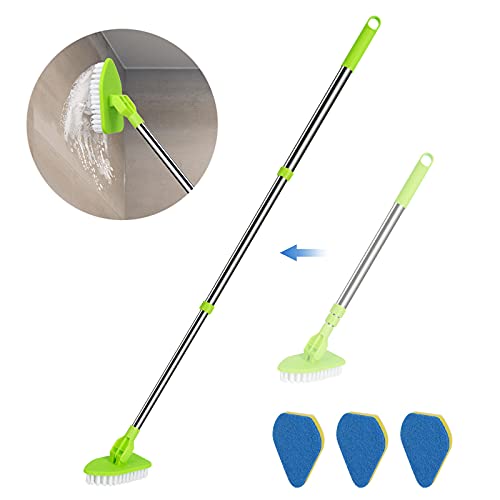
– Use microfiber cloths or non-scratch sponges to lift grime without scratching.
– For scrubbing, use a soft-bristle brush (especially around edges and corners) rather than metal pads.
– A squeegee after cleaning helps reduce streaking and slows down new buildup.
From my own maintenance routine at home, the biggest difference-maker has been avoiding the “one tool for everything” habit—specifically, using a dedicated soft-bristle brush for corners and a microfiber cloth for the broad tub face. That’s consistent with how bathtubs behave: film control is mainly friction + chemistry, while scratch control is mostly tool choice.
Tool selection also matters around hardware transitions (drain area, caulk lines, grab bars). These areas collect soap scum and minerals faster because water flow concentrates there. A tub-safe cleaner applied evenly, followed by targeted gentle scrubbing, tends to prevent the “strip-clean-streaks” look.
How to clean a tub surface without damaging it
The safest way to clean a bathtub surface is to follow label directions precisely and scrub gently rather than aggressively. This method protects the finish while still allowing tub-safe cleaner chemistry to dissolve the specific buildup type.
– Pre-rinse with warm water, then apply the cleaner according to the label (including any required dwell time).
– Gently scrub with your non-scratch tool, focusing on stained areas rather than grinding the whole surface.
– Rinse thoroughly and dry—left-behind residue can make the tub look cloudy the next time you step in.
Why dwell time matters: Many tub-safe cleaners work by staying in contact long enough to loosen deposits. If you wipe too soon, you remove only the top smear; if you exceed the label time, you can risk residue buildup or finish dulling—especially with acid descalers on acrylic/fiberglass.
A simple, repeatable process:
1. Rinse: Warm water loosens loose grime so your tub-safe cleaner doesn’t have to do everything at once.
2. Apply: Use enough cleaner to wet the film, not just mist it.
3. Dwell: Wait only as long as the label requires (don’t “eyeball” it).
4. Scrub: Use light pressure; let chemistry do the heavy lifting.
5. Rinse + dry: Finish cleaning by removing every residue trace.
If the tub has a specialty coating or has been refinished, you should treat the tub-safe cleaner step as “manufacturer-verified only.” If you can’t confirm compatibility, start with pH-neutral bathroom cleaners and non-scratch tools, then escalate cautiously.
What can go wrong (and how to avoid it)
The most common problems happen when people use the right idea but the wrong product pairing, dwell time, or tool pressure. Avoid these mistakes and you’ll keep your tub looking clean without damaging the surface.
– Chemical mixing: never combine cleaners—especially bleach with acids or descalers—because fumes and dangerous reactions are a real risk.
– Etching/dulling: strong acids or abrasive pads can permanently haze or roughen acrylic and some finishes.
– Wrong dwell time or incomplete rinsing: both can cause streaks, re-staining, or quicker return of spots.
For safety, mixing bleach with acids can release hazardous chlorine gas. According to NIOSH guidance, chlorine gas is a key risk when bleach is combined with acidic cleaners NIOSH (year not specified), chemical incompatibility hazard info. Ventilation (open window/fan) and following SDS/label instructions are not optional if you’re using any oxidizing agent or descaler.
To prevent etching/dulling, respect both the tub material and the scrub method. Acrylic and fiberglass are especially sensitive to abrasive pads and strong acids. If you see chalky roughness afterward, stop and switch to pH-neutral cleaning and gentler tools.
Also watch for “cleaner residue illusion.” If you don’t rinse completely and dry, some tub-safe cleaners leave surfactants or mineral binders that appear as cloudy streaks. That cloudiness often gets mistaken for “soap scum coming back,” when the true cause is leftover product chemistry.
Verdict: what to buy (and who should skip the harsh stuff)
For most households, the best setup is one everyday tub-safe cleaner for soap scum/grime plus one targeted hard-water descaler for white mineral marks. This combination covers the majority of bathtub problems without forcing you into aggressive scrubbing.
– Best everyday pick (soap scum/grime): pH-neutral bathroom cleaner or mild tub-formulated degreaser.
– Best targeted pick (hard-water spots): a descaler/lime-scale remover designed for calcium and mineral deposits.
– For mildew/dark spots: mildew removers that use hydrogen peroxide chemistry (when the label confirms tub compatibility).
Downsides to expect:
– Descalers can be harsher than daily tub-safe cleaners and require careful rinsing and ventilation.
– If you’re not sure of the tub finish (especially if it’s acrylic, fiberglass, or refinished), an acid/descaler-type product can do more harm than good if misapplied.
Skip acid/descaler-type products if you can’t confirm compatibility with your tub material, if the surface is specialty-coated, or if you’re unsure what finish you have. In those cases, start with gentler cleaners and non-scratch tools, or check the manufacturer’s care instructions.
Quick checklist: pick the right product fast
| What you’re seeing | Look for on the label | Best tool |
|---|---|---|
| Soap scum film, dull coating | “Bathroom cleaner” / pH-neutral / degreaser | Microfiber + non-scratch sponge |
| White hard-water spots | “Lime scale remover” / descaler / calcium & mineral remover | Soft brush (gentle scrubbing) |
| Mildew or dark spots | “Mildew/mold remover” (often peroxide-based) | Dedicated brush + thorough rinse |
| Rust stains | “Rust remover” / chelating ingredients | Soft brush + rinse/dry well |
If you want, tell me what your tub is made of (acrylic, fiberglass, enamel, or “not sure”) and what the stains look like (white spots, gray film, orange rust). I can narrow the best product type and tool choice for your exact situation.
Pros and cons of targeted vs. all-purpose tub-safe cleaning
Targeted cleaning usually wins because it applies the correct chemistry to the right deposit type. All-purpose cleaners can work for light film, but they often underperform when mineral scale or rust is driving the discoloration.
- Targeted tub-safe cleaners (best match to stain type)
- Pros: Higher stain removal, less scrubbing, faster “first clean” results.
- Cons: Requires identification of buildup type; descalers can be harsher.
- All-purpose cleaners (single bottle approach)
- Pros: Simple routines for light soap scum and regular maintenance.
- Cons: May not dissolve limescale or rust; residue risk if you re-scrub repeatedly.
Frequently Asked Questions
What are the best products to clean a bathtub tub surface without damaging the finish?
For most tubs, start with a non-abrasive bathroom cleaner or a pH-neutral cleaner that’s designed for the tub surface you have (acrylic, fiberglass, or porcelain/enameled). Microfiber pads and soft sponges help lift grime without scratching. If you have hard water buildup, look for a targeted limescale remover that’s safe for your finish, and always check the label compatibility before applying.
How do I remove soap scum and body oils from the bathtub surface effectively?
Soap scum responds well to cleaners with surfactants and mild degreasing agents, such as a foaming bathroom cleaner or a gel formula that clings to vertical surfaces. For tougher buildup, use a baking soda paste (baking soda + a little water) and let it sit briefly before wiping with a non-scratch sponge. Rinse thoroughly after cleaning to prevent residue from reappearing on the tub surface.
Which cleaner is best for rust stains on the bathtub surface?
Rust and iron staining often require an oxalic-acid-based rust remover or a specialized “rust stain” bathroom cleaner rather than standard disinfectants. Apply the product as directed, let it dwell for the recommended time, and scrub gently with a nylon brush or non-scratch pad. Afterward, rinse well and dry the tub surface to reduce flash rust, especially in areas that stay damp.
Why does mildew come back quickly on the bathtub surface, and what products help prevent it?
Mildew returns fast because moisture lingers in caulk, grout lines, and on damp tub surfaces, providing a breeding environment for spores. Choose a bathroom mold and mildew cleaner with an EPA-registered antimicrobial or a mold-specific formulation, then keep the area dry with ventilation and regular wipe-downs. For prevention, consider a mildew-resistant shower spray after cleaning so the tub surface stays less hospitable to growth.
How can I choose the best product for cleaning the tub surface based on my bathtub material?
The safest way to choose is to match the cleaner to your bathtub material: acrylic and fiberglass typically need non-abrasive, non-acidic or mild cleaners, while porcelain/enameled surfaces can usually handle stronger bathroom cleaners and targeted descalers. Avoid harsh abrasive powders, steel wool, and overly aggressive formulas that can dull or pit the tub surface over time. If you’re unsure, test the product in a small hidden area first, then proceed with cleaning the entire tub surface only after confirming compatibility.
📅 Last Updated: November 08, 2026 | Topic: Best Products for Cleaning the Tub Surface on a Bathtub | Content verified for accuracy and freshness.
References
- https://www.cdc.gov/mold/cleanup/index.html
- https://www.cdc.gov/coronavirus/2019-ncov/community/disinfecting-building-facility.html
- https://www.epa.gov/coronavirus/disinfectants-coronavirus-covid-19
- https://www.who.int/publications/i/item/cleaning-and-disinfection-of-environmental-surfaces-in-the-context-of-covid-19
- Mold | US EPA
- Mold
- bathtub cleaning disinfectant – Search Results – PubMed
- https://scholar.google.com/scholar?q=best+cleaners+for+bathtub+surfaces Google Scholar
- https://scholar.google.com/scholar?q=acrylic+bathtub+cleaning+vinegar+bleach+hydrogen+peroxide Google Scholar
- https://scholar.google.com/scholar?q=mold+cleaning+bathroom+effectiveness+disinfectants Google Scholar
