
Before cleaning your couch, first identify its material to pick the right cleaner and always spot test to avoid damage. Start by vacuuming thoroughly using brush and crevice attachments to remove dust and debris. After cleaning, dry your couch well with fans or open windows to prevent mold and odors. You can also use steam cleaners for a deep, chemical-free clean. Following these steps helps keep your couch fresh and prolongs its life—there’s even more useful advice to keep it looking its best.
Assessing the Couch Material for Proper Cleaning
Before you start cleaning your couch, it’s important to know what material it’s made from. Different fabric types demand different care methods, so understanding your couch’s material helps you avoid damage. Whether your couch is leather, microfiber, cotton, or a synthetic blend, each requires specific material care to keep it looking fresh and lasting longer. Take a moment to check the tag or manufacturer’s guide for cleaning codes—these are your freedom pass to clean confidently without fear of ruining your couch. By evaluating the fabric types upfront, you’ll choose the right cleaning products and techniques that honor the material’s integrity. This way, you maintain your couch’s comfort and style while enjoying the liberty of a clean, inviting space.
Removing Loose Debris and Dust Before Cleaning
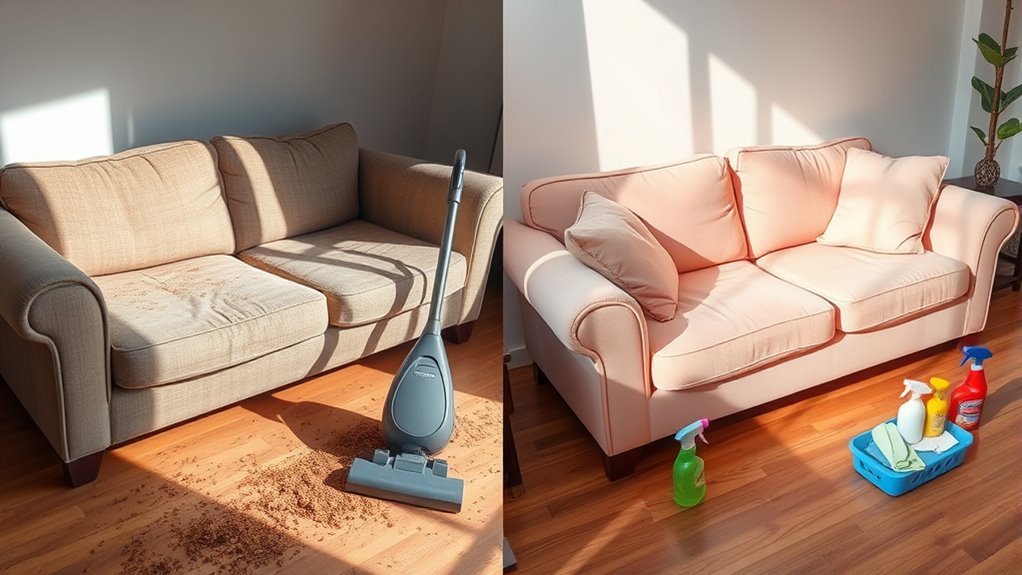
Since dust and loose debris can settle deep into your couch’s fabric, it’s essential to remove them before applying any cleaning solutions. Start by giving your couch a thorough debris removal using a vacuum cleaner with a brush attachment. This helps lift dust and dirt trapped in crevices and seams. Don’t skip dust collection on cushions, armrests, and underneath — these spots tend to gather the most dirt. If a vacuum isn’t handy, a lint roller or a soft brush can work to collect loose particles efficiently. Taking the time for proper debris removal not only preps the surface for cleaning but also prevents grime from embedding further, making your cleaning efforts more effective and preserving your couch’s freshness.
Spot Testing Cleaning Products Safely
Before using any cleaning product on your couch, pick a small, hidden spot to test it first. Apply the cleaner and wait a few minutes to see if there’s any discoloration or damage. This quick check helps you avoid ruining the entire fabric.
Choose Appropriate Test Area
Although it might be tempting to apply a cleaning product directly to your couch, you should always spot test in an inconspicuous area first. Choosing the right test area is essential for effective spot testing. Look for a hidden spot—like under a cushion or behind the couch—where any potential damage won’t be obvious. This careful test area selection helps you guarantee the product’s fabric compatibility without risking visible stains or discoloration. Remember, different fabrics react differently to cleaning agents, so even if a product worked on your carpet, it might not suit your couch. By testing in a discreet spot, you gain freedom to clean confidently, knowing you’re protecting your couch’s appearance while avoiding costly mistakes.
Observe Reaction Time
Once you’ve picked a hidden spot to test your cleaning product, pay close attention to how your couch fabric reacts over time. Don’t rush the process—reaction observation is key to ensuring the product won’t damage or discolor your fabric. Check the spot immediately after application, then revisit it after a few hours and even a day later. This helps you gauge any delayed effects. Understanding this will guide your cleaning frequency, letting you clean confidently without risking harm. If you notice any fading, stiffness, or residue, it’s a clear sign to choose a gentler product or adjust how often you clean. Taking the time for careful reaction observation lets you maintain your couch’s look and feel while enjoying the freedom to keep it fresh and inviting.
Choosing the Right Cleaning Solutions for Different Fabrics
Since couches come in a variety of fabrics, choosing the right cleaning solution is crucial to avoid damage and maintain their appearance. You want to guarantee fabric compatibility to protect your couch while achieving effective stain removal. Here’s a quick guide to help you pick the best cleaner:
- For cotton and linen, use mild detergent mixed with water.
- Velvet loves gentle steam cleaning or specialized upholstery shampoo.
- Leather requires pH-balanced leather cleaner to avoid drying or cracking.
- Synthetic fabrics like polyester respond well to water-based solutions.
- Always test a small hidden area first to check for colorfastness.
Effective Vacuuming Techniques for Upholstery
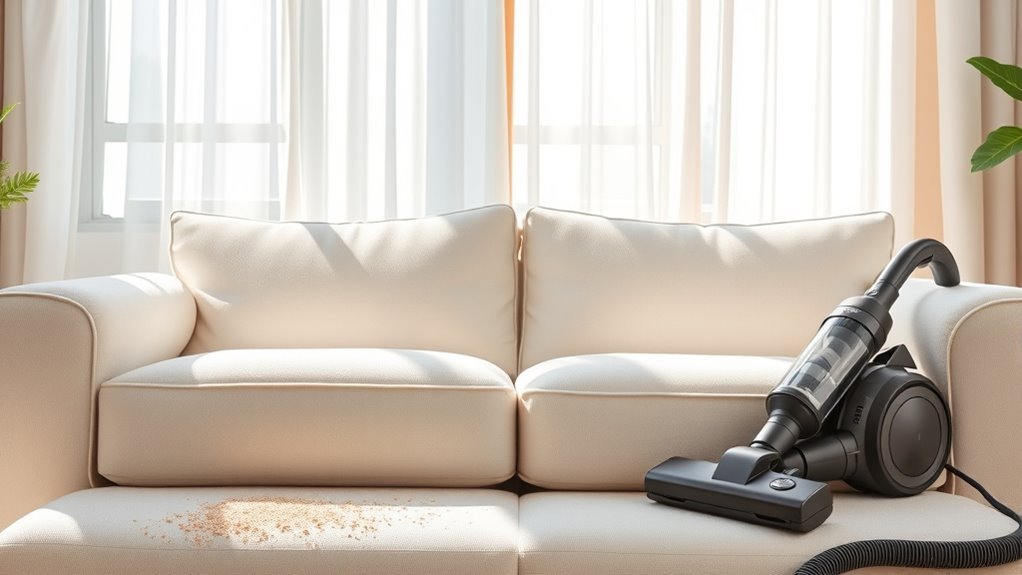
To get the best results when vacuuming your couch, you’ll want to choose the right attachment for your upholstery type. Following consistent vacuuming patterns helps guarantee you don’t miss any spots or damage the fabric. Plus, keeping your vacuum cleaner well-maintained will improve its performance and extend its life.
Choosing the Right Attachment
Anyone who wants to keep their couch looking fresh knows that using the right vacuum attachment makes a big difference. Choosing the right attachment type lets you clean efficiently without damaging your upholstery. Different attachment benefits include reaching tight spots, protecting delicate fabrics, and loosening embedded dirt. Here are some popular attachment types to evaluate:
- Brush attachment: Gently lifts dust and pet hair without harming fabric.
- Crevice tool: Perfect for tight corners and seams.
- Upholstery tool: Designed for broad, flat surfaces to remove dust and debris.
- Motorized brush: Ideal for deep cleaning embedded dirt and pet hair.
- Flexible hose extension: Helps you reach awkward spots easily.
Selecting the right tool gives you freedom to clean thoroughly and maintain your couch’s look effortlessly.
Vacuuming Patterns to Follow
Although choosing the right attachment is crucial, how you move the vacuum over your couch makes just as much difference. To truly free your upholstery from dust and debris, adopt consistent vacuuming techniques that cover every inch. Start by moving in straight lines along the fabric’s grain, then switch to crosswise passes. This vacuuming pattern guarantees you lift dirt trapped deep in the fibers. Don’t rush—steady, overlapping strokes catch what a hasty pass might miss. For cushions, vacuum each side separately, following the same method. By mastering these vacuuming patterns, you gain control over your couch’s cleanliness without wasting time or effort. This approach keeps your upholstery fresh and inviting, letting you enjoy your space with ease and confidence.
Maintaining Your Vacuum Cleaner
Mastering the right vacuuming techniques is only part of keeping your couch spotless; maintaining your vacuum cleaner plays a big role in its effectiveness. Regular vacuum cleaner maintenance guarantees powerful suction and prevents dirt buildup, letting you clean freely without hassle. Don’t let a clogged filter or worn brush slow you down. Stay on top of these key tasks:
- Check and replace filters regularly to maintain strong airflow.
- Empty the dustbin or bag before it’s full to avoid suction loss.
- Clean brush rolls and remove tangled hair or threads.
- Inspect hoses and attachments for blockages or damage.
- Lubricate moving parts if recommended by the manufacturer.
Pre-Treatment Tips for Stains and Spills
When you notice a stain or spill on your couch, acting quickly can make all the difference in preventing permanent damage. First, gently blot the area with a clean cloth to absorb as much liquid as possible—never rub, as that can push the stain deeper. For effective stain removal, use a mild detergent mixed with water or a fabric-safe cleaner, testing it on a hidden spot first. Prompt attention not only tackles the immediate mess but also supports long-term spill prevention by stopping stains from setting in. Remember, the sooner you start pre-treatment, the easier it’ll be to keep your couch looking fresh and inviting. Taking these simple steps gives you the freedom to enjoy your space without worrying about stubborn stains.
Using Steam Cleaners and Their Benefits
If you’re looking for an efficient way to refresh your couch without harsh chemicals, steam cleaners offer a powerful solution. They harness high-temperature steam to deep clean and sanitize your upholstery, making them ideal for maintaining a fresh, healthy living space. Here are some steam cleaner advantages you’ll appreciate:
- Kills bacteria, dust mites, and allergens for superior upholstery sanitization
- Eliminates stubborn stains without damaging fabric fibers
- Requires no drying time with quick evaporation
- Eco-friendly, using only water to clean—no chemicals involved
- Easy to maneuver, reaching tight spots and crevices effortlessly
Using a steam cleaner gives you freedom from harsh detergents and a cleaner, healthier couch you can feel good about relaxing on.
Drying and Air Circulation After Cleaning
Once you’ve cleaned your couch, it’s important to focus on drying it properly to prevent mold and odors. You can speed up the process by improving airflow with fans or open windows. These simple steps help guarantee your couch dries evenly and stays fresh.
Optimal Drying Techniques
Although cleaning your couch is essential, ensuring it dries properly is just as important to prevent mold and odors. Mastering the right airflow techniques and drying methods will give you the freedom to enjoy a fresh, clean space without worry. Here’s how you can optimize drying:
- Open windows and doors to maximize natural airflow.
- Use a fan directed at the couch to speed up moisture evaporation.
- Remove cushions to let air circulate around every part.
- Avoid direct sunlight to prevent fabric fading while drying.
- Consider a dehumidifier in humid environments to reduce moisture faster.
Enhancing Airflow Efficiency
When you want your couch to dry quickly and thoroughly, enhancing airflow efficiency is key. Start by positioning your couch near natural airflow channels like open windows or doors. This allows fresh air to circulate freely around the fabric, speeding up drying. If natural ventilation isn’t enough, use mechanical ventilation systems such as fans or air conditioners to boost air movement. Make certain these systems direct air evenly across the couch’s surface to prevent damp spots. Avoid blocking airflow channels with other furniture or clutter, as this restricts circulation and prolongs drying time. By optimizing airflow and ventilation systems, you’ll guarantee your couch dries faster, preventing mold and odors while giving you the freedom to enjoy a fresh, clean space sooner.
Preventative Measures to Keep Your Couch Cleaner Longer
Even if you clean your couch regularly, taking preventative steps can help keep it looking fresh much longer. Embracing preventive cleaning habits saves you time and effort in the long run, maintaining your couch’s freedom from stains and wear. Couch covers are a smart investment to protect against spills and dirt while allowing you to express your style.
Here are some easy ways to keep your couch cleaner:
- Use washable couch covers or throws to shield fabric.
- Establish a no-food-or-drink rule around your couch.
- Regularly vacuum to remove dust and debris.
- Rotate cushions to prevent uneven wear.
- Keep pets off or use pet-specific covers.
These small actions give your couch the care it deserves without restricting your lifestyle.
Routine Maintenance Practices After Daily Use
A quick daily routine can make a big difference in keeping your couch looking its best. Start with simple daily upkeep: fluff cushions, straighten pillows, and remove crumbs or debris with a handheld vacuum or brush. This prevents dirt from settling deep into the fabric and keeps your space feeling fresh and inviting. If you’ve applied fabric protection, wiping down spills immediately preserves that barrier, stopping stains from setting in. Don’t forget to rotate cushions regularly to guarantee even wear and maintain the couch’s shape. By incorporating these routine maintenance practices after daily use, you free yourself from extensive cleanings later and extend your couch’s life. Staying consistent means your couch stays comfortable and clean, giving you the freedom to relax without worry.
Frequently Asked Questions
How Often Should I Deep Clean My Couch Professionally?
Think of your couch as a trusted companion, quietly holding your stories and dreams. To keep that bond strong, you should follow couch maintenance tips and schedule professional deep cleaning every 12 to 18 months. This cleaning frequency recommendation guarantees your freedom to relax without worry, letting your space breathe fresh life. Regular care isn’t just about looking good—it’s about preserving comfort and the memories your couch cradles.
What Are the Best Natural Cleaning Alternatives for Couches?
If you want natural cleaning alternatives for your couch, you can’t go wrong with baking soda and a vinegar solution. Sprinkle baking soda over the fabric, let it sit for 15 minutes, then vacuum to freshen and deodorize. For stains, mix equal parts vinegar and water in a spray bottle, lightly spritz the area, and blot with a cloth. These simple, freedom-loving methods keep your couch clean without harsh chemicals.
Can Pet Hair Damage Couch Fabric Over Time?
Think of pet hair as tiny invaders slowly creeping into your couch fabric. While pet hair itself doesn’t directly damage fabric, it can trap dirt and oils, which might wear down fibers over time. If you want to keep your couch looking fresh and enjoy fabric maintenance freedom, regularly vacuuming or using sticky rollers will help. You’ll prevent buildup, keeping your furniture comfy and your space pet-hair free without feeling chained to constant cleaning.
How Do I Remove Odors From a Couch Effectively?
If you want to freshen up your couch, try couch deodorizing techniques like sprinkling baking soda over the fabric and letting it sit for a few hours before vacuuming. For fabric odor removal, you can also use a mixture of white vinegar and water in a spray bottle—lightly mist the area and let it air dry. These methods work wonders, letting you enjoy a clean, odor-free space without hassle or harsh chemicals.
Are Slipcovers a Good Option for Couch Protection?
Slipcovers are a fantastic option for couch protection because they offer flexibility and style without the commitment. You’ll enjoy slipcover benefits like easy removal, washing, and the freedom to switch up your look whenever you want. Plus, slipcover maintenance is simple—most are machine washable, making spills and stains less stressful. If you want to keep your couch fresh and protected while embracing freedom in your decor, slipcovers are definitely worth it.
