Deep Cleaning Checklist for Toys
To deep clean your child’s toys, first identify the type and material to choose the safest cleaning method. Gather gentle supplies like mild detergent, soft cloths, and disinfectant wipes. Clean plastic toys with warm soapy water, machine wash fabric toys, carefully wipe electronics, and use mild soap for wooden ones. After cleaning, dry toys thoroughly and store them in breathable or sealed containers to prevent moisture. Keeping a regular cleaning schedule helps keep toys safe and fresh—you’ll find easy tips to make this routine smooth and effective.
Assessing the Type of Toy and Material

Before you begin cleaning, it’s important to identify the type of toy and what material it’s made from. This step guarantees toy safety and proper material care, helping you avoid damage or hazards. For example, plush toys often need gentle washing, while plastic toys might tolerate harsher cleaning agents. Understanding the materials lets you choose the right method, preserving the toy’s integrity and keeping it safe for use. If you’re dealing with electronic or battery-operated toys, extra caution is necessary to prevent water damage. By evaluating the toy first, you take control over the cleaning process, making it efficient and safe. This approach lets you maintain freedom in how you care for your toys without compromising their condition or safety.
Essential Cleaning Supplies Needed
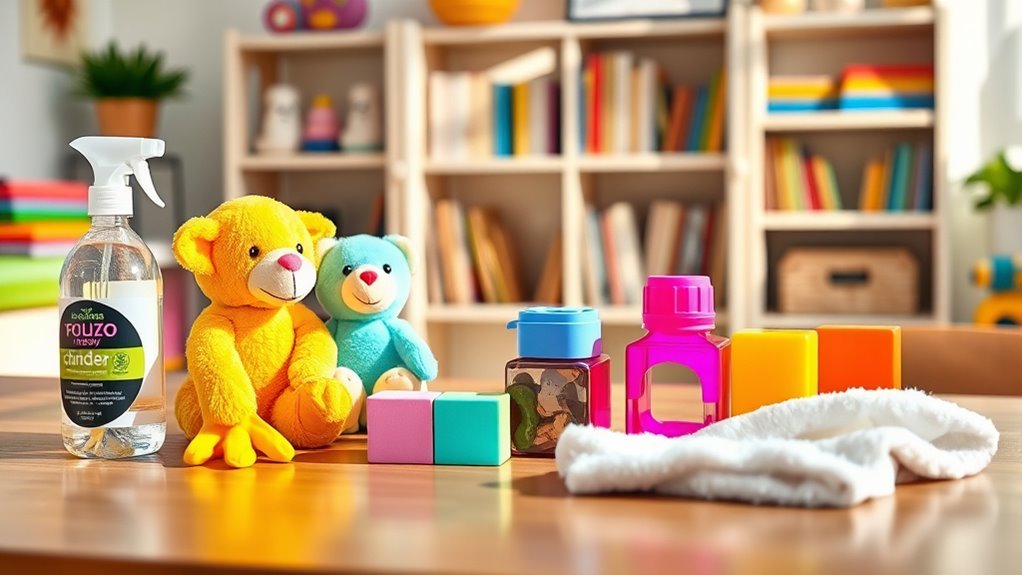
When you’re ready to clean toys thoroughly, having the right supplies on hand makes all the difference. Start with gentle, non-toxic cleaners that respect toy safety while effectively removing dirt and germs. A soft cloth, mild detergent, and a small brush will cover most cleaning methods without damaging delicate materials. Don’t forget disinfectant wipes or sprays approved for kids’ items to keep bacteria at bay. For plush toys, a vacuum with a brush attachment can help remove dust before washing. Gloves protect your hands and prevent cross-contamination. Keeping these essentials ready empowers you to clean efficiently and safely, giving your little ones freedom to enjoy their toys without worry. Choosing the right supplies means you’re set for any type of toy and material, ensuring thorough, safe cleaning every time.
Step-by-Step Cleaning Process for Different Toy Types
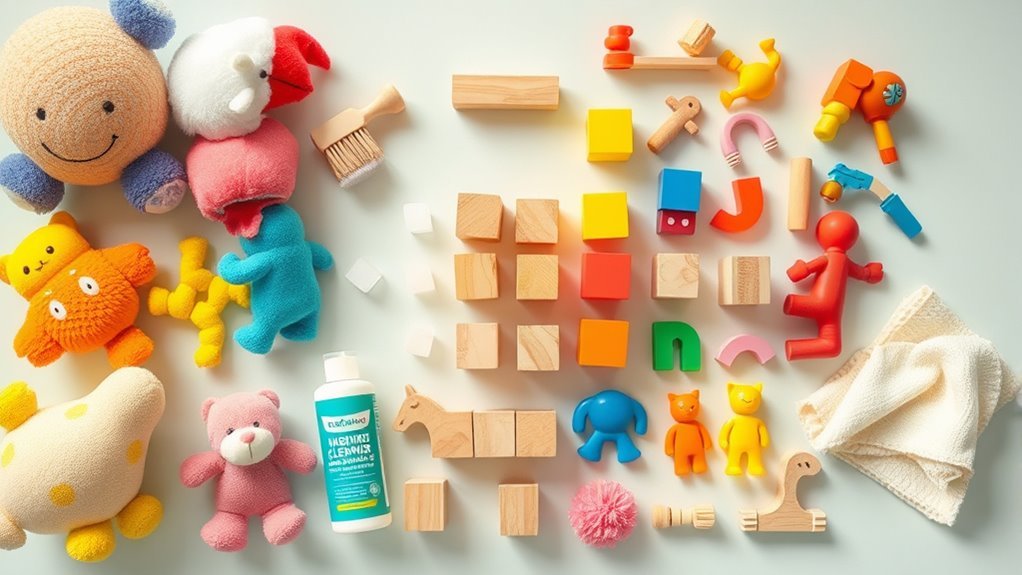
Cleaning toys effectively involves tailored steps for each type to guarantee safety and cleanliness. For plastic toys, start by washing with warm, soapy water, then apply toy disinfecting methods like diluted bleach solutions or wipes approved by toy safety guidelines. Fabric toys need gentle cycles in the washing machine using mild detergent, followed by air drying to prevent damage. Electronic toys require wiping with a damp cloth and using alcohol-based disinfectants carefully—avoid soaking to protect internal parts. Wooden toys call for a mild soap wash and a quick wipe-down with vinegar water to disinfect without harming the material. By following these specific steps, you ascertain each toy is thoroughly cleaned without compromising safety or durability, giving you the freedom to keep your child’s playthings fresh and safe.
Tips for Drying and Storing Clean Toys
Although drying might seem like a simple step, it’s essential for preventing mold and bacteria buildup on your child’s toys. To keep things hassle-free, choose drying methods that let air circulate freely—like laying toys on a clean towel or hanging them up. Avoid stuffing toys into tight spaces while damp; that only traps moisture. Once dry, opt for storage solutions that promote cleanliness and easy access. Clear bins with lids work great, keeping toys dust-free yet visible, so your child can grab their favorites without a mess. For plush toys, breathable fabric bags help maintain freshness. By using smart drying methods and thoughtful storage solutions, you’ll keep toys safe and ready for play, giving you and your child more freedom to enjoy every moment without worry.
Scheduling Regular Deep Cleanings for Toy Safety
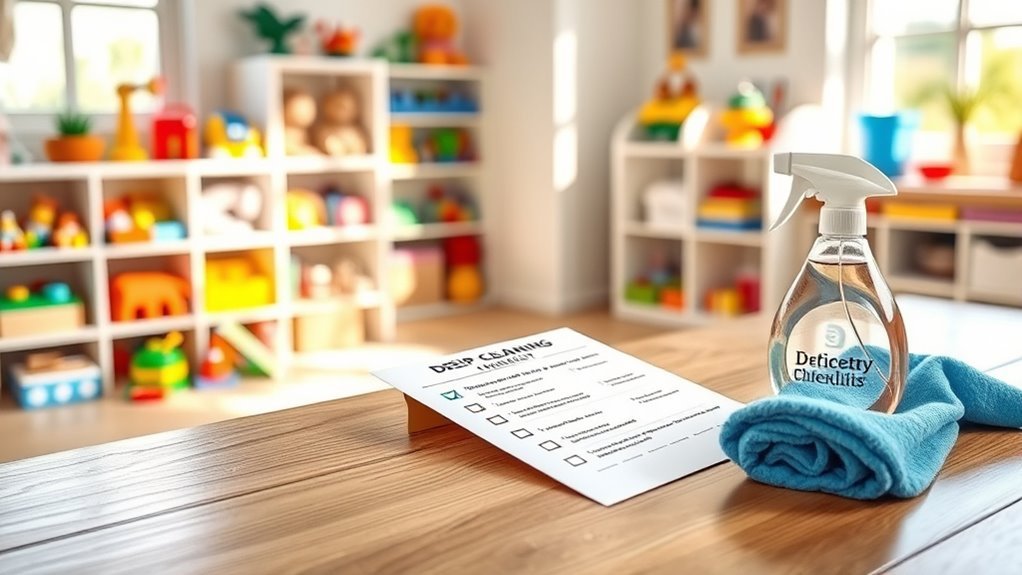
Since toys are constantly handled and exposed to dirt and germs, setting a regular deep cleaning schedule is key to keeping them safe for your child. You’ll want to balance cleaning frequency with your lifestyle to maintain toy safety without feeling overwhelmed. Here’s a simple guide to help you plan:
| Toy Type | Cleaning Frequency | Recommended Method |
|---|---|---|
| Soft Toys | Monthly | Machine wash or hand wash |
| Plastic Toys | Bi-weekly | Soap and warm water |
| Electronic Toys | Monthly | Surface wipe with cloth |
| Outdoor Toys | Weekly | Hose down and disinfect |
Stick to this rhythm, and you’ll protect your child effortlessly while enjoying the freedom to play without worry.
Frequently Asked Questions
Can Deep Cleaning Toys Remove All Bacteria and Viruses?
You can’t guarantee deep cleaning toys removes all bacteria and viruses, but effective toy sanitization methods can markedly reduce germs. Depending on toy cleaning frequency and the materials involved, using disinfectants, steam cleaning, or dishwasher cycles helps keep toys safer. Staying consistent with cleaning lets you enjoy peace of mind and freedom from worry, knowing you’re doing your best to protect health without limiting playtime fun.
How Often Should Plush Toys Be Professionally Cleaned?
Did you know that bacteria can multiply on plush toys by up to 100,000 times within a week? When it comes to plush cleaning frequency, aiming for professional cleaning every 3 to 6 months helps you meet toy hygiene standards and keep germs at bay. Of course, if your plush friend’s been through a mess or illness, don’t wait—get it cleaned sooner. Keeping to this schedule lets you enjoy your toys freely and safely.
Are There Natural Disinfectants Safe for Children’s Toys?
You can definitely use natural cleaning methods to keep your child’s toys safe and germ-free. Ingredients like white vinegar, baking soda, and lemon juice work great as natural disinfectants without harsh chemicals. They guarantee toy safety while giving you peace of mind. Just mix diluted vinegar with water for a gentle spray or a quick wipe-down, and you’re good to go. This way, you’re choosing freedom from toxins while keeping toys fresh and clean.
Can Deep Cleaning Damage Electronic or Battery-Operated Toys?
When you deep clean electronic or battery-operated toys, you’ve got to be mindful of electronic safety. Using too much water or harsh chemicals can damage internal components. Instead, opt for gentle cleaning methods like wiping with a damp cloth or using disinfectant wipes that won’t soak the device. Keeping electronics dry and avoiding submersion guarantees your toys stay safe and functional, giving you the freedom to clean without worry.
What Are Signs a Toy Is Too Worn to Clean Safely?
If your toy looks like it survived a tornado, with fraying fabric or cracked plastic, it’s probably too worn to clean safely. Worn materials can hide sharp edges or broken parts that pose serious safety concerns. You don’t want to risk cuts, choking hazards, or electrical issues. Trust your instincts—if the toy’s seen better days, it’s better to let it go and enjoy the freedom of fresh, safe playthings instead.