Deep Cleaning Guide for Bathroom Flooring
To deep clean your bathroom flooring effectively, start by removing rugs and debris, then sweep or vacuum thoroughly. Use pH-neutral cleaners for ceramic, porcelain, or natural stone floors, and a gentle vinegar mix for soap scum and hard water stains. Be cautious with vinyl and laminate—avoid excess water and harsh scrubbers. Regularly mop with a damp microfiber cloth and respond quickly to spills. Follow these basics, and you’ll discover tips tailored to each floor type to keep your bathroom sparkling longer.
Understanding Different Bathroom Flooring Materials
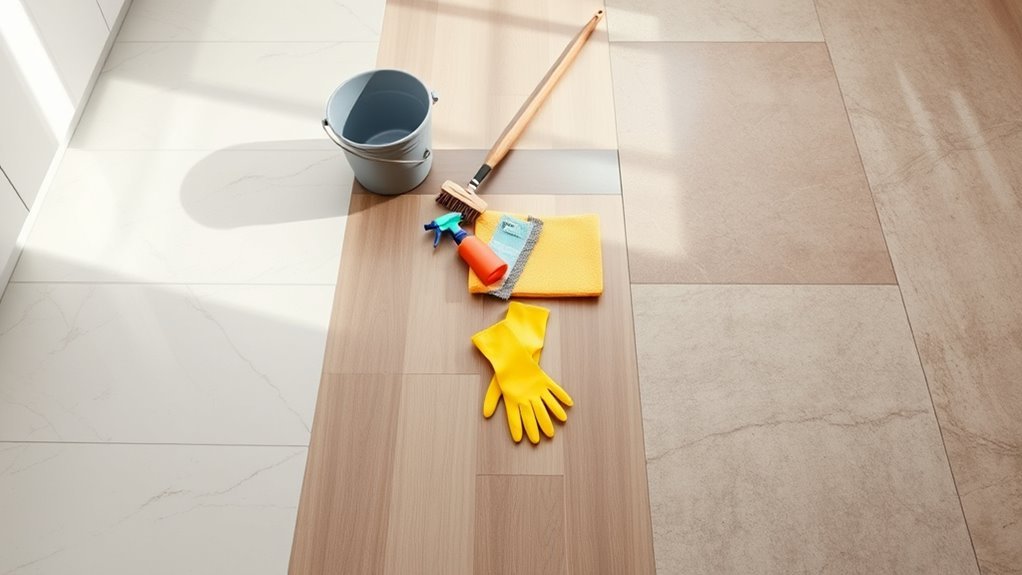
Before you plunge into deep cleaning, it’s important to know what type of flooring you have in your bathroom. Ceramic tiles and porcelain tiles are popular choices—durable and water-resistant but need gentle care to avoid grout damage. Vinyl sheets offer flexibility and waterproofing, making cleaning easier. Laminate planks might look like wood but require extra caution to prevent water damage. Natural stone adds luxury but demands special cleaning to protect its porous surface. Bamboo flooring and cork tiles bring eco-friendly options but can be sensitive to moisture. Epoxy coatings create seamless, durable floors perfect for a modern touch but need the right cleaning approach. Knowing your floor type gives you the freedom to maintain it effectively without risking damage or losing its charm.
Essential Tools and Cleaning Products
Having the right tools and cleaning products makes deep cleaning your bathroom floor much easier and more effective. You want to feel free from stubborn grime without wasting time or effort. Here’s a list of essential cleaning supplies to keep handy:
- Sturdy floor brushes – perfect for scrubbing grout and textured surfaces.
- A mop with a microfiber head – absorbs dirt and dries quickly.
- pH-neutral floor cleaner – safe for most bathroom flooring types.
- A bucket with a wringer – helps control water usage and speeds up the process.
With these tools, you’re set to tackle tough dirt while protecting your flooring. Choosing the right cleaning supplies means you can maintain a fresh, inviting bathroom floor with less hassle and more freedom.
Preparing the Bathroom Floor for Cleaning
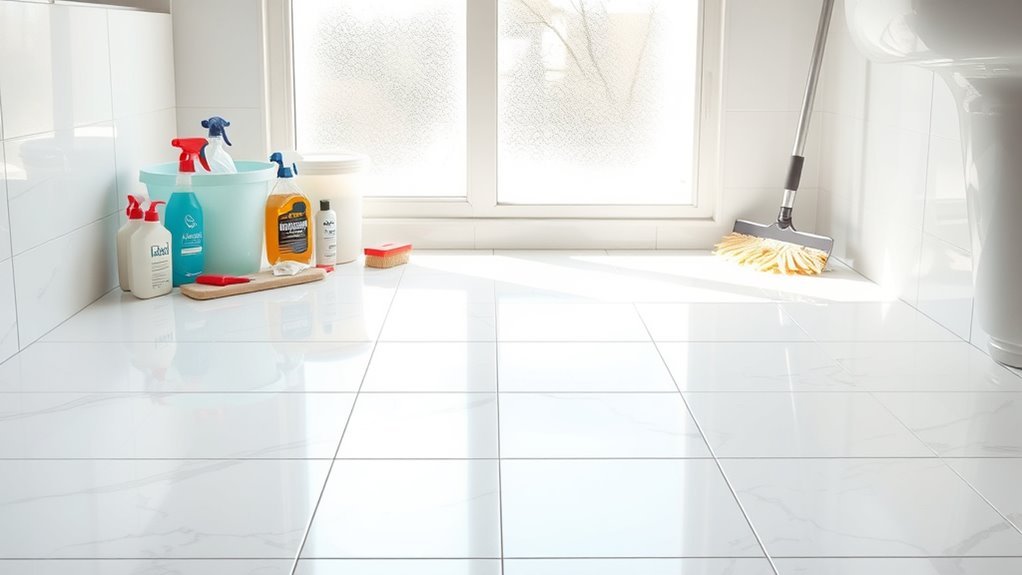
To prepare your bathroom floor for a deep clean, start by removing any loose items like rugs, trash bins, or toiletries that might get in the way. This floor preparation step is vital to guarantee thorough surface clearing, letting you reach every corner freely. Sweep or vacuum to eliminate dust and debris, making the cleaning process smoother and more effective.
| Step | Purpose |
|---|---|
| Remove rugs | Clear surface for cleaning |
| Take out trash bins | Prevent spills and obstruction |
| Relocate toiletries | Avoid damage and ease access |
| Sweep/vacuum | Get rid of loose dirt and dust |
| Inspect floor | Identify spots needing extra care |
Removing Soap Scum and Hard Water Stains
Although soap scum and hard water stains can be stubborn, you can effectively remove them with the right approach. Tackling these issues frees your bathroom floor from buildup, restoring its shine and cleanliness. Here’s how to handle soap scum removal and hard water solutions:
- Mix equal parts white vinegar and water in a spray bottle; this natural solution cuts through soap scum.
- Spray the affected areas generously and let it sit for 10 minutes to loosen deposits.
- Scrub gently with a soft brush or cloth, focusing on stubborn spots.
- Rinse thoroughly with warm water and dry the floor to prevent new stains.
Stick to these steps regularly, and you’ll enjoy a fresh, vibrant bathroom floor without harsh chemicals or endless scrubbing.
Deep Cleaning Tile and Grout Lines
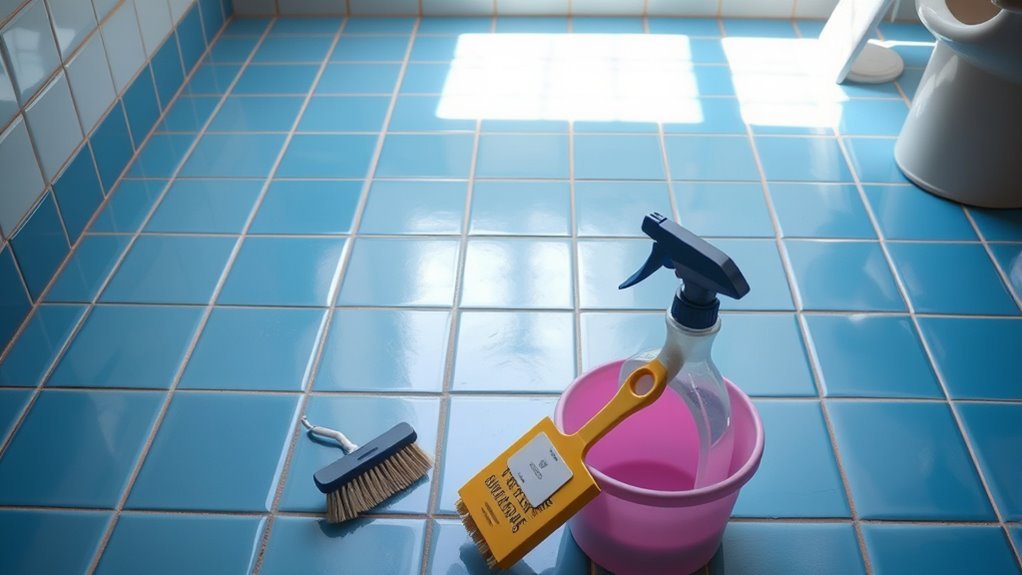
When tile and grout lines get dirty, they can make your entire bathroom floor look dull and neglected. You’ll want to tackle grout cleaning techniques that break down grime without harsh chemicals. Start by scrubbing grout with a paste of baking soda and water, then rinse well. After deep cleaning, consider tile sealing options to protect grout from future stains and make maintenance easier—this gives you freedom from constant scrubbing.
| Grout Cleaning Techniques | Tile Sealing Options |
|---|---|
| Baking soda and water paste | Penetrating sealers |
| Vinegar and water spray | Surface sealers |
| Brush grout with a stiff toothbrush | Regular reapplication recommended |
Using these methods, you keep your bathroom floor fresh and effortlessly clean.
Caring for Vinyl and Laminate Flooring
When cleaning vinyl and laminate flooring, you’ll want to use gentle methods to avoid damage. Regular maintenance, like sweeping and using a damp mop, helps keep your floors looking fresh. Let’s explore the best cleaning techniques and tips to protect these surfaces.
Cleaning Methods
Since vinyl and laminate flooring are both sensitive to moisture and harsh chemicals, you’ll need to choose your cleaning methods carefully to avoid damage. Here’s how you can keep your bathroom floors fresh without risking warping or discoloration:
- Use a steam cleaner cautiously—too much steam can damage seams, so keep it light and quick.
- Opt for eco friendly solutions like diluted vinegar or gentle plant-based cleaners to avoid harsh residues.
- Mop with a damp, not soaking wet, microfiber cloth to prevent water infiltration.
- Avoid abrasive scrubbers or bleach-based products that can strip the floor’s protective layer.
Maintenance Tips
Keeping your vinyl and laminate bathroom floors in top shape requires just a few simple maintenance habits. To boost flooring longevity, clean up spills immediately and avoid harsh chemicals that can damage the surface. Stick to a regular cleaning frequency—sweeping or vacuuming a couple of times a week prevents grit from scratching your floors. When mopping, use a damp mop with a gentle cleaner designed for vinyl or laminate, never soaking the floor. Also, place mats at entry points to catch dirt and reduce wear. By following these straightforward steps, you’ll keep your bathroom floors looking fresh and durable, freeing you from worry and letting you enjoy your space without constant upkeep. Simple care goes a long way toward preserving your floor’s beauty and function.
Maintaining Natural Stone Floors
Although natural stone floors add timeless beauty to your bathroom, they require special care to stay looking their best. For effective natural stone care, you’ll want to embrace specific sealing techniques and cleaning habits that preserve both appearance and integrity. Here’s how you can maintain your floors with confidence:
- Apply a high-quality sealant every 6-12 months to protect against moisture and stains.
- Use pH-neutral cleaners designed for stone to avoid damage.
- Wipe spills immediately to prevent etching or discoloration.
- Avoid abrasive tools; opt for soft cloths or mops instead.
Preventative Tips to Keep Bathroom Floors Cleaner Longer
To keep your bathroom floors cleaner for longer, you’ll want to sweep regularly to prevent dirt buildup. Using bathroom mats can catch moisture and reduce wear on your flooring. Also, cleaning up spills promptly stops stains and damage before they start.
Regular Sweeping Routine
Regularly sweeping your bathroom floor is one of the simplest ways to prevent dirt and grime from building up. By sticking to a consistent sweeping frequency, you can dramatically reduce dust accumulation and keep your space feeling fresh. Here’s how to make the most of your routine:
- Sweep at least every other day to stop dust and hair from settling.
- Use a soft-bristle broom to avoid scratching delicate flooring.
- Focus on corners and edges where dust tends to gather.
- Quickly spot-sweep after showers to catch damp debris before it sticks.
Use Bathroom Mats
Bathroom mats act as your first line of defense against dirt and moisture, helping you keep floors cleaner for longer. By placing mats strategically—like outside the shower or near the sink—you catch water and grime before they reach your flooring. Understanding the bathroom mat benefits can transform your cleaning routine, reducing the need for frequent deep scrubs. When choosing bathroom mats, look for materials that dry quickly and resist mildew, ensuring they stay fresh and effective. Opt for non-slip backs to keep mats securely in place, giving you freedom to move without worry. With the right mats, you’re not just protecting your floors—you’re creating a cleaner, safer bathroom environment that supports your easy, carefree lifestyle.
Prompt Spill Cleanup
Mats do a great job catching dirt and moisture before they reach your floors, but spills and splashes can still happen anytime. Your best defense is a fast spill response to avoid stains and water damage. Here’s how to keep your bathroom floors cleaner longer:
- Act immediately—grab a cloth or paper towel for quick absorption.
- Blot, don’t rub; pressing gently prevents spreading the spill.
- Use a mild cleaner suited for your floor type to remove residue.
- Dry the area thoroughly to stop moisture from seeping into grout or seams.
Frequently Asked Questions
Can I Use Steam Cleaners on All Bathroom Flooring Types?
You might think you can blast every inch of your bathroom floor with a steam cleaner like it’s a superhero gadget, but hold on! Not all steam cleaner types suit every flooring material. For example, tile and sealed stone can handle steam’s heat and moisture, but unsealed wood or vinyl might warp or peel. Always check your flooring’s care instructions before releasing that steamy freedom—your floors will thank you!
How Often Should I Deep Clean Bathroom Floors?
When figuring out how often you should deep clean your bathroom floors, frequency recommendations usually suggest once a week or every two weeks, depending on your lifestyle. If you want more freedom with your cleaning schedules, just listen to your space—if it looks or smells off, it’s time. Adjusting based on use helps keep things fresh without feeling stuck in a rigid routine. You’ve got this!
Are Natural Remedies Effective for Bathroom Floor Cleaning?
You might think natural cleaning is as powerful as a superhero for your bathroom floors—and you’d be close! Eco friendly solutions like vinegar, baking soda, and lemon juice can tackle grime effectively without harsh chemicals. They’re perfect if you want freedom from toxins and want to care for the planet. While they might need a bit more elbow grease, natural remedies definitely get the job done and keep your space fresh and green.
What Safety Precautions Should I Take During Deep Cleaning?
When deep cleaning, you’ve got to prioritize chemical safety to keep yourself safe. Always wear protective gear like gloves and goggles to shield your skin and eyes from harsh cleaners. Make sure the room’s well-ventilated so you don’t breathe in fumes, and never mix cleaning products—they can create dangerous gases. Taking these precautions lets you clean freely without risking your health or comfort. Stay safe and enjoy that sparkling space!
Can Deep Cleaning Damage Bathroom Floor Finishes?
You’d think scrubbing your bathroom floor could release a hurricane of damage, but it doesn’t have to if you’re careful! Your floor finish durability depends on choosing the right cleaning products that won’t strip or dull it. Always check cleaning product compatibility with your flooring type to keep your freedom intact—no one wants to be stuck babysitting ruined floors. With the right care, your bathroom floor can stay stunning and strong for years.