DIY Cleaner for Glass Surfaces
You can make a safe, effective glass cleaner at home using simple ingredients like white vinegar, water, and a bit of rubbing alcohol for quick drying. Mix equal parts vinegar and water, add a few drops of dish soap, and spray on your glass surfaces. Use a microfiber cloth or squeegee to avoid streaks and scratches. This homemade cleaner saves money, reduces toxins, and leaves glass sparkling. Keep exploring for tips to perfect your shine and maintain your glass surfaces.
Benefits of Using a Homemade Glass Cleaner
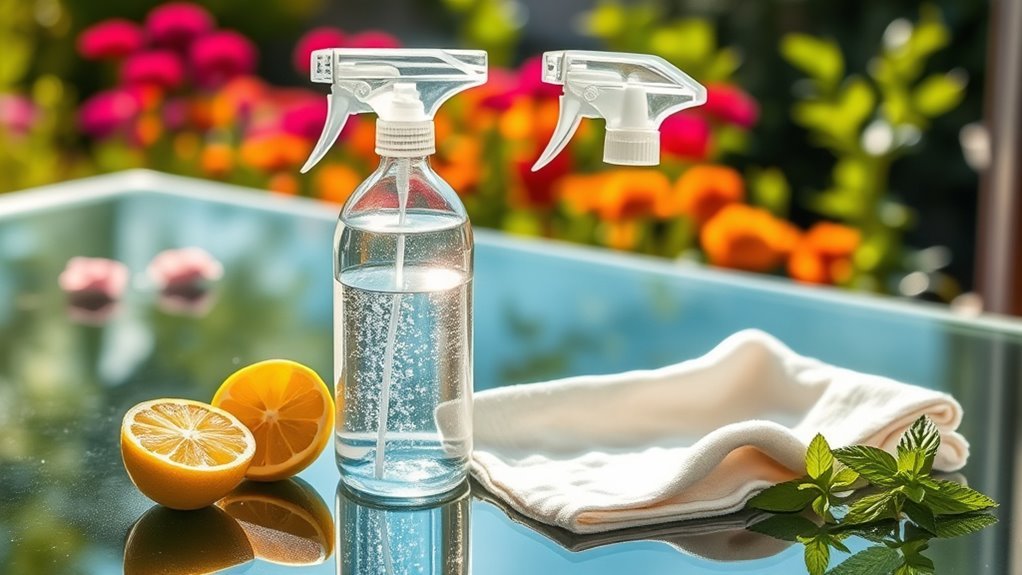
Although commercial glass cleaners are widely available, using a homemade glass cleaner offers several benefits you might not have considered. When you make your own, you take control, freeing yourself from harsh chemicals and unnecessary additives found in many store-bought options. Homemade solutions let you customize ingredients to suit your preferences and needs, giving you the freedom to create a cleaner that’s as natural or powerful as you want. Plus, you’ll enjoy significant cost savings by using common household items instead of expensive branded products. This approach not only saves money but also reduces waste, aligning with a more sustainable lifestyle. Choosing homemade solutions empowers you to clean efficiently without compromising your values or budget.
Essential Ingredients for DIY Glass Cleaner
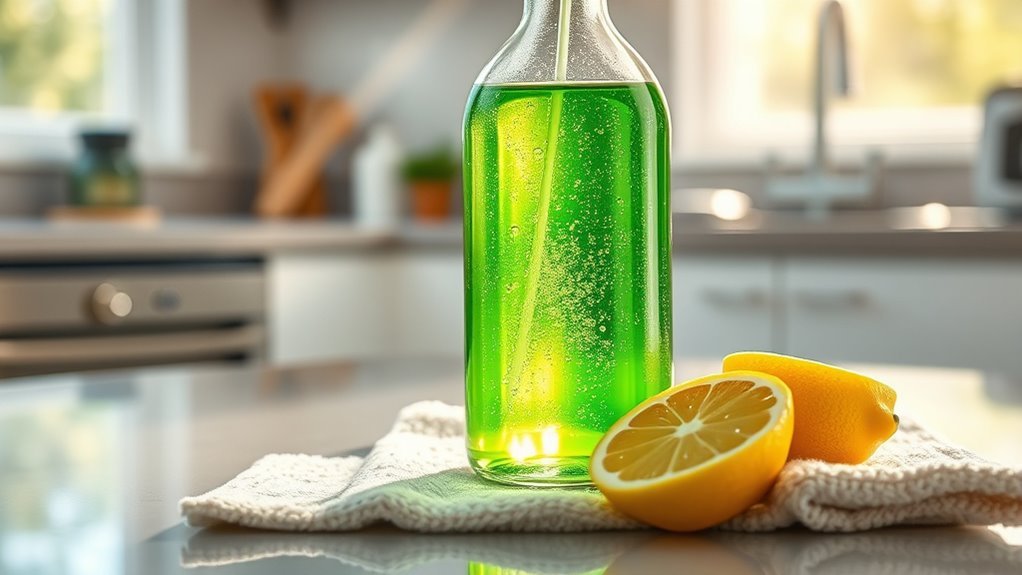
Creating an effective DIY glass cleaner starts with selecting the right ingredients. You’ll want a vinegar solution as your base—it’s powerful, natural, and streak-free. Vinegar cuts through grime without harsh chemicals, giving you freedom from store-bought toxins. Adding a splash of water dilutes it just enough to keep your glass spotless without damage. To elevate your cleaner, include citrus zest. The natural oils from lemon or orange zest not only add a fresh scent but boost cleaning power by breaking down grease and fingerprints. Together, vinegar solution and citrus zest make a dynamic duo for sparkling surfaces. By choosing these simple, natural ingredients, you stay in control, crafting a cleaner that fits your lifestyle and values perfectly.
Step-by-Step Guide to Mixing Your Cleaner
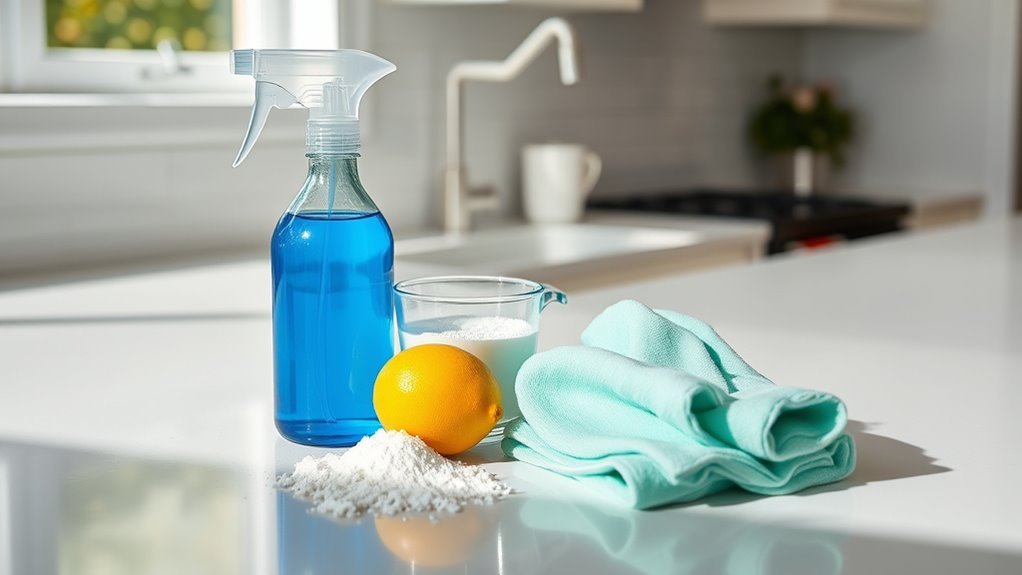
Now that you know the essential ingredients, it’s time to mix your cleaner correctly. I’ll walk you through simple, clear instructions to combine everything safely and effectively. By following these steps, you’ll have a powerful glass cleaner ready in no time.
Essential Ingredients Needed
To make an effective glass cleaner, you’ll need just a few essential ingredients that work together to remove grime and leave surfaces streak-free. Using natural ingredients gives you the freedom to avoid harsh chemicals and still get sparkling results. Here’s a quick look at what you’ll need for your glass cleaning solution:
| Ingredient | Purpose | Quantity |
|---|---|---|
| White vinegar | Cuts grease, dissolves dirt | 1 cup |
| Water | Dilutes vinegar, prevents streaks | 1 cup |
| Rubbing alcohol | Evaporates quickly, speeds drying | 1/2 cup |
| Cornstarch | Adds gentle abrasion, removes residue | 1 tbsp |
| Essential oil (optional) | Adds fresh scent, natural antibacterial | 5-10 drops |
These natural ingredients give you control and freedom to create a powerful glass cleaning solution at home.
Mixing Instructions Explained
Mixing your glass cleaner takes just a few simple steps, and you’ll have it ready in minutes. Start by measuring your ingredients carefully to maintain the right mixing ratios—this guarantees your cleaner is effective without wasting supplies. Typically, a good proportion is 1 part white vinegar to 3 parts water, plus a few drops of dish soap for extra grease-cutting power. Pour these into a spray bottle, but always add water last to prevent foaming. Shake gently to combine, and your DIY glass cleaner is ready to use. Sticking to precise ingredient proportions gives you control over the solution’s strength, so feel free to tweak the ratios as you see fit. This way, you create a cleaner that’s both powerful and customized just for you.
Best Tools to Use for Cleaning Glass
When cleaning glass, choosing the right tools makes a big difference. You’ll find microfiber cloths great for streak-free wiping, while squeegees help remove excess liquid efficiently. Let’s explore why these tools are your best bet for sparkling results.
Microfiber Cloth Benefits
A microfiber cloth is one of the best tools you’ll find for cleaning glass surfaces. Its microfiber advantages include trapping dust and dirt without scratching, which means you can clean freely without worrying about streaks or damage. Using proper cleaning techniques, like wiping in circular motions or gentle vertical strokes, helps you achieve a crystal-clear finish effortlessly.
| Microfiber Advantages | Cleaning Techniques | User Benefits |
|---|---|---|
| Non-abrasive fibers | Circular and vertical wipes | Streak-free shine |
| High absorbency | Light pressure application | Saves time and effort |
| Reusable and durable | Easy to rinse and dry | Eco-friendly, cost-effective |
With a microfiber cloth, you get freedom from harsh chemicals and frustration, making glass cleaning a smooth, satisfying task.
Squeegee Effectiveness
Two key reasons squeegees are among the best tools for cleaning glass are their efficiency and streak-free results. When you want to embrace freedom from smudges and spots, choosing the right squeegee type matters. A rubber blade squeegee provides smooth, even pressure, while a silicone blade offers extra durability. Mastering squeegee techniques is just as important—start at the top corner and pull in a straight line, wiping the blade after each pass. This method prevents drips and streaks, letting you clean faster and better. With practice, you’ll enjoy spotless glass without the hassle of constant wiping. Using the right squeegee and technique empowers you to maintain crystal-clear surfaces effortlessly, freeing you from frustrating, time-consuming cleaning sessions.
How to Apply the Cleaner for a Streak-Free Shine
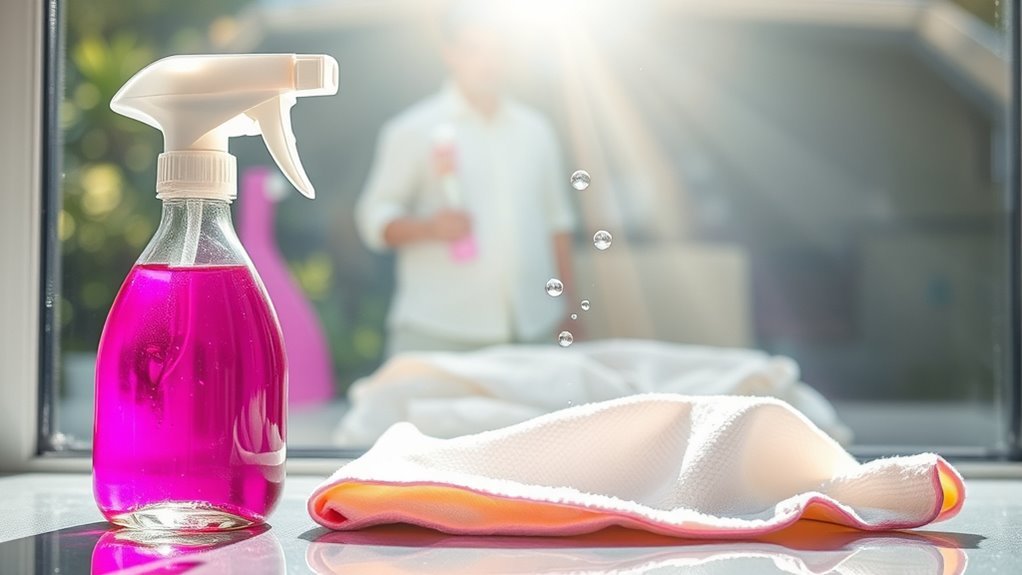
Achieving a streak-free shine depends largely on your technique. To get the best results, you want to focus on the streak free technique and ideal application of your DIY cleaner. First, spray the cleaner evenly across the glass surface, then wipe in smooth, circular motions using a microfiber cloth. Avoid over-saturating, as too much liquid causes streaks. Finally, dry the edges to prevent drips.
| Step | Action | Tip |
|---|---|---|
| 1. Spray | Apply evenly | Use a fine mist spray |
| 2. Wipe | Circular motions | Use a clean microfiber |
| 3. Dry | Edges and corners | Prevent drips/streaks |
Mastering this process gives you freedom to enjoy spotless, streak-free glass every time.
Tips for Maintaining Sparkling Glass Surfaces
Keeping your glass surfaces sparkling requires regular care and smart habits. To master glass maintenance, clean your windows and mirrors frequently using your DIY cleaner to prevent buildup that dulls their shine. Always wipe in a circular motion to lift dirt without leaving streaks. For streak prevention, use a microfiber cloth instead of paper towels or rough fabrics, which can scratch or leave lint behind. Avoid cleaning glass in direct sunlight, as it dries too fast and causes streaking. Finally, maintain your tools by washing cloths regularly to avoid transferring dirt back onto surfaces. With these tips, you’ll enjoy crystal-clear glass that reflects your style and freedom without hassle. Consistency is key—stick to a routine, and your glass will stay brilliantly clean.
Common Mistakes to Avoid When Cleaning Glass
Many people make simple mistakes that can leave glass surfaces streaky or scratched. To keep your glass clear and flawless, avoid these common errors:
Avoid common mistakes that cause streaks or scratches to keep your glass surfaces clear and flawless.
- Using paper towels – they often leave fibers and cause glass streaks.
- Cleaning in direct sunlight – it dries the cleaner too fast, leaving marks.
- Applying too much cleaner – excess liquid can drip and create streaks.
- Using abrasive cloths or sponges – they scratch delicate glass surfaces.
Stick to microfiber cloths and gentle cleaning techniques to enjoy freedom from frustrating streaks and damage. By avoiding these pitfalls, you’ll maintain sparkling glass that lets your space shine without hassle.
Eco-Friendly Alternatives to Commercial Glass Cleaners
Why rely on harsh chemicals when there are simple, eco-friendly options for cleaning your glass surfaces? Embracing natural cleaning solutions not only frees you from toxins but also supports green cleaning practices that protect the planet. You can easily make your own effective glass cleaner using ingredients like vinegar, lemon juice, and baking soda.
| Ingredient | Benefits | Usage Tip |
|---|---|---|
| White Vinegar | Cuts grease, streak-free | Dilute with water (1:1) |
| Lemon Juice | Natural disinfectant | Mix with water for shine |
| Baking Soda | Gentle abrasive | Use in paste form for tough spots |
Frequently Asked Questions
Can Homemade Glass Cleaner Be Used on Tinted Windows?
You might wonder about tinted window compatibility when using a homemade cleaner. While homemade cleaner effectiveness is great for regular glass, you need to be cautious with tinted windows. Some DIY mixtures can damage the tint film, causing bubbling or discoloration. To keep your freedom to clean safely, always test your homemade cleaner on a small, hidden spot first, or choose a formula specifically labeled as safe for tinted surfaces.
How Long Does DIY Glass Cleaner Last Once Mixed?
You’ll find that the shelf life of your homemade glass cleaner usually lasts about one to two weeks. How long it stays effective depends a lot on storage conditions—keeping it in a cool, dark place and a sealed container helps preserve it longer. If you want to keep your cleaner fresh and ready to use, avoid direct sunlight and extreme temperatures, so you can enjoy the freedom to clean whenever you like without worry.
Is Vinegar Safe for All Types of Glass Surfaces?
You want something effective, affordable, and natural—that’s where vinegar’s effectiveness shines. But you can’t just use vinegar on all glass types without caution. While it works great on standard windows and mirrors, it’s not safe for delicate surfaces like tinted, laminated, or coated glass. You’ll want to avoid damaging those finishes. So, before you plunge in, check the glass type and test a small spot first to keep your freedom to clean worry-free.
Can Essential Oils Be Added for Fragrance in Glass Cleaner?
You can definitely add essential oils for fragrance in your glass cleaner, giving you freedom to choose scents that uplift your space. Essential oil benefits include natural antibacterial properties, so they enhance cleaning without harsh chemicals. Plus, you get a variety of fragrance options—from invigorating peppermint to calming lavender—letting you customize your cleaner’s scent. Just be sure to mix them well so the oils don’t separate and leave residue on your glass.
How Do I Store Homemade Glass Cleaner Safely?
You’ll want to store your homemade cleaner in bottles made from materials like glass or high-quality plastic to avoid any chemical reactions. Keep the bottle tightly sealed and store it in a cool, dry place away from direct sunlight or heat sources. These storage conditions help maintain the cleaner’s effectiveness and prevent spills. Label your bottle clearly, so you always know what’s inside, giving you the freedom to use it safely whenever you need.