Essential Tools for Cleaning Sofa
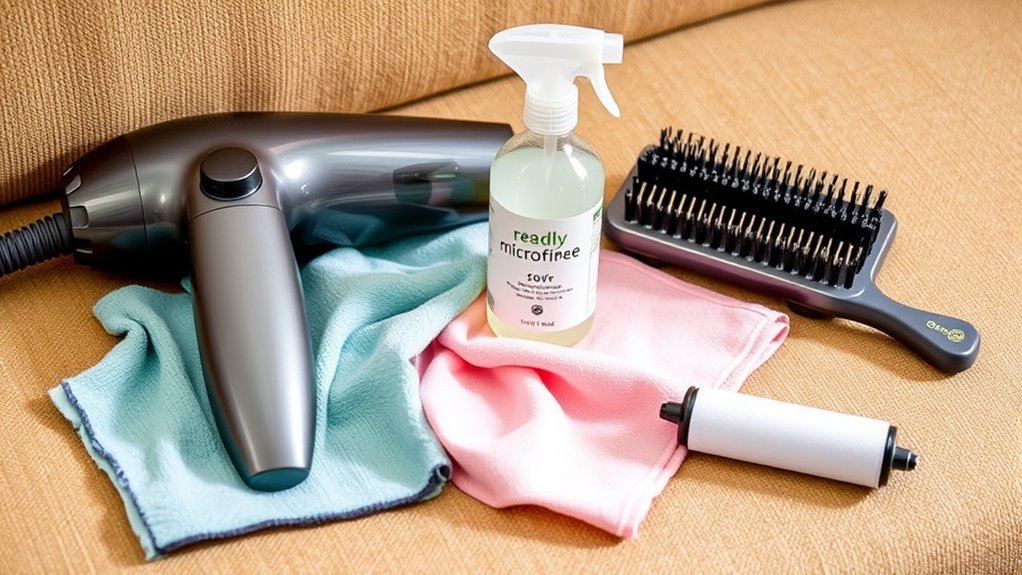
You’ll want a vacuum with upholstery attachments to easily remove dust and hair from your sofa’s fabric. Pair it with a soft bristle brush and microfiber cloths to gently lift dirt without damage. For stains, keep fabric or leather cleaners and stain remover pens handy. A lint roller quickly tackles pet hair and crumbs. Including a steam cleaner can deep clean tough spots. Keep these essentials nearby, and you’ll find simple ways to maintain a fresh, inviting sofa.
Vacuum Cleaner With Upholstery Attachments

Although it might seem simple, using a vacuum cleaner with upholstery attachments is one of the most effective ways to keep your sofa clean. You want a vacuum that offers versatile vacuum features like adjustable suction and specialized nozzles designed for fabric surfaces. These features help you reach every corner and crevice, removing dust, crumbs, and pet hair without damaging the fabric. Incorporating this tool into your regular upholstery maintenance routine saves you time and effort while extending your sofa’s life. When you choose a vacuum with dedicated upholstery attachments, you gain the freedom to keep your living space fresh and inviting without relying on harsh chemicals or expensive professional cleaning. It’s a smart, efficient way to maintain your sofa’s appearance and comfort every day.
Soft Bristle Brush
A soft bristle brush is an essential tool for gently loosening dirt and debris from your sofa’s fabric without causing damage. One of the soft bristle benefits is its ability to reach deep into the fibers, freeing trapped dust while preserving the material’s integrity. To make the most of this tool, focus on proper usage: use light, circular motions rather than harsh scrubbing. This approach guarantees you avoid wear and tear, keeping your sofa fresh and vibrant. You’ll appreciate how easily the soft bristle brush works on delicate fabrics, allowing you to clean effectively without restrictions. Incorporating this brush into your routine gives you the freedom to maintain your sofa’s appearance without stress or damage, making your cleaning process both efficient and gentle.
Microfiber Cloths
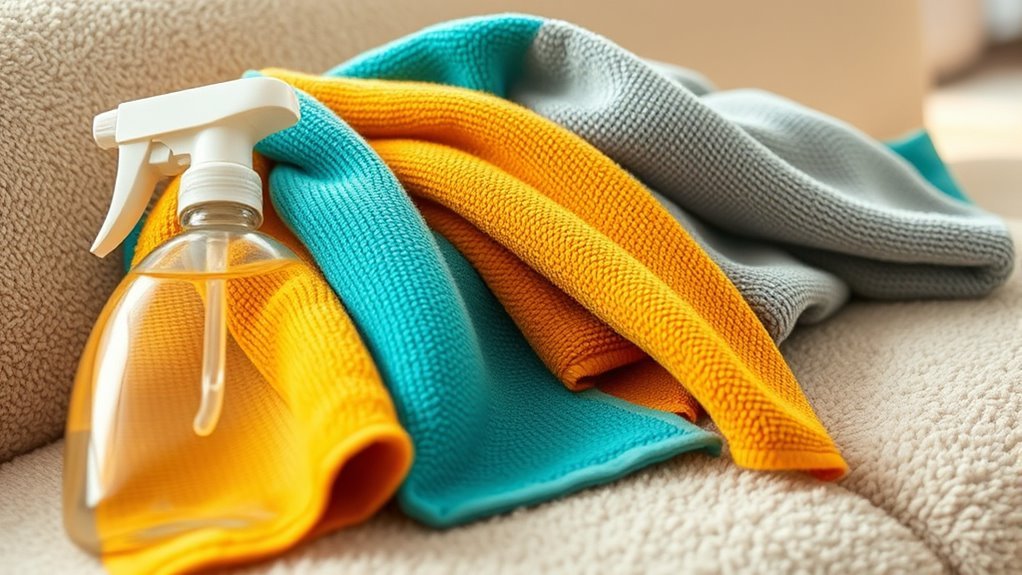
When you want to quickly wipe away dust and spills without harming your sofa’s fabric, microfiber cloths are your best bet. Their unique fibers trap dirt and moisture efficiently, making cleaning effortless. Understanding the different microfiber cloth types can help you choose the right one for your sofa’s needs.
Microfiber cloths quickly trap dust and spills, cleaning your sofa gently and effectively every time.
Here are some microfiber cloth benefits to keep in mind:
- Highly absorbent, perfect for spills
- Non-abrasive, safe on delicate fabrics
- Reusable and eco-friendly, freeing you from waste
- Effective without harsh chemicals, preserving your freedom from toxins
Fabric Upholstery Cleaner
When choosing a fabric upholstery cleaner, you’ll want to contemplate the type that suits your sofa’s material. Knowing the right way to apply the cleaner can make a big difference in effectiveness. Plus, having a few stain removal tips up your sleeve will help you tackle spots quickly and safely.
Types of Fabric Cleaners
Since different fabrics react uniquely to cleaning agents, you’ll want to choose the right type of fabric upholstery cleaner for your sofa. Matching your cleaner to your fabric type guarantees effective stain removal without damage, letting you enjoy freedom from worry. Here are common fabric cleaners to take into account:
- Foam Cleaners: Great for delicate fabrics, offering gentle cleaning without soaking.
- Spray Cleaners: Ideal for quick spot treatments on durable materials.
- Solvent-Based Cleaners: Perfect for stubborn stains on synthetic fabrics but require ventilation.
- Enzyme Cleaners: Best for organic stains like food or pet messes, safe on many natural fibers.
Understanding your sofa’s fabric type and appropriate cleaning techniques will help you keep it fresh and vibrant, giving you control over your cleaning routine without hassle.
Application Techniques
Mastering the right application techniques guarantees your fabric upholstery cleaner works effectively without damaging your sofa. Start by testing the cleaner on a hidden spot to avoid surprises. Lightly spray or apply the cleaner, ensuring even coverage without soaking the fabric. Use a soft brush or cloth to gently agitate the surface, loosening dirt without harsh scrubbing. Remember, patience is key; let the cleaner sit as directed before wiping away with a damp cloth. Avoid over-wetting to prevent mold or fabric distortion. Incorporate these cleaning techniques into your routine to maintain your sofa’s look and feel. Regular maintenance tips, like vacuuming before cleaning and air drying thoroughly, will help preserve your sofa’s freshness and extend its lifespan.
Stain Removal Tips
Applying fabric upholstery cleaner properly sets the stage for effective stain removal. To keep your sofa looking fresh and maintain fabric care, follow these stain removal tips that give you freedom from stubborn spots without hassle:
- Blot stains immediately with a clean cloth—don’t rub, to avoid spreading.
- Test the cleaner on a hidden area first to verify it won’t damage your fabric.
- Use gentle, circular motions when applying the cleaner to lift stains effectively.
- Allow the fabric to air dry completely to prevent mold and odors.
Incorporating these stain prevention methods into your routine helps protect your sofa and extends its life, giving you the freedom to enjoy your space worry-free.
Leather Cleaner and Conditioner
To keep your leather sofa looking its best, you’ll need both a good leather cleaner and conditioner. The right cleaner removes dirt without damaging the material, while a conditioner protects and nourishes the leather. Choosing products designed specifically for leather guarantees your sofa stays soft and durable over time.
Benefits of Leather Conditioner
Although leather sofas are durable, they still need regular care to stay soft and vibrant. Using a leather conditioner is one of the smartest leather maintenance tips you can follow to keep your sofa looking its best. The benefits of conditioning go beyond just appearance—it helps preserve your freedom to enjoy your furniture without constant worry.
Here’s what leather conditioner does for you:
- Restores moisture, preventing cracks and dryness
- Enhances softness for a comfortable feel
- Protects against stains and spills by creating a barrier
- Extends the lifespan of your leather sofa
Choosing the Right Cleaner
How do you guarantee your leather sofa gets the care it deserves? The key lies in choosing the right cleaning agents designed specifically for leather. Unlike other fabric types, leather needs gentle products that protect its natural oils and texture without causing damage. Avoid harsh detergents or general-purpose cleaners—they can strip away the leather’s finish, leading to cracks and dryness. Instead, opt for a dedicated leather cleaner paired with a conditioner to maintain flexibility and shine. Before applying any product, always test it on a hidden spot to ascertain compatibility. By selecting the right cleaner, you’re not just maintaining your sofa—you’re preserving your freedom to relax without worry, knowing your leather stays supple and beautiful for years to come.
Steam Cleaner

A steam cleaner is a powerful tool that can breathe new life into your sofa by removing dirt, stains, and allergens with just hot steam and minimal chemicals. When you use a steam cleaner, you’re tapping into steam cleaner benefits like deep sanitization and quick drying, freeing you from harsh cleaning agents. Mastering steam cleaning techniques means you can effortlessly revive your sofa’s fabric and maintain a healthier living space. Here’s why you should consider it:
- Penetrates deep into fibers for thorough cleaning
- Kills dust mites and bacteria without chemicals
- Quick drying time, so you’re not stuck waiting
- Eco-friendly and safe for most sofa materials
With a steam cleaner, you gain freedom from tough stains and allergens while keeping your sofa fresh and inviting.
Stain Remover Pens
Two stain remover pens can be your best allies when you need to tackle spills quickly and effectively. They offer a simple, on-the-go solution for stain prevention, letting you act fast before stains set into your sofa fabric. Compact and easy to carry, these pens are true travel essentials—perfect for keeping in your bag or car. Whenever life throws accidental splashes or drops your way, you won’t have to stress. Just dab the pen on the affected area and watch the stain fade away. They’re designed for convenience and freedom, so you can maintain your sofa’s fresh look without hassle. Stain remover pens empower you to handle messes immediately, giving you peace of mind wherever you are.
Lint Roller
While stain remover pens handle spills, a lint roller comes in handy for removing dust, pet hair, and crumbs from your sofa’s surface. You’ll appreciate the lint roller benefits, especially how quick and effortless it makes cleaning. Its sticky sheets grab debris that vacuuming might miss, giving your sofa a fresh look in minutes.
For effective lint roller usage, keep these tips in mind:
- Roll gently to avoid damaging fabric
- Replace sticky sheets regularly for maximum pickup
- Use in hard-to-reach corners and crevices
- Store it nearby for quick touch-ups
With a lint roller, you gain freedom from stubborn dirt without fuss, helping you maintain a cozy, inviting sofa anytime you want.
Frequently Asked Questions
How Often Should I Deep Clean My Sofa?
Think of your sofa as a cozy island in your living room—deep cleaning frequency should be about every 6 to 12 months to keep it feeling fresh and inviting. If you want to maintain that comfort without feeling tied down, follow upholstery maintenance tips like regular vacuuming and spot cleaning. This way, you’ll enjoy your freedom without the hassle of stubborn stains or lingering odors taking over your space.
Can I Use Homemade Cleaners on My Sofa?
You can definitely use homemade recipes to clean your sofa, giving you freedom from harsh chemicals. Just remember, the cleaning effectiveness varies depending on the ingredients you choose. For example, a mix of vinegar and water works well on many fabrics but might not be suitable for delicate materials. Always test a small hidden spot first to avoid damage. Homemade cleaners can be a safe, budget-friendly option if you’re cautious and informed.
What Is the Best Drying Method After Cleaning?
When you’re drying your sofa after cleaning, the best drying method depends on fabric types. For delicate fabrics like silk or velvet, air drying is gentle and preserves texture. For sturdier materials like microfiber or leather, you can use a fan or open windows to speed things up. Avoid direct sunlight, as it can fade colors. Using the right drying techniques lets you enjoy a fresh sofa without restrictions or damage.
Are There Any Cleaning Tools to Avoid for Sofas?
Imagine using a sledgehammer to crack a walnut—it’s overkill and can cause damage. That’s how harsh cleaning chemicals can be for your sofa’s fabric; they might strip colors or weaken fibers. Also, steer clear of stiff vacuum attachments that can snag or tear delicate upholstery. Instead, choose gentle tools and mild cleaners to keep your sofa looking fresh without restricting your freedom to relax and enjoy it.
How Do I Prevent Future Stains Effectively?
To prevent future stains effectively, you’ll want to invest in stain-resistant treatments for your sofa. Applying fabric protection creates a barrier that repels spills and dirt, letting you enjoy your space without constant worry. Choose products designed for your sofa’s material, and reapply as recommended. This way, you can relax freely, knowing your furniture stays cleaner longer and looks great, no matter what life throws your way.