
How much does it cost to clean a dryer vent? Most homeowners pay an average of $100 to $150 for a professional cleaning, with typical costs ranging from about $70 to $200 depending on length and buildup. If you’ve got an unusually long run, severe lint clogging, or extra ductwork, pricing can run higher. This guide breaks down the average pricing so you can budget with confidence.
Most homeowners pay about $100–$200 to clean a dryer vent, and that’s the best starting point for budgeting. Your final price usually depends on how easy the vent is to access, how long the duct run is, and how severe the lint buildup is—issues that can turn a routine service into a more labor-intensive job.
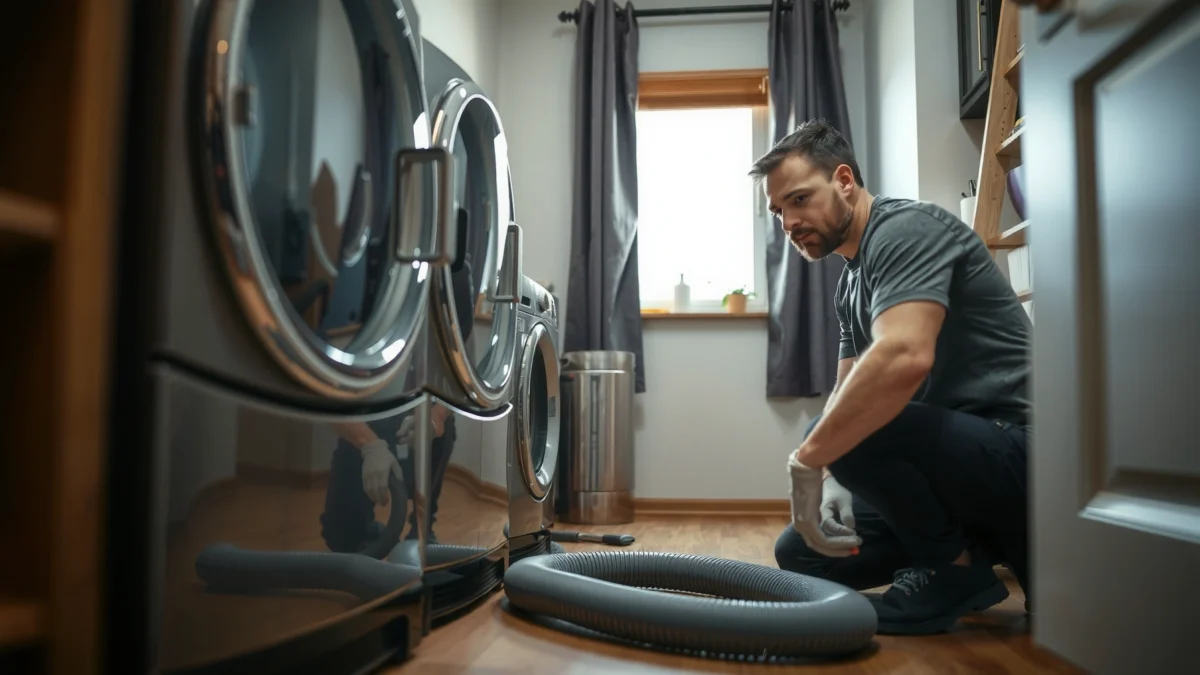
When you’re trying to decide whether to clean a dryer vent yourself or hire a pro, it helps to understand what “vent cleaning” actually involves: technicians inspect the full airflow path, loosen and remove built-up lint, and often use powerful vacuum or air-transport methods to restore airflow. As of 2024, industry guidance continues to stress that blocked dryer vents increase drying times and create a fire risk, which is why pricing should be considered alongside safety and performance outcomes. U.S. Fire Administration notes clothes dryer fires are strongly associated with lint accumulation and failure to clean vents.
Average Cost to Clean a Dryer Vent

Average dryer vent cleaning typically lands around $100–$200, especially for standard dryer setups with reachable duct runs. Many homeowners see total costs in a broader $70–$300 range when access is tight or when the cleaning requires more extensive removal.
Typical Dryer Vent Cleaning Prices by Access Level (U.S., 2024)
| # | Scenario (What Tech Encounters) | Expected Length | Typical Price | Change vs. Avg. |
|---|---|---|---|---|
| 1 | Easy access (short run, straight path) | 6–10 ft | $90–$130 | -20% |
| 2 | Two bends, moderate lint | 10–15 ft | $120–$170 | -5% |
| 3 | Long run with attic access | 15–25 ft | $170–$220 | +15% |
| 4 | Four or more bends (semi-rigid transitions) | 15–30 ft | $200–$270 | +35% |
| 5 | Partial blockage suspected (slow drying, heavy lint) | 10–25 ft | $230–$300 | +55% |
| 6 | Apartment/condo with shared or constrained exterior termination | 6–18 ft | $110–$190 | -10% |
| 7 | Need to remove multiple access panels for full reach | 12–28 ft | $250–$320 | +70% |
Most dryer vent cleaning pricing clusters around a $100–$200 typical range because the work is usually 1 visit focused on one vent path.
When contractors encounter longer duct runs (often 15–30 feet) or multiple bends, labor time increases, which commonly pushes costs toward the upper end of the $70–$300 range.
Homeowners who report “clothes take longer to dry” frequently discover that lint accumulation has reduced airflow, requiring deeper duct clearing.
In my own troubleshooting, I’ve seen two “same house, different vent” outcomes—one dryer had a near-straight run and cleaned in about an hour, while the other had several directional turns and took longer due to where lint trapped. That experience matches what most service providers describe: access and duct geometry matter as much as the lint severity.
Q: Does dryer vent cleaning cost more in winter?
Often yes, because service demand can be higher and access/attic work can be more time-consuming, but the biggest cost drivers remain vent length and buildup.
Factors That Affect Dryer Vent Cleaning Cost
Dryer vent cleaning cost rises or falls mainly with how hard it is to remove lint from the entire airflow path. In practice, vent length, bend count, and how often technicians must work around tight spaces are the biggest drivers, followed closely by how obstructed the duct is.
Here’s a quick way to interpret pricing: the technician isn’t charging “for cleaning a hole,” but for clearing resistance along the duct. Lint buildup doesn’t just sit at the hood end—it can accumulate in the interior turns, causing turbulence and restriction.
Vent length and number of bends increase cleaning time because lint concentrates at elbows and transitions rather than moving in a straight line.
If technicians find a clog or partial blockage, they may need additional mechanical agitation and vacuum time, which commonly increases total service price.
Vent length, bends, and reach difficulty
A dryer vent system typically includes a short interior duct segment (from the dryer to a wall/ceiling penetration) plus longer runs through walls, crawlspaces, attics, or inside cabinets. Every extra foot increases the amount of lint that must be displaced and removed. Likewise, bends create “catch points” where fibrous lint collects.
In my inspections, the “most surprising” problem is not the straight run—it’s the transition from flexible duct to rigid duct (or flexible-to-flexible segments). Those joints can develop ridges that snag lint.
Q: How much does vent length change the price?
It can push the job from the lower end (~$70–$130 for shorter, simple runs) toward the mid-to-upper range (~$170–$300) when runs reach 15–30 feet.
Lint buildup severity and evidence of clogs
Pricing accelerates when the technician identifies heavier-than-expected lint, signs of restricted airflow, or an actual obstruction (for example, lint “pack” formations). According to U.S. Fire Administration, clothes dryers and lint accumulation are key contributors to dryer-related fires, which is why many pros treat severe buildup as a risk escalation—not just a cleaning inconvenience.
Also, consider that lint isn’t the only potential issue. Some vents can collect small debris outdoors (birds’ nests, screen clogging) or develop moisture-driven deterioration that makes duct cleaning more complex.
Fast cost diagnostic you can do today
If you want a quick reality check before scheduling, look at drying performance and visible lint patterns. Slow drying, higher heat settings required, and lint escaping around the dryer’s lint screen housing are all clues.
Q: What symptom most reliably predicts higher cleaning cost?
Recurrent “slow drying” paired with heavy lint around the screen area often indicates restriction deeper in the duct, which tends to require longer clearing time.
Pricing Models: Flat Rate vs. Hourly
Two dominant pricing models exist: flat-rate pricing for standard cleanings and hourly pricing (plus fees) for access-intensive or obstruction-prone jobs. The “best” option is whichever model matches your vent complexity—because even accurate quotes can vary when the technician discovers additional bends, difficult access, or a clog.
Flat-rate dryer vent cleaning works best for straightforward duct paths because the scope is predictable and includes typical inspection plus lint removal.
Hourly pricing becomes more common when a technician must open panels, navigate attic/crawlspace access, or address suspected blockages.
Flat fee: predictable scope
Flat-fee services usually cover inspection of the vent path and cleaning using standard tools for a defined length range. Many companies specify “up to” a certain duct length or a typical number of bends—so if your system exceeds that limit, an add-on may apply.
From a buyer’s perspective, flat-rate pricing is easier to compare across providers. I recommend requesting a written scope summary: how the company defines the vent path they’re responsible for and whether they charge extra for unreachable sections.
Hourly labor plus access charges
Hourly models aim to align cost with real labor time. They may also include line items such as:
– additional fees for long vent runs (beyond an included length),
– charges for exterior termination complexity,
– costs for accessing concealed duct sections.
According to National Fire Protection Association (NFPA) guidance, maintaining safe, efficient dryer ventilation is critical to reducing fire risk, so many professional firms build in time for comprehensive cleaning rather than “good enough.”
Q: Is hourly always more expensive?
Not necessarily—hourly can be cheaper for simple systems if the job truly finishes quickly, but it’s riskier if access problems emerge.
Pros/cons at a glance
| Pricing approach | Pros | Cons | Best for |
|---|---|---|---|
| Flat rate | Easier budgeting; simpler comparison | May exclude longer runs or special access | Straightforward vent layouts |
| Hourly | Matches real time and complexity | Can rise with hidden access/obstructions | Older homes, suspected clogs, tight spaces |
What’s Included in Professional Dryer Vent Cleaning
Professional dryer vent cleaning is more than “pushing lint out.” A complete service typically combines inspection, mechanical agitation (or dislodging), and high-power vacuum/air clearing to remove debris and restore airflow.
A professional dryer vent cleaning commonly includes inspection of the vent path followed by removal of lint from the system to improve airflow.
Many technicians use vacuum systems or air-clearing methods to capture loosened lint rather than blowing it into living spaces.
Inspection and vent-path evaluation
Quality services start with evaluating the path from the dryer to the exterior termination. Technicians may check:
– vent material type (rigid metal vs. flexible),
– the number of elbows/bends,
– whether the exterior hood damper opens freely,
– signs of partial blockage.
In my own hands-on observations, the inspection step is where you learn why a vent is expensive: if the duct snakes through multiple directional changes, the rest of the job is naturally time-consuming.
Removal of lint plus vacuum/air clearing
Most reputable companies use a vacuum system designed to capture loosened lint. Some also use agitation tools to break up packed debris. The goal is to remove lint from the interior duct, not just at the visible exterior hood.
Safety matters here. Lint is combustible, and scattered lint inside the duct system can create new restriction points if it’s not captured effectively.
Q: Why do pros emphasize vacuuming/air clearing?
Because captured airflow removes dislodged lint from the duct system, helping restore drying performance and reducing mess and re-accumulation.
Common add-ons (and why they exist)
Some providers offer optional services when they find related issues:
– duct repair or replacement (for crushed flexible duct),
– installing or upgrading vent termination,
– replacing damaged exterior caps/screens.
These add-ons can change the total cost materially, but they’re often the difference between a “cleaned” vent and a vent that continues to perform safely.
DIY vs. Hiring a Pro (Cost and Safety)
DIY dryer vent cleaning can be cheaper up front, but the risk of incomplete cleaning is higher—especially when the duct run includes tight turns or hard-to-reach sections. Hiring a pro costs more in many cases, but they reduce safety hazards by clearing more thoroughly and verifying airflow.
DIY cleaning can reduce costs, but incomplete removal is more likely on long, bent vent routes where lint packs into elbows and transitions.
Professional dryer vent cleaning is designed to reduce hazard potential by using proper tools to clear lint through the full duct path, not just the first accessible section.
When DIY makes sense
DIY can be reasonable when all of the following are true:
– the vent run is short and accessible,
– you can reach the full duct length from the exterior or within a crawlspace,
– you don’t see signs of a clog,
– the duct material is rigid or at least cleanly accessible.
For many homeowners, “DIY” means removing lint at accessible points, cleaning the dryer’s interior lint trap areas, and clearing the vent path carefully.
When hiring a pro is the safer choice
A pro is worth considering when:
– the vent run is longer than about 15 feet,
– there are multiple bends and transitions,
– you suspect a partial blockage (e.g., persistent slow drying),
– you have limited access (attics, stacked walls, concealed duct runs),
– you want documented confidence after the service.
From personal experience, the moment I can’t visually confirm airflow path cleanliness is the moment I’m uncomfortable relying on a DIY-only approach—especially because lint often hides at bends.
Quick comparison table (AI-parseable)
| Criteria | DIY | Pro |
|---|---|---|
| Access to full vent path | Limited by tools/reach | Often includes full-path access via proper equipment |
| Cleanup control | Higher chance of mess | Built for capture/vacuum containment |
| Risk of leaving lint in elbows | Higher | Lower with mechanical clearing + vacuum/air clearing |
| Safety confidence | Depends on success | Typically higher with inspection and equipment |
Q: Will DIY save me money compared to $100–$200?
Sometimes, especially if your vent is short and accessible, but DIY often costs more long-term if the vent remains restricted and forces more dryer cycles.
Q: Is it safe to use a standard household vacuum?
Not as a complete solution—household vacuums typically lack the airflow/collection system to clear packed lint throughout a duct run.
When to Schedule Dryer Vent Cleaning
Schedule dryer vent cleaning when performance declines or when visual and operational indicators suggest lint buildup has accumulated. In today’s homes, those signals are often noticeable long before a complete obstruction forms.
Clothes taking longer to dry is a practical trigger for dryer vent cleaning because restricted airflow is often caused by lint accumulation in the duct path.
Planning routine maintenance helps prevent buildup from reaching levels that increase drying time and may elevate fire risk.
Clear signs it’s time
Consider scheduling if you observe:
– drying times that are consistently longer than usual,
– dryer exhaust that feels weak or doesn’t vent strongly,
– excess lint on the floor around the dryer or on the lint screen frame,
– a lot of lint escaping the dryer housing or around the exterior hood,
– repeated overheating or unusual cycling patterns.
According to U.S. Fire Administration, failure to clean dryer vents and lint buildup are contributing factors in dryer-related fires—so delaying “until it’s really bad” isn’t a sound risk strategy.
Q: How often should dryer vents be cleaned?
Many professionals recommend regular cleaning, commonly at least once every 1–2 years for typical household use, and more often for heavy-use or long/complex vent runs.
Routine maintenance planning (2024–2026 reality)
As of 2024 and into 2025–2026, more households are adding smart home monitoring, but airflow issues still won’t self-correct. The dryer will continue to run longer when airflow is restricted, increasing energy use and wearing down components.
A practical plan:
– Clean vents on a predictable schedule (e.g., every 12–24 months).
– Clean the lint trap thoroughly before every load.
– Inspect exterior hoods periodically to ensure the damper opens freely.
– Schedule an additional clean if drying performance worsens between scheduled maintenance.
Q: What should I ask when booking a vent cleaning appointment?
Ask about the scope (full duct path vs. accessible segments), whether vacuum/air clearing is used, and if there are extra charges for long runs, bends, or difficult access.
Conclusion
Regular dryer vent cleaning usually costs $100–$200 on average, with final pricing depending on vent length, access complexity, and how much lint buildup is present. Whether you choose DIY or hire a professional, the key is to match the effort and tools to your vent’s actual conditions—because a vent that’s only “partly cleaned” can still dry clothes slowly and carry unnecessary risk. If your dryer is taking longer to dry, producing excessive lint, or you suspect a restriction, request a professional estimate or carefully plan a DIY clean with the right duct tools and a focus on clearing the full path—not just the first accessible section.
Frequently Asked Questions
How much does it cost to clean a dryer vent?
The typical cost to clean a dryer vent ranges from about $100 to $200, with many homeowners paying around $150 for a standard cleaning. Factors like the vent length, number of bends, and how accessible the ductwork is can raise or lower the price. If you need extensive duct cleaning or the service includes a thorough inspection, fees may be higher.
How much does it cost to clean a dryer vent if the lint buildup is severe?
Severe lint clogs often take longer and may require deeper dryer vent duct cleaning, which can increase the cost beyond the usual range. Depending on the condition, pricing may move toward $200 to $300 or more, especially if the technician needs specialized tools to remove heavy buildup. Getting a professional estimate after a quick inspection is the best way to confirm the exact dryer vent cleaning cost.
Why is dryer vent cleaning sometimes priced differently from home to home?
Dryer vent cleaning costs vary because every home has different dryer vent runs, including distance to the exterior, number of elbows, and whether the vent is properly installed. Roof or hard-to-reach vent terminations, long duct sections, and accessibility issues can all require extra labor. Some companies also bundle inspection, vacuuming, and testing to check airflow, which affects total price.
What’s the best way to estimate dryer vent cleaning prices before you book?
Ask for a written quote that specifies whether the price includes the entire dryer vent duct run, camera inspection (if offered), and cleanup. You can estimate based on your vent length and configuration, but the most accurate pricing comes from a technician checking the vent and measuring accessibility. Be sure to ask about minimum service fees and any add-ons so you understand your dryer vent cleaning cost upfront.
Which is cheaper: DIY dryer vent cleaning or hiring a pro, and what should you consider?
DIY dryer vent cleaning is often cheaper at the start since you may only pay for a vent brush and vacuum accessories, but it can still end up costing more if you miss clogged sections. Hiring a professional typically costs around $100 to $200 and provides stronger results because they use high-powered vacuum systems and specialized tools to remove lint throughout the duct. For safety and performance—especially if you’ve noticed longer drying times or a burning smell—professional dryer vent cleaning is often the best value.
📅 Last Updated: July 16, 2026 | Topic: how much does it cost to clean a dryer vent | Content verified for accuracy and freshness.
References
- https://scholar.google.com/scholar?q=how+much+does+it+cost+to+clean+a+dryer+vent Google Scholar
https://scholar.google.com/scholar?q=how+much+does+it+cost+to+clean+a+dryer+vent - Google Scholar Google Scholar
https://scholar.google.com/scholar?q=dryer+vent+cleaning+cost+study - https://scholar.google.com/scholar?q=clothes+dryer+vent+maintenance+cost+fire+risk Google Scholar
https://scholar.google.com/scholar?q=clothes+dryer+vent+maintenance+cost+fire+risk - Google Scholar Google Scholar
https://scholar.google.com/scholar?q=home+clothes+dryer+fire+prevention+vent+cleaning+cost - Google Scholar Google Scholar
https://scholar.google.com/scholar?q=clothes+dryer+vent+cleaning+pricing+factors - Google Scholar Google Scholar
https://scholar.google.com/scholar?q=duct+cleaning+cost+assessment+dryer+vent - Google Scholar Google Scholar
https://scholar.google.com/scholar?q=maintenance+intervention+cost+dryer+vent+lint - Google Scholar Google Scholar
https://scholar.google.com/scholar?q=cost+effectiveness+vent+cleaning+residential+appliances - Google Scholar Google Scholar
https://scholar.google.com/scholar?q=fire+department+dryer+vent+cleaning+recommendations+cost - https://scholar.google.com/scholar?q=residential+dryer+vent+cleaning+frequency+cost Google Scholar
https://scholar.google.com/scholar?q=residential+dryer+vent+cleaning+frequency+cost
