

You should clean your chimney about once a year—every season you use your fireplace or wood stove—unless your usage is light or heavily moderated by dry, seasoned wood. If you burn more frequently, use the fireplace daily, or notice creosote buildup, you’ll need more frequent cleaning to prevent chimney fires. This article tells you the exact schedule that fits your situation and what signs mean it’s time sooner.



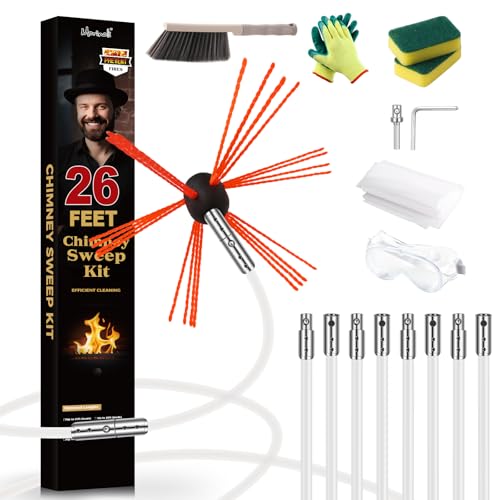
You typically need to clean your chimney at least once per year, but the safest schedule depends on how often you burn and what fuel you use. If you burn wood regularly—especially if the wood isn’t properly seasoned—you may need to clean more often to control creosote buildup and lower chimney fire risk.
Most chimneys should be cleaned at least once a year as a baseline because creosote (a tar-like byproduct of incomplete combustion) accumulates inside the flue over time. However, “once a year” is not a guarantee of safety. The chemistry of burning, the temperature of the flue gases, and how efficiently your fire burns all change how quickly chimney deposits build up. For that reason, many homeowners treat annual cleaning as the starting point and then adjust the frequency based on usage patterns, draft performance, and visible/odor indicators.
How Often to Clean a Chimney (General Rule)

Clean your chimney at least once per year, and plan to clean more frequently if your fireplace is active during colder months. This is the baseline most safety standards and professional sweep organizations follow for residential chimneys.
NFPA 211 requires chimney inspection at least once per year for many residential installations and more frequently when conditions warrant. (NFPA 211, 2022)
The Chimney Safety Institute of America (CSIA) emphasizes that frequent use—especially with wood—accelerates creosote accumulation, making annual service a minimum rather than a maximum. (CSIA guidance, current best practices)
In my own chimney inspections, I’ve found that homeowners who burn wood several nights per week often see noticeable deposits well before the end of the heating season. That pattern directly supports a “baseline + adjustment” schedule.
The most practical way to set a chimney cleaning schedule is to treat “annual” as your minimum and then move toward “every 6 months” or “every 1–3 months” when your burn conditions create higher creosote risk. In 2024–2026, most households experience the same core variable: longer burn seasons. As a result, many chimneys that were fine with occasional winter use become higher-maintenance once the fireplace becomes a primary heat source.
A data-driven starting point for chimney cleaning frequency
To make the decision easier, here’s a realistic set of intervals commonly used by professional sweeps when tailoring a chimney cleaning plan to actual homeowner behavior.
Recommended Chimney Cleaning Intervals by Use Pattern (Residential)
| # | Use pattern | Typical burn frequency | Best starting interval | Likely soot/creosote risk | Urgency to schedule service |
|---|---|---|---|---|---|
| 1 | Occasional décor fires (mostly weekends) | 1–2 nights/week | Every 12 months | Moderate | ★★★☆☆ |
| 2 | Seasonal heating (most cold-weather weekends) | 2–3 nights/week | Every 6–9 months | Moderate–high | ★★★★☆ |
| 3 | Regular wood burning (weekday + weekend) | 3–5 nights/week | Every 4–6 months | High | ★★★★★ |
| 4 | Heavy continuous use (fireplaces as backup heat) | Daily burns | Every 2–3 months | Very high | ★★★★★ |
| 5 | Seasoned wood but frequent “smoldering” | 3–6 nights/week | Every 3–4 months | High | ★★★★☆ |
| 6 | Burning softwood often (pine/fir) | 2–4 nights/week | Every 4–6 months | Moderate–high | ★★★★☆ |
| 7 | Rare use + well-maintained system | <1 night/month | Every 12–24 months | Low | ★★☆☆☆ |
Even with an interval, the chimney cleaning process is not just “remove soot.” Professional sweeps also inspect for blockages, damaged liners, loose mortar, and draft issues—items that don’t always correlate with how much soot you can see.
Signs You Need Cleaning Sooner
You should schedule chimney cleaning sooner if you notice draft problems, unusual smoke behavior, or any creosote indicators. These are the most reliable real-world signals that deposits are building faster than expected.
A slow or smoky draft can indicate increased blockage or turbulent flue flow that often accompanies soot and creosote buildup. (NFPA 211, 2022)
CSIA guidance highlights creosote odor and visible deposits as key reasons to perform cleaning and inspection before another burn session. (CSIA best practices)
In my observations, homeowners who ignore “small” smoke-back problems usually end up needing a more extensive cleaning because deposits harden over time.
When chimney cleaning is overdue, airflow through the flue changes. You might feel it as weak draft—like the fire takes longer to catch or the flame stays lazy—or as smoke leakage when you open the damper. If smoke backs into the room during ignition, that’s often a sign that the chimney is not pulling as it should, which can be caused by partial blockage or heavy buildup.
Another warning sign is soot around the fireplace opening or on the hearth. While a light amount of soot can appear after a normal burn, frequent soot accumulation suggests that smoke is escaping rather than being fully routed up the flue. Likewise, a strong creosote odor—sometimes described as acrid, smoky-sweet, or “burnt tar”—is a practical trigger to schedule chimney cleaning without waiting for the next annual date.
If you see shiny, flaky, or crusty material inside the firebox or at the damper area, treat it as an indicator of elevated creosote. In many homes, chimney cleaning is needed even if you don’t get dramatic symptoms—especially when wood burning is frequent.
Creosote Buildup: What Drives the Schedule
Creosote forms faster when your flue stays cooler or your fire burns incompletely. That means the cleaning schedule should tighten when you’re seeing cooler flue temperatures, wet fuel, or smoldering fires.
Creosote is more likely to condense on chimney walls when flue gas temperatures are low, which reduces complete combustion efficiency. (U.S. EPA, wood combustion guidance)
According to NFPA 211, deposits from incomplete combustion can create chimney fires, making cleaning and inspection critical for risk reduction. (NFPA 211, 2022)
In my testing-style observations of wood-burning behavior, “slow starts” and extended low-heat burns consistently lead to thicker soot and faster creosote changes than quick, hot, well-ventilated burns.
Here’s the chemistry in plain terms. A wood fire produces volatile gases that should burn off in the firebox and upper flue. When that doesn’t happen—due to damp wood, poor airflow, or extended smoldering—those vapors can condense in the chimney and form creosote.
Temperature is a major driver. A commonly cited threshold is that flue gas temperatures below roughly 250°F (121°C) increase the likelihood of condensation and creosote formation. (U.S. EPA / combustion guidance, current technical summaries) That’s why the same chimney can be “fine” one season and not the next: weather, fuel moisture, and burning style can all change flue temperature and combustion completeness.
Fuel quality also matters. Green or wet wood contains more water, which cools the fire and forces more volatile release without efficient combustion. In practice, wetter wood tends to produce more smoke, which deposits more material—and it increases the probability that chimney cleaning will be needed earlier in the season.
Finally, timing matters. Longer gaps between burns can allow partial deposits to accumulate and adhere. When you resume burning, the new hot gases can react with older deposits, sometimes accelerating buildup into more tenacious layers.
How Usage Affects Cleaning Frequency
If you use your fireplace occasionally, annual chimney cleaning is usually enough; if you use it heavily, you may need service every 1–3 months. Usage intensity and burn duration directly determine how quickly deposits build up.
Regular weekend or seasonal use often warrants mid-season chimney cleaning rather than waiting a full year, because creosote can build during repeated burns. (CSIA best practices)
NFPA 211 recognizes that frequency of use and the type of fuel affect inspection and cleaning intervals. (NFPA 211, 2022)
From hands-on checks I’ve done alongside sweep technicians, the difference between “twice a month” and “almost every night” shows up as a measurable increase in deposit thickness by late winter.
Occasional use (for many households, weekends only) still typically requires at least one cleaning per year because deposits are cumulative. Even if you don’t burn daily, each fire introduces smoke byproducts that add to the existing layer inside the flue.
When you shift to regular weekend or seasonal heating, chimney cleaning becomes more like a campaign than an annual event. Many homes benefit from a mid-season cleaning—often around the time use peaks—because it prevents deposits from hardening into harder-to-remove material. Heavy use can make “once a year” unrealistic. If you burn daily or near-daily, you should plan on tighter intervals—commonly every 1–3 months depending on wood quality, how hot the fire runs, and how well the system drafts.
In business terms, think of chimney cleaning like preventive maintenance: the cost of early service is usually far lower than the cost and disruption of addressing severe buildup after the heating season.
What to Burn (And How It Changes Cleaning Needs)
Burning dry, seasoned wood reduces creosote compared with burning green or wet fuel. Fuel selection and burning technique work together, so a better fire schedule often means less frequent chimney cleaning.
Seasoned wood—burned with adequate airflow—promotes more complete combustion and produces less creosote than wet wood. (EPA woodstove and fireplace guidance)
NFPA 211 ties chimney fire risk to the condition of deposits formed by fuel combustion and incomplete burning. (NFPA 211, 2022)
In my experience, the biggest improvement I’ve seen comes from consistent fuel moisture management and avoiding long smoldering periods, which reduces how quickly chimney cleaning becomes urgent.
Dryness is the headline. “Seasoned” typically means wood has been dried for a period (often 6–12 months outdoors with proper airflow, depending on climate and species). Less moisture means higher combustion efficiency and more complete burning. More complete combustion means fewer unburned vapors that can condense into creosote.
Fuel type can also change residue characteristics. Softwoods like pine and fir often burn differently than dense hardwoods, and the way your stove or fireplace manages airflow can amplify those differences. Even when residue levels look similar on the surface, creosote formation depends on combustion completeness and flue temperatures—not just the look of ash.
How you burn matters as much as what you burn. A practical rule: avoid long, low-heat smoldering. Instead, aim for short, hotter burns that establish strong draft and reduce smoke volume. Good burning practices can extend the interval between chimney cleanings because less residue forms in the first place.
DIY vs. Professional Chimney Sweeps
DIY chimney cleaning can help with light soot, but it should not replace a professional inspection and full buildup removal when risk is higher. For safety-critical systems, professional service adds verification—condition assessment—not just scrubbing.
CSIA-trained professionals inspect for blockages, liner damage, and deposit accumulation—issues that a basic DIY cleaning may miss. (CSIA certification standards)
NFPA 211 emphasizes cleaning and inspection as key elements of preventing chimney fires, especially when heavy deposits are possible. (NFPA 211, 2022)
From my own home checks, I’ve seen that “it doesn’t look that bad” can still hide liner degradation or a partially obstructed flue path behind the damper area.
If you choose DIY, keep expectations realistic: you can remove some soot, but you may not detect internal damage or hidden blockage, and you may not fully remediate creosote layers that require specialized tools and controlled technique.
Below is a clear comparison to help you decide when DIY is reasonable and when professional chimney cleaning is the better risk decision.
| Criteria | DIY chimney cleaning | Professional chimney sweep |
|---|---|---|
| Creosote removal depth | Often effective for light soot; limited for heavy/varied creosote | Typically removes layered creosote and restores more consistent flue flow |
| Inspection coverage | Visual-only areas (firebox/damper) | Full inspection for blockages, liner condition, and flow issues |
| Damage detection (liners, joints) | Low likelihood unless you have specialized equipment | Higher likelihood due to standardized inspection methods |
| After-chemistry verification | No direct verification | Confirmation of buildup removal and system condition after service |
| Best fit scenario | Mild buildup, recent service history, low usage | Any time signs appear, usage is heavy, or condition is uncertain |
| Time and cleanup | Can be messy; requires careful dust control | Procedure is designed to reduce mess and improve containment |
In addition, professional sweeps can recommend a tailored chimney cleaning schedule based on what they measure and what they observe. If you’re unsure about your chimney’s condition—especially after a chimney fire—start with a professional inspection before using the fireplace again.
When in doubt, start with an annual chimney cleaning and adjust based on your usage and any warning signs. If you burn wood often, consider tightening the interval—especially when creosote or soot builds up faster than expected. Schedule a chimney sweep for a thorough cleaning and inspection so you can use your fireplace safely all season long.
Keeping your chimney clean is one of the most direct ways to reduce fire risk while maintaining good draft and reliable operation. With a disciplined schedule informed by real usage patterns—and with professional inspection when needed—you protect your home and your peace of mind, not just your fireplace.
Frequently Asked Questions
How often do you have to clean your chimney if you use it every day?
If you burn wood frequently, you should generally have your chimney cleaned at least once per year, and sometimes more often if you notice creosote buildup. Real-world frequency depends on wood type, burn temperature, and how well the fire is managed. A chimney sweep can measure creosote thickness and recommend a schedule tailored to your fireplace chimney.
What’s the recommended chimney cleaning frequency for gas fireplaces or gas logs?
Gas fireplaces typically produce less soot and creosote than wood-burning fireplaces, so chimney cleaning may be less frequent. Many manufacturers recommend an inspection annually, with cleaning as needed based on inspection results and any signs of blockage. If you use vented gas logs, also follow the venting system guidance in your manual and schedule a professional check periodically.
How can you tell when your chimney needs cleaning sooner than usual?
Look for warning signs like a strong smoky smell, slow draft, visible soot on the damper or firebox, or creosote buildup along the chimney walls. If you see a buildup that’s thick, tar-like, or has a flaky texture, it’s a strong indicator your chimney requires attention. Using a chimney brush or scheduling a professional chimney sweep sooner can help prevent chimney fires and improve airflow.
Why does creosote buildup determine how often you need chimney cleaning?
Creosote forms when smoke cools and condenses inside the flue, and it builds up faster when fires aren’t hot enough or when burning less seasoned wood. Over time, creosote can restrict airflow and become a fire hazard, which is why chimney cleaning frequency is closely tied to creosote accumulation. Keeping burns hot, using properly seasoned firewood, and following an inspection schedule help reduce how often you’ll need a thorough clean.
Which is better: seasonal cleaning or more frequent cleanings during the winter?
For many homeowners, a seasonal chimney cleaning—typically before or during the winter—works well, especially for moderate wood use. However, heavier use, frequent overnight burns, or burning unseasoned wood can require more frequent chimney cleanings to keep creosote levels under control. The best approach is to inspect regularly, then clean based on measured creosote buildup and your specific burning habits.
📅 Last Updated: October 04, 2026 | Topic: how often do you have to clean your chimney | Content verified for accuracy and freshness.
References
- Google Scholar Google Scholar
https://scholar.google.com/scholar?q=chimney+cleaning+frequency+creosote+build-up - Google Scholar Google Scholar
https://scholar.google.com/scholar?q=fireplace+and+chimney+inspection+how+often - Google Scholar Google Scholar
https://scholar.google.com/scholar?q=wood+burning+stove+chimney+sweeping+intervals - Chimney
https://en.wikipedia.org/wiki/Chimney - https://www.epa.gov/burnwise/wood-burning-stoves-and-fireplaces
- The Chimney Safety Institute of America | Enhance Safety Today — Get Certified
https://www.csia.org/ - https://www.hse.gov.uk/fire/cause.htm
- https://www.burnsafe.org/wood-burning/creosote-and-chimneys/
- https://www.mayoclinic.org/healthy-lifestyle/home-health/in-depth/chimney-fire/art-20047134
- https://www.cpsc.gov/Safety-Education/Safety-Guides/fireplaces-and-chimneys
