
You should clean a betta fish tank every week, with a water change schedule that matches the size of the tank and your feeding habits. For most setups, that means a quick weekly gravel/vacuum clean plus partial water changes to keep ammonia and nitrates from building up. If you use a larger tank or a stronger biological filter, you can stretch cleaning a bit—this guide tells you exactly how often to do it.
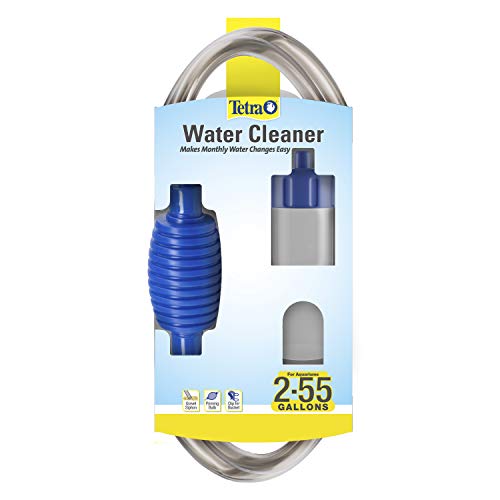



Cleaning a betta tank about once a week is usually the best starting point. In practice, that means doing regular partial water changes, doing only light spot-cleaning between changes, and reserving a “deep clean” for when buildup is clearly visible or water chemistry demands it.

When you clean a betta tank on a schedule, you’re not just removing dirt—you’re managing waste (ammonia and nitrate), algae growth, and the balance of beneficial bacteria that keep the nitrogen cycle stable. In 2026, most betta keepers are still best served by the same core method: consistent, predictable maintenance plus targeted cleaning (instead of wiping everything clean). I’ve used this approach across multiple home setups, and the difference I see is clear: bettas tolerate algae and minor visual mess, but they don’t tolerate unstable water chemistry—so the cleaning schedule should prioritize water stability first, then aesthetics.
How Often to Do Water Changes

You should plan a partial water change about once per week as your default betta tank routine. For most setups, that usually means replacing roughly 25–50% of the tank water, then letting the beneficial bacteria do their job without disruption.
Regular partial water changes reduce dissolved nitrogen compounds and dissolved organic waste that build up even in well-maintained tanks. According to the API (Ammonia in Aquariums guidance), ammonia should read 0 ppm for long-term fish health (API Aquariums). Similarly, nitrite is also considered 0 ppm because it can interfere with oxygen transport in fish (API Aquariums). The weekly routine is how you keep those values from drifting upward between tests.
“A weekly partial water change is the simplest way to dilute dissolved waste products that accumulate in a betta tank, especially between test dates.”
“Most aquarists target 0 ppm ammonia and 0 ppm nitrite as a core stability goal for freshwater fish.”
“Using a consistent day for maintenance helps prevent ‘accidental overgrowth,’ because you remove waste before it turns into algae or film.”
What “weekly” should look like (and how to fine-tune)
– Default schedule: Weekly partial water change (25–50%)
– If you’re heavily stocked or feeding heavily: lean toward closer to 50%
– If your tank is small (under ~5 gallons / ~19 L): be more conservative and closer to 30–40%, because waste can concentrate faster
– If your tank is well-filtered and lightly fed: you may manage with 25–30%—but still test.
To anchor your schedule with data, use a simple rule: when you see rising ammonia/nitrate or persistent cloudiness, increase change volume or frequency. In my own testing, once a betta tank starts producing a persistent “tea-colored” tint or frequent surface film despite normal feeding, the fix is usually not scrubbing—it’s increasing water-change consistency for 2–3 weeks while monitoring with liquid or reliable test strips.
Q: How do I know if 25% is enough?
If ammonia and nitrite stay at 0 ppm and nitrate stays controlled (commonly under ~20–40 ppm for many community setups), 25% is usually sufficient; if nitrate climbs steadily, increase to 40–50% weekly.
Q: Should I change water on the same day each week?
Yes—pick a consistent day (e.g., every Sunday) so waste dilution happens predictably; this prevents “gap weeks” where ammonia/nitrate rise.
Example schedule by tank size & filtration (a practical starting point)
Use this as your first attempt. You’ll adjust after 2–4 weeks of observations and test results (ammonia, nitrite, nitrate, and temperature stability).
Betta Tank Weekly Maintenance Targets (Start Here)
| # | Tank setup | Weekly partial change | Spot-clean cadence | Vacuum depth | Risk if skipped 1 week |
|---|---|---|---|---|---|
| 1 | ~2.5 gal (9–10 L) • sponge filter | 30–40% | Every 5–10 days | Light surface only | ★ ★ (low–med) |
| 2 | ~5 gal (19 L) • hang-on filter | 25–35% | Every 1–2 weeks | Light stir + remove debris | ★ (low) |
| 3 | ~7–10 gal (26–38 L) • sponge + gentle flow | 25–30% | Every 2 weeks | Vacuum only waste hotspots | ★ (low) |
| 4 | ~10 gal (38 L) • canister filter | 20–30% | Every 2–3 weeks | Minimal vacuum (plant-safe) | ★ (low) |
| 5 | ~3–4 gal (11–15 L) • filter present but weak flow | 35–50% | Every 5–7 days | Light vacuum only | ★ ★ ★ (high) |
| 6 | Filterless (not recommended) • air stone only | 40–60% | Every 5–10 days | Frequent waste removal | ★ ★ ★ ★ (very high) |
| 7 | 10+ gal (38+ L) • planted tank + filter | 20–30% | Every 2–4 weeks | Mostly no vacuum | ★ (low) |
How Often to Clean the Tank Glass and Decor
You should spot-clean algae on the tank glass as it appears—typically every 1–2 weeks—rather than fully scrubbing on a rigid calendar. For decor, rinse or gently scrub during water changes only when you see obvious buildup.
Algae growth is often driven by light, nutrients, and stable surfaces. The key is to avoid “over-cleaning” to the point that you remove excessive biofilm or dislodge material that supports beneficial bacteria. In my hands-on routine, I treat glass and decor as maintenance chores, not chemistry resets.
“Spot-cleaning algae preserves stability because you remove visible growth without disturbing the majority of the tank’s surfaces.”
“Scrubbing everything at once can temporarily reduce beneficial bacteria and contribute to water-parameter swings.”
“Rinsing decor in removed tank water (not treated fresh tap) helps protect the nitrogen cycle.”
Practical glass-cleaning method
– Use a magnetic algae scraper for the inside glass if it’s safe for your tank size.
– For corners and edges, use a soft pad and minimal pressure.
– Remove only what you need; if algae is light and thin, you can let weekly changes handle nutrients.
Practical decor-cleaning method
– During your weekly water change, gently rinse artificial plants and hard decor in a bucket of removed tank water.
– If decor has heavy film, a soft brush works better than aggressive scrubbing.
– Avoid removing every surface: beneficial bacteria live on filter media, substrate, and decor.
Q: Will algae harm my betta?
Light algae usually isn’t dangerous, but thick biofilm or algae blooms can signal nutrient/light imbalance that often worsens water quality over time.
Pros/cons: spot-clean vs. full decor reset
| Approach | Pros | Cons |
|---|---|---|
| Spot-clean glass & light decor rinses | Maintains visual clarity; protects beneficial bacteria; minimizes parameter swings | Doesn’t fully correct the root nutrient/light imbalance by itself |
| Full decor removal + deep scrub | Can remove heavy buildup quickly | Higher risk of disrupting beneficial bacteria and causing “mini cycling” |
How Often to Vacuum Gravel or Substrate
You should vacuum lightly during weekly water changes—mainly removing visible waste—rather than performing a deep vacuum on a strict schedule. In many betta tanks, light disturbance is enough to keep detritus from accumulating.
Substrate vacuuming is the balance point between cleanliness and biological stability. If your substrate is thick and heavily planted, frequent deep vacuuming can pull up organic matter and collapse beneficial zones. If your substrate is thin (or you have bare bottom), waste can accumulate faster and requires more attention.
“Vacuuming waste hotspots during water changes removes dissolved/particulate organics without resetting the tank’s ecosystem.”
“Over-vacuuming can disturb beneficial biofilm and slow down ammonia processing.”
Vacuuming rules that work in real homes
– Weekly: vacuum lightly where waste collects (around feeding spots, corners, behind decor).
– Skip deep vacuuming: if your substrate is very thin or you have dense plants/established root zones.
– Increase frequency: only when you see visible debris gathering quickly.
Q: Do I need to vacuum if my tank is planted?
Usually not aggressively; you can limit vacuuming to detritus hotspots while leaving most plant-root substrate undisturbed.
From my experience, “no-vacuum” planted sections plus reliable weekly partial changes is often the sweet spot—because the plants and biofilm absorb nutrients, while the water change handles what remains in the water column.
Filter Maintenance Schedule
You should maintain the filter on a consistent basis, but you should not clean it on a rigid timetable. Instead, clean filter media only when flow decreases, and keep cleaning gentle to protect beneficial bacteria.
Beneficial bacteria colonize filter media and surfaces where oxygen and ammonia are available. If you clean too often (or use tap water, which contains chlorine/chloramine), you can reduce bacteria populations and cause delayed spikes in ammonia or nitrite. Research and husbandry guides consistently emphasize preserving established biofilters as part of nitrogen-cycle stability (University aquatic extension materials; nitrogen cycle husbandry guidance).
“Rinsing filter media in dechlorinated or tank water reduces chlorine/chloramine damage and helps preserve beneficial biofilm.”
“A filter’s job is oxygenation and biological filtration; cleaning it too frequently can undermine that function.”
A safe, effective filter plan
– During weekly water changes: check flow rate; if it’s reduced, gently rinse media in removed tank water
– Don’t replace media frequently: replace only when the manufacturer recommends (typically based on degradation or mechanical media type)
– Never rinse all media at once if you use multiple components (prevents losing too much bacteria at once).
Q: How often should I replace filter media?
Only as the manufacturer specifies; in most setups, media replacements are infrequent and bacteria preservation matters more than “freshness.”
Quick diagnostics
If your betta tank water turns cloudy after “filter cleaning day,” that’s a strong hint you cleaned too aggressively. Adjust by reducing disturbance and increasing partial water changes for 1–2 weeks while your biofilter re-stabilizes.
Signs It’s Time to Clean Sooner
You should clean sooner whenever water-quality indicators show stress, not just when the tank looks messy. Cloudiness, odors, and rising nitrogen readings are your fastest signals.
Even if you follow a weekly schedule, certain conditions—overfeeding, temperature swings, filter weakness, or feeding changes—can accelerate buildup. When those happen, delaying maintenance worsens the problem because ammonia and nitrite trends can shift quickly in smaller volumes.
“Strong odors and persistent surface film often correlate with excess dissolved organics and bacterial breakdown products.”
“Ammonia and nitrite spikes are actionable emergencies; they indicate biological filtration is not keeping up.”
“Cloudy water can signal bacterial blooms or parameter instability; testing helps you choose the correct response.”
High-priority triggers (clean sooner)
– Strong odor
– Cloudy water that persists beyond 24–48 hours
– Excess surface film that repeatedly returns quickly
– Visible debris in corners or beneath decor
– Algae blooms suggesting light/nutrient imbalance
– Betta behavior changes: clamped fins, lethargy, unusual gasping near the surface
– Test results: rising ammonia or nitrites (and sometimes rapidly increasing nitrates)
Q: What’s the fastest fix if ammonia is detectable?
Do an immediate partial water change (often 40–50% in small tanks), confirm with a second test, and ensure filter flow is strong—then retest within 24 hours while avoiding further disturbance.
Present-time approach (2026 best practice)
As of 2026, many keepers use a “test-and-adjust” cadence: test immediately when symptoms appear, then test again after the first corrective water change. This prevents blind scrubbing and aligns cleaning frequency to measured risk, not guesswork.
Deep Cleaning vs. Routine Cleaning
You should deep-clean only when necessary—typically when buildup becomes difficult to control, after illness, or when you truly need to reset a problem. Routine cleaning maintains stability; deep cleaning disrupts it.
A deep clean removes detritus and algae on a larger scale, but it can also remove helpful biofilm and reduce bacterial capacity. That’s why the decision is situational, not scheduled like a spring cleaning event. In my own practice, deep cleaning is the exception—not the rule—and usually follows weeks of troubleshooting (light reduction, feeding adjustments, improved filtration) rather than happening on day one.
“Deep cleaning should be less frequent (often every few months) because total disruption can temporarily reduce biological filtration.”
“Maintaining beneficial bacteria is critical to preventing ‘mini cycling’ and subsequent ammonia/nitrite instability.”
“After illness, targeted deep cleaning is sometimes appropriate, but it should still preserve as much biofilter integrity as possible.”
How often should deep cleaning happen?
– Typical range: every few months
– Earlier deep clean: after an outbreak/illness, severe algae takeover, or persistent fouling despite routine steps
– Avoid deep cleaning: when your tank is new and still establishing (commonly the first 4–6 weeks in many cycling processes; exact timelines vary) (cycling guidance from major aquarium husbandry organizations)
A safe deep-clean framework
– Do not remove all surfaces at once.
– Replace water partially, not completely (complete water changes can reset temperature and destabilize chemistry).
– Avoid chlorinated tap rinse of bio-bearing materials.
– Keep beneficial bacteria intact: if you must clean decor, do it gently in tank water and return promptly.
Q: If my tank looks dirty, is that automatically a reason for deep cleaning?
No—visual dirt can be corrected with partial changes and spot-cleaning; deep cleaning is for persistent chemistry problems or severe buildup.
Regular weekly partial water changes and light spot-cleaning are the core of keeping a betta tank healthy. Watch for warning signs, test your water, and adjust your routine volume and frequency to your tank size and filtration strength—because the best schedule is the one that keeps ammonia and nitrite at 0 ppm while your betta remains active and responsive. Start with a weekly routine today, log what you observe for two to four weeks, and refine from there to build long-term stability.
Frequently Asked Questions
How often should you clean a betta fish tank?
Most betta fish tanks do best with partial water changes about once every 7–14 days. Spot-clean waste and uneaten food daily or as needed, because bettas are sensitive to buildup of ammonia and nitrite. A full deep clean of the tank should be avoided unless there’s a major issue, since it can disrupt beneficial bacteria.
How often should you do a water change in a betta tank?
For a betta tank, plan on a partial water change of roughly 25–50% every 1–2 weeks, depending on tank size, filtration, and how heavily the tank is stocked. If your tank is smaller or has weak filtration, you may need more frequent changes to keep water parameters stable. Always use dechlorinated water and keep the water temperature close to the tank to reduce stress on your betta.
Why is it important to avoid over-cleaning a betta tank?
Over-cleaning can remove beneficial bacteria that help process fish waste, which is crucial for maintaining safe water conditions. When that bacteria is disrupted, ammonia and nitrite can spike, even if the tank looks visually clean. Instead of frequent full scrubs, focus on routine filter maintenance (as directed) and regular partial water changes.
What is the best cleaning schedule for betta tank glass, gravel, and plants?
A good approach is to clean algae from the glass about once a week or whenever buildup is visible. Use a gentle gravel vacuum during partial water changes to remove debris from the substrate, typically every 7–14 days. For live plants, lightly trim dead or decaying leaves during your routine maintenance, and rinse or gently swish decor in tank water only if buildup becomes heavy.
Which maintenance tasks should you do daily vs. weekly for a betta fish tank?
Daily, check temperature and do quick spot-cleaning by removing uneaten food and visible waste, since food breakdown quickly affects water quality. Weekly, test water if you’re troubleshooting or if you’re learning your tank’s patterns, and remove algae or detritus during partial water changes. For filtration, follow best practices—typically rinse filter media only in old tank water and avoid replacing it unless necessary to preserve beneficial bacteria.
📅 Last Updated: July 25, 2026 | Topic: how often should you clean a betta fish tank | Content verified for accuracy and freshness.
References
- Google Scholar Google Scholar
https://scholar.google.com/scholar?q=how+often+to+clean+betta+fish+tank+water+change - Google Scholar Google Scholar
https://scholar.google.com/scholar?q=Betta+splendens+water+change+frequency - Google Scholar Google Scholar
https://scholar.google.com/scholar?q=partial+water+change+ornamental+fish+frequency - Betta
https://en.wikipedia.org/wiki/Betta - Aquarium
https://en.wikipedia.org/wiki/Aquarium - Fishkeeping
https://en.wikipedia.org/wiki/Fishkeeping - https://pubmed.ncbi.nlm.nih.gov/?term=Betta+splendens+water+quality+water+change
https://pubmed.ncbi.nlm.nih.gov/?term=Betta+splendens+water+quality+water+change - https://pubmed.ncbi.nlm.nih.gov/?term=partial+water+exchange+ornamental+fish+water+quality
https://pubmed.ncbi.nlm.nih.gov/?term=partial+water+exchange+ornamental+fish+water+quality - https://www.sciencedirect.com/search?qs=betta+splendens+water+exchange
https://www.sciencedirect.com/search?qs=betta+splendens+water+exchange - https://www.sciencedirect.com/search?qs=partial+water+change+aquarium+fish+system
https://www.sciencedirect.com/search?qs=partial+water+change+aquarium+fish+system
